REVIEW · KYOTO
Kyoto Walking Tour with Kimono Rental Lunch and Tea Ceremony
Book on Viator →Operated by Kyoto Bespoke Tours · Bookable on Viator
Kyoto wears its tradition on the sidewalk. This walking day tour strings together kimono dressing, Kyoto heritage sites, and a calm tea ceremony with Wagashi.
I like that you start with dressing at Ume Sakura by licensed professionals, then move through places like the old Mitsui family Shimogamo villa and Shimogamo Jinja, where history actually has time to show. I also like the human side: the tour includes explanations during the ceremony, and you’ll get thoughtful cultural context along the way.
One thing to weigh: lunch is not included, and if you want the kimono option you’ll need to handle makeup in advance since basic hairstyling is included but makeup is not.
In This Review
- Key Highlights You’ll Care About
- Kyoto Tradition on Foot, Not Just in Photos
- Ume Sakura Kimono Dressing: What’s Included and What You Must Do
- The Imperial Gardens Walk: Soft Power in the Background
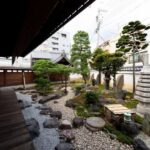
- Mitsui Shimogamo Villa: A Preserved Residence, Not a Museum Script
- Shimogamo Jinja: Over 1,000 Years, 30 Minutes to Feel the Scale
- Lunch at Teramachi Yoshikura: A Machiya Meal You Choose
- Tea Ceremony with Chisato: Matcha, Wagashi, and Clear Explanations
- Guide Voice and Cultural Context That Actually Helps
- Price and Value: What $117.06 Buys (and What It Doesn’t)
- Timing and Logistics: How the Day Flows
- Practical Tips for a Smooth Kyoto Kimono + Tea Day
- Who This Kyoto Walking Tour Fits Best
- Should You Book This Kyoto Walking Tour?
- FAQ
- How long is the Kyoto walking tour?
- What time does the tour start, and where do I meet?
- Is the tour private?
- Is lunch included in the price?
- What’s included with the tea ceremony?
- Do I need to pay for admission to Shimogamo Jinja?
- Is admission to the Mitsui Shimogamo Villa included?
- What’s included if I choose the kimono option?
- Can the tour accommodate dietary restrictions?
- Can I cancel for a full refund?
Key Highlights You’ll Care About
- Kimono at Ume Sakura with licensed professionals plus basic hairstyling
- Mitsui Shimogamo Villa admission included for a preserved Japanese residence
- Shimogamo Jinja stop with over 1,000 years of history (and free admission)
- Machiya lunch at Teramachi Yoshikura where you choose your meal option
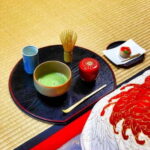
- Tea ceremony with Chisato including matcha and Wagashi with explanations
Kyoto Tradition on Foot, Not Just in Photos
This tour works because it keeps things slow enough for real observation, yet structured enough that you’re not wandering around wondering what matters. You’ll cover a smart loop through the Shimogamo area, then finish in a setting built for quiet attention: the tea ceremony.
The itinerary also mixes “big names” with less obvious immersion. You get a major shrine stop, but you also spend time inside a preserved family villa, in a house-style environment that helps you understand how people lived around Kyoto’s old power centers.
You can also read our reviews of more walking tours in Kyoto

Ume Sakura Kimono Dressing: What’s Included and What You Must Do
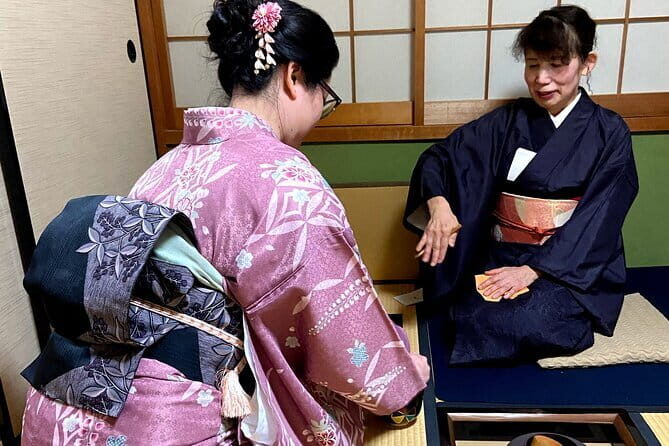
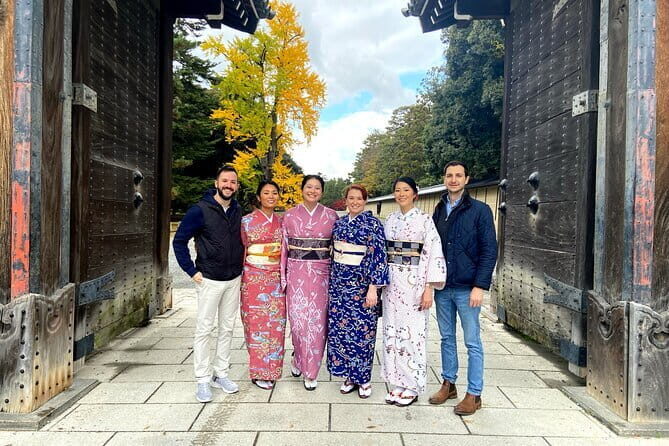
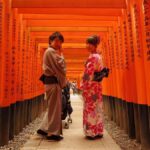
The morning begins at Ume Sakura (38 Fujikicho, Nakagyo Ward). If you choose the kimono option, you’ll get dressed by licensed professionals, and you’ll receive basic hairstyling as part of the experience.
Plan around the one clear prep item: makeup is to be done in advance by you. That’s not a small detail. If you usually do your makeup lightly, you might want to test a look that photographs well under indoor lighting, since you’ll be moving from streets to buildings to a tea room.
This kimono rental is positioned as higher-quality garments that aim for what locals actually wear, not the usual costume-style look many tourists end up with. That focus matters because it affects how the day feels. In a good kimono, you stop thinking about yourself as a visitor and start moving like you belong to the moment.
Practical tip: bring a small bag you can keep with you during the day. Kimono days are easier when you travel light, and you’ll want somewhere to store essentials like your phone, water, and any personal items you won’t want to carry in your hands.
The Imperial Gardens Walk: Soft Power in the Background
After kimono dressing, you’ll stroll the grounds of the former home of the Imperial Family. Gardens like this aren’t just “pretty,” they’re Kyoto’s slow-moving stage for seasonal festivals and seasonal mood.
The tour notes that the grounds are especially beautiful in spring and autumn, which tells you what kind of atmosphere the place is meant to hold. Even if you’re not there in those peak seasons, this kind of garden stop gives your eyes a break from crowds and a sense of Kyoto’s rhythm.
The main value here is pacing. You’re not rushed through one quick stop and back out. You get time to walk and look at the space as a whole, which is rare in day tours built around checkboxes.
Mitsui Shimogamo Villa: A Preserved Residence, Not a Museum Script
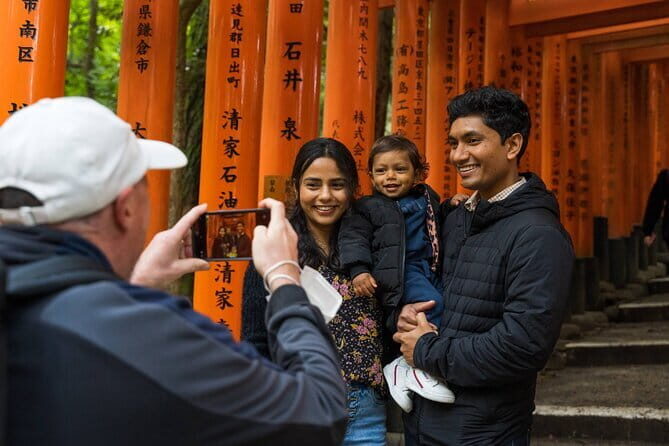
Next comes the Old Mitsui Family Shimogamo Villa, a preserved Japanese residence once owned by one of Japan’s prominent families. You’ll have about 30 minutes, and admission is included.
This is a great stop because villas like this help you connect architecture to lifestyle. In a shrine or street shopping area, you can only observe surface details. In a preserved home, you start noticing how space shapes daily habits—where people gathered, how rooms connect, and what the property values visually.
A short warning, gently: 30 minutes can feel like “just enough” when you’re taking photos. If you care about interiors and details, prioritize what you want to see most. Otherwise, you can end up photographing everything and retaining almost nothing.
Shimogamo Jinja: Over 1,000 Years, 30 Minutes to Feel the Scale
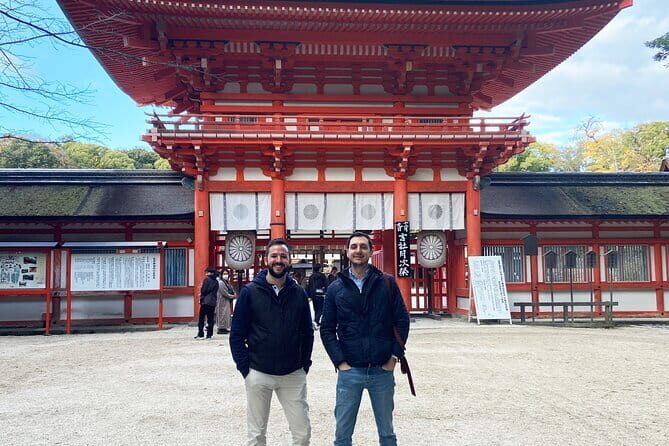
Then you head to Shimogamo Jinja, one of Kyoto’s important shrines. You’ll spend about 30 minutes, and the admission is listed as free.
The big draw here is the age. The site has over 1,000 years of history, and that number matters because you’re standing in a place that has outlasted fashions, governments, and travel trends. It’s not just a pretty backdrop; it’s an active spiritual address in Kyoto.
This stop works well after the villa. The villa gives you private-space context; the shrine gives you public-space meaning. Together, they help you see how old Kyoto organizes daily life around both home and ritual.
Practical tip: shrines often require a bit of quiet behavior. You’ll enjoy it more if you keep your voice down and avoid rushing through the key viewpoints.
A few more Kyoto tours and experiences worth a look




Lunch at Teramachi Yoshikura: A Machiya Meal You Choose
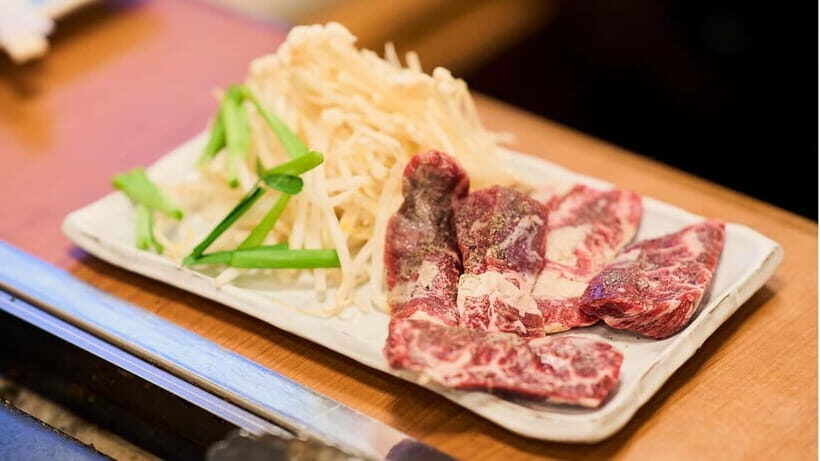
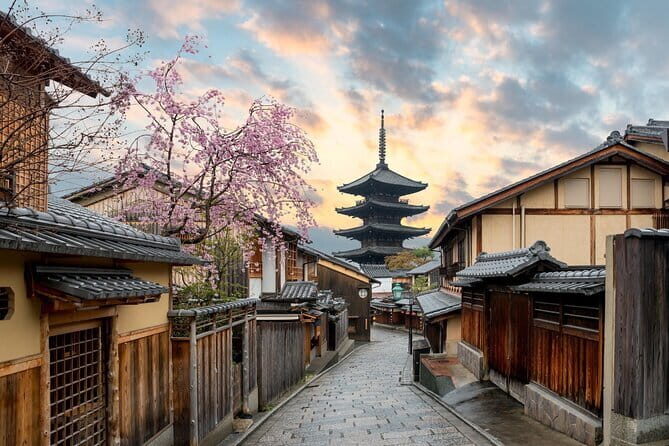
For lunch, you’ll go to Kyoto cuisine Teramachi Yoshikura. The meal happens in a renovated machiya, which is the classic wooden townhouse style you see woven into Kyoto’s streetscape.
Lunch is not included. That’s worth knowing up front because it changes the “true cost” of the day. The value here is that you’re not stuck with one set menu. The tour invites you to choose your meal options, which helps accommodate different appetites.
Also, the tour asks you to state dietary restrictions in advance. That’s important because if your needs are complex, you might not be able to swap items last-minute. If you have allergies or strong dietary limits, send the details when booking, not days later.
What I’d do: pick a lunch that matches your walking day. Kyoto meals can be heavy or rich. If you plan to keep moving for hours, choose something you’ll feel good digesting during the second half of the afternoon.
Tea Ceremony with Chisato: Matcha, Wagashi, and Clear Explanations
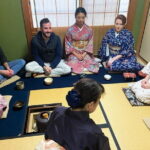
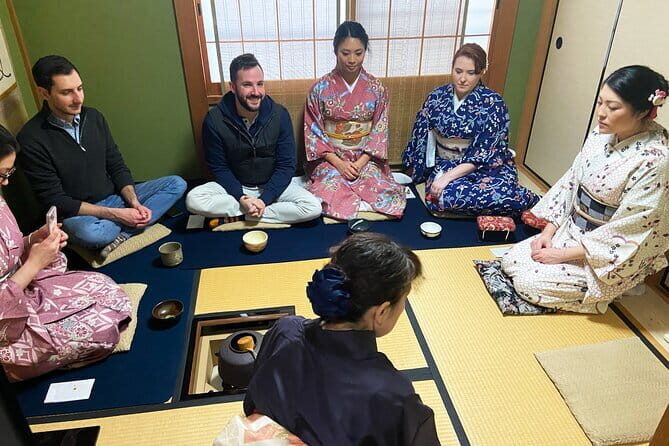
The finale is a tea ceremony experience with Chisato. You’ll have about one hour, and admission is included.
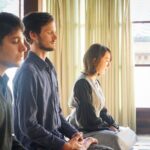
This part is built around more than sipping matcha. The experience includes Wagashi, and your host and guide explain what you’re seeing and what the ritual is about. That matters because tea ceremony can feel intimidating if you don’t understand what’s happening and why.
In a good ceremony setting, your brain slows down. You stop multitasking and start noticing small details: how the tea is prepared, how sweetness balances bitterness, and how the room’s pace shapes your own behavior.
If you’ve ever tasted matcha before, this is still worth doing because ceremonies teach you how to taste with intention, not just with curiosity.
Etiquette note: even without assuming you know the rules, the fact that explanations are included means you won’t be left guessing.
Guide Voice and Cultural Context That Actually Helps
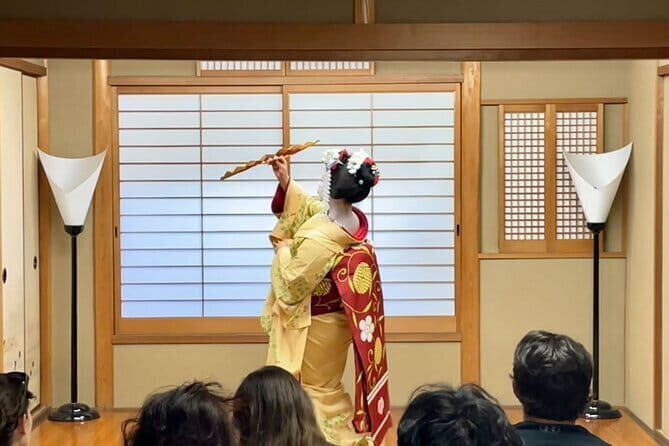
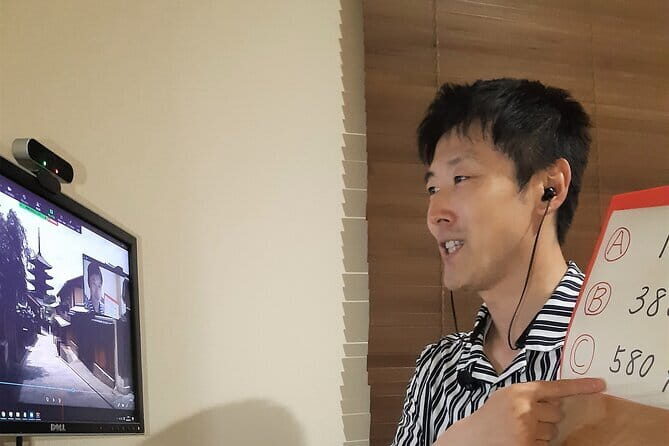
One of the most praised parts of this tour is the way the guide adds personal cultural insight. You’ll get an expat perspective on life in Japan as a foreigner, plus practical cultural context that makes everyday Kyoto make more sense.
That’s not fluff. When you understand how locals think and how foreigners fit into that picture, you make better choices later—what to ask, how to behave, and what to pay attention to when you’re out on your own.
You also get this context embedded into the day rather than delivered as a long lecture. That keeps the tour from turning into a running commentary over scenery. The day stays human.
Price and Value: What $117.06 Buys (and What It Doesn’t)
At $117.06 per person for an 8-hour day, this isn’t a “just transport you around” kind of tour. You’re paying for several named, time-specific experiences and admissions: the tea ceremony is included, and admission to the Mitsui Shimogamo stop is included.
Lunch is not included, so consider it part of your on-the-day budget. If you add the kimono option on top (it’s an optional choice), your total spend will rise. The upside is that kimono dressing and the ceremony are not things you can easily replicate on the fly without planning.
Is it good value? For me, it becomes a yes when you care about three things:
- structured cultural experiences (tea ceremony plus villa access)
- a guided route in an area that can be easy to underuse without context
- kimono aesthetics handled by professionals
If you mainly want shrine photos and casual wandering, you might be better off with a simpler self-guided plan. But if you want Kyoto traditions packaged with time to slow down, this price starts to look fair.
Timing and Logistics: How the Day Flows
The tour starts at 10:30 am and begins at Ume Sakura. It ends back at the same meeting point, so you’re not trying to figure out a separate drop-off.
You’ll also receive a mobile ticket, and the tour runs as a private tour for only your group. Private doesn’t mean fancy for its own sake—it usually means you can ask more questions and you’re less likely to feel swept along with a crowd.
Duration is listed as about 8 hours, which is a long but manageable day if you’re ready for walking. Kyoto days add up, so wear shoes you trust.
Practical Tips for a Smooth Kyoto Kimono + Tea Day
A few things make this day easier from start to finish:
- Bring comfortable shoes. Even with kimono, your feet still run the show on uneven sidewalks.
- Plan your makeup ahead since makeup is not part of the included services; basic hairstyling is.
- State dietary restrictions early. The tour notes that accommodation depends on your request.
- Keep your schedule flexible in your head. You’re spending time at multiple stops (villa, shrine, lunch, ceremony), so treat it as one continuous experience.
Also, be aware the tour is described as suitable for most travelers. If you have mobility limits, the day’s walking will matter, so consider that before booking.
Who This Kyoto Walking Tour Fits Best
This tour is a strong match if you want Kyoto through hands-on experiences, not just sight-seeing. I’d especially recommend it if:
- you want the kimono experience handled by professionals
- you care about the tea ceremony as a real cultural practice, not a quick photo moment
- you like a guided route that balances shrine, villa, and traditional town lunch
It’s also a good fit for couples, friends, and small groups who want privacy and a smoother pace.
If you’re the type who hates structured timing, you might find the itinerary length (8 hours) a bit demanding. But if you like a plan that still leaves room to look, it’s well suited.
Should You Book This Kyoto Walking Tour?
I’d book it if your idea of a great Kyoto day includes kimono dressing, a real tea ceremony with Chisato, and time in the Mitsui Shimogamo villa plus Shimogamo Jinja. The day’s value comes from included admissions and a thoughtful cultural flow, not just from ticking off landmarks.
Skip it or switch approach if lunch inclusion is a deal-breaker for you, or if you’re not interested in the kimono option and would rather spend your budget on a more flexible, self-guided itinerary.
If you do book, come prepared for the kimono makeup step and tell them dietary restrictions early. That’s how you keep the day smooth and enjoyable.
FAQ
How long is the Kyoto walking tour?
It’s listed at about 8 hours.
What time does the tour start, and where do I meet?
The start time is 10:30 am. You meet at Ume Sakura, 38 Fujikicho, Nakagyo Ward, Kyoto, 604-0992, Japan.
Is the tour private?
Yes. It’s a private tour/activity, so only your group participates.
Is lunch included in the price?
No. Lunch at Kyoto cuisine Teramachi Yoshikura is not included, and you choose meal options there.
What’s included with the tea ceremony?
The tour includes the tea ceremony experience. The tea ceremony includes Wagashi, and there are explanations provided by your host and guide.
Do I need to pay for admission to Shimogamo Jinja?
No. Shimogamo Jinja admission is listed as free.
Is admission to the Mitsui Shimogamo Villa included?
Yes. Admission to Mitsui Shimogamo is included.
What’s included if I choose the kimono option?
You’ll get dressed in an authentic kimono by licensed professionals. Basic hairstyling is included, while makeup is noted as something guests should do in advance.
Can the tour accommodate dietary restrictions?
You must state dietary restrictions in advance, and depending on the request they may not be able to accommodate you.
Can I cancel for a full refund?
Yes. Free cancellation is available, and you can cancel up to 24 hours in advance for a full refund.