REVIEW · ONNA SON
Tea ceremony experience with simple kimono in Okinawa
Book on Viator →Operated by SASAGIRIAN / 笹桐庵 · Bookable on Viator
One small tea room can teach a lot. This experience at Sasagirian 笹桐庵 turns Okinawa into something more traditional through kimono, strict tea manners, and hands-on matcha making. I like that you actually learn the sequence—entering the room, cleansing your hands, viewing the hanging scroll and utensils—rather than just watching. I also like the extra care they give the details: sweets first, then bitter tea, plus tool-handling and even a photo moment by the gold folding screen. A possible drawback: the experience depends on good weather, so your date could shift if conditions aren’t right.
What you’re signing up for is not just matcha. It’s a guided walkthrough of how to move, look, and handle objects with respect, including a moment to take photos and a final cloth change. The group stays intimate (up to 6), which helps the instructor keep the pace calm and understandable.
If you’re tight on time, the duration is short—about 1 hour 15 minutes—so you’ll want to arrive ready to focus. The good news is that the format works even if you can’t sit up, and it’s structured to include you as long as you’re the right age.
In This Review
- Key Highlights You’ll Feel Immediately
- Sasagirian 笹桐庵: a calm setting for tea-room manners in Onna
- Simple kimono on, then through the small tea-room entrance
- The tasting room: Okinawan and Japanese sweets, then bitter tea
- Cleaning tools and handling the silk cloth the right way
- Making your own matcha: the step-by-step that sticks
- The photo moment: gold folding screen and a final cloth change
- Price and value: $85.39 for a hands-on cultural class
- Logistics that actually matter: where to go, how long, and what to expect
- Who should book this tea ceremony (and who might skip it)
- Should you book this tea ceremony in Okinawa?
- FAQ
- How long does the tea ceremony experience last?
- What does it cost, and is that per person?
- How many people are in a group?
- Where is the meeting point?
- Is a mobile ticket used?
- What happens first when the experience starts?
- Do you need to sit in a traditional way?
- What ages can participate?
- Is there a photo opportunity?
- What if the weather is bad?
Key Highlights You’ll Feel Immediately
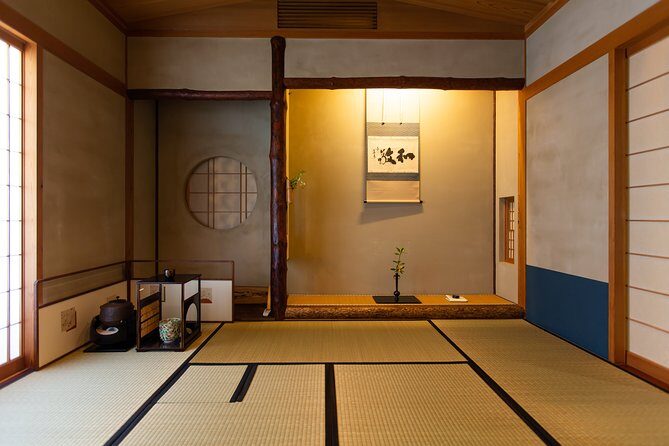
- A real tea-room sequence: from the small entrance to the view of scroll, flowers, and utensils
- Kimono included: change into a simple kimono and go through the ritual with proper timing
- Sweets, then bitter tea: Okinawan and Japanese sweets first, then the traditional tea taste
- Matcha you make yourself: you’ll prepare and taste your own green tea
- Tool-handling lessons: learn how to cleanse and handle the tea tools and silk cloth
- Photo time by the gold folding screen: a clear moment for a memorable shot
Sasagirian 笹桐庵: a calm setting for tea-room manners in Onna
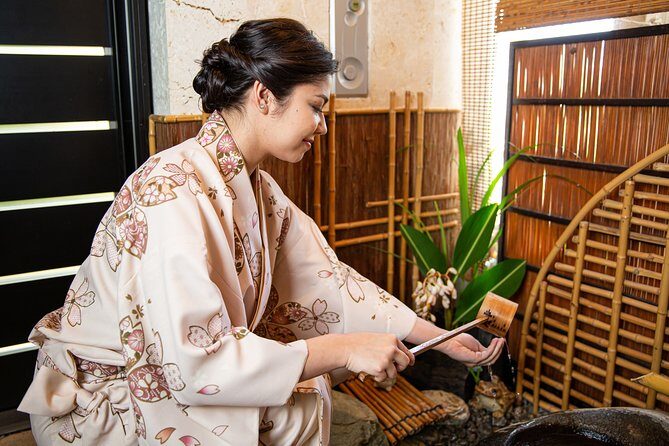
This class takes place at Sasagirian 笹桐庵 in Onna-son, and the setting matters. The whole flow is designed around the tea room being treated with reverence—so you’re not just eating sweets and drinking matcha. You’re learning how to notice the space: the hanging scroll, the flower arrangement, and the way every utensil has a role.
That’s one reason people rave about the peace of the experience. Even if you don’t know the language of tea terms, you can follow the structure: stand, enter, cleanse, observe, then sit for the tasting and practice. When a class is built like a ritual, you feel it right away.
There’s also a practical advantage to the location and format. The meeting point is at a specific facility (Japanese Cultural Experience Facility Sasagirian 笹桐庵), and it’s described as near public transportation. For Okinawa trips, that helps if you don’t want to rely entirely on taxis.
You can also read our reviews of more tours and experiences in Onna son.



Simple kimono on, then through the small tea-room entrance
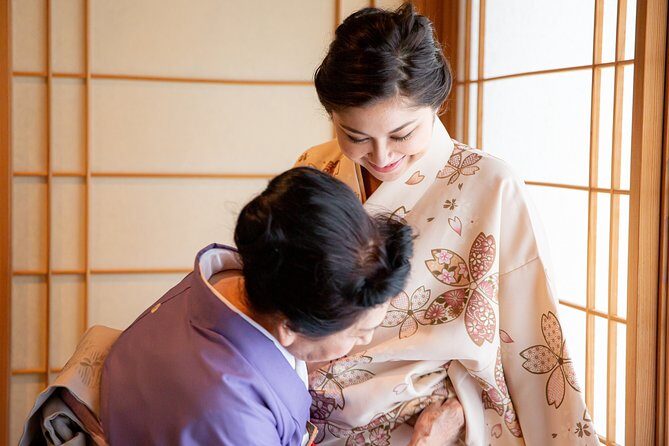
You start with the simple kimono portion, and it’s not just for looks. The kimono change helps set expectations: you’re expected to move more carefully, sit more deliberately, and follow the instructor’s cues.
Next comes the sequence of manners. You cleanse your hands first—then you enter through the small tea-room entrance. This detail is more than a fun photo moment. It forces you to slow down and pay attention, because you have less space to rush. That’s how these ceremonies teach respect: by shaping your body and pace.
Once inside, the instructor guides you to appreciate what’s in the room: the hanging scroll, flowers, and tea tools. Even if you’re the type who usually skips the formal parts of cultural shows, this is the part where your brain switches gears. You start seeing tea as a whole environment, not just a drink.
Then you move to the room set up with Ryurei-style tables and chairs for the ceremony. That’s important for comfort and accessibility. Traditional tea ceremony usually involves kneeling, but this setup uses tables and chairs, and the activity specifically says you can participate even if you cannot sit up.
The tasting room: Okinawan and Japanese sweets, then bitter tea
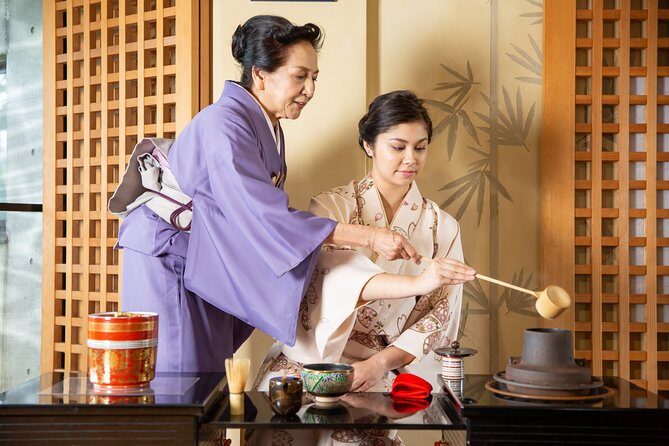
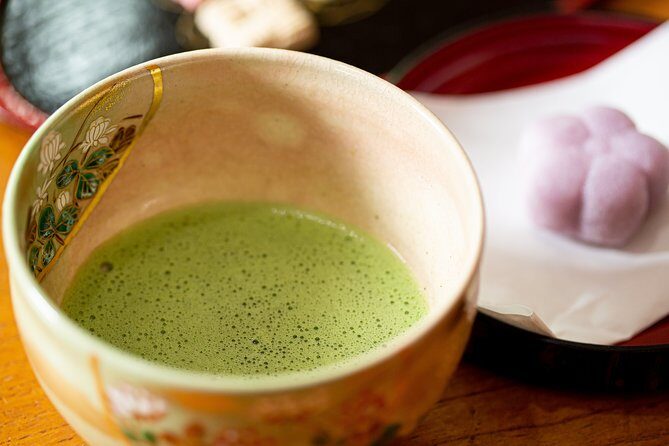
After you settle into the Ryurei-style area, you’ll enjoy sweets before the tea. The experience includes tasting both Japanese and Okinawan sweets, which is a clever way to bridge what you already know with what’s local to Okinawa.
Why this order matters: sweets prepare your palate for the tea. Then the session moves to the bitter tea part—the part that teaches balance. Tea ceremony isn’t about sugary flavors. It’s about noticing texture, temperature, and taste without rushing to fix it.
You also learn to appreciate the tools during the tasting. That’s a key difference from just having refreshments. The instructor shows you how each item is used and how to handle things with care.
One small note: because the ceremony is time-boxed to about 1 hour 15 minutes, this is not a long, drawn-out tasting tour. It’s structured for learning the main points and getting you to participate, not to lounge.
Cleaning tools and handling the silk cloth the right way
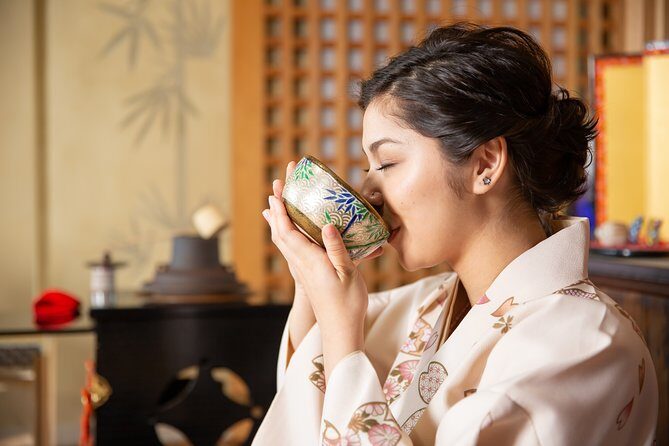
This is where the ceremony turns from watching to doing.
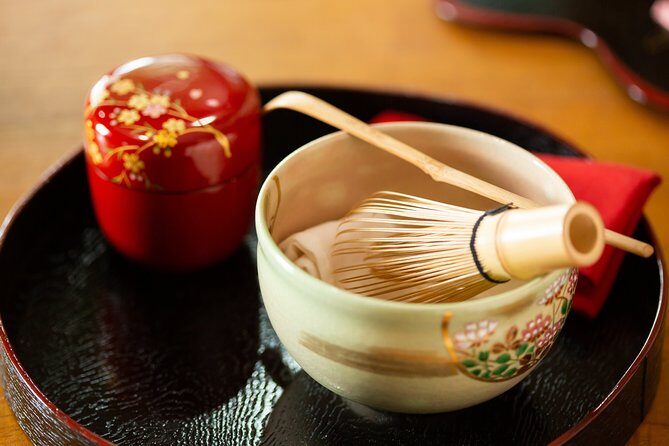
You’ll learn how to treat each tea tool, including steps like cleansing and handling. There’s also a specific mention of learning how to handle the silk cloth and cleanse the tea tools. That might sound minor, but in tea ceremony, these textiles and tools are part of respect. They keep things clean, and they help you move with care.
The upside is that you’re not just told rules. You’re guided through the reasoning by watching the instructor’s pace and then copying it under supervision. If you’ve ever worried that cultural experiences are mostly performative, this portion tends to remove that worry. You get a tangible skill.
Also, it helps that the class is small. The group max is 6 travelers, and the minimum is 2. In a smaller group, your timing, questions, and hands-on practice are more likely to land smoothly.
Making your own matcha: the step-by-step that sticks
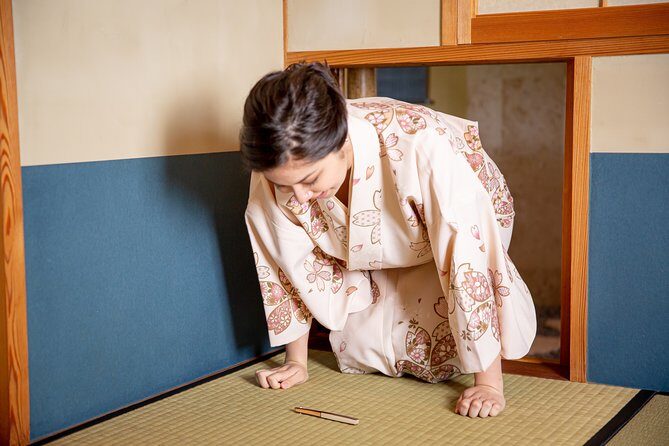
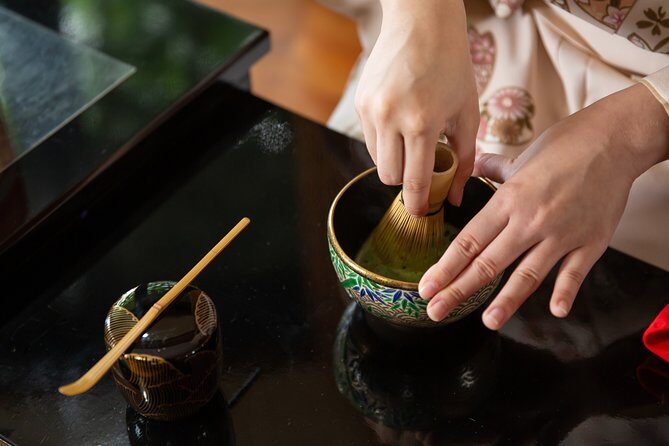
Now comes the highlight: you make your own green tea, including matcha, and taste it.
The instructions are straightforward:
- add matcha green tea and hot water into the tea bowl
- learn how to prepare it as part of the ceremony
- taste what you made
That’s a full-circle moment. You start with manners and observation. You move into tasting. Then you learn handling and cleansing. Finally, you do the core action and experience the result yourself.
This kind of participation is what makes the memory last. You don’t just leave with photos; you leave with a practiced action that felt orderly and intentional.
Also, you’ll likely appreciate the teaching style if you’re visiting with family or multiple generations. Reviews include experiences spanning older adults and kids, and the presence of a translator helps when questions come up. The format is designed so different ages can understand the steps.




The photo moment: gold folding screen and a final cloth change
At a clear point in the ceremony, you’ll take photos in front of a gold folding screen. That matters because it’s not an awkward scramble during the formal part. You get a planned moment that fits the flow.
Then there’s a final change of cloths. You’ll likely notice how the outfit transitions as part of the ritual timing. Even if the ceremony is not long, the clothing and room changes help you feel like you went through distinct chapters rather than one continuous talk.
Price and value: $85.39 for a hands-on cultural class
At $85.39 per person for about 1 hour 15 minutes, the price isn’t the cheapest way to spend an afternoon in Okinawa. But for what you get, it can be fair value—especially if you compare it to other experiences that only show you the basics.
Here’s what you’re paying for:
- Kimono included (not a prop rental vibe)
- a guided ceremony with specific manners and room sequence
- tasting with both Japanese and Okinawan sweets
- guided tool-handling and silk cloth practice
- making and tasting your own matcha
- a photo moment that’s actually built into the ceremony flow
In other words, the cost isn’t just for the drink. It’s for guided participation and cultural structure.
Group size also affects value. With a max of 6 travelers, your instructor has a better chance to guide you directly and keep the pace manageable. This is one of those experiences where you can feel the difference between a packed group and a small class.
If you’re booking, it’s typically scheduled about 22 days in advance on average, and you need to reserve at least 3 days ahead. That’s normal for small-group cultural experiences, so give yourself some buffer.
Logistics that actually matter: where to go, how long, and what to expect
You’ll start and end back at the meeting point at Japanese Cultural Experience Facility Sasagirian 笹桐庵, address: 1765-8 Nakama, Onna, Kunigami District, Okinawa 904-0401, Japan.
The activity uses a mobile ticket. That’s convenient when you’re hopping around Okinawa with multiple stops.
Timing is about 1 hour 15 minutes, and the tour ends where it begins. Plan your day with enough margin afterward. You’ll be changing kimono and then switching cloths again, so you want time to settle afterward and not rush off immediately.
Weather matters. The experience requires good weather. If it’s canceled due to poor weather, you’ll be offered a different date or a full refund.
Who should book this tea ceremony (and who might skip it)
This is a great fit if:
- you want a hands-on cultural experience, not a quick performance
- you like detailed etiquette and quiet, structured learning
- you want Okinawa-connected touches through Okinawan sweets
- you’re traveling with family across ages and want a calm group setting
You might consider skipping if:
- you need a very casual, low-attention experience today
- you’re strongly against sitting formats in general (even though it notes you can participate if you cannot sit up)
- your schedule is very weather-dependent and you can’t risk a date change
Age-wise, it allows participation if you’re over 4 years old, and it says children under 3 can’t participate. If you’re traveling with kids, this detail helps you plan without surprises.
Should you book this tea ceremony in Okinawa?
I’d book it if you want one activity that feels both authentic and practical. The best part isn’t the matcha alone—it’s the way you learn the ceremony through sequence: entering the room, observing the scroll and flowers, tasting sweets, learning tool care, then making and tasting tea yourself. You leave with a memory that’s tied to actions, not just photos.
If you’re already doing a full Okinawa itinerary and want something cultural but not exhausting, this one hits the sweet spot: small group, clear structure, and enough participation to feel real.
FAQ
How long does the tea ceremony experience last?
It runs for about 1 hour 15 minutes.
What does it cost, and is that per person?
The price is $85.39 per person.
How many people are in a group?
The group size is minimum 2 people and maximum 8 people, and it also notes a maximum of 6 travelers for the activity.
Where is the meeting point?
You’ll meet at Japanese Cultural Experience Facility Sasagirian 笹桐庵, 1765-8 Nakama, Onna, Kunigami District, Okinawa 904-0401, Japan, and the tour ends back at the meeting point.
Is a mobile ticket used?
Yes, the experience uses a mobile ticket.
What happens first when the experience starts?
You change into a simple kimono, cleanse your hands, and then enter the tea room.
Do you need to sit in a traditional way?
No. The experience says you can participate even if you cannot sit up.
What ages can participate?
It says people over 4 years old can participate, and children under 3 cannot participate.
Is there a photo opportunity?
Yes. You’ll take photos in front of the gold folding screen.
What if the weather is bad?
The experience requires good weather. If it’s canceled due to poor weather, you’ll be offered a different date or a full refund.