REVIEW · TOKYO
Tokyo: Edo Castle and Imperial Palace Guided Walking Tour
Book on GetYourGuide →Operated by Happy Plus Corporation · Bookable on GetYourGuide
Gates, moats, and stories of power. This Edo Castle and Imperial Palace walking tour in Tokyo turns a handful of famous spots into one clear timeline of how Japan was governed. I especially like the way the guide uses an Edo map in the 1650s to make the route feel logical, not random.
The second thing I love is the focus on physical defenses: you’ll get up close to stone walls and moats and understand why they mattered. You also cover the long shift from the Tokugawa Shogunate to the Meiji Restoration, and then how the Imperial Palace became the Emperor’s residence.
One possible drawback: it’s a walking tour with a lot of short stops at gates, bridges, and structures, so if you want long, slow sightseeing or lots of sitting time, this pacing may feel tight.
In This Review
- Key things to know before you go
- Edo Castle’s story starts at the Imperial Palace gates
- Tokyo Station’s yellow dome start: easy to find, easy to miss
- A guided setup with an Edo-in-the-1650s map
- Sakurada-mon and the gate-to-gate way of thinking
- Stone walls and moats: why the defenses matter
- Honmaru main hall site: the center of Tokugawa power
- Ote-San’no Gate Ruins, Hyakunin Bansho, and the politics of daily control
- Kita-Hanebashi, 竹橋, and Hirakawa Bridge: finishing with perspective
- Price and value: why this $3.22 tour can still be worth it
- Who should book this walk, and who might hesitate
- Should you book the Tokyo Edo Castle and Imperial Palace guided walk?
- FAQ
- How long is the Tokyo Edo Castle and Imperial Palace guided walking tour?
- Where is the meeting point?
- What landmark helps me recognize the meeting spot?
- Is the tour guided in English?
- How big is the group?
- Is the tour wheelchair accessible?
- Do I need to bring anything special?
- What’s included in the price?
- Are meals or drinks included?
- Is free cancellation available?
- Does the tour offer a reserve-now, pay-later option?
Key things to know before you go
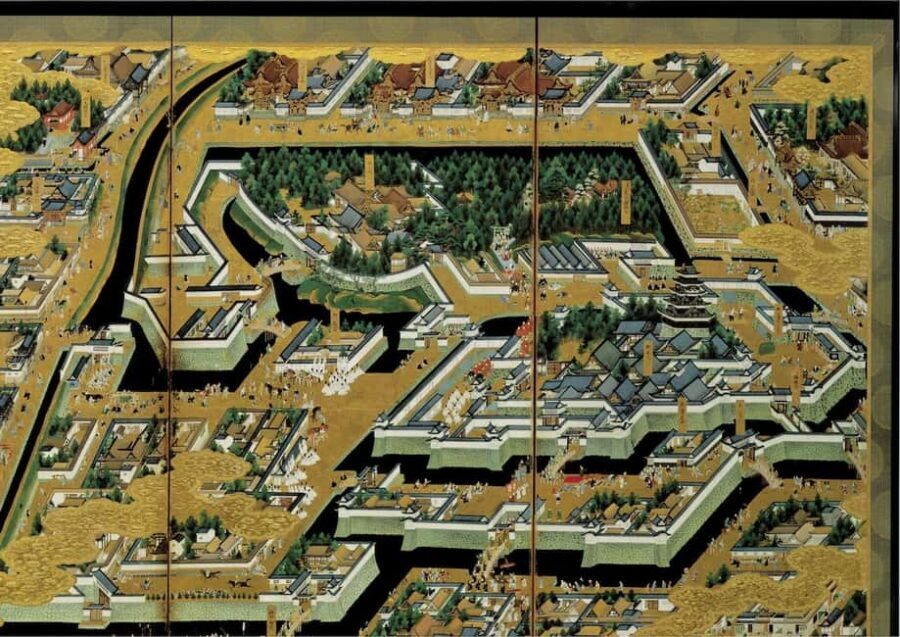
- Edo in the 1650s, mapped out for you so the area stops being a blur of gates.
- Tokugawa Shogunate to Meiji Restoration explained through the places you’re standing on.
- Stone walls and moats get real attention, not just quick photos.
- Small group size (up to 8) keeps the guide’s explanations focused and questions welcome.
- Lots of named gates and structures gives you a mental wayfinding system for future visits.
- English-speaking guide plus a small gift make it easy to take home something extra.
Edo Castle’s story starts at the Imperial Palace gates
The most interesting part of this tour is the basic idea: you’re walking through the same broad power center, but in two different eras. The route begins at the Imperial Palace, which is today’s residence of the Emperor. Historically, the area functioned as the former Edo Castle, the heart of the Tokugawa Shogunate for about 260 years.
What you learn fast is that Edo Castle wasn’t only about buildings. It was about rules, hierarchy, and control—how the shogun’s government maintained order and how that system eventually changed. Then the Meiji Restoration flips the whole meaning of the site: what was once the shogun’s center becomes the Imperial Palace again.
This is the kind of tour where place names matter. When you hear the names of gates and structures while you’re standing near them, the stories stop being abstract and start feeling like a map you can carry in your head.
You can also read our reviews of more walking tours in Tokyo


Tokyo Station’s yellow dome start: easy to find, easy to miss
You meet at Tokyo Station, Marunouchi South Gate Dome, on the ground floor of the South Exit. The landmark is a Western-style historic yellow dome, which is helpful because Tokyo Station is… Tokyo Station. It’s enormous, and you don’t want to waste time searching.
The tour lasts about 150 minutes, and it’s designed to be walked at a steady pace. That means comfy shoes aren’t optional. You’re moving between points frequently, with short guided segments at each place.
Another practical win: the group is limited to 8 people. Smaller groups usually mean the guide can keep the explanation at a human speed and actually respond to questions instead of rushing through content.
A guided setup with an Edo-in-the-1650s map
One of the most useful moments early on is the way the guide frames the day with a map showing Edo in the 1650s. You don’t just hear dates. You’re shown where things were in relation to each other, which makes the later stops click.
Before you reach the main gate area, the route includes a short guided stop at the Mitsubishi Ichigokan Museum. Even if you don’t go inside, the timing works as a warm-up. The guide can build context for what you’re about to see: where the castle sat in the city, what kinds of spaces existed around it, and why the defensive layout was more than decoration.
This is also where you’ll understand the tour’s method. The guide doesn’t treat Edo Castle like a single monument. Instead, it’s a system—gates, walls, bridges, and guard points arranged to funnel movement and control access.
Sakurada-mon and the gate-to-gate way of thinking
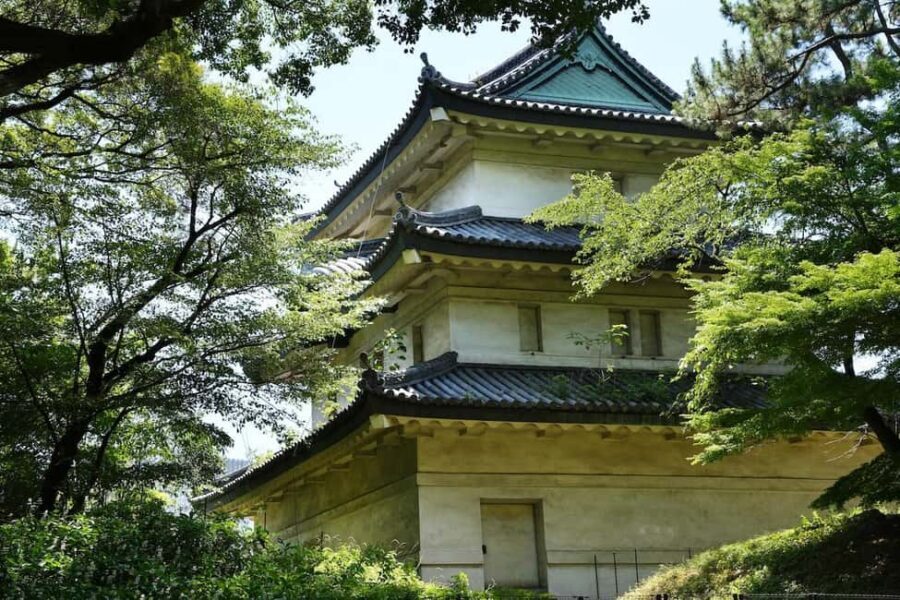
Once you start hitting the named gates, you quickly learn to see the castle like a living machine. The tour includes Sakurada-mon Gate and then continues through other points in the palace/castle complex area, including Kikyo-mon Gate and Ote-Mon Gate.
Each gate is a lesson in how people moved and how power showed itself. You’re not just looking at stone or architecture. You’re learning what a gate meant in terms of security, ceremony, and authority.
At Sakurada Tatsumi Yagura, you also get a structure that feels more practical than poetic. Yagura are defensive towers, and the stop helps you connect the scenery to actual strategy. When the guide points out these roles, you’ll start noticing details you’d otherwise skip—placement, angles, and how sightlines support defense.
If you like walking tours that teach you how to “read” a site, this gate sequence is a highlight. It trains your eye for symbolism and function at the same time.
Stone walls and moats: why the defenses matter
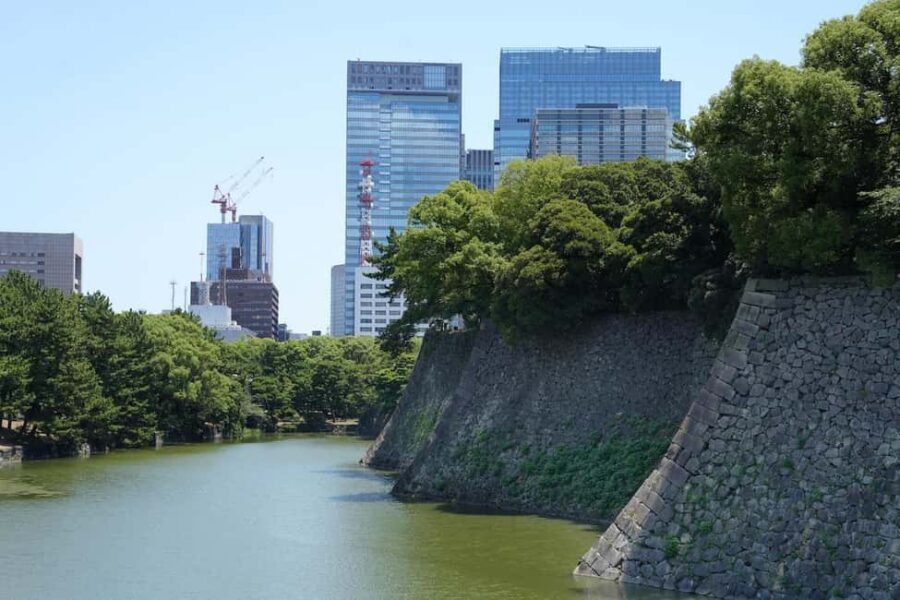
A central promise of the tour is time spent exploring the stone walls and moats with the guide. This is where you get the best sense of scale and engineering.
One reason this part lands is that Edo Castle defenses weren’t one-size-fits-all. In the experience of prior guests, the guide explains how the stonework reflects different styles associated with the daimyo, and how the construction technique includes both cutting into the structure and driving in stone. Even without getting technical, you can feel the emphasis on durability and control.
This section also gives you context for why Edo felt stable for so long. A government that lasts is supported by systems that keep working. Stone walls and moats are the physical side of that stability.
And there’s a story layer too. The guide’s explanations connect the defenses to major historical turning points—especially the shift after the Meiji Restoration. If you’ve ever wondered why the built environment changed so dramatically, this is where the timeline becomes real in your feet.
You can also read our reviews of more guided tours in Tokyo



Honmaru main hall site: the center of Tokugawa power
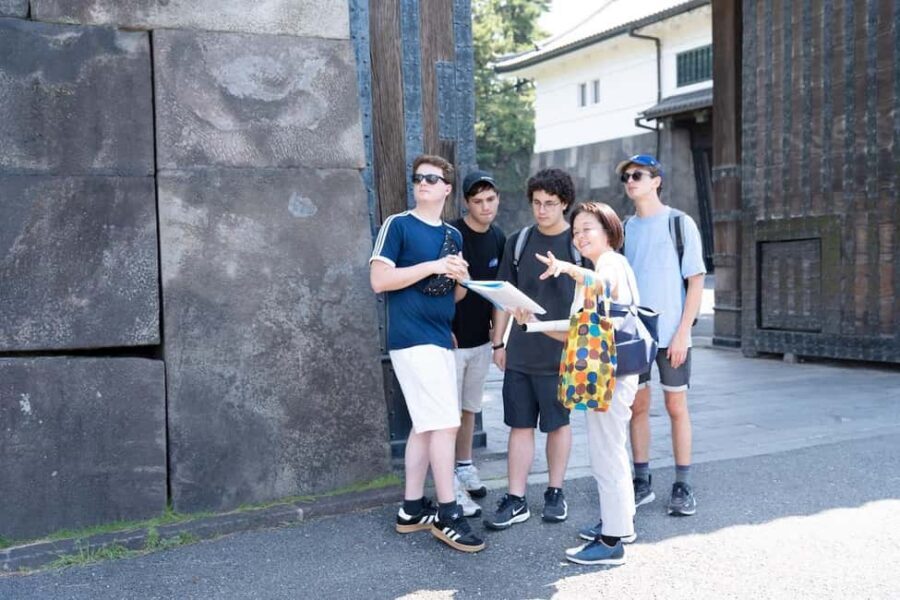
The biggest guided block is at the Site of Edo Castle Honmaru (Main Hall), where you get around 30 minutes with the guide. This longer stop matters. It’s not a quick glance. It’s time to understand the significance of the Honmaru as the center of Japan’s government and the shogun’s residence.
Even if the physical structure you expect isn’t all there today, the guide helps you picture what it represented: administrative power, ceremony, and the command structure that kept Edo running.
There’s also a particularly meaningful story tied to reconstruction and priorities. One guest highlighted a lesson about the aftermath of the Great Fire of Meireki, including how decisions favored rebuilding the city over rebuilding the Tenshu (the main keep). That kind of explanation changes how you look at ruins. They stop being empty spaces and start reading like evidence of choices.
This Honmaru segment is a strong pick if you want more than postcard facts. It’s where you walk away with a clearer “why.”
Ote-San’no Gate Ruins, Hyakunin Bansho, and the politics of daily control
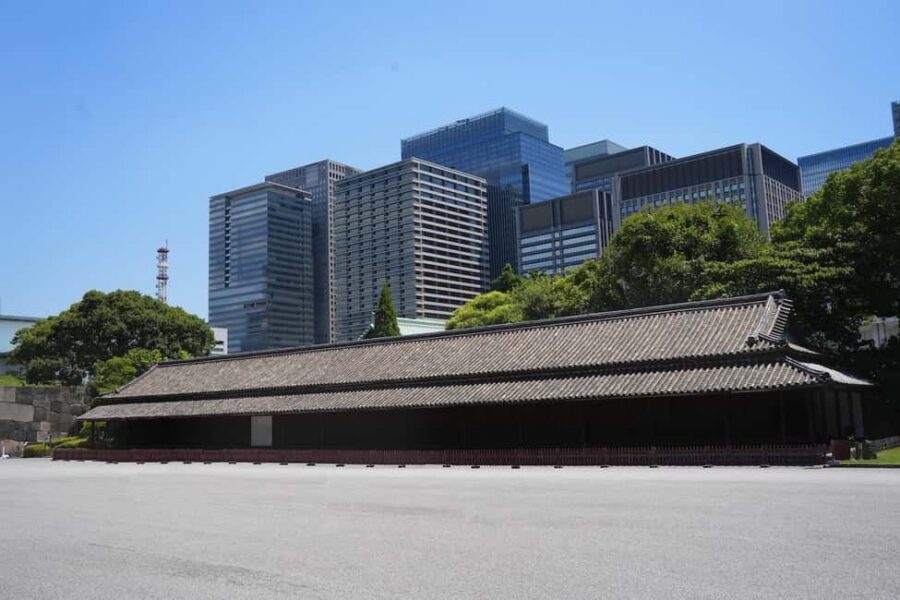
After Honmaru, the tour continues through more named points, including Ote-San’no Gate Ruins and Hyakunin Bansho Guardhouse.
Ruins can be frustrating on their own. You see stones and wonder what they looked like in full. What makes this stop work is that the guide connects these structures to how control operated day to day. A guardhouse isn’t just a building. It’s a social function: monitoring, enforcing, and maintaining order in a space where access mattered.
This is also where the tour leans into human stories around power. Based on guest feedback, the guide’s discussion includes the Ōoku (Great Inner Quarters) and how it had a political side, not only a domestic one. You may not expect palace women’s quarters to be framed as governance, but it’s a useful reminder that power isn’t only on battlefields. It also runs through rooms.
And then there’s the kind of detail that makes the castle feel lived-in: the tour includes the 不浄門 (Fujōmon) and 帯廓 (Tai-kaku). Those names alone make you curious. With the guide’s explanations, they turn into a window on how rules and boundaries were designed into the environment.
Kita-Hanebashi, 竹橋, and Hirakawa Bridge: finishing with perspective
The final stretch is a sequence of gates and bridges that keeps the walking rhythm moving while your understanding deepens. You pass Kita-Hanebashi Gate, then 竹橋 (Takebashi), then Hirakawa Bridge, and finish at 平川門 (Hirakawa-mon).
Bridges and crossings are a sneaky good way to learn a site. They force you to think about edges: where movement funnels, where you’d slow down, and how defense can be built into the easiest pathways people would use. By the time you reach the last gate, you’re not just tired. You’re oriented.
Also, finishing near the Hirakawa area helps you mentally connect this day’s walk to the larger palace grounds you might want to explore later on your own.
Price and value: why this $3.22 tour can still be worth it
The listed price is $3.22 per person, which is strikingly low for a guided, small-group walking experience. I can’t help but think the value is in the structure: a 150-minute English tour, capped at 8 participants, focused on a concentrated set of major places rather than a scattershot route.
What you get included is straightforward: an English-speaking guide and a small gift. Meals and drinks are not included, so you’ll want to plan around that if you’re hungry before or after.
The practical value is that you’re buying interpretation. Edo Castle can be confusing if you show up and start sightseeing at random. Here, you get a guided storyline that explains what you’re seeing—shogun government, defensive design, gate function, and the change to the Imperial Palace after the Meiji Restoration.
So even if the price looks almost too good, the core reason it feels like good value is that the tour doesn’t rely on you already knowing the place.
Who should book this walk, and who might hesitate
This tour is a strong fit if you:
- want an English explanation of Edo Castle and the Imperial Palace area
- like learning by walking through gates, walls, and named sites
- enjoy a small group where questions don’t get steamrolled
- are curious about the less obvious layers of power, including Ōoku politics and the roles of specific gates and boundary spaces
You might hesitate if you:
- prefer museum-style pacing with lots of indoor time
- want a tour that sticks to one core structure without frequent gate-to-gate movement
- dislike walking-intensive sightseeing
If you fall into the first group, you’re likely to feel satisfied because the tour gives you both the physical layout and the meaning behind it.
Should you book the Tokyo Edo Castle and Imperial Palace guided walk?
Yes, if you want a guide to turn Edo Castle from a list of ruins into a coherent story. The best reason to book is the combination of stone walls and moats plus the interpretive timeline from Tokugawa to Meiji, all delivered by an English-speaking guide in a small group.
Skip it only if you know you hate walking between multiple gates and bridges. This is not a sit-and-stare tour. It’s a “learn by moving” tour, and the payoff comes from how the stops build on each other.
If you’re planning a first visit to this area, it’s also a smart starter. You’ll leave with better wayfinding, so future palace sights are easier to place.
FAQ
How long is the Tokyo Edo Castle and Imperial Palace guided walking tour?
It runs for about 150 minutes.
Where is the meeting point?
You meet at the Marunouchi South Exit of Tokyo Station, on the ground floor.
What landmark helps me recognize the meeting spot?
It’s near a Western-style historic yellow dome.
Is the tour guided in English?
Yes. The tour includes an English-speaking guide.
How big is the group?
The tour is limited to a small group of up to 8 participants.
Is the tour wheelchair accessible?
Yes, it is listed as wheelchair accessible.
Do I need to bring anything special?
You should wear comfortable shoes for the walking.
What’s included in the price?
An English speaking guide is included, along with a small gift.
Are meals or drinks included?
No. Meals and drinks are not included.
Is free cancellation available?
Yes. You can cancel up to 24 hours in advance for a full refund.
Does the tour offer a reserve-now, pay-later option?
Yes. You can reserve now and pay later.