REVIEW · OSAKA
Osaka Dotonbori Daytime Food Tour
Book on Viator →Operated by Arigato Japan KK · Bookable on Viator
Dotonbori can feel like a food maze. What I like most is how this tour turns the neon chaos into a clean route: 4 local food stops with a street-food photo walk through Dotonbori and Namba. You also get practical guidance that helps you steer around overly touristy places and long lines.
The main downside to consider is that this is still a 3-hour walk day, mostly on your feet and through busy streets and alleyways. If you’re not up for moderate walking, you’ll feel it by the end.
In This Review
- Key things I’d watch for
- Why Dotonbori needs a plan (and how this one works)
- Price and what you’re really paying for
- Meeting point at Starbucks Tsutaya Ebisubashi: start smart at 11:00
- Stop 1: Dotombori’s Glico Sign and the story behind the neon
- Stop 2: Dotonbori street walk—see the lights, then choose the right doors
- Stop 3: Minami (Namba) and the street-food mindset
- Hozenji Yokocho: the alley stop that feels like Osaka on pause
- Sennichimae Doguyasuji Shotengai: browsing energy before the market hits
- Kuromon Market: where snacks make sense and the choices multiply
- Misono Building: a recognizable marker in the middle of all that food
- What you’ll eat and drink (and how to think about it)
- Photo time and local stories: what the guide is doing for you
- Who this Osaka Dotonbori day tour is best for
- Practical tips so your 3 hours feel easy
- Should you book the Osaka Dotonbori Daytime Food Tour?
- FAQ
- Where is the meeting point and what time does the tour start?
- How long is the Osaka Dotonbori Daytime Food Tour?
- How many people are in the group?
- What’s included in the price?
- What food can you accommodate for dietary restrictions?
- Is it family-friendly and are there age rules for drinking?
- What if the weather is bad or I need to cancel?
Key things I’d watch for
- 4 food stops + 1 drink + traditional Japanese dessert keeps you from guessing what to order
- Small group (max 10) means more time to ask questions
- Dotonbori and Namba photo stops help you time your walking with the best street views
- Street-level guidance to skip long lines (you’re not just following crowds)
- Menu flexibility: food can change by season and availability
- Diet-friendly options including vegetarian, vegan, and pork-meat free friendly
Why Dotonbori needs a plan (and how this one works)
Osaka earns its nickname Japan’s Kitchen for a reason. The problem is that the city feeds you nonstop, and Dotonbori can be especially overwhelming. Bright signs, strong smells, and menus in Japanese can make even simple decisions feel harder than they should.
This tour helps you lock in a smart, daytime route through the parts that matter: Dotonbori, Minami (Namba), and the market-and-alley zone that locals use for snacks and meals. You also move with a local English-speaking guide, which is a big deal here. Not because you need someone to translate everything, but because you want someone to steer you toward places where ordering isn’t a battle and you’re not waiting forever for a seat.
And you’re not stuck in one kind of food. The structure is built around several tastings across different styles of Osaka eating, plus a drink and a traditional dessert to finish.
You can also read our reviews of more food & drink experiences in Osaka

Price and what you’re really paying for
At $209 per person for about 3 hours, this isn’t a budget snack crawl. But it can be good value if you want convenience plus real local direction, not just random bites.
Here’s what you’re paying for, based on what’s included:
- 4 food stops (so you’re not trying to hunt down “the one thing” you heard about)
- 1 drink and traditional Japanese dessert
- Local English-speaking guide
- A route designed to help you avoid tourist trap restaurants and long lines
If you’ve ever tried to build this kind of plan on your own, you know the hidden costs: time, wrong turns, and paying too much for the wrong spot. This tour compresses that decision-making into a guided, pre-set run—plus you get city recommendations at the end.
One practical note: food changes with season and availability. That’s not a flaw; it’s normal in markets. It does mean you should think of the tastings as “Osaka classics and local favorites” rather than a guaranteed exact menu.
Meeting point at Starbucks Tsutaya Ebisubashi: start smart at 11:00
You’ll meet at Starbucks Coffee – Tsutaya Ebisubashi in Dotonbori (1-chōme-8-19 Dōtonbori, Chuo Ward). The start time is 11:00 am, and the tour ends in the Sennichimae area.
Why the meeting choice matters: Dotonbori is easy to spot but not always easy to navigate. Starting near a major landmark makes the “find the group” part less stressful. Also, midday timing is useful for food and photos: street life is active, shops are open, and it’s usually easier to browse without everything feeling rushed.
You’ll also have a mobile ticket, which saves time once you arrive.
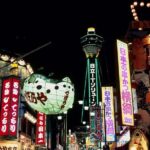
Stop 1: Dotombori’s Glico Sign and the story behind the neon
The tour starts at the Dotombori Glico Sign. You’ll spend about 5 minutes learning about Glico man, tied to a Filipino sprinter named Fortunato Catalon and how the story influenced the country and the company.
This is a short stop, but it’s a good opening. It gives you a cultural anchor before the street visuals take over. Osaka’s signage isn’t just decoration—it’s part of the city’s identity, and that context makes the rest of the walk more meaningful.
Also, the Glico area is a natural “group photo” zone. You’ll get your footing in the busiest intersection first, then the tour moves you into side streets and less chaotic dining lanes.
Stop 2: Dotonbori street walk—see the lights, then choose the right doors
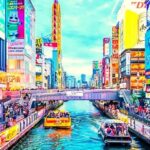
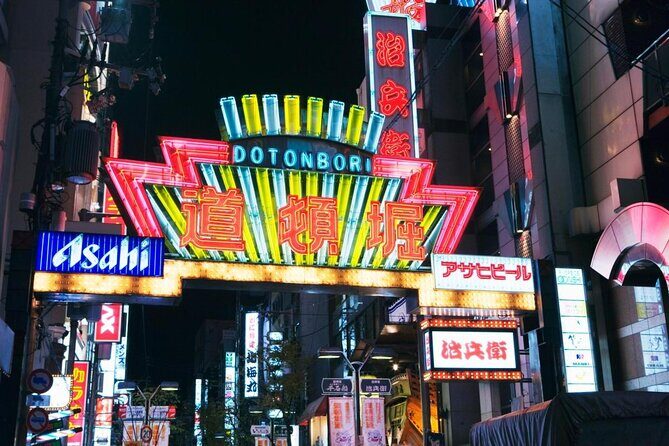
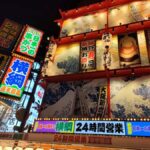
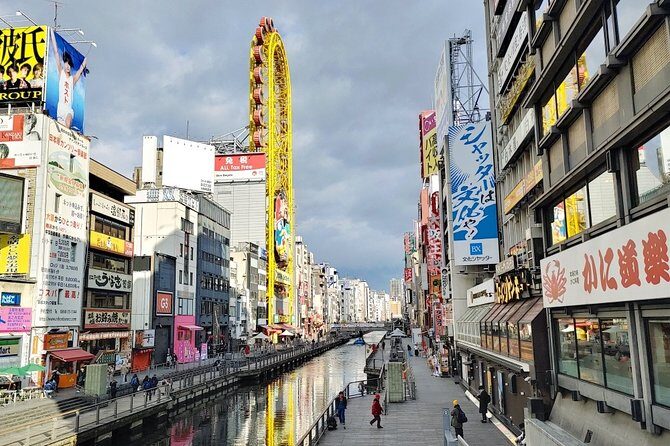
Next up is Dotonbori itself, around 15 minutes. This is where the tour’s promise becomes real: you’ll notice how the lights and sounds can pull you toward overly commercialized restaurants with queues of tourists.
The key here isn’t that you never see crowds. It’s that you don’t get stuck buying dinner where the line is mainly for show. The guide’s job is to steer you to places that feel more local and more efficient for eating.
What to expect in this segment:
- A paced walk so you can read the street without feeling lost
- Photo-friendly moments where Dotonbori’s energy is at its best
- Quick transitions from the main drag into areas that feel more like “people live here”
A practical tip: wear shoes you trust. Dotonbori is compact, and even short segments can involve brisk walking on uneven pavement and crowded sidewalks.
A few more Osaka tours and experiences worth a look

Stop 3: Minami (Namba) and the street-food mindset
You then head into Minami (Namba) for about 15 minutes, with a clear focus on street food culture.
Namba is a smart bridge between the famous neon zones and the eating zones that are less obvious if you’re wandering without a plan. It’s also where you’ll start to see how Osaka eats: quick bites, frequent stops, and lots of ordering by instinct (which is where a guide saves time).
This portion sets you up for the market and alley stops later. By the time you reach the tasting points, you should feel more confident about how to judge what you’re seeing.
Hozenji Yokocho: the alley stop that feels like Osaka on pause
From there, the route includes Hozenji Yokocho, a classic narrow alley area. Even though your exact time at each stop isn’t spelled out, this is one of the most memorable parts for atmosphere.
Here’s what makes it valuable on a food tour:
- The alley format changes the vibe fast—less main-street noise, more “old Osaka” feel
- It’s perfect for learning how local spaces work, not just what to eat
- You’re close enough to keep the pace, but far enough to feel the difference
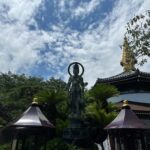
One review-specific detail that fits this spot: people love the narrow passage feel and the presence of a special Buddha statue in the area. If that’s your thing—street history mixed with food—this stop delivers.
Sennichimae Doguyasuji Shotengai: browsing energy before the market hits
Next is Sennichimae Doguyasuji Shotengai, another shopping street stop. This is less about a single dish and more about what Osaka looks like when it’s not trying to sell you a single tourist meal.
On a guided tour, this kind of stop helps for two reasons:
- You learn how the neighborhood is laid out, so your later self-guided wandering is easier
- It sets you up to understand what you’ll see at Kuromon Market, where browsing and eating overlap
Even if you don’t buy anything, the walk-through matters. It’s the kind of orientation that makes your Osaka day feel more connected instead of like you’re hopping between attractions.
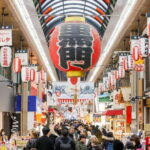
Kuromon Market: where snacks make sense and the choices multiply
Then you reach Kuromon Market. This is the stop most people picture when they think of Osaka food variety—and it’s also where a guide earns their fee.
Without guidance, markets can push you into:
- Buying something you don’t really understand
- Ordering the most obvious option instead of the best option for what you want
- Losing time to indecision
With a guide, you can focus on tasting, not troubleshooting. You also get help aligning the tastings with what the tour is designed to include across its 4 food stops.
Expect a lively environment and lots to look at. The value is that you’re not stuck turning over too many options alone.
Misono Building: a recognizable marker in the middle of all that food
The route also includes Misono Building. Like many landmark stops, this works as a navigation point and a visual reset in the middle of market-and-alley energy.
I treat stops like this as useful wayfinding. You get a mental map of where you are, and it helps you remember where to return later if something caught your eye.
What you’ll eat and drink (and how to think about it)
You’re guaranteed:
- 4 food stops
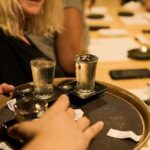
- 1 drink
- Traditional Japanese dessert
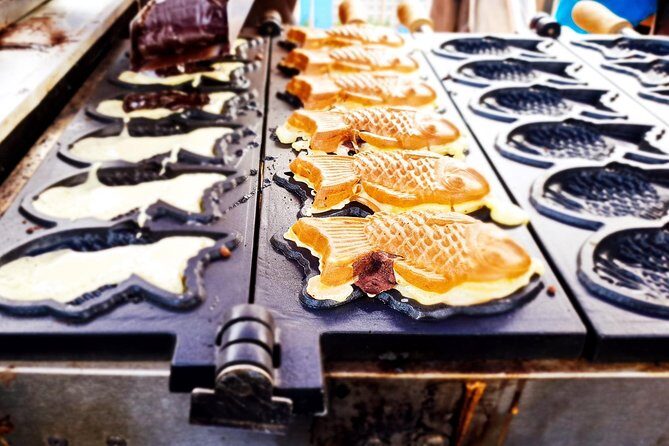
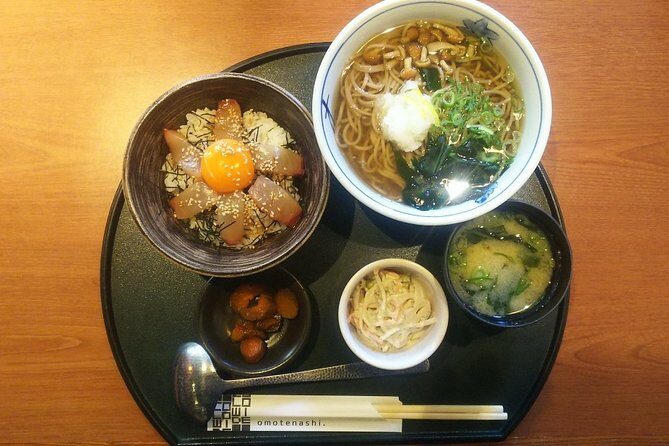
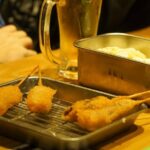
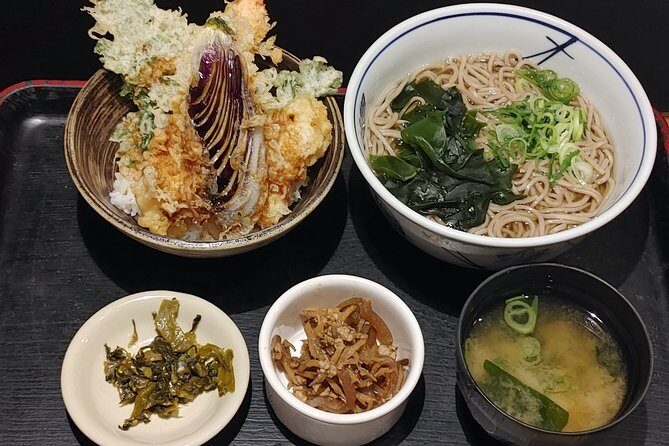
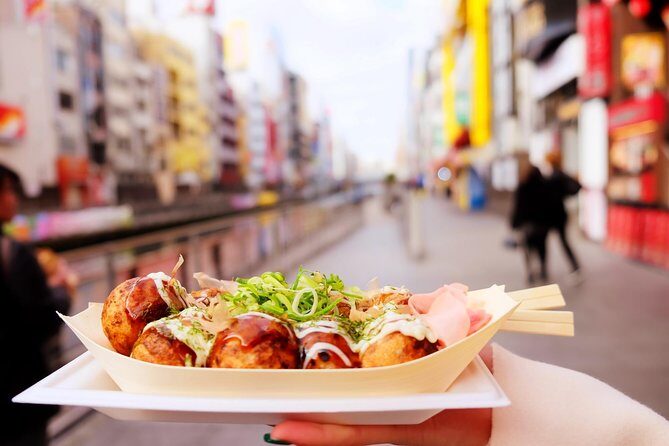
Specific menu items can change due to season and availability, but Osaka tours in this style often highlight classic street-food hits. One dish that shows up in guide experiences on this route is takoyaki. You should also expect a sweet finish—Japanese cake-style desserts have been mentioned as part of what people love about the end of the tour.
Here’s how I suggest you approach the eating:
- Don’t treat it like a buffet where you need to sample everything. Treat it like a curated set of Osaka flavors.
- Eat slowly enough to enjoy each stop, but don’t linger too long. The route is paced so you don’t run out of time for later tastings.
Dietary needs are supported within reason. The tour is vegetarian, vegan, pescetarian, shellfish free, and pork-meat free friendly. If you have a serious allergy, you should confirm details when you book, because the tour notes food can change.
Also, there’s an important rule for drinks: minimum drinking age is 21 years.
Photo time and local stories: what the guide is doing for you
A big selling point is that your guide helps you explore and take photos of Dotonbori and Namba. That’s not fluff. It helps because this area has so many visual distractions that people often point their cameras at the loudest thing, not the best thing.
You’ll also get story-driven context that makes the street food feel less random. Some guides on this route are praised for adding side stories and culture history while you eat. Names that show up in guide experiences include Ron, Russ, Natsumi, Chiyoe, Mickey, and Kevin.
You may hear offbeat anecdotes tied to Osaka fandom and local history—exact details vary by guide, but the style is consistent: eat, walk, then understand what you’re seeing.
Who this Osaka Dotonbori day tour is best for
This works especially well if:
- You want a first or last-day activity in Osaka so you can either get oriented fast or send your trip off with a strong food win
- You like street food but don’t want to guess your way into overpriced lines
- You enjoy learning through walking—food plus neighborhood context
It’s also a good pick for a small group day. With max 10 travelers, the tour feels more personal than the giant group chaos that can happen in major tourist areas.
Kids are welcome as long as they’re with an adult. One additional detail to plan for: for kids 10 and above, a copy of passport information is required.
Practical tips so your 3 hours feel easy
- Wear comfortable walking shoes. The route includes markets and narrow lanes, and you’ll be moving a lot.
- Bring your phone camera. You’ll want it for Dotonbori and Namba photo moments.
- Come hungry, but not so hungry that you rush. The goal is tasting order, not stuffing.
- If you drink, remember the tour follows the 21+ minimum rule.
- If you’re vegan or have restrictions, expect accommodations but also keep flexibility because seasonal swaps happen.
Should you book the Osaka Dotonbori Daytime Food Tour?
I’d book this tour if you want a guided way to eat around Osaka’s most famous street-food zones without wasting your day in the wrong lines. The combination of 4 tastings, dessert and drink, a local English-speaking guide, and a route focused on avoiding tourist traps is what makes the $209 price feel reasonable.
Skip it only if you’re the type who already knows exactly what you want to eat and you hate group pacing. Also, if walking for about 3 hours sounds tough, consider a lighter plan.
If you want an Osaka day that feels like you’re getting the local rhythm fast—this is one of the smarter ways to do it.
FAQ
Where is the meeting point and what time does the tour start?
You meet at Starbucks Coffee – Tsutaya Ebisubashi, located at 1-chōme-8-19 Dōtonbori, Chuo Ward, Osaka. The start time is 11:00 am.
How long is the Osaka Dotonbori Daytime Food Tour?
The tour lasts about 3 hours.
How many people are in the group?
The tour has a maximum of 10 travelers.
What’s included in the price?
The price includes try local dishes at 4 food stops, 1 drink, traditional Japanese dessert, and a local English-speaking guide.
What food can you accommodate for dietary restrictions?
The tour is listed as vegetarian, vegan, pescetarian, shellfish free, and pork-meat free friendly. Food can also change based on season and availability.
Is it family-friendly and are there age rules for drinking?
The tour is family-friendly. The minimum drinking age is 21 years.
What if the weather is bad or I need to cancel?
The experience requires good weather. If it’s canceled due to poor weather, you’ll be offered a different date or a full refund. You can cancel for a full refund up to 24 hours in advance of the experience start time.