REVIEW · OSAKA
Mount Koya from Osaka: Cultural Small Group Day Tour
Book on GetYourGuide →Operated by 万達旅運株式会社 · Bookable on GetYourGuide
Mount Koya feels like stepping into silence. This small-group day trip from Osaka turns a long commute into a focused, meaningful loop through the sites that anchor Shingon Buddhism. You’ll start with a quiet, cedar-lined walk in Okunoin Cemetery, then move on to temple art, a stone garden, and a hands-on Buddhist practice.
Two things I really like: the way the day is built around moments of stillness (not just sightseeing), and the shojin ryori lunch, which is meatless and simple in a way that feels purposeful, not like a tourist meal. The main catch is pacing: there’s a fair amount of walking on mountain paths, so plan for comfortable shoes and cooler temperatures.
In This Review
- Key things you’ll remember from Mount Koya
- From central Osaka to Mount Koya in one smooth 12-hour loop
- Okunoin Cemetery: cedar shadows and the walk to Kobo Daishi
- Shojin ryori lunch: a meatless meal that’s about restraint
- Kongobuji Temple: sliding-door art, Japan’s largest rock garden, and class time
- Shakyo sutra copying or the Goma fire ritual: practice you can watch and feel
- Danjo Garan and Reihokan Museum: the symbolic map and the context
- Walking, weather, and what to bring up the mountain
- Price and value: what your $251 actually buys
- Who this Mount Koya day trip suits best
- Should you book this Mount Koya from Osaka tour?
- FAQ
- Where does the tour start?
- How long is the Mount Koya day tour from Osaka?
- Is the guide available in English?
- What are the main stops during the day?
- Does the tour always include sutra copying?
- What is included in the price?
- What should I bring?
- Is there much walking?
- What items are not allowed during the tour?
- Who is this tour not suitable for?
Key things you’ll remember from Mount Koya
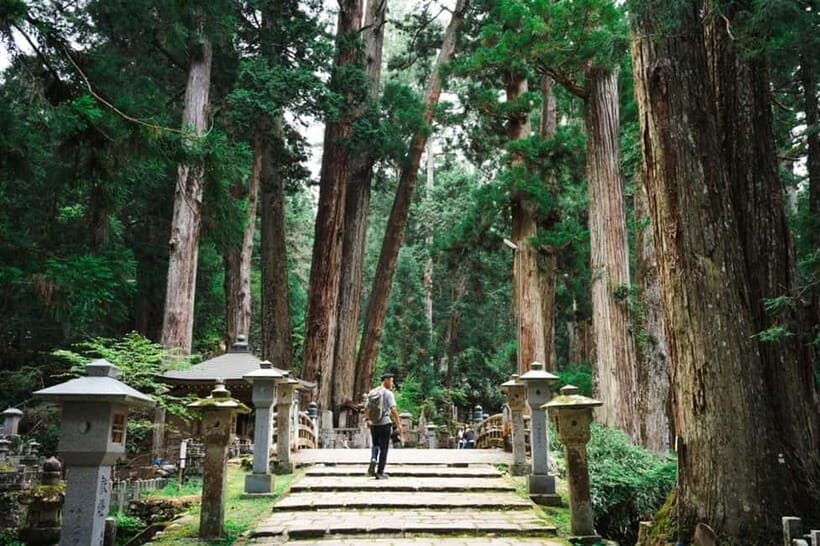
- Okunoin Cemetery’s cedar trail with moss-covered tombstones and the feeling of silent scale
- Shojin ryori lunch made without meat, fish, or strong seasonings
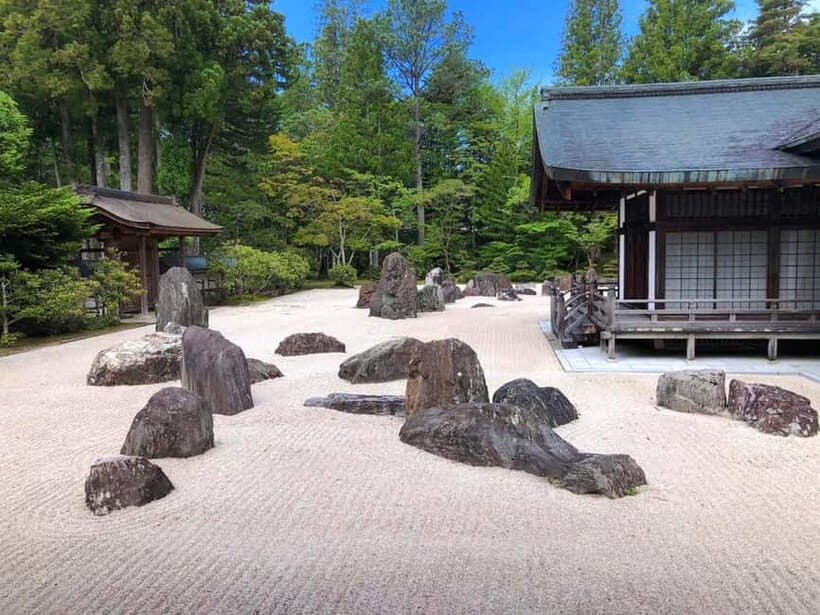
- Kongobuji Temple’s fusuma (sliding doors) with ink paintings, plus the Banryutei rock garden
- A Shakyo (sutra copying) session or a Goma fire ritual, depending on temple scheduling
- Danjo Garan and the Reihokan Museum to connect symbols, buildings, and meaning
From central Osaka to Mount Koya in one smooth 12-hour loop
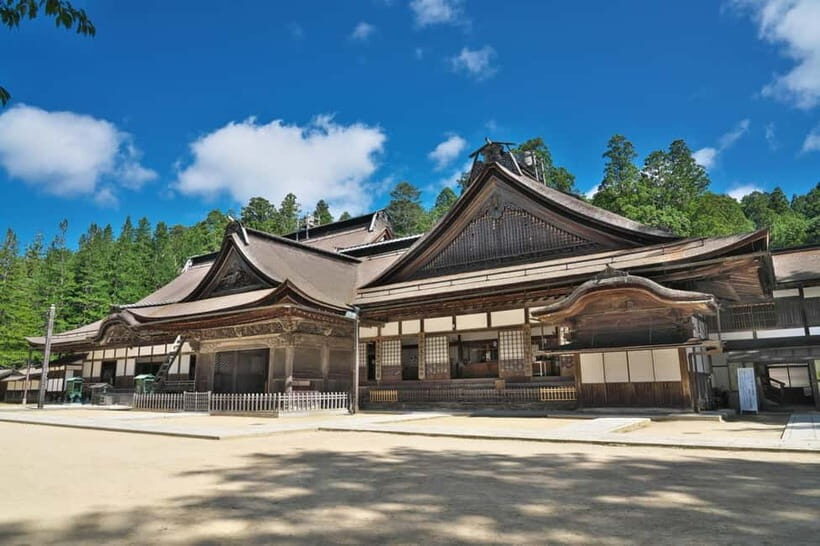
The day starts with hotel pickup in central Osaka, then you ride to Mount Koya in a private, comfortable vehicle. That part matters more than it sounds. Mount Koya is high and spread out, so having transport handled means you can spend your energy on the temples, not on transit stress.
You’re also traveling with a professional English-speaking guide (they can also support Japanese). This is the kind of day where a good guide makes the difference between seeing sacred places as photos and understanding why they matter. Expect a real intro to the mountain’s history and significance early on, before you hit the deeper stops.
The total duration is 12 hours, so treat this as a full-day commitment. You’ll see multiple major sites, and the schedule includes walking time (especially at Okunoin). If you’re the type who likes to pace yourself with breaks, you’ll want to come ready to slow down, not to rush.
One more practical note: the tour requires a minimum of 4 participants. If fewer join, the tour can be cancelled, so don’t book it as your only plan on a tight schedule.
You can also read our reviews of more tours and experiences in Osaka.
Okunoin Cemetery: cedar shadows and the walk to Kobo Daishi
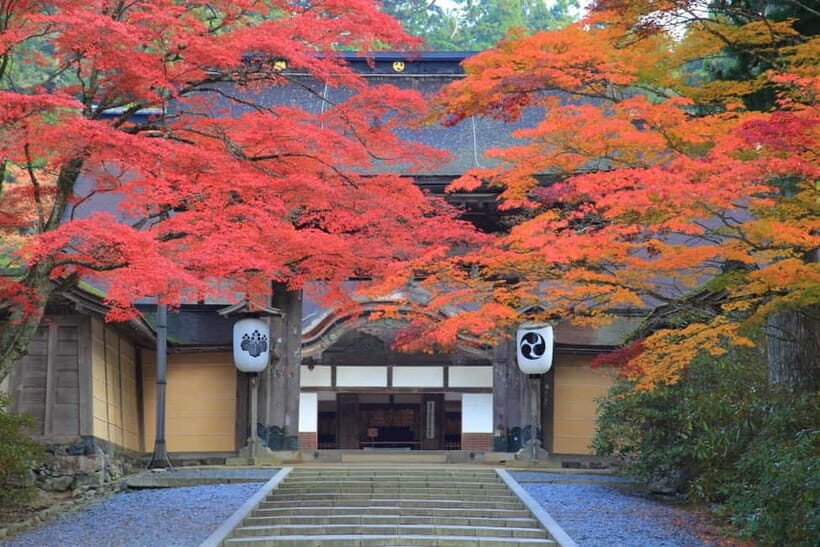
Okunoin Cemetery is the headline stop for a reason. It’s described as Japan’s largest and most revered cemetery, and the experience starts the moment you walk in.
You’ll take a stone-paved path lined with ancient cedars and thousands of moss-covered tombstones. It’s not a quick stroll. You’re there to walk through the cemetery’s sacred atmosphere, which means the guide’s context plus the physical path work together. The day is set up so this segment is silent and reflective, which is rare for a normal group tour.
About halfway through the walk, the scene tightens around meaning: you reach the mausoleum area connected with Kobo Daishi, who is believed to be in eternal rest. Even if you don’t know the details going in, the emotional tone is clear. This is where Mount Koya stops being a place and starts feeling like a practice.
Practical considerations:
- You’ll be moving for about 1.5 hours here. Wear shoes you can stand and walk in for that long.
- This is a cemetery. Keep your phone use respectful and follow your guide’s pace and rules.
- The cedar canopy and mountain air can feel cooler and calmer than Osaka, so dress in layers.
Shojin ryori lunch: a meatless meal that’s about restraint
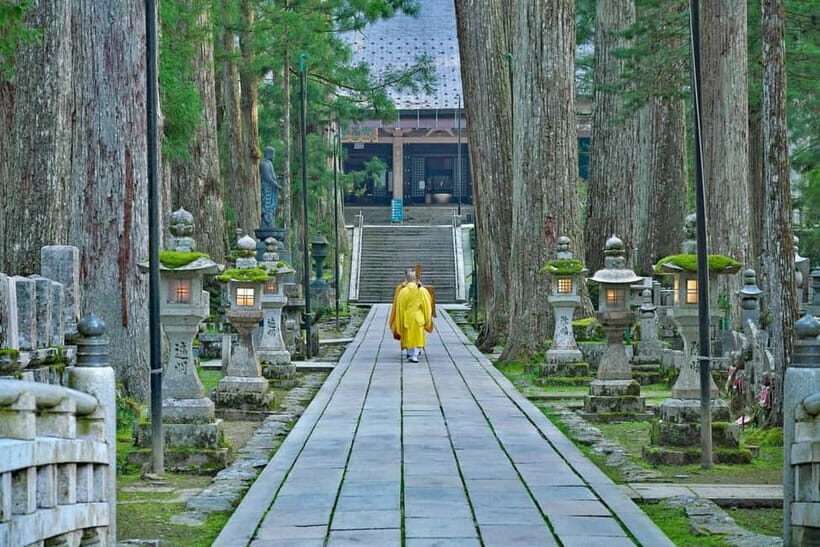
After the cemetery walk, the tour shifts gears to a traditional Shojin Ryori lunch. The food is made without meat, fish, or strong seasonings, focusing instead on seasonal vegetables and simple preparation.
This matters because shojin ryori isn’t just “vegetarian.” It’s a style connected to Buddhist values like harmony, compassion, and gratitude. In a tour day that starts with silence, this meal becomes the next step: mindful, not loud. You’re given 75 minutes, which is enough time to eat without feeling chained to a timetable.
What to expect from the meal experience:
- Flavor is built through seasoning that isn’t heavy, so expect a gentler taste profile than what you’d get from Osaka’s usual stronger sauces.
- It’s seasonal vegetable-driven, so dishes can vary. Think of it as comfort food with purpose, not as a cooking demo.
One drawback to consider: because the lunch is special-menu by design, special dietary substitutions aren’t included. If you have strict allergies or requirements, you’ll want to ask before you go. Otherwise, plan to enjoy the shojin style as intended.
Kongobuji Temple: sliding-door art, Japan’s largest rock garden, and class time
Next comes Kongobuji Temple, the head temple of Shingon Buddhism. This is where you start seeing the “systems” behind Mount Koya. The tour doesn’t just point at buildings; it helps you connect them to practice.
You’ll spend 45 minutes in a guided visit, and you’ll have a chance to admire the fusuma sliding doors decorated with traditional ink paintings. These aren’t casual artworks. They’re part of how the temple space communicates meaning, movement, and seasonal mood.
Then there’s Banryutei, described as Japan’s largest Zen garden, featuring a symbolic design where dragons emerge from clouds. The experience is designed for walking and seeing rather than just looking from one angle. Even if you don’t follow the symbolism at first, the physical layout makes it easier to slow down and notice.
The day also includes a longer 2-hour class at Kongobuji. This is likely the most memorable “active” part for many people because it links the temple setting to a specific Buddhist practice.
Shakyo sutra copying or the Goma fire ritual: practice you can watch and feel
At Kongobuji, you’ll either do Shakyo (sutra copying) or observe a Goma fire ritual, depending on temple availability. That flexibility is important to know because both experiences carry different energy.
Shakyo (sutra copying) tends to feel inward. You copy sacred texts, and the point is repetition with attention. It’s not about producing a perfect calligraphy page. It’s about slowing down, focusing your hands and mind, and treating the process as part of meditation. If you like hands-on experiences, this is usually the part that turns a temple visit into something personal.
Goma fire ritual is the opposite in tone: it’s a dynamic prayer ceremony using fire to cleanse negative energies. Watching it can feel dramatic compared with the quiet walk through Okunoin. If you prefer experiences that feel more communal and expressive, you’ll likely appreciate this.
How to choose what you’ll enjoy more:
- If you want calm focus, lean toward Shakyo energy.
- If you like movement, ceremony, and visible transformation, you may enjoy the Goma ritual more.
Either way, your guide’s role matters here. You’re not just observing; you’re learning what the ritual is meant to do and how it fits into the larger spiritual logic of the day.


Danjo Garan and Reihokan Museum: the symbolic map and the context
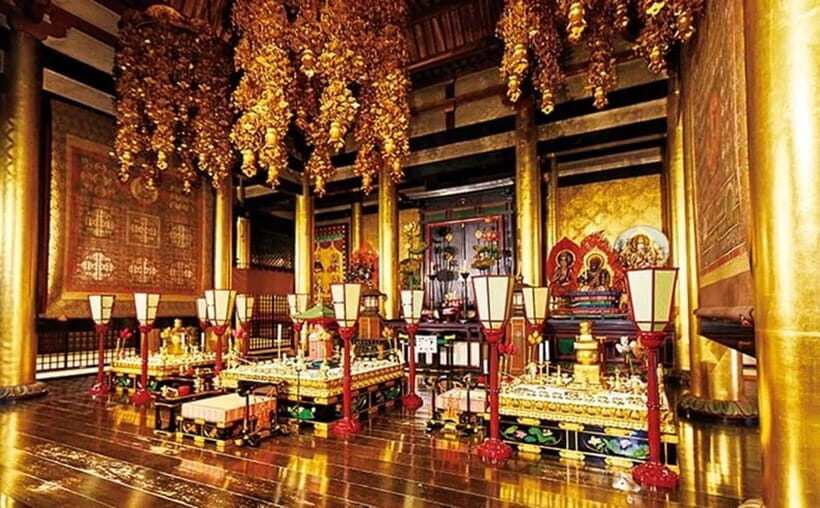
After the practice session, the tour brings you to Danjo Garan, a symbolic temple complex. It’s described as filled with pagodas, statues, and halls arranged in a mandala-like harmony. That description isn’t decoration. It’s a hint that you’re meant to see the layout as a representation of order and meaning, not just architecture.
The complex helps connect dots after you’ve already been through the emotional intensity of Okunoin and the artistic/ritual aspects of Kongobuji. In other words, Danjo Garan gives the day structure. You start understanding how symbols repeat across the mountain.
Then you’ll visit Reihokan Museum with a guided tour for about 1.5 hours. A museum stop can be a “wait, do we have time?” moment on some tours. Here, it works better because it likely supports what you saw already: the temple complex, the beliefs, and the visual culture around Shingon Buddhism. If you like museums but hate filler, this pairing feels designed to make the rest of the day click.
You’ll also have some free time back in the town area later for shopping—especially incense and prayer beads—or for a quieter moment among the town’s serene corners.
Walking, weather, and what to bring up the mountain
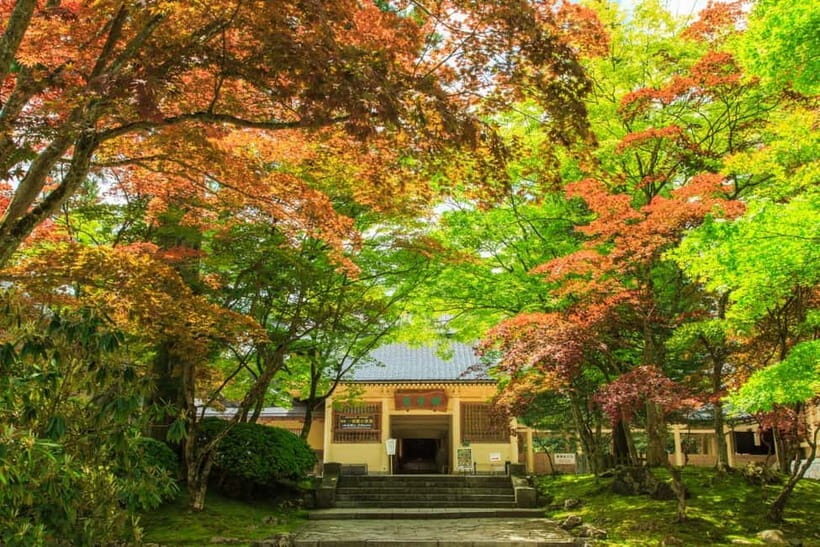
This tour is simple on paper, but the mountain setting makes it physical. The tour notes that there’s a fair amount of walking, and the Okunoin segment alone includes a 1.5-hour walk.
So do yourself a favor:
- Bring comfortable shoes. Not your “nice but not supportive” ones.
- Dress in comfortable clothes and expect the mountain to be cooler than Osaka.
- Bring cash for personal purchases like incense or prayer beads.
- Don’t plan on snacking in transit. Food isn’t allowed in the vehicle, and you’ll be on the schedule for meals.
Also note the rules that keep the day respectful: no smoking, no pets, and no alcohol or drugs (including alcoholic drinks in the vehicle). It’s not just formal wording. These rules help the day stay calm and focused.
Price and value: what your $251 actually buys
At $251 per person, this isn’t a budget impulse buy. But it also isn’t just admission fees and a bus ride.
Here’s what you’re getting for the price:
- Hotel pickup in central Osaka
- Private transport to Mount Koya
- A professional English-speaking guide throughout the key stops
- Guided visits to major sites: Okunoin, Kongobuji, Danjo Garan, and Reihokan Museum
- Shojin ryori lunch
- A hands-on or observation-based practice moment at Kongobuji (Shakyo or Goma)
For many people, the value question comes down to time and attention. With private transport and a guide, you’re not coordinating schedules across multiple locations. You’re also more likely to get meaning, not just movement.
Is it worth it if you’re the type who loves big cities and fast itineraries? Maybe not. But if you want a single-day framework that covers Mount Koya’s emotional center, its art, and its practice, the structure is part of the value.
Who this Mount Koya day trip suits best
This tour is a strong fit if you:
- Enjoy cultural experiences with clear context, not just photo stops
- Like temples, gardens, and the quieter side of travel
- Want a real practice element, either sutra copying or the Goma fire ritual
- Appreciate vegetarian, seasonal meals like shojin ryori
It’s not suitable for people with mobility impairments, babies under 1 year, or people over 95 years. Also expect a schedule that assumes you can walk comfortably for the day.
Should you book this Mount Koya from Osaka tour?
If your goal is to understand Mount Koya in one concentrated day, I think it’s an easy yes to consider. The day balances emotion (Okunoin), art (fusuma and the rock garden), and practice (Shakyo or Goma), and it gives you real time at each stop rather than rushing through everything.
Book it if:
- You want a guided framework for sacred sites
- You like thoughtful pacing and you’re comfortable walking on mountain paths
- You’re excited to try shojin ryori and take part in (or watch) a ritual
Skip it if:
- You need a low-walking itinerary
- You have strict dietary needs that require substitutions not offered in the standard lunch
- You’re booking as a high-stakes plan, since the tour can be cancelled if minimum participant numbers aren’t met
If you’re flexible and you bring good walking shoes, you’ll leave with more than memories. You’ll have a story that makes sense: silence, symbols, and practice all tied into one day.
FAQ
Where does the tour start?
It includes hotel pickup in central Osaka. You should wait at the front entrance of your hotel at the pickup time.
How long is the Mount Koya day tour from Osaka?
The tour runs for 12 hours.
Is the guide available in English?
Yes. The tour includes a live tour guide in English (and Japanese support is also listed).
What are the main stops during the day?
You’ll visit Okunoin Cemetery, Kongobuji Temple, Danjo Garan, and Reihokan Museum, with a shojin ryori lunch in between.
Does the tour always include sutra copying?
You’ll either participate in a Shakyo (sutra copying) experience or observe a Goma fire ritual, depending on temple availability.
What is included in the price?
Included: hotel pickup in central Osaka, private transport to Mount Koya, professional English-speaking guide, Okunoin Cemetery visit, shojin ryori lunch, Kongobuji Temple visit, Danjo Garan, and the sutra copying experience (or the practice alternative noted above).
What should I bring?
Bring comfortable shoes, comfortable clothes, and cash.
Is there much walking?
Yes. The tour involves a fair amount of walking, including a walk through Okunoin and time spent at temple sites.
What items are not allowed during the tour?
Pets and smoking are not allowed. Also, food is not allowed in the vehicle, and alcohol and drugs (including alcoholic drinks in the vehicle) are not allowed.
Who is this tour not suitable for?
It’s not suitable for people with mobility impairments, babies under 1 year, or people over 95 years.