REVIEW · KANAZAWA
Taste of Kanazawa (Food tasting in Omicho Market & Higashi Chaya)
Book on Viator →Operated by Kanazawa Tours · Bookable on Viator
Kanazawa tastes better with a guide. This 2-hour food walk links Omicho Market snacks with historic chaya districts, so you get flavor plus context. You’ll finish near the Higashi Chaya area, with time for your next stop on your own.
What I like most is the balance: at least three tastings (including seafood) plus a cultural stroll through teahouse streets. I also like the group size stays small, with a maximum of 12, so it feels personal instead of rushed.
One possible drawback: drinks aren’t included, so if you like to sip with your food, plan on paying extra.
In This Review
- Key Points You’ll Care About
- Taste of Kanazawa in Plain English
- Meeting Point and How the Route Works
- Omicho Market: Seafood-Forward Tastings With Local Context
- Kazuemachi Chayagai: A Quick Geisha-District Stroll
- Higashi Chaya District: Teahouses, Geisha Culture, and Japanese Sweets
- Why the Guides Matter (Saya, Ian, Karolina, Catrina)
- What You Should Expect to Eat (And How Much)
- Pace, Walking, and Group Size: The “Right Amount of Time” Effect
- Value for $44.25: What You’re Paying For
- Who This Tour Fits Best (And Who Might Want Something Else)
- Quick Practical Tips Before You Go
- Should You Book Taste of Kanazawa?
- FAQ
- FAQ
- How long is the Taste of Kanazawa tour?
- How much does the tour cost?
- What do I get to eat and taste on this tour?
- Are drinks included in the price?
- Where does the tour start?
- Where does the tour end?
- How many people are in the group?
- Is admission included for the stops?
- Is there a mobile ticket?
- What is the cancellation policy?
Key Points You’ll Care About
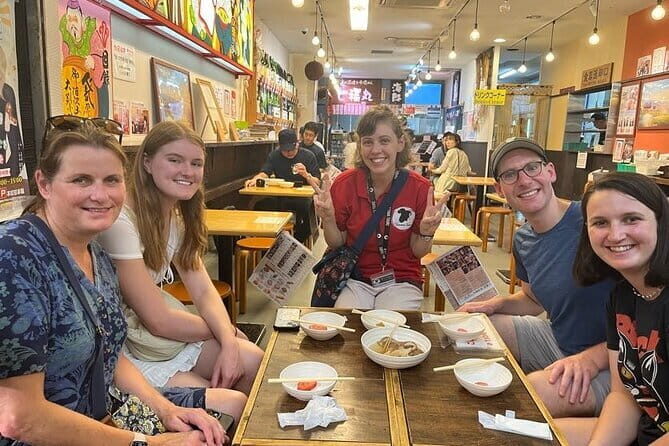
Omicho Market tastings first with seafood and local specialties in about an hour
Two historic teahouse districts: a short stop at Kazuemachi Chayagai and longer time in Higashi Chaya
Japanese sweet tasting as part of the Higashi Chaya segment
Small groups (max 12) and a professional guide who can answer questions
Often ends with a gold leaf moment, based on guide finish notes from past groups
Taste of Kanazawa in Plain English
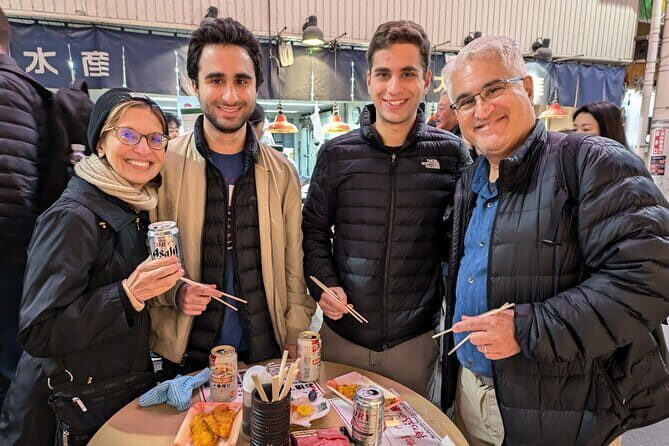
This tour is built for people who want a fast, accurate feel for Kanazawa without having to plan every bite. You start in the Omicho Market area, then you walk into the teahouse districts—Kazuemachi Chayagai and Higashi Chaya—where the food story keeps running.
The timing is tight but not frantic. You get about 2 hours total, with enough structure to try things you might skip on your own. And because the tour includes all fees and taxes plus the tastings, you’re not doing math mid-hunt for what’s included.
You can also read our reviews of more food & drink experiences in Kanazawa

Meeting Point and How the Route Works
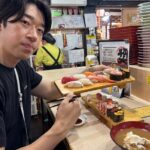
You’ll meet at Mister Donut Kanazawa Musashi Shop (1F), Aokusamachi 88番地1, Kanazawa. The tour ends at a loop bus stop in Higashi Chaya, Geisha District area, so you can continue exploring right after.
The tour uses a mobile ticket, which is handy once you’re on the move. And since it’s near public transportation, you can fit it into most day plans without turning your schedule into a puzzle.
Omicho Market: Seafood-Forward Tastings With Local Context
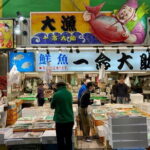
Your first stop is Omicho Market, the go-to place for fresh seafood and local produce. You’ll get an introduction to the market with a short history and why it matters in Kanazawa, which helps your tastings make more sense than just tasting for tasting’s sake.
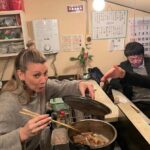
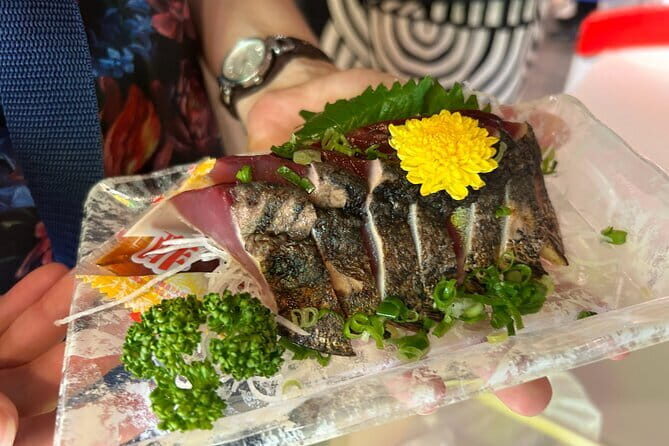
This is also where the tour leans hardest into food. You’ll sample multiple items—and based on past experience notes, that can include things like sashimi and oden alongside other market snacks. The guide helps you understand what you’re eating, so you can tell the difference between a safe starter bite and a more adventurous choice.
What I especially like about starting here is momentum. After you’ve been shown what to look for, you’ll have an easier time reading the market atmosphere later if you return on your own. And after one hour, you’re not stuck in the market when your feet start to complain.
Kazuemachi Chayagai: A Quick Geisha-District Stroll
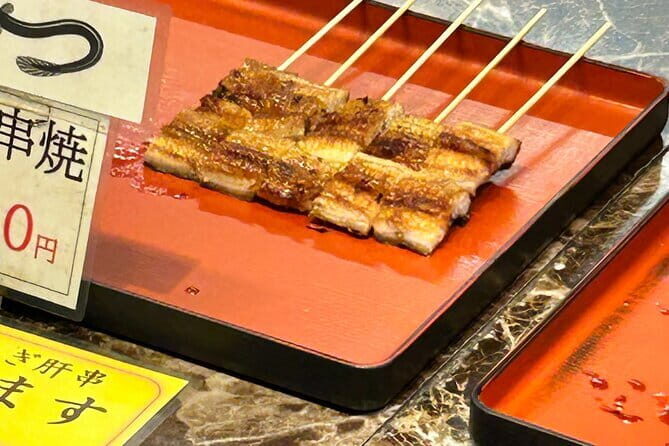
Next comes Kazuemachi Chayagai, a traditional teahouse district known for charming streets. This stop is short—about 15 minutes—so think of it as a cultural waypoint, not a long sightseeing block.
You’ll also get a quick snack during this segment. That matters because it keeps the tour from turning into one long market tasting followed by nothing but walking. Instead, the food rhythm continues as you transition from the market setting into the quiet, historic teahouse lanes.
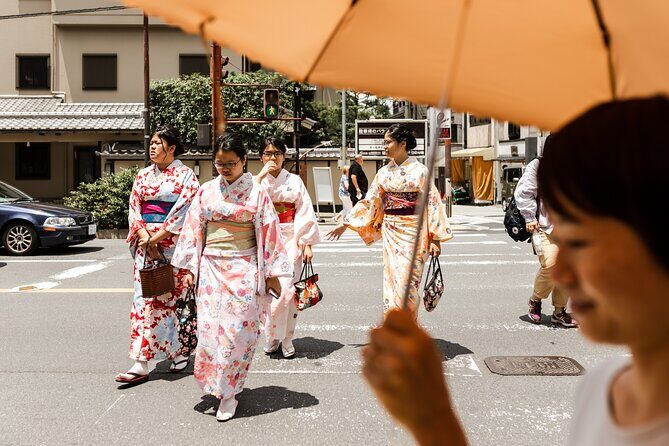
Even in a brief window, the value is learning how the teahouse districts fit into the broader cultural picture. One theme that comes up with guides here is the meaning behind geisha culture, and sometimes how it connects with other Japanese traditions like Shinto elements.
Higashi Chaya District: Teahouses, Geisha Culture, and Japanese Sweets
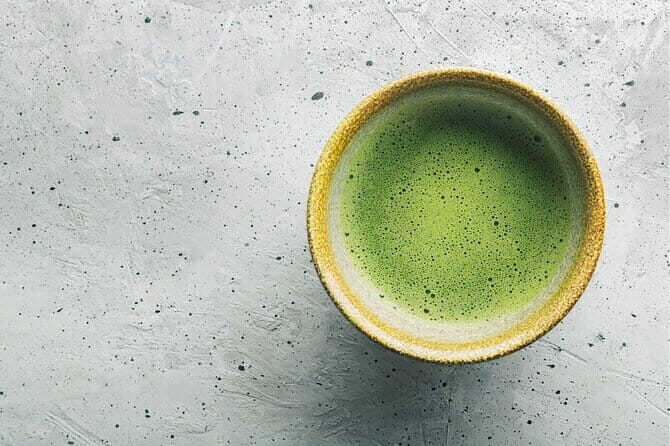
Higashi Chaya is the longer finale block at about 45 minutes. This is where the preserved teahouses and classic district atmosphere take center stage, and where the guide’s cultural explanations really help you slow down.
This stop includes Japanese sweet tasting, which is a smart move. It rounds out the tour so you’re not only thinking about seafood flavors. Instead, you get a final taste that feels like a shift in mood: from savory street-and-market energy to calmer, old-Kanazawa vibes.
A fun bonus: some groups note a gold leaf experience at the end. Gold leaf shows up in finishing moments more than once in the feedback, so if you’ve got a soft spot for Kanazawa’s signature crafts, keep your eyes open during the final stretch.
If you love photo stops, this is also the moment to pause. The district streets and teahouses are the kind of place where you’ll want a few minutes to look and not just walk through.
A few more Kanazawa tours and experiences worth a look
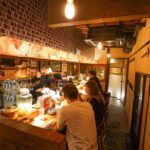

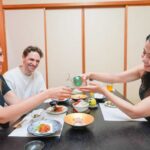
Why the Guides Matter (Saya, Ian, Karolina, Catrina)
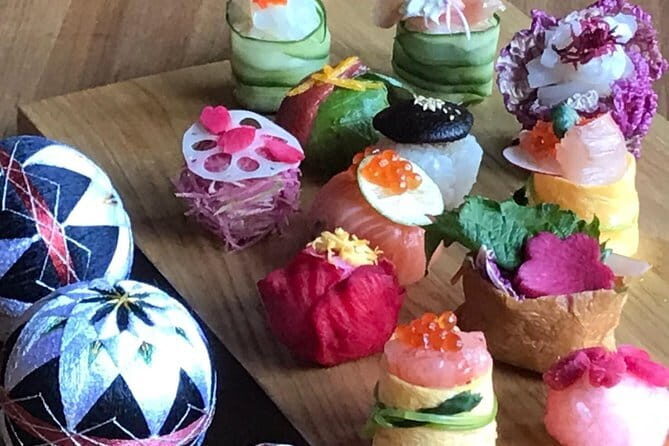
The biggest pattern across strong feedback is that the guide makes the tour feel like more than a checklist. Guides named in past experiences include Saya, Ian, Karolina, and Catrina—and they’re praised for being easy to follow and for answering questions clearly.
In practice, that means you’re more likely to understand what you’re eating and why it belongs here. It also means you can ask for guidance if something looks intimidating at the market. You’re not left saying, Okay, I’ll try that random thing—then hoping for the best.
One other helpful detail: some tours include broader cultural chat, like how Japanese food culture compares with places in Europe. That kind of conversation doesn’t replace the food, but it does make the walk feel more personal.
What You Should Expect to Eat (And How Much)
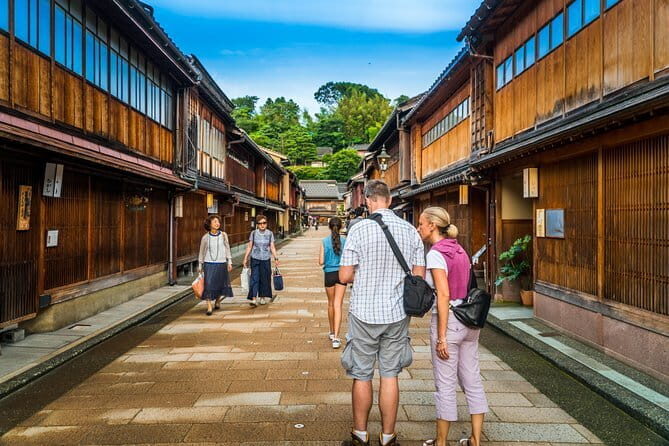
The tour includes snacks, and the plan is for you to try at least three different types of food. The menu range is described as spanning seafood to local specialties, and the ending segment explicitly includes a Japanese sweet tasting.
Based on specific notes from past tastings, you may encounter items like fresh sashimi and oden early on. The exact mix can vary, but the goal stays consistent: you taste a spread that helps you map Kanazawa flavors to specific places.
One practical note: drinks aren’t included. That’s important for budgeting. If you want tea, water, or anything else during the tasting windows, plan for it separately.
And about hunger: this is not a full sit-down meal. It’s a food tour that teaches you how to snack your way through a city. If you arrive properly hungry, you’ll leave satisfied enough to keep moving.
Pace, Walking, and Group Size: The “Right Amount of Time” Effect
The pacing is built around short segments that change scenery often. You’ll spend about an hour at Omicho Market, then only 15 minutes at Kazuemachi Chayagai, and finally about 45 minutes at Higashi Chaya.
That timing works for a few reasons:
- You get enough food sampling time at the market.
- You still get cultural context without turning it into an all-day commitment.
- You end near Higashi Chaya, so you can keep exploring afterward.
Group size matters too. With a maximum of 12 travelers, you tend to get smoother movement between stops. It’s also easier for the guide to spot who’s struggling to read the menu or wants a different flavor direction.
Value for $44.25: What You’re Paying For
At $44.25 per person, this tour prices like a “high usefulness” experience rather than a fancy add-on. You’re paying for a professional guide, local food tasting, and all fees and taxes—not just for the walk.
Here’s why that can be good value for your trip:
- You get multiple tastings rather than one token sample.
- The guide helps you choose and understand what you’re eating.
- You get structured access to two teahouse districts without figuring out which streets matter.
The trade-off is that you’re not getting unlimited food or drinks. You’re also not getting a long, sit-and-stay cultural program. But if your goal is to learn fast, eat well, and then keep exploring on your schedule, this fits.
Who This Tour Fits Best (And Who Might Want Something Else)
This is a great match if you want:
- A solid intro to Kanazawa through food plus context
- A guided path through Omicho Market and Higashi Chaya
- A small-group experience with a guide who can explain what you’re seeing and tasting
It’s less ideal if you want a full meal experience, or if you plan to drink a lot during tastings (since drinks aren’t included). It’s also not designed as an all-day deep archive on geisha life—you get a smart overview in a couple of hours.
One more fit note: the tour is marked as suitable for most travelers, and service animals are allowed, which is helpful if you need that accommodation.
Quick Practical Tips Before You Go
- Bring a mindset of snack-hunting. You’re sampling, not dining.
- Save your appetite for the market first; that’s where the strongest savory variety happens.
- If you care about a particular topic like geisha culture or how traditions connect, ask the guide as you walk—this is the kind of tour where questions get answered.
Should You Book Taste of Kanazawa?
I’d book it if you want an efficient, high-impact introduction to Kanazawa’s food scene and teahouse districts. The mix of Omicho Market tastings plus Kazuemachi Chayagai and Higashi Chaya is exactly the kind of combo that makes it easier to enjoy your next hours in the city.
Skip it if you’re looking for a drink-inclusive food crawl or a long, slow cultural visit. And if you hate group logistics, remember it caps at 12, so it should feel manageable.
If your schedule is flexible, you also have some breathing room for planning. Cancellation is free up to 24 hours before the experience starts, and if the minimum number of travelers isn’t met, you’ll be offered a different date or a full refund.
FAQ
FAQ
How long is the Taste of Kanazawa tour?
It’s listed at about 2 hours.
How much does the tour cost?
The price is $44.25 per person.
What do I get to eat and taste on this tour?
You’ll try snacks and at least three different types of food. The tour notes include seafood and local specialties, and it specifically includes Japanese sweet tasting at the end.
Are drinks included in the price?
No. Drinks are listed as not included.
Where does the tour start?
It starts at Mister Donut Kanazawa Musashi Shop (1F) at Aokusamachi, Kanazawa.
Where does the tour end?
It ends at the loop bus stop in Higashi Chaya, Geisha District.
How many people are in the group?
The tour has a maximum of 12 travelers.
Is admission included for the stops?
Admission tickets are listed as free for the stops included in the itinerary.
Is there a mobile ticket?
Yes, the tour uses a mobile ticket.
What is the cancellation policy?
You can cancel for a full refund up to 24 hours before the experience’s start time. If you cancel less than 24 hours before, the amount paid is not refunded.