REVIEW · YOKOHAMA
Tokyo: Best Price Daikoku Parking Area JDM Car Meet
Book on GetYourGuide →Operated by Daikoku Trip · Bookable on GetYourGuide
Daikoku at night feels like a portal. You ride Tokyo’s expressways with Rainbow Bridge on the route, then get real time at Daikoku Parking Area to roam, photograph, and talk cars with people who live for this stuff. I especially like how you’re not stuck behind a rigid script once you arrive.
Two things I love: the flat pricing that stays honest, and the fact that your guide really helps you read what you’re seeing, not just where to walk. One possible consideration: it’s a shared ride in a normal car, so at full capacity the seating can feel a bit snug, and the exact car lineup is never guaranteed.
In This Review
- Key things that make this Daikoku car meet drive worth it
- Why Daikoku Parking Area feels like a real Tokyo side quest
- Flat $76 pricing and what you’re really getting
- The highway ride is half the fun, not filler
- Meeting in Shinjuku area, then ending near Shinjuku
- Daikoku PA on arrival: how the free-roam time really works
- Car lineup surprises: supercars, classics, and the JDM you came for
- Guides who keep the night moving (and conversations easy)
- Shared ride comfort: the one thing to plan for
- Car meet etiquette that keeps everyone happy
- Is this worth $76 for a Tokyo car scene night?
- Should you book the Daikoku Parking Area JDM car meet drive?
- FAQ
- How much does the standard Daikoku Parking Area car meet ride cost?
- Does the price go up if I travel alone?
- How long is the whole experience?
- Where do we meet, and where does the tour end?
- How much time do I get at Daikoku Parking Area?
- Will I definitely see specific cars like supercars or rare JDM models?
- Is this a drifting or illegal racing tour?
- What vehicle do you ride in on the standard shared ride?
- Is the tour wheelchair accessible, and are there any rules?
Key things that make this Daikoku car meet drive worth it
- Flat $76 shared-ride pricing (no solo upcharge, no minimum group size)
- 1.5 hours at Daikoku PA to explore on your own with time to take photos
- Tokyo-to-Yokohama highway ride with passes like Rainbow Bridge and Tokyo Tower
- Car culture talk from real enthusiasts with guides named Joshua and Kai in recent bookings
- Backup planning if Daikoku is closed or cars don’t show
- Not drifting, not illegal racing: it’s about culture and cars, legally and safely
Why Daikoku Parking Area feels like a real Tokyo side quest
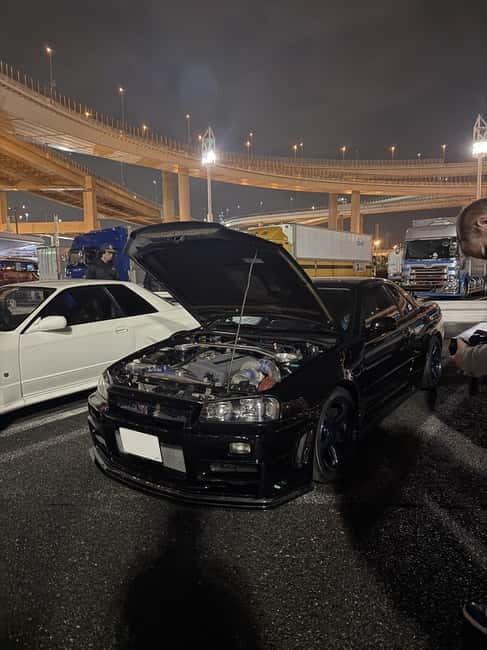
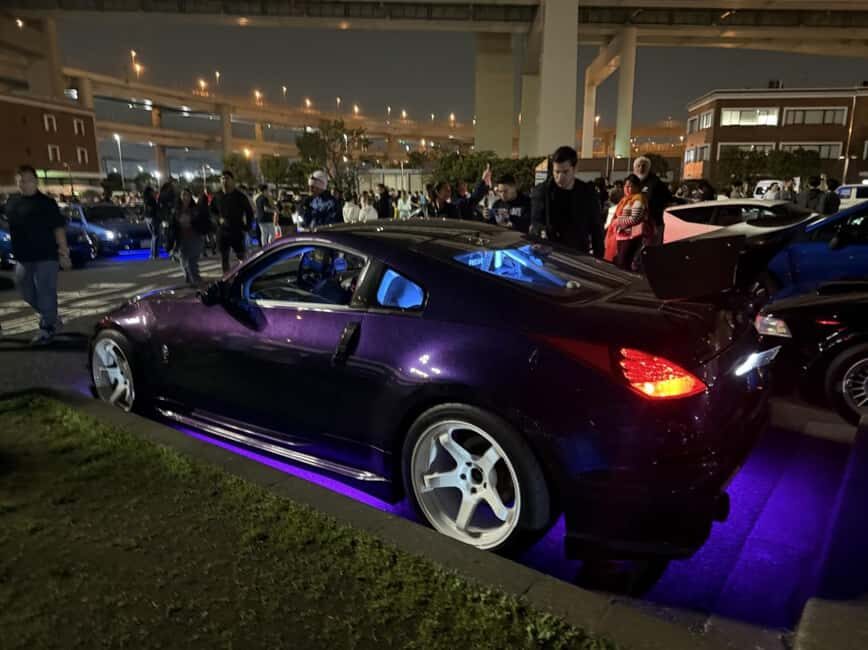
Daikoku Parking Area in Yokohama isn’t a museum stop. It’s a public meeting point where you can watch Japan’s car passion in motion: owners arriving, people pointing out details, and cars that look like they’ve been built for personality, not just performance.
What makes this tour work is the balance. You get a highway ride with big-city night views, then you’re let loose at the meet for long enough to actually enjoy it. It’s not “walk by for 10 minutes, take a photo, move on.”
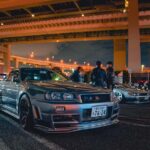
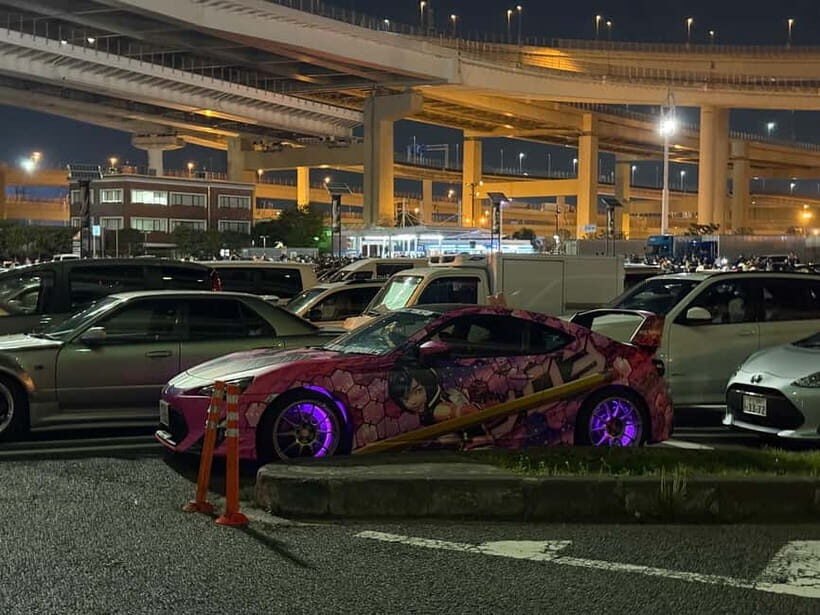
And yes, you can end up seeing everything from supercar-level exotica to heavily modified JDM machines, plus rare classics that show up when the timing is right. It’s also the kind of place where you can be a casual fan and still have a great time. Look, listen, ask one or two questions, repeat.
You can also read our reviews of more tours and experiences in Yokohama.
Flat $76 pricing and what you’re really getting
Here’s the smart part: one honest price for the standard shared ride. There’s no fake starting price, no solo penalty, and no minimum participant requirement to run your seat. For Tokyo pricing, that’s a big deal because car-related experiences can quietly get expensive fast.
Also, you’re not paying for a special tuned vehicle. The ride uses a normal car, and that keeps costs down while still giving you the key value: getting to Daikoku from central Tokyo without the headache of figuring out the expressways on your own.
If you want something different, there’s an added option: a Toyota new GR86. The pricing is different from the standard shared ride, so check what’s shown for your date. Either way, the goal is the same: you reach the legendary meet and get time to enjoy it.
The highway ride is half the fun, not filler
This outing is built around the drive. You pass big Tokyo landmarks and get that late-evening city feeling while moving between areas on expressways. The route includes passes like Rainbow Bridge and Haneda Airport, and you’ll also pass Tokyo Tower before finishing back in Shinjuku.
Why this matters: Daikoku isn’t just “a parking lot.” Getting there at night changes how the whole experience feels. The city lights, the expressway flow, and the quick glimpses of Tokyo’s density make it feel like you’re doing something special, not just riding somewhere.
Timing is also honest. The total duration is 210 minutes, and that includes the drive time. Once you do the math, you’re spending a meaningful chunk actually at the meet, not just in transit.
Meeting in Shinjuku area, then ending near Shinjuku
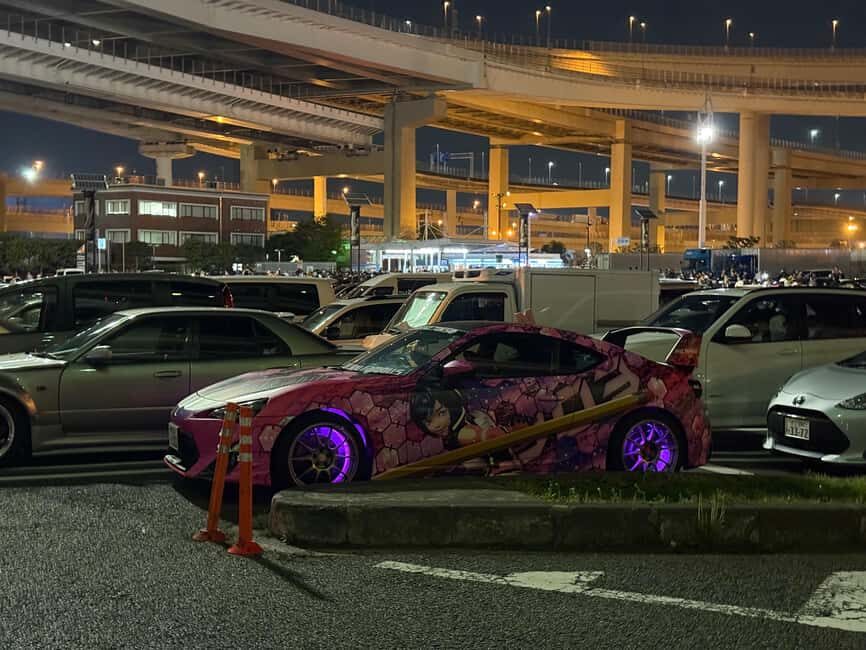
The meeting points are two options. One is near Tochomae Station (Nishishinjuku). The other experiences routes from the “from here” points that line up with the ride schedule. The end point is Shinjuku Station, so you’re not stranded far from where tourists normally want to be.
This matters for practical planning. If you’re staying around Shinjuku, finishing near a major transit hub is a relief when you’re tired from walking around the meet. It also makes it easier to grab dinner or head back to your hotel without extra transfers.
Daikoku PA on arrival: how the free-roam time really works
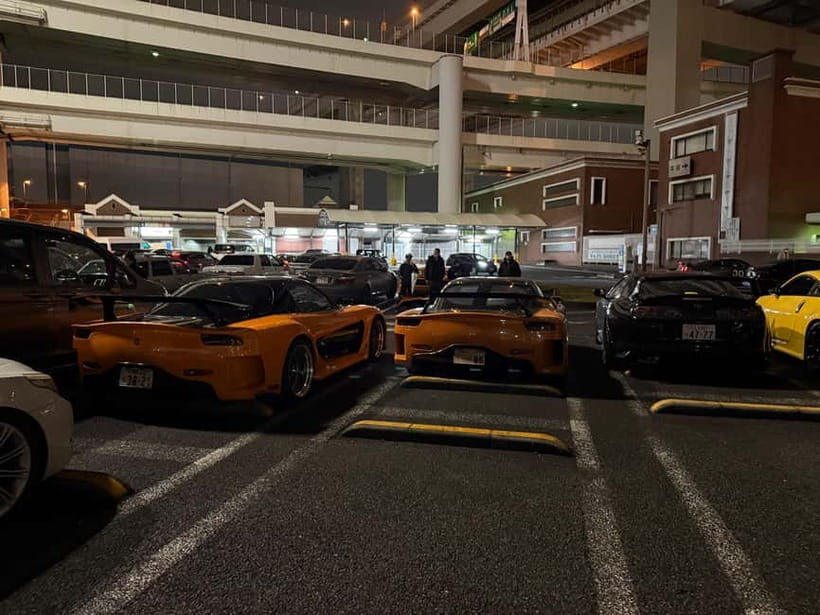
When you arrive at Daikoku PA, you get about 1.5 hours to explore. The best part is the freedom. You’re not forced to stay in one spot or follow a tight route. You can move toward what catches your eye—whether that’s a JDM legend, a heavily modified tuner build, or something older and rarer.
Expect the atmosphere to feel like a living car show. Cars come and go, owners gather, and conversations pop up around specific details. The exact number and types of vehicles aren’t guaranteed, since it’s an impromptu car meeting. Sometimes it’s a great crowd; sometimes it’s quieter. Your best bet is to go with curiosity, not a checklist.
Photo strategy tip that actually helps: wear comfortable shoes and plan for walking. There’s no structured “guide stops” flow once you’re inside, so you’ll want to move at your own pace. Bring your camera, since the whole point is getting real on-site shots of the cars and the night scene.
If weather rolls in, bring an umbrella. Rain changes the vibe fast, and you’ll be walking around.

Car lineup surprises: supercars, classics, and the JDM you came for
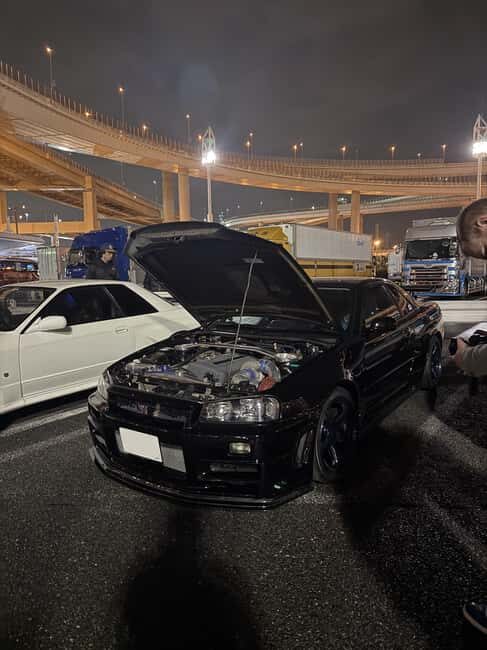
This is a “car people watching” tour. You’re going to see a mix—exotic supercars, heavily modified tuners, and rare classics—when the timing aligns. The tour is clear that the lineup isn’t promised, and that’s part of the fun. You’re seeing what shows up in real life, not a staged lineup.
One thing I like about how this is run: you’re encouraged to ask questions. You can ask the driver(s) or your guide for context about the parking area and what you’re looking at. That turns random photos into stories you’ll remember.
Also, don’t expect drifting or racing. This is explicitly a lawful car culture stop. If you’re hoping for track-style chaos, you’ll be disappointed. But if you want the human side of Japanese car culture—owners, cars, and the scene—this is the right kind of event.
Guides who keep the night moving (and conversations easy)
The guide role here isn’t just logistics. It’s also about making the car culture readable.
In recent bookings, the guides have included Joshua (often called Josh) and Kai, and both get praised for making the ride more than transportation. Joshua has been described as going out of his way to explain the culture on the way there, and Kai has been noted for an easy going, authentic vibe once you start moving through the night.
There’s also a practical angle: if something doesn’t go to plan, guides have handled it without drama. Daikoku PA can close or thin out, and the plan includes switching to a prepared backup car-culture spot so you still get your evening. In other words, you’re not left sitting there wondering what happened.
And if someone needs to drop early, the operation is built to solve it. That’s not something you always get on tours like this, and it matters when you’re traveling with family or a mixed group.
Shared ride comfort: the one thing to plan for
The ride is a shared transfer, limited to small groups (up to 6 participants). The exact vehicle depends on the group size for the standard ride: Toyota Aqua for smaller groups, and Toyota Noah / Voxy / Nissan Serena / Toyota Hiace for larger groups.
Here’s the real-world consideration: at full capacity, it may feel snug. That’s not a red flag; it’s just the reality of shared transport in busy metro areas. If you’re tall or sensitive to tight seating, keep that in mind when you choose your departure time and group size.
Also, there’s a weight limit: people over 280 lbs (127 kg) aren’t suitable. If that applies, you’ll want to choose a different format.
Car meet etiquette that keeps everyone happy
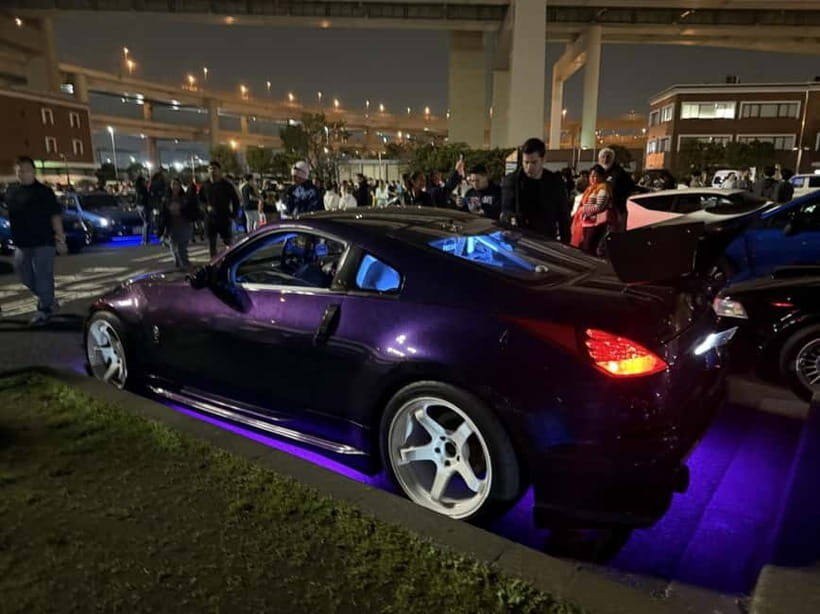
Daikoku is a public scene, but it’s also a community. Be respectful around the cars and the owners. Don’t crowd in ways that block movement. If you want to photograph, do it thoughtfully and don’t lean on vehicles or invade personal space.
A practical rule that makes everything easier: watch where others stand. Then copy that behavior. You’ll blend in faster, and you’ll avoid the awkward moments that happen when someone treats a car owner’s pride like a prop.
If you do talk with owners, start with something simple. Ask what you’re looking at, what model it is, or what the owner likes about it. You’ll get better answers if your first question is honest and easy.
Is this worth $76 for a Tokyo car scene night?
For many Tokyo experiences, you pay for access. Here, you pay for two things: the highway ride that gets you there smoothly and the time to roam at one of Japan’s most famous car gathering spots.
At $76 per person for the standard shared ride, it’s good value because you’re not only buying transportation. You’re buying the whole setup that makes Daikoku practical to experience from central Tokyo: expressway driving, guided context, and enough time on site to actually enjoy the scene.
Who should book:
- You like Japanese car culture, even if you are not a hardcore gearhead
- You want long free time at the meet, not a strict guided walk-through
- You want night views from the expressways plus a real car scene stop
Who might skip:
- If you want guaranteed specific cars every time (this is not that kind of event)
- If you dislike shared-ride comfort tradeoffs
- If you came for drifting or racing (this tour is not that)
Should you book the Daikoku Parking Area JDM car meet drive?
Yes, if you want a legal, culture-focused Daikoku night with time to roam, photo opportunities, and a guide who helps you understand what you’re seeing. The flat pricing is the biggest reason to feel confident before you go, and the backup plan is what keeps the evening from falling apart if the scene changes.
Book it with the right expectations: you’re not guaranteed a specific car lineup, and the vehicle is a normal shared car. But if you show up curious and ready to walk, this is exactly the kind of Tokyo experience that feels off the tourist path in a good way.
FAQ
How much does the standard Daikoku Parking Area car meet ride cost?
The standard shared ride is priced at $76 per person.
Does the price go up if I travel alone?
No. The tour uses flat pricing with no higher price for solo participants and no minimum number of participants.
How long is the whole experience?
The total duration is 210 minutes, and that includes the travel time.
Where do we meet, and where does the tour end?
There are two starting options, one near Tochomae Station (Nishishinjuku) and another route option depending on what you book. The tour ends at Shinjuku Station.
How much time do I get at Daikoku Parking Area?
You get about 1.5 hours at Daikoku Parking Area to explore and admire the cars.
Will I definitely see specific cars like supercars or rare JDM models?
No. The meeting is impromptu, so the type and number of cars showing up is not guaranteed.
Is this a drifting or illegal racing tour?
No. This is not a drifting or illegal racing tour. The visit is for car culture.
What vehicle do you ride in on the standard shared ride?
The car depends on group size. For smaller groups it may be a Toyota Aqua, and for larger groups it may be a Toyota Noah, Voxy, Nissan Serena, or Toyota Hiace.
Is the tour wheelchair accessible, and are there any rules?
The tour is wheelchair accessible. Pets and smoking are not allowed, and people over 280 lbs (127 kg) are not suitable for this activity.