REVIEW · TOKYO
Best Go Kart Experience in Shibuya Crossing with Iconic Photos
Book on Viator →Operated by Monkey Adventure Kart · Bookable on Viator
Shibuya Crossing in a go-kart feels unreal. This small-group Tokyo ride strings together the city’s biggest photo backdrops—Shibuya Crossing and beyond—while you’re in a themed costume and your guide helps you stay safe and on track. You also get stop-based photo moments, plus a printed souvenir photo afterward.
I love two things right away. First, the small group size keeps the ride less chaotic and easier to follow, especially when the streets get busy. Second, you don’t have to manage navigation—your guide does that—while you still get the fun parts like dressing up and snapping photos at the right moments (guides such as Lewis and Rakesh are called out for clear instructions).
One consideration: driving in Tokyo requires the correct hard-copy IDP (1949 Geneva Convention). If your paperwork doesn’t match Japan’s rules, you can get turned away before you even ride. Also, the karts are loud, so you may miss some instructions if you’re focused on the engine noise.
In This Review
- Key things to know before you book
- What makes this Shibuya go-kart ride different
- Your driving permit is the whole game
- Where you start: Monkey Adventure Kart Shibuya
- Getting costumes, water, and the “ready to roll” routine
- The route: Shibuya Crossing to Yoyogi Park
- Stop 1: Shibuya Crossing
- Stop 2: Harajuku Station
- Stop 3: Omotesando
- Stop 4: Miyashita Park
- Stop 5: Yoyogi Park
- Photos, printed keepsakes, and the small comforts
- How safe is it, and how much is it truly guided
- Price and value: what $106.12 buys you
- Night rides and cold weather: when your mood changes
- Should you book this Shibuya Crossing go-kart tour
- FAQ
- How long is the go-kart tour?
- Where does the tour start and end?
- What’s included in the price?
- Do I need an international driving permit (IDP)?
- What IDP types are not recognized?
- Are costumes included?
- Are photos included?
- Is an action camera included?
- How big is the group?
- What happens if it’s canceled or weather is bad?
Key things to know before you book
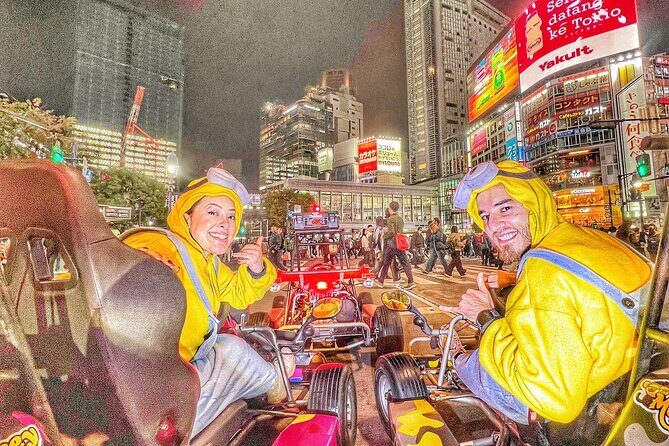
- Go-kart through central Tokyo with a guide who handles the route and timing
- Small-group setup (capped at three riders; overall limit listed as four travelers)
- Costume selection before you ride, for that instant fun-photo factor
- Guide-captured photos during key stops, plus a printed keepsake
- Stops built around iconic landmarks including Shibuya Crossing, Harajuku, Omotesando, Miyashita Park, and Yoyogi Park
- International Driving Permit rules are strict and require the correct paper format
What makes this Shibuya go-kart ride different
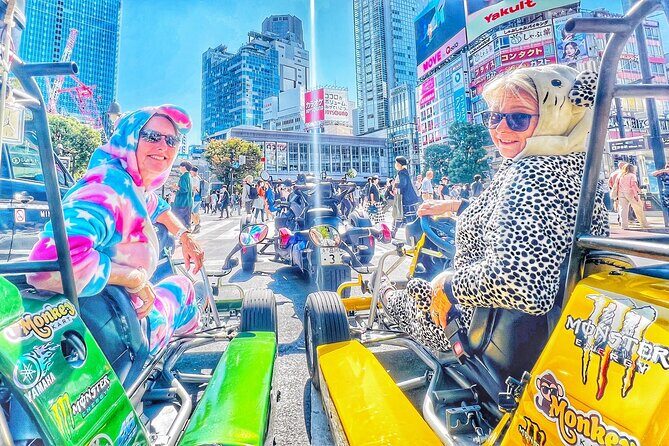
This isn’t just renting a kart and hoping you figure out Tokyo. The value is in the mix: you get a guided loop through recognizable districts, you dress up, and you get photo support during the ride. The format makes it easier for most people to enjoy the “I’m driving in Tokyo” brag without stress.
The route also matters. Shibuya Crossing is the headline, sure. But the ride also threads through areas people actually want to revisit on foot—Harajuku Station vibes, Omotesando’s stylish streets, and the park-side calm near Yoyogi. That gives you two payoff layers: the ride itself and a mental map of where to wander afterward.
Finally, the experience is designed around controlling risk while still letting you feel the thrill. Several guides (like Jerome, Luna, and Kazuki in the accounts I saw) are praised for clear guidance and making riders feel comfortable while traffic and pedestrians are part of the reality.
You can also read our reviews of more photography tours in Tokyo
Your driving permit is the whole game
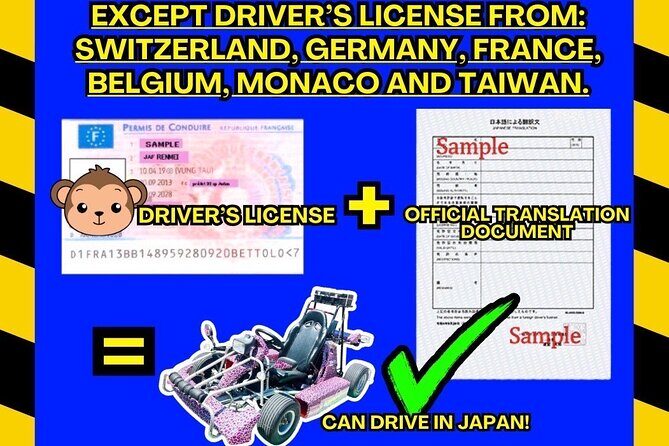
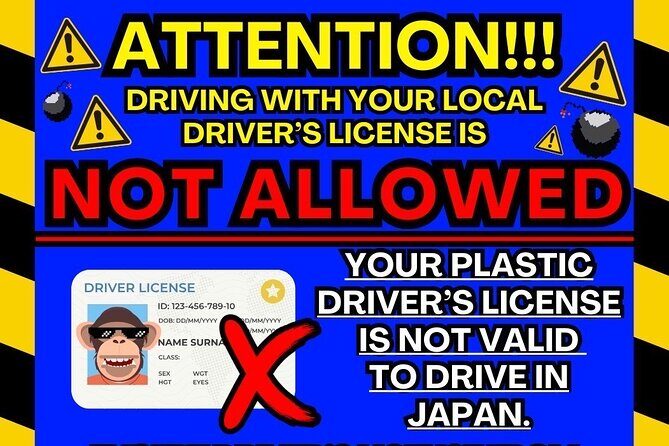
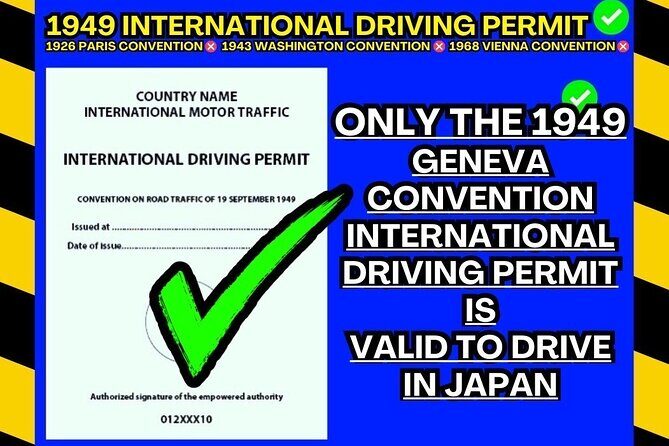
Let’s be blunt: you need the right paper to drive. Japan requires a hard copy International Driving Permit issued under the 1949 Geneva Convention (the requirement is stated as a physical paper booklet in the correct format).
A few important rules to plan around:
- You must have the hard-copy 1949 Geneva IDP printed by the official issuing organization in your country (examples listed include AAA, AA, CAA, and others).
- Permits under the 1968 Vienna Convention are not recognized.
- IDPs obtained online (listed as not recognized) are not accepted.
- Some countries’ permits are listed as not allowed for driving in Japan, so you must check your country’s eligibility before you travel.
- For licenses issued from France, Switzerland, Taiwan, Germany, Monaco, and Belgium, you need a Japanese translation of your local license, and you obtain the physical copy from JAF (Japan Automobile Federation).
Practical tip: do your paperwork early. If you’re missing even one requirement, you may lose the whole trip day.
Where you start: Monkey Adventure Kart Shibuya
You meet at Monkey Adventure Kart Shibuya, 1F, 1-chōme-27-7 Higashi, Shibuya, Tokyo 150-0011. It’s described as near public transportation, which is helpful because this part of Tokyo can be easier by train than by taxi.
The tour ends back at the same meeting point. That matters because you’re not trying to coordinate a later meetup or scramble for a return ride after you’ve finished your hour-plus driving.
Getting costumes, water, and the “ready to roll” routine
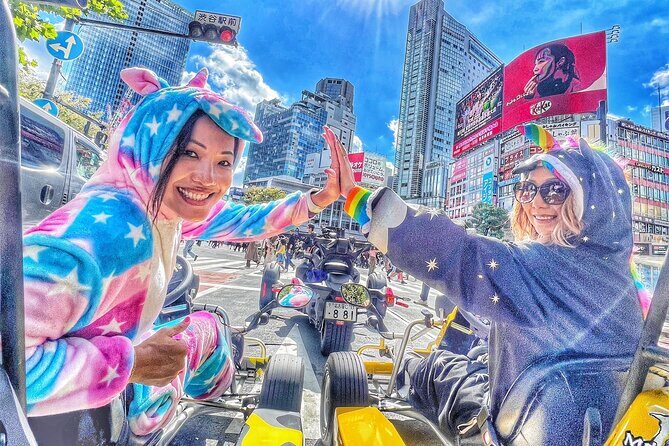
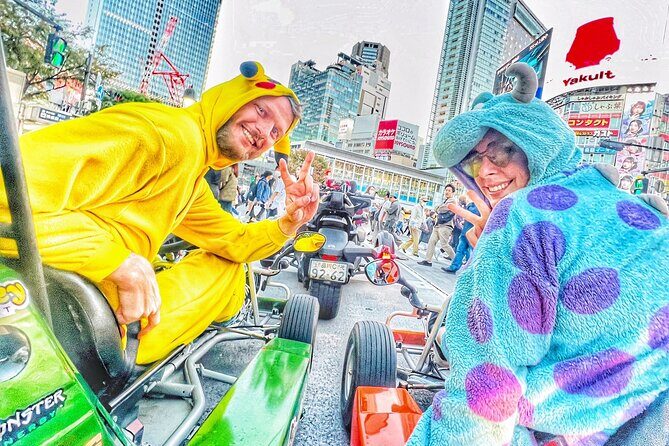
Before you hit the road, you’ll choose from a selection of fun costumes. This is one of the simplest ways to make Shibuya feel like a movie set. You’ll also get:
- Locker use (so you can store items you don’t want bouncing around)
- Bottled water
- The go-kart experience includes fuel
- A guide who stays with your group through the route
- Photos captured during the ride, plus an included hard-copy printed photo afterward
If you’re wondering whether this is “just a novelty,” the included photos and the printed keepsake change the feeling. You’ll spend less time acting like a tourist holding a phone up in traffic and more time actually driving.
The route: Shibuya Crossing to Yoyogi Park
This is a roughly 1 hour 20 minutes ride, and the stops are built around Tokyo landmarks you can later point to on a map.
You’ll move through:
- Shibuya Crossing
- Harajuku Station
- Omotesando
- Miyashita Park
- Yoyogi Park





Stop 1: Shibuya Crossing
This is the big moment. The goal is to experience that intersection energy without spending your whole day waiting for the perfect crossing light.
What you’ll feel here is the contrast between control and chaos. You’re driving a small vehicle, at a controlled pace, while Tokyo pedestrians and traffic habits stay very real. That’s why the guide’s role matters. In the accounts I read, guides like Rakesh and Lewis were singled out for making the instructions understandable—use that moment to listen early, then focus on scanning the road ahead.
Photo tip: Shibuya is “photo all day” territory. Your best shots often come when your guide pauses you at a good spot, so don’t treat photos like a distraction. They’re part of the plan.
Stop 2: Harajuku Station
Harajuku is where Tokyo goes loud in style—streetwear energy, people-watching, and that fast-moving city vibe. Coming from Shibuya, this stop feels like the ride is showing you a different layer of the same neighborhood story.
The advantage of driving here is you see more than one street. On foot, you might bounce between stations and crosswalks for a long time. By kart, you get a concentrated sample of the area while still keeping within the guided flow.
A drawback to keep in mind: Harajuku areas can be dense with pedestrians. Your guide will likely keep things smooth and safe, so if you’re expecting a long, wide-open “go fast” stretch, you may be disappointed. This is more about city immersion than racing.
Stop 3: Omotesando
Omotesando is the “styled streets” stop. The streets feel more planned and design-forward, and the ride here gives you a calmer rhythm compared with Shibuya’s constant attention-grab.
Why it’s worth it: you’re not just chasing one famous intersection. Omotesando gives context. It helps you understand why people build Tokyo itineraries around neighborhoods, not just single sights.
Practical caution: even if a street looks open, you’re still sharing space. Expect controlled driving and follow the guide’s signals without assuming you’ll have freedom like a closed course.
Stop 4: Miyashita Park
Miyashita Park is a visual pivot. You go from shopping streets and station energy into an area that feels more like a landmark you can linger in.
From a photo standpoint, this stop helps break the ride into distinct chapters. You’re not just repeating “big city” scenes. You get at least one pocket where the background feels a bit more modern and park-adjacent.
If you’re the type who likes stopping and looking, this is a good moment to slow your brain down. Just remember you’re still in the middle of a timed activity, so be ready when the guide calls you forward.
Stop 5: Yoyogi Park
Yoyogi Park adds greenery energy to the itinerary. Even if your time here is limited compared to a full park visit, the contrast is the point—Tokyo’s parks are part of why the city feels livable.
This stop is also useful after the ride. If you like what you see, you’ll have an easy next step: return on foot and explore more slowly. The route effectively gives you a guided “start point” for later wandering.
Weather note: because the activity requires good weather, cold and rain can affect comfort. One guide-led ride account mentioned it was cold and strongly suggested gloves—so dress for winter conditions if your departure is chilly.
Photos, printed keepsakes, and the small comforts
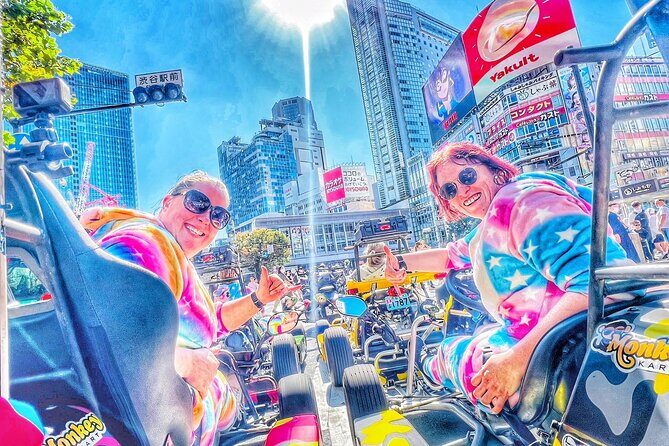
One of the most praised parts of this ride is the photo setup. The guide captures photos during the trip at the stops where you’ll actually want a souvenir.
What’s included:
- Photos taken during the tour
- Hard copy printed photo
- Costumes for that instant theme look
- Bottled water
- Locker
You can also add an action camera, but it isn’t included. The data lists ¥3,500 per person for an action camera (so if you want that POV style, budget for it).
The practical upside of included photos is time. You’re not juggling the camera the whole time. You’re driving. Then you get your printed result as a tangible memory.
How safe is it, and how much is it truly guided
This ride is built around safety first. People consistently mention that guides do strong safety check-ins and explain driving clearly before you head out.
Several guide names show up in strong feedback: Jerome is noted for reading traffic well and knowing when to go faster or slower. Kazuki is praised for keeping everyone together and safe. Luna and Issam are praised for making instructions easy to follow.
Still, here’s the honest catch: it’s not a detailed talking tour. One experience described it as more of an activity than a full guided commentary of Tokyo. The karts are also loud, so hearing instructions can be harder if you’re seated near the front and expecting full audio over engine noise.
So your “how guided is it” expectation should be:
- You’ll be guided for driving, safety, and route
- You might not get long, in-depth storytelling about every neighborhood
If you want both deep history and a kart ride, you may need to pair this with another Tokyo walking plan.
Price and value: what $106.12 buys you
At $106.12 per person, the price feels steep compared with standard tours. But for what you’re getting, it’s easier to justify.
You’re paying for:
- A guided go-kart experience in central Tokyo
- Fuel and the kart itself
- A small group setup
- Costumes
- Photo capture plus an included printed photo
- Locker storage and bottled water
Most importantly, you’re paying for the friction removed. Navigation is handled. Safety instructions are handled. You’re not figuring out where to drive in a dense, pedestrian-filled part of Tokyo while trying to keep your own phone out of your hands.
If you’re the type who loves memorable, high-energy activities and wants an iconic Shibuya moment you can’t replicate by walking, this is a strong value. If you’re mainly after sightseeing narration, you might consider a different format, because the ride prioritizes driving and safety over deep talk.
Night rides and cold weather: when your mood changes
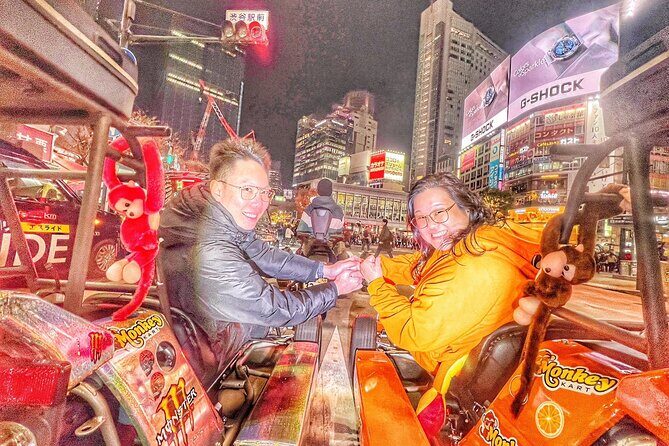
One clear theme from the accounts I saw: night can be a big win. A night departure was described as better because of lights and busier street energy. If your schedule allows a night slot, it’s worth considering for that Tokyo glow factor.
At the same time, don’t ignore temperature. Another account mentioned the ride was cold and recommended gloves. The karts don’t keep you warm, and Shibuya evenings can be chilly.
Pack logic is simple:
- Dress for the weather, not for “being on a warm street”
- Bring or buy gloves if it’s cool
- Wear layers that won’t interfere with your driving comfort
Should you book this Shibuya Crossing go-kart tour
Book it if you want an unmistakably Tokyo experience: driving a go-kart through Shibuya Crossing and nearby districts, wearing a costume, and leaving with printed photo proof. It’s also a good choice if you prefer a guided route over spending your day figuring out where to go next.
Skip or rethink if any of these apply:
- You don’t have the correct hard-copy 1949 Geneva IDP (or the needed translation rules)
- You’re expecting a long, talk-heavy sightseeing tour
- You’re sensitive to engine noise and need easy audio instruction
FAQ
How long is the go-kart tour?
The tour is about 1 hour 20 minutes.
Where does the tour start and end?
It starts at Monkey Adventure Kart Shibuya (1F, 1-chōme-27-7 Higashi, Shibuya) and ends back at the same meeting point.
What’s included in the price?
The package includes the go kart, fuel, guide, pictures, costumes, locker, hard copy printed photo, and bottled water.
Do I need an international driving permit (IDP)?
Yes. You must carry a hard copy paper booklet of an IDP issued under the 1949 Geneva Convention (or other approved licenses according to Japanese law).
What IDP types are not recognized?
The 1968 Vienna Convention IDP, IDPs acquired online, and other online permits listed as not recognized are not accepted.
Are costumes included?
Yes. You choose from a selection of costumes before you ride.
Are photos included?
Yes. Your guide takes pictures during the tour, and you receive a hard copy printed photo as part of the included package.
Is an action camera included?
No. An action camera is listed as costing ¥3,500 per person if you want to add one.
How big is the group?
The experience is described as small group size capped at three people, and the activity limit is stated as a maximum of four travelers.
What happens if it’s canceled or weather is bad?
The experience requires good weather. If it’s canceled due to poor weather, you’ll be offered a different date or a full refund. Free cancellation is available up to 24 hours in advance for a full refund.