REVIEW · MOTOBU CHO
Zen Style Voice Meditation and Cooking Workshop in Motobu Okinawa
Book on Viator →Operated by Zen Style Voice Meditation and Cooking Workshop in Motobu Okinawa · Bookable on Viator
If you can handle a little quiet, you’ll love this. It pairs Zen Voice meditation with hands-on cooking in Motobu, Okinawa, where your breath actually gets you out of your head. I especially liked how the Zen Kitchen part is practical (you get a recipe you can take home), and I really appreciated the calm, step-by-step pace. One thing to consider: the voice meditation asks you to coordinate breathing and posture, so if you’re uncomfortable sitting on the floor, you may need to go in with patience.
The group stays small, so the instruction feels personal. The cooking is led by TOKKO, and the Zen teacher and his wife are both praised for making the whole experience feel welcoming rather than performative. The trade-off is simple: with only 3 hours total, you won’t have time to master every technique—but you will leave with enough to feel confident cooking Japanese food at home.
In This Review
- Key highlights at a glance
- A Zen-and-Kitchen Combo in Motobu, Okinawa
- Price, timing, and why the value feels fair
- Zen Voice: stretch, breathe, and find your comfortable resonance
- A real-life consideration
- The Zen Kitchen mindset: simple Japanese cooking with local ingredients
- Cooking session: 3–4 seasonal dishes, hands-on and doable
- The tasting: you get to enjoy your work
- What the small group changes (for the better)
- Practical tips to make it comfortable and not awkward
- Who should book this Zen workshop (and who might pass)
- Should you book Zen Style Voice Meditation and Cooking Workshop in Motobu?
- FAQ
- What is the duration of the workshop?
- Where is it located?
- How much does it cost?
- What time does it start?
- How big is the group?
- Do I get a recipe to take home?
- What happens during the Zen Voice part?
- What happens during the cooking part?
- Is there any cancellation flexibility?
- Are service animals allowed?
Key highlights at a glance
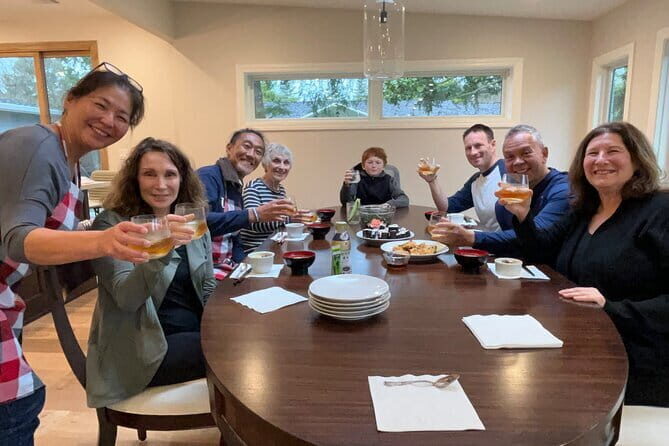
- Zen Voice starts with stretch and breathing, then you explore how your voice resonates more comfortably
- A small group (max 6) keeps the meditation and cooking hands-on and not rushed
- TOKKO teaches simple Japanese cooking using local ingredients, with a take-home recipe
- You cook 3–4 seasonal dishes, then spend real time tasting what you made
- You hear group harmony as your voice work aligns with other participants
A Zen-and-Kitchen Combo in Motobu, Okinawa
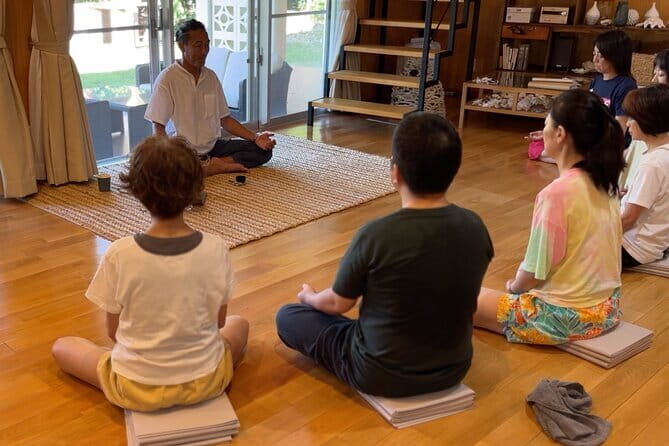
This workshop is built around a simple idea: when your body relaxes and your breath steadies, everything else gets easier. That includes your mind during meditation, and it also includes your hands in the kitchen.
You’re not just learning two separate activities. The schedule links them. First comes Zen Voice, where you practice posture, breathing, and resonance. Then you move into Zen Kitchen, where you apply the same calm focus to cooking seasonal Japanese food in a straightforward way.
And it happens in Motobu-cho, so it works nicely as a focused cultural block in your Okinawa plans. No big sightseeing sprint required—just a meaningful morning that ends with food you can actually eat and reproduce.
You can also read our reviews of more tours and experiences in Motobu cho.



Price, timing, and why the value feels fair
The price is $200 per person for about 3 hours. That’s not cheap, but you should judge it by what’s included: meditation instruction, live cooking guidance, and a meal you taste at the end. You also get the recipe, which adds real value if you plan to cook after you return home.
A couple practical notes that matter for planning:
- Start time is 10:00 am, and the activity ends back at the meeting point
- It runs on a tight, efficient timeline (intro, voice work, cooking, tasting)
- The group is capped at 6 travelers, so you’re not lost in the crowd
One more plus: the schedule is structured enough that you can show up without needing special prep. You still want to arrive on time, because the morning flows from stretching into breath and then right into cooking.
Zen Voice: stretch, breathe, and find your comfortable resonance
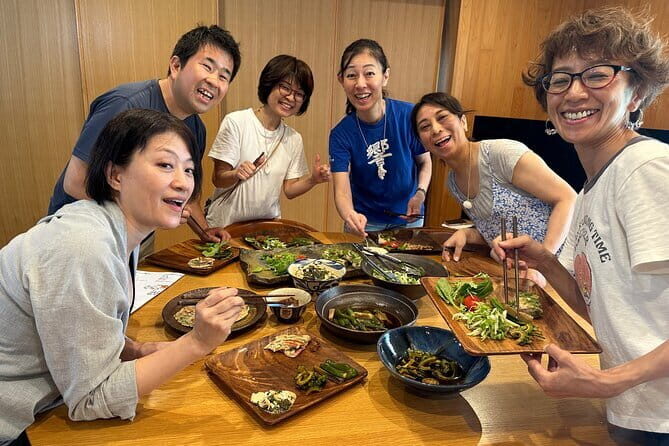
Zen Voice is the training-style practice described as sitting with awareness of breath and stabilizing the mind. If that sounds intimidating—fair. For westerners, sitting in the correct posture is often the hardest part, especially if you’re used to chairs.
That’s why this session begins with body prep. The flow looks like this:
- Introduction (15 minutes): you get the structure of Zen Voice and an explanation of what you’re doing
- Stretch and breathe (20 minutes): you release tension and deepen your breathing with breathing techniques
- Voice work and meditation (25 minutes): you relax body tension further, deepen breathing, and let your voice resonate more comfortably
- Rest (5 minutes): a pause so the experience settles, instead of pushing straight through
The key here isn’t singing louder or “performing.” It’s learning how resonance feels when your body isn’t fighting itself. I like that the workshop explicitly targets the physical side of the problem—tension, posture discomfort, and shallow breathing—because those are normal issues.
During the voice work, you also get the chance to hear your voice harmonize with other participants. In a group of only up to 6, that element feels less awkward and more supportive. You’re guided to listen, adjust, and keep it calm.
A real-life consideration
If you’re expecting a passive meditation class, this isn’t it. You’ll do stretching, breathing, and voice resonance work. If you have neck, back, or knee issues that make floor posture hard, keep that in mind. You’ll still likely be able to participate, but you may need to take the process slowly and follow the instructor’s cues carefully.
The Zen Kitchen mindset: simple Japanese cooking with local ingredients

After the voice practice, you shift gears. There’s an introduction to Zen Kitchen (5 minutes) that explains the cooking concepts behind the approach.
The big message: Japanese food is loved for being delicious and healthy, but cooking it at home can feel expensive or complicated. TOKKO’s teaching style is meant to remove both obstacles—by making the steps approachable and by using local ingredients.
What I like about this format is that it doesn’t pretend you need advanced skills. The class focuses on method: keep it simple, follow instructions, and build comfort through repetition during the cooking window.
Also, you’re given the recipe to take home. That turns the experience from a one-time activity into something you can actually use later. It’s the difference between visiting Okinawa for a memory and visiting Okinawa for a new skill.



Cooking session: 3–4 seasonal dishes, hands-on and doable

The cooking portion runs 70 minutes, and the class is designed around making 3–4 kinds of seasonal Japanese traditional food. The exact dishes aren’t listed in the workshop details you provided, but the promise is consistent: seasonal, traditional, and taught in a very simple way.
Here’s what this means for your experience in the real world:
- You’ll cook more than one item, so you get a sense of range
- The instruction is step-by-step, not a demo you watch from across the room
- Because the group is small, you can ask questions and get immediate feedback
This is where the Zen Voice part quietly helps. Once you’ve spent time on breathing and relaxing tension, you tend to cook with steadier attention. Your hands move more smoothly, and you’re less likely to rush.
And yes, it’s guided by TOKKO, who is repeatedly praised for making the class enjoyable. One review notes that TOKKO’s wife also helped with the cooking class, and both the kitchen and the Zen side were described as standout experiences. That matters, because good classes aren’t just about recipes—they’re about how people translate teaching into a calm, human rhythm.
The tasting: you get to enjoy your work
After cooking, you’ll do tasting for 40 minutes. This is a generous chunk of time, and it’s a big reason I think the workshop is good value. You’re not sent away right after the last step. You sit with what you made, eat it, and actually enjoy the result.
Again, the dishes are seasonal and traditional, and the class is positioned as healthy as well as flavorful. I’d treat that as a focus on balanced home-style Japanese cooking rather than heavy, restaurant-only food.
What the small group changes (for the better)
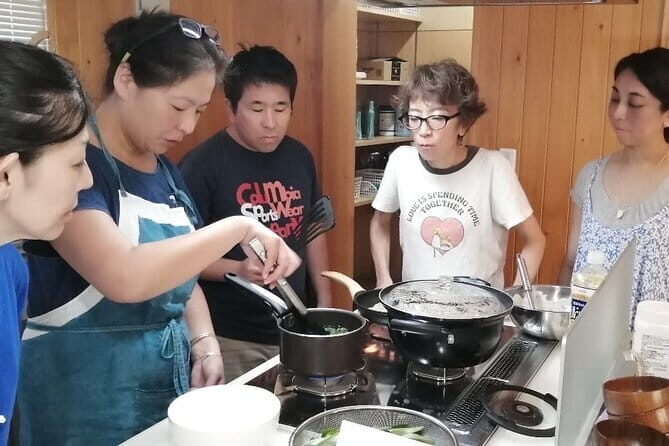
This workshop caps at 6 travelers, and that number is a big deal. In a small group, instructors can correct posture, breathing, and technique without you feeling singled out. It also means you’re more likely to hear and feel that group harmony during Zen Voice.
In cooking, small groups mean you’re not waiting around. You’re likely working at the pace the instructor sets, and you get support before small mistakes become big ones. With a bigger class, you’d often lose that coaching and simply watch.
The reviews strongly point to this as a highlight: people loved the unique combination, and they praised the Zen teacher and his wife for the tone they set—friendly, skilled, and genuinely encouraging. That pairing matters because voice meditation can feel strange at first, and cooking can feel stressful if you’re worried about messing up. Having two capable guides reduces both worries.
Practical tips to make it comfortable and not awkward

You don’t need special training, but you can prepare for comfort. Here are the most useful, grounded tips based on how the workshop is structured:
- Wear comfortable clothes you can move in for stretching. Even if you’re not flexible, you’ll likely be moving your body through warm-up motions.
- Bring a mind-set for floor sitting: if you’re not used to it, plan to take it slowly and follow the instructor’s pacing during Zen Voice.
- Use the voice work as a breathing exercise first, not as a performance. The goal is resonance that feels comfortable.
- When you cook, pay attention to the instructor’s order of steps. The class packs 70 minutes of cooking plus tasting, so efficiency matters.
- After tasting, ask about the recipe steps you’re most likely to forget. Since you get a take-home recipe, you’ll want your future self to succeed.
If you like activities that mix mind-body calm with practical skills, this one fits that sweet spot.
Who should book this Zen workshop (and who might pass)

This experience is a great match for you if:
- you want a calm, structured cultural activity rather than a fast-moving tour
- you enjoy workshops that leave you with something usable, like the recipe
- you’re open to breathing, posture, and voice exercises as a way to reset
It may be less ideal if:
- you strongly dislike floor seating or stretching
- you’re only interested in cooking and not in the meditation component
- you need more time than 3 hours to learn kitchen techniques thoroughly
That said, even if you’re cautious about Zen Voice, the workshop is built with prep time and guided breathing, so you’re not thrown into the deep end.
Should you book Zen Style Voice Meditation and Cooking Workshop in Motobu?
Book it if you want a morning that feels different from the typical Okinawa checklist. The blend of Zen Voice and Zen Kitchen makes this more than a cooking class and more than a meditation session—it’s one continuous experience built around relaxation and practical learning.
Skip it only if you know floor posture and voice work are deal-breakers for you. Otherwise, it’s a strong choice because you get: calm instruction, a hands-on cooking session with 3–4 seasonal dishes, time for tasting, and a recipe you can bring home.
If you’re planning your trip and want one activity that refreshes you mentally and feeds you physically, this is the kind of workshop you’ll likely remember every time you cook the dishes later.
FAQ
What is the duration of the workshop?
The workshop is about 3 hours.
Where is it located?
It takes place in Motobu-cho, Japan.
How much does it cost?
The price is $200.00 per person.
What time does it start?
It starts at 10:00 am.
How big is the group?
The activity has a maximum of 6 travelers.
Do I get a recipe to take home?
Yes. You’ll be given the recipe so you can make the dishes at home.
What happens during the Zen Voice part?
You’ll do an introduction, then stretch and breathing, then voice work and meditation, with a short rest before moving on.
What happens during the cooking part?
You’ll cook 3–4 kinds of seasonal Japanese traditional food using local ingredients, then you’ll taste what you made.
Is there any cancellation flexibility?
Yes. You can cancel for a full refund up to 24 hours before the experience’s start time, and confirmation is required at booking.
Are service animals allowed?
Yes, service animals are allowed.