REVIEW · AOMORI
Aomori Full-Day Private Trip with Government-Licensed Guide
Book on Viator →Operated by Japan Guide Agency · Bookable on Viator
Nebuta float energy, minus the festival crush. This private Aomori day focuses on two headliners I really liked: the Nebuta Museum Wa Rasse and the Sannai-Maruyama Jomon site, explained by a government-licensed English guide. One thing to plan for: it’s a walking tour, and most entrance fees and lunch are on you.
I also love how much control you get. Your guide builds a route around your interests from the core set of stops, so you can spend longer on art if that’s your thing, or move faster if you want more sightseeing time in the city.
One possible drawback is also the reason it works: because it’s mostly city-center walking with limited time at each stop, you’ll need comfortable shoes and a bit of patience with crowds around museums and sidewalks.
In This Review
- Key things to know before you go
- Aomori in six hours: what a private walking tour really buys you
- Price and value: is $154.84 per person a good deal?
- How the pickup works when it’s a walking tour
- Stop 1: Wa Rasse Nebuta Museum and the scale of the festival
- Stop 2: Aomori Prefectural Kyodokan for Jomon pottery and reconstructed life
- Stop 3: Aomori Contemporary Art Center designed by Tadao Ando
- Stop 4: Munakata Shiko Memorial Museum for woodblock print lovers
- Stop 5: Aomori Museum of Art and the bridge to archaeology
- Sannai-Maruyama: reconstructed Jomon foundations you can finally picture
- Your guide’s superpower: tailoring 3–4 stops to your interests
- What to budget for: entrances, lunch, and transportation
- Who should book this Aomori private guide tour (and who might not)
- Should you book? My decision rule
- FAQ
- How long is the Aomori private tour?
- What sites does the tour focus on?
- Is an English-speaking guide included?
- Is there pickup, and is it a walking tour?
- Are entrance fees included?
- Can I cancel for free?
Key things to know before you go

- Government-licensed English guide: you’re not stuck with rough explanations or guessing your way through meaning.
- Wa Rasse Nebuta Museum: you’ll see five floats from the previous year plus sound and video displays.
- Jomon-focused museums: Kyodokan and Sannai-Maruyama help connect artifacts to real reconstructed settlement foundations.
- Architectural interest: the Aomori Contemporary Art Center was designed by Tadao Ando, so the building experience matters, not just the art.
- Art for print lovers: Munakata Shiko’s woodblock work is a standout stop for anyone curious about Aomori’s creative legacy.
- Mostly museum time: several stops run about an hour each, so it’s structured, not a free-for-all stroll.
Aomori in six hours: what a private walking tour really buys you
Aomori doesn’t feel like the kind of place where you need a megaphone to enjoy it. What you need is context. That’s where this experience pays off: a licensed guide turns “this is a museum” into “here’s why it exists and what you’re actually looking at.”
You’ll spend the day moving between Aomori’s best indoor-and-outdoor anchors: a Nebuta-themed museum, two art stops, a Jomon-era folk museum, and Sannai-Maruyama (the big archaeology moment). The day is organized enough that you won’t waste time, but flexible enough that you can steer the emphasis toward what you care about.
If you’re the type who likes to understand art before you judge it, or you want history that isn’t just dates and labels, you’ll likely feel at home here.
You can also read our reviews of more tours and experiences in Aomori.


Price and value: is $154.84 per person a good deal?
At $154.84 per person for about six hours, you’re paying primarily for three things:
- A licensed local guide in English (so you can actually follow the stories).
- A private format for your group, not a mixed crowd with a rushed schedule.
- A customized itinerary from the core set of Aomori stops.
What’s not included is also important. Entrance fees, lunch, and transportation are not included. So the real value depends on whether you planned to visit several ticketed sites anyway.
In my view, this price works best if:
- you’re a small group (so the private guidance spreads out),
- you plan to enter multiple museums,
- and you want the guide’s explanations more than you want to just collect photos.
If you’re the type who only wants one or two quick sights, you might feel the guide cost more than you’d like. But if you want a guided day with meaning, the pricing matches the effort.
How the pickup works when it’s a walking tour
This is a walking tour, so don’t expect a driver to whisk you around the city. Pickup is offered, but your meeting happens on foot within a designated area of Aomori city.
Practically, that means two things for you:
- Start the day ready to walk. Comfortable shoes matter more than you think.
- You’ll be planning your own pace with the guide’s schedule, because you’re moving between stops on foot.
If your timing is tight (like a cruise-day schedule), you’ll want to confirm your meeting location early. One extra note: service animals are allowed, and the tour says most travelers can participate, but the core reality is still walking between sites.
Stop 1: Wa Rasse Nebuta Museum and the scale of the festival

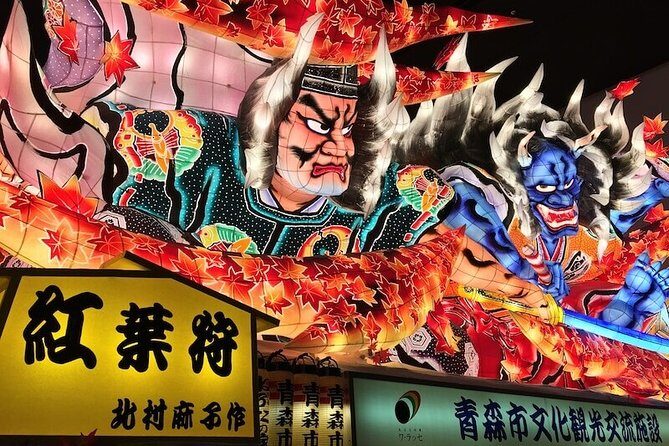
Nebuta Museum Wa Rasse is your first big story: Aomori’s Nebuta Festival, the famous parade of giant illuminated floats.
Here’s what you can expect:
- The museum is dedicated to the festival.
- It shows five floats from the previous year.
- You’ll also find video installations, sound, and photos to explain how these floats work and why they’re so central to Aomori identity.
This is a smart start because it sets the emotional tone for the rest of the day. Even if you’re not traveling during the August festival dates, the museum gives you the “why” and “how” behind what you’ll see in the real-world parades.
Possible drawback: it can feel like a lot of sensory input—lights, sound, screens. If you prefer quiet sightseeing, this still isn’t overwhelming, but it’s definitely the liveliest stop.
Stop 2: Aomori Prefectural Kyodokan for Jomon pottery and reconstructed life
Next is Aomori Prefectural Kyodokan, a folk museum with a deep Jomon focus.
This stop is built for understanding early Japan in a hands-on way:
- You’ll see a large collection of Jomon-period pottery.
- There are miniature reconstructions of Jomon huts and tools.
- The exhibits help you connect objects to daily living, not just artifacts in display cases.
I like this museum because it turns “Jomon” from a word into something you can picture. When you later reach Sannai-Maruyama, you’re not starting from zero—you’ve already seen what these people likely built and used.
Possible drawback: if museums don’t usually hold your attention, you might want your guide to talk more than you read. The guided explanations are part of the value here.

Stop 3: Aomori Contemporary Art Center designed by Tadao Ando
Then you head to Aomori Contemporary Art Center (ACAC), located on the grounds of Aomori Public College.
The main reason this stop is worth your time, even if you’re not an art fanatic, is architecture:
- The building was designed by Tadao Ando.
- The building and a water feature are part of the experience, not background decoration.
This is the kind of place where your guide’s interpretation matters. Contemporary art can be personal and confusing on your own. With a licensed guide, you can ask basic questions like what you should notice and how the space shapes your mood.
Possible drawback: contemporary art splits people. If you don’t enjoy modern works, you may treat this as a short reset stop—use it for the building and the guided context, not a full day of absorption.
Stop 4: Munakata Shiko Memorial Museum for woodblock print lovers
At the Munakata Shiko Memorial Museum of Art, you’re in territory that feels both local and internationally recognizable: woodblock prints.
What stands out in the description:
- It exhibits the woodblock prints of Munakata Shiko, who was native to Aomori.
- The museum highlights his reputation with a nickname that compares him to a famous post-impressionist artist: the Vincent van Gogh of Aomori.
- You’ll also see major works, including his famous multi-part print series.
This is a great stop if you want a style of art that’s readable without needing advanced art history. Woodblock prints have enough visual detail that you can enjoy them even before you fully understand the themes.
Possible drawback: if prints feel too “paper-flat” to you, you may need your guide to point out technique and storytelling. Ask questions and slow down your viewing.
Stop 5: Aomori Museum of Art and the bridge to archaeology
After that, you reach Aomori Museum of Art, close to the big archaeology site.
This museum is described as:
- a white cubic building designed by architect Jun Aoki
- intended to harmonize with the surrounding historical environment
So even though it’s an art stop, it acts like a bridge. You’re moving from visual culture and interpretation into the physical remains of older life at Sannai-Maruyama.
Possible drawback: some people skip art museums when they’re most excited about the archaeology. Don’t rush it, but do keep an eye on pacing—this stop is there to connect themes, not to replace the main dig site.
Sannai-Maruyama: reconstructed Jomon foundations you can finally picture
Now for the anchor: Sannai-Maruyama Site.
Here’s what matters:
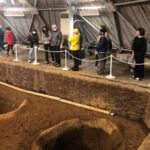
- You’ll see reconstructed foundations of a Jomon-era settlement.
- The site was first discovered in 1992.
- It was later declared a special national historic landmark.
This stop is powerful because it’s the “proof.” Your earlier museum visits give you objects and mini reconstructions. At Sannai-Maruyama, you can walk around the idea of a real settlement footprint—what space may have looked like for daily tasks, dwelling structures, and community life.
Possible drawback: archaeology sites can feel slow if you go without questions. Bring your curiosity. A good guide will help you read the site like a map.
Your guide’s superpower: tailoring 3–4 stops to your interests
The experience is built around choosing 3–4 sites from the core list, based on what you want to prioritize.
That customization is not just a “nice to have.” In a six-hour day, the difference between visiting three versus four locations is huge. It affects:
- how long you can spend at each museum,
- whether you can pause for photos without panic,
- and how much time the guide has to explain what you’re seeing.
From the guide-side experience described, you’ll likely find that guides can adjust around special requests, time constraints, and even mobility needs (as long as you plan within the walking format). If you have a clear preference—festival storytelling, Jomon archaeology, or art—tell your guide early so the day doesn’t feel like compromise.
What to budget for: entrances, lunch, and transportation
Your guide is included, but entrance fees, lunch, and transportation fees are not included. That includes tickets for stops like Wa Rasse, Kyodokan, and the museums listed.
So here’s your real planning checklist:
- Bring cash or a card for museum entry.
- Budget for lunch separately.
- Assume you’ll pay for any local transport you need (though the tour itself is walking-based).
Because the day can flex between 3 and 4 stops, your ticket total will also flex. If you tend to visit museums quickly, you might handle fewer tickets. If you linger, you might end up wanting all the sites your route includes.
Who should book this Aomori private guide tour (and who might not)
This is a great match for you if:
- you want meaning, not just a checklist of photos,
- you enjoy festival culture and local identity (Nebuta),
- you want Jomon history that connects objects to real settlement ground,
- and you like art, especially prints and architecture.
It might be less ideal if:
- you dislike walking and prefer long taxi hops,
- you only want one or two places and then free time,
- or you strongly dislike contemporary art and museum settings.
Also, note the important limit: you cannot visit Hirosaki on this tour. If Hirosaki is on your must-see list, plan a separate outing.
Should you book? My decision rule
Book this tour if you want a guided Aomori day where you understand what you’re seeing—especially if you’re excited about Nebuta culture and Jomon history. The structure fits a six-hour window, and the guide does the heavy lifting of interpretation.
Skip it or choose a different plan if your main goal is pure “wander time” with minimal ticket stops. This works best when you’re ready for several museum-based hours and you’re budgeting for entrances and lunch.
FAQ
How long is the Aomori private tour?
It’s about 6 hours (approx.).
What sites does the tour focus on?
The core options include Nebuta Museum Wa Rasse, Aomori Prefectural Kyodokan, Aomori Contemporary Art Center, Munakata Shiko Memorial Museum of Art, Aomori Museum of Art, and Sannai-Maruyama Site. The tour is customizable to 3–4 sites from that list.
Is an English-speaking guide included?
Yes. The tour includes a licensed local English-speaking guide.
Is there pickup, and is it a walking tour?
Pickup is offered, but this is a walking tour. You’ll meet the guide on foot within a designated area of Aomori city.
Are entrance fees included?
No. Entrance fees are not included, and lunch and transportation are also not included.
Can I cancel for free?
Yes, free cancellation is available. You can cancel up to 24 hours in advance for a full refund.