REVIEW · AOMORI
Aomori Private Customizable 6-Hour Tour
Book on Viator →Operated by Japan Awaits · Bookable on Viator
Aomori can feel like a stop on the way to somewhere else. This tour treats it like the destination. You get a private day where you choose the rhythm, then a guide lines up 3 to 4 targeted stops inside the Aomori area. In my notes, the standout is how the day can swing from Nebuta lantern craft to cypress soaking, without you having to plan a single transfer. One guide I saw mentioned, Yasuo, matched the pace and got people moving early.
I love the hands-on planning side. After booking, you fill out a form with themes like culture, history, cuisine, nature, and special events, and the itinerary is built around your must-sees and exclusions. I also like that you’re not stuck with a rigid checklist: it’s designed as a dream tour at your pace, with an English-speaking professional guide and transportation within the city.
The main drawback is cost and commitment. At $282.76 per person for a 6-hour private format, it’s not a bargain-bin option, and cancellation terms are strict—especially if you cancel after the customized itinerary has been sent.
In This Review
- Key things that make this Aomori private tour work
- How the customizing actually plays out
- Price and value: what $282.76 per person buys you
- Your day starts at Aomori Station at 9:00 am
- Stop type 1: Nebuta history at the lantern museum
- Stop type 2: Contemporary art with rotating exhibits
- Stop type 3: Asamushi Aquarium and dolphin shows
- Stop type 4: The Jomon village found by accident
- Spiritual and cultural stops: Kōyasan Betsuin and Shinto shrines
- Kōyasan Betsuin
- Nebuta-connected shrine role
- Smaller city shrines and Hakkoda-area scenery
- Hiba bath: the 1,000-person cypress soak
- How your guide fits in (and why that matters)
- Timing, transport, and why 6 hours is a sweet spot
- Who should book this tour
- Quick tips so your customized day goes smoothly
- Should you book the Aomori private customizable 6-hour tour?
- FAQ
- How long is the Aomori private customizable tour?
- Is this tour private?
- What does the tour include?
- Where does the tour start?
- What time does the tour start?
- Can I choose the attractions and order?
- Do you offer hotel pickup and drop-off?
- What should I know about cancellations?
- When do I need to fill out the custom tour form?
Key things that make this Aomori private tour work
- Custom themes drive the itinerary so your day matches your interests, not a cookie-cutter plan
- A real guide in the driver’s seat helps with reservations and selections for your chosen stops
- You’ll see 3 to 4 attractions, which is a sweet spot for a 6-hour day without rushing
- Nebuta culture plus modern art plus nature keeps the day interesting even if you like variety
- Transportation stays inside Aomori’s zone so the schedule stays realistic
- Hotel pickup may be available if your hotel is in the city center
How the customizing actually plays out
This tour is built around the idea that “Aomori” means different things to different people. Some want festival stories. Some want animals and aquariums. Some want history you can stand inside. The format lets you steer that.
After you book, you’ll receive a link to a form (sent within 48 hours). You’re expected to fill it out accurately at least 7 days before your tour date. The key point: you can also flag attractions you already visited and don’t want to repeat. That matters more than it sounds, because repeat stops can waste the best part of a limited 6-hour window.
Then the operator creates the route and handles the reservations and bookings needed for your selected stops. That’s valuable if you don’t want to spend your trip time comparing opening hours, ticket types, and best arrival times. It also reduces stress when you’re traveling in Japan without local language support.
You can also read our reviews of more private tours in Aomori


Price and value: what $282.76 per person buys you

Let’s talk value in plain terms. At $282.76 per person, you’re paying for three things at once: a private guide, local transportation within Aomori, and customized planning with reservations made for you.
If you were to piece this together yourself, you’d likely spend time (and sometimes money) coordinating tickets and transit. Here, you’re paying to compress that work into one organized day. And because the day is private, your guide can slow down or tighten timing based on what you actually care about—rather than forcing everyone to move at one speed.
That said, it’s still not “cheap.” This is a smart pick if you’re traveling as a small group, you want a tailored mix (especially culture + nature), or you simply want someone else to do the scheduling math. If you’re on a tight budget and don’t mind public transit plus self-planning, you might choose a less structured option.
Your day starts at Aomori Station at 9:00 am
You meet at Aomori Station (1 Chome-1 Yanakawa, Aomori). The tour starts at 9:00 am and ends back at the meeting point.
If your hotel is within the city center, hotel pickup and drop-off are included. If not, you’ll still start at a transit-friendly place near public transportation. That’s practical because it means you can plan your morning without guessing where to go.
A small but important detail: the guide only waits up to 30 minutes from the start time if you’re late. So if you’re catching a morning train, give yourself a little buffer.
Stop type 1: Nebuta history at the lantern museum
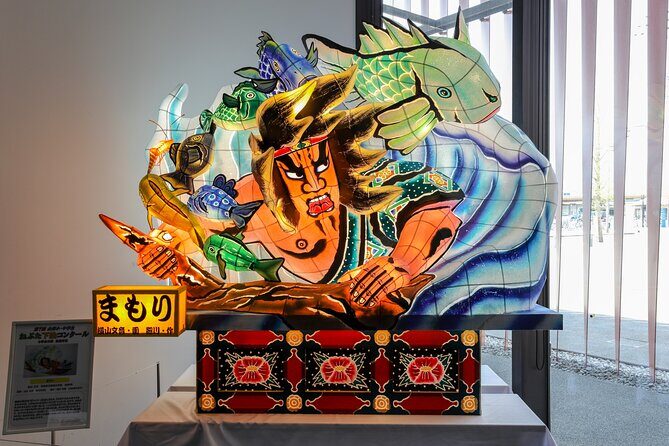
One of the most Aomori experiences you can add is the Nebuta Festival story—this tour includes a museum that focuses on the history and artistry of the giant illuminated paper lantern floats used in Nebuta.
What’s special here is context. If you’ve only seen Nebuta images online, a museum stop helps you understand the craft, the design thinking, and why the lanterns matter beyond the spectacle. It turns a festival moment into something you can actually read and interpret with your guide.
Possible drawback: if you’re visiting outside peak festival season, you won’t see the floats in the same way you might during the event itself. But the museum is there to explain the art and history, so you still get substance.
Stop type 2: Contemporary art with rotating exhibits

Another included option is Aomori’s contemporary art museum. The standout features are the distinctive architecture and rotating exhibitions, so you’re not just ticking a box—you’re seeing what’s on during your visit.
This works well if your idea of a good trip includes modern creativity and you don’t want your whole day to be museums in name only. The rotating shows also mean the museum can feel different from visit to visit.
Possible drawback: if contemporary art doesn’t do much for you, this stop might feel like filler. In a customizable day, you can usually adjust—so make sure your form reflects your real interest level.


Stop type 3: Asamushi Aquarium and dolphin shows
The tour can include Asamushi Aquarium. It’s a solid nature-and-animals stop in Aomori, with diverse marine life and interactive dolphin show programming.
This is often a great choice for mixed-interest groups because it has energy, clear visuals, and a straightforward “everyone gets something” layout. It’s also a good option if the weather turns cold or rainy—indoors wins.
One consideration: since dolphin shows have timing, you’ll want your guide to build the route so you arrive with enough buffer. The tour’s planning support helps here, but you still benefit from being on time for each segment.
Stop type 4: The Jomon village found by accident
One of the most intriguing historical options on the list is a major Jomon period village. It’s described as one of the largest and best-preserved, and it was reportedly discovered during land survey work for a baseball field.
The number that sticks is over 700 structures, dwellings, and artifacts. That scale gives you a real sense of life in the Jomon era—how settled communities could be, and how much remains to interpret.
Why this stop is valuable in a 6-hour schedule: it gives you depth without requiring a full day of archaeology reading. With a guide, you can focus on what matters most rather than wandering through signage with a half-understood timeline.
Possible drawback: if you mainly want scenic views and food experiences, archaeology can feel slower than expected. Still, it’s a high-impact stop for people who like history with real physical evidence.
Spiritual and cultural stops: Kōyasan Betsuin and Shinto shrines
The tour also includes several shrine and temple possibilities, including a Kōyasan Betsuin (a Kōyasan-affiliated place of worship) and multiple Shinto shrine stops.
Kōyasan Betsuin
This option is tied to the Kōyasan tradition in Japan and mentions that the temple was founded by a Great Acharya Ryūkou Oda, and later saw the construction of the Shōwa Daibutsu. That combination of lineage and a major statue makes it a meaningful stop, especially if you like religion as living culture rather than just architecture.
Nebuta-connected shrine role
Another shrine option is described as a historic Shinto site surrounded by lush greenery, known for its role in local festivals including Nebuta Matsuri. That’s interesting because it connects the festival’s visual identity (lanterns) with the local sacred calendar behind it.
Smaller city shrines and Hakkoda-area scenery
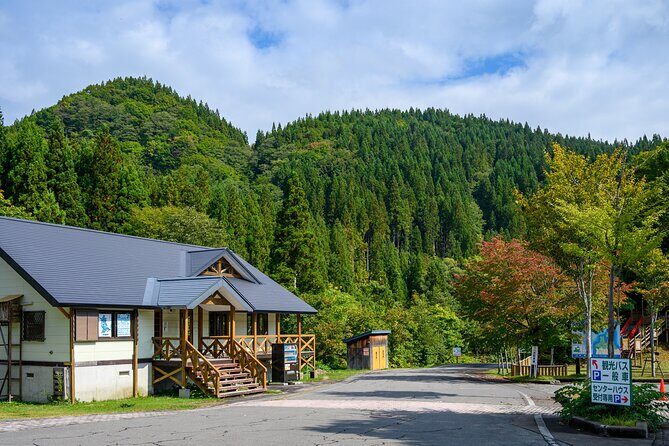
There’s also a smaller, traditional Shinto shrine in the city for a quieter cultural pause, plus a shrine in the Hakkoda Mountains area of Aomori described as serene and historic.
In a customizable day, these stops can act like the glue between heavier museum segments. They’re also a good way to reset your brain in the middle of a packed schedule.
One practical consideration: shrine/temple pacing often depends on walking comfort and weather. The tour is flexible, but you should dress for the conditions and expect some outdoor time.
Hiba bath: the 1,000-person cypress soak
One of the most distinctive items on the list is a famous bath featuring capacity for 1,000 people, made from hiba wood (Japanese cypress). It’s described as resistant to water and decay, and it’s noted for being built without a single pillar.
Even if you’re not a “bath person,” this can still be memorable because it’s cultural tech as much as it is relaxation. The hiba wood aspect matters in snowy, water-heavy conditions—so the story is practical, not just decorative.
A quick reality check: the tour data doesn’t specify whether you’ll actually have time to bathe or if it’s primarily a viewing stop. When you’re filling out the form, it’s worth asking your guide what your time allocation looks like for this specific stop so your expectations match the schedule.
How your guide fits in (and why that matters)
You’re not just buying entry tickets. You’re getting an English-speaking professional guide who handles planning, reservations, and on-the-ground timing.
That’s the difference between visiting Aomori as a list and experiencing it as a coherent day. Your guide can also help you make tradeoffs when your preferences conflict. For example, if you’re torn between art and animals, your guide can shape the route so you don’t spend 30 minutes traveling just to “almost” enjoy both.
From the reviews summary you were given, Yasuo is an example of a guide who matched early timing and worked with a nature-focused custom plan. Even when your interests differ, that same approach—early start, pace control, and route building—tends to be the value driver.
Timing, transport, and why 6 hours is a sweet spot
This is a 6-hour private tour with transportation within the city only. Depending on your booking choices, transportation could be public transit or a private vehicle.
The “3 to 4 attractions” structure matters here. It keeps the day from turning into constant walking between far-flung places. It also means you can actually spend time inside museums and exhibits instead of treating every stop like a photo opportunity.
Another small benefit of private format: your guide can manage the order. For example, museums often pair well with art and festival history, while aquariums and baths can be timed to avoid the busiest parts of the day.
Who should book this tour
I’d point you toward this tour if:
- You want a tailored Aomori day instead of a fixed itinerary
- You like a mix of culture (Nebuta, shrines, temples) and nature (aquarium, mountain-area shrine option)
- You’re traveling with kids or mixed interests and want stops that are easy to enjoy
- You’re the type who appreciates good pacing more than nonstop speed
I’d hesitate if:
- You already love Aomori’s sites and can self-plan easily
- Contemporary art and historical ruins won’t hold your attention
- You want a long-distance day trip outside the city zone (the transport stays within Aomori’s area)
Quick tips so your customized day goes smoothly
- Fill out the tour form with real priorities. If nature is your focus, say so. If you dislike one museum type, note that early.
- Plan your morning so you can arrive at the meeting point at least 10 minutes early. Late arrivals can cut your tour time fast.
- Dress for mixed weather. This is Japan in the real world, not always one perfect day.
- Ask your guide what to expect for the hiba bath stop so you know if it’s time for soaking or mainly a cultural visit.
Should you book the Aomori private customizable 6-hour tour?
If your goal is to see Aomori with intention—Nebuta context, art, marine life, Jomon history, plus spiritual and bath culture—this tour is a strong fit. The big reason is control: you’re not just following a route; you’re shaping it, while a guide handles reservations and timing.
Book it if you value an organized, private day and you want fewer decisions and less guesswork. Skip it if you’re budget-focused and you don’t care about customization. For the money, you’re paying for efficiency and a guide-led experience that turns Aomori from “a stop” into a day with meaning.
FAQ
How long is the Aomori private customizable tour?
It’s approximately 6 hours.
Is this tour private?
Yes. It’s a private tour/activity, with only your group participating.
What does the tour include?
It includes a 6-hour fully customized tour with reservations and bookings made on your behalf, transportation within the city, an English-speaking professional tour guide, and hotel pickup and drop-off if your hotel is within the city center. The tour is designed to help you discover 3 to 4 attractions in the timeframe.
Where does the tour start?
The tour starts at Aomori Station (1 Chome-1 Yanakawa, Aomori, 038-0012, Japan).
What time does the tour start?
The start time is 9:00 am.
Can I choose the attractions and order?
Yes. After booking, you’ll receive a form to choose themes and must-see spots, and you can also note attractions you don’t want to see again. The itinerary is then created around your preferences.
Do you offer hotel pickup and drop-off?
Hotel pickup and drop-off are offered if your hotel is within the city center.
What should I know about cancellations?
The experience is described as non-refundable and cannot be changed for any reason. You also have a staged cancellation fee schedule listed: 100% if cancelled 14 days or less before the event, 50% if cancelled 21 days or less before the event, and 25% if cancelled 30 days or less before the event. If you cancel after the custom itinerary has been sent, a 15% service fee of the total tour cost is nonrefundable.
When do I need to fill out the custom tour form?
You’ll get the form link within 48 hours after booking, and you should complete it accurately at least 7 days before your tour date.