REVIEW · ASO
Aso Caldera and Farm Experience Tour
Book on Viator →Operated by Satoyama Journey · Bookable on Viator
Volcano views meet farm lunch. This half-day private tour pairs Mt. Aso caldera drama with hands-on rural life, starting at the highest northern wall viewpoint and then shifting to a small community where you harvest and cook with local people.
Two things I especially like: the Daikanbo observatory gives you instant, jaw-dropping scale, and the farm stop turns lunch into an experience you participate in, not just eat.
One consideration: this tour depends on good weather, so cloudy or rainy conditions can change what you see at the caldera, and you should be ready for a bit of walking on uneven ground.
Key highlights at a glance
- Daikanbo Overlook: A prime caldera viewpoint with the five peaks of Mt. Aso in view
- Real countryside time: You go beyond the main sights into nearby rural communities
- Hands-on farm-to-table: Harvest seasonal vegetables and help prepare local cuisine
- Shared lunch with local hosts: Meal time is part of the connection, not an add-on
- Private group with an English-speaking guide: Pickup offered and your group stays together
- Weather-dependent experience: Best results when visibility is strong
In This Review
- Aso’s Caldera at Daikanbo Lookout (The View Sets the Tone)
- After the View: Heading From the Caldera to Rural Japan
- Harvesting and Cooking at Tateiwa Suigen Park (Farm-to-Table, Hands-On)
- Why the Lunch Feels Different (This Is More Than Food)
- Private Group, English Guide, Pickup, and Real Timing
- Price and Value: Is $156.09 Worth It?
- Weather, Shoes, and How to Plan Around the Caldera Mood
- Should You Book This Aso Caldera and Farm Experience Tour?
- FAQ
- How long is the Aso Caldera and Farm Experience Tour?
- Where does the tour start and end?
- Is pickup available?
- Is this tour private?
- Does the tour include ticket admissions?
- What fitness level is needed?
- What is the cancellation policy?
Aso’s Caldera at Daikanbo Lookout (The View Sets the Tone)
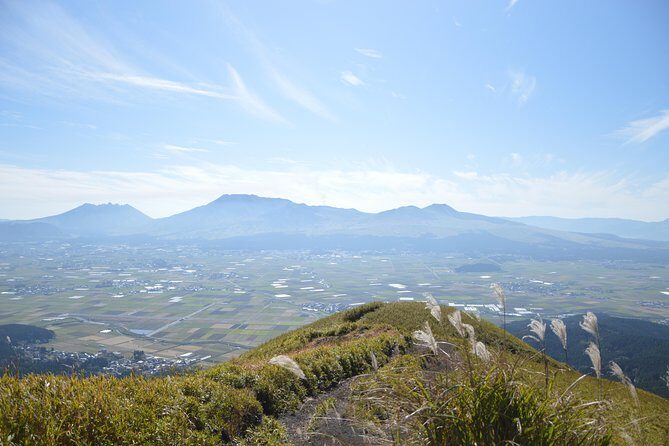
Your tour starts at Daikanbo Lookout (a convenient starting point at Yamada, Aso). From here, you’ll head to the highest point on the north caldera wall, which matters because it changes the whole perspective. Instead of looking at Aso from the edge, you’re positioned to feel the size of the crater and how the surrounding hills frame it.
At Daikanbo, you’ll take in a dramatic view of the five peaks of Mt. Aso alongside the huge volcanic caldera. The setting is also part of the experience: you walk in grasslands with the caldera dropping away on one side, so photos come out with depth and scale (and yes, you’ll want a few different angles before you move on).
You also get the story behind what shaped the area. Even if you’re not a geology nerd, the explanation helps you look at the landscape with context—why the land looks the way it does, and how active volcanoes influence local life. Expect about an hour here, with admission ticket free noted for the stop.
Practical tip: bring something you can layer. Even in comfortable daytime temperatures, viewpoint areas can feel cooler, and you’ll likely stand still for photos.
After the View: Heading From the Caldera to Rural Japan
Once you’ve “got your bearings” at the caldera, the tour shifts gears. You travel to a small community near the volcano, the kind of place you’d miss if you only stayed around the main tourist nodes.
This section is valuable because it changes your understanding of Aso. The caldera is the headline, but rural life is the point of your second half. You’re not just driving through countryside—you’re meeting locals and learning how life and food connect in this area.
You’ll explore the local surroundings with the help of your guide and community hosts. The vibe here is slower and more everyday. That’s where the tour earns its name: the farm experience isn’t staged like a show. It’s tied to what people actually do in their area.
What I like about this pacing: the tour uses the caldera viewpoint to set emotion first, then uses farm life to keep it meaningful afterward. You finish with a memory that’s more than a photo.
You can also read our reviews of more tours and experiences in Aso.
Harvesting and Cooking at Tateiwa Suigen Park (Farm-to-Table, Hands-On)
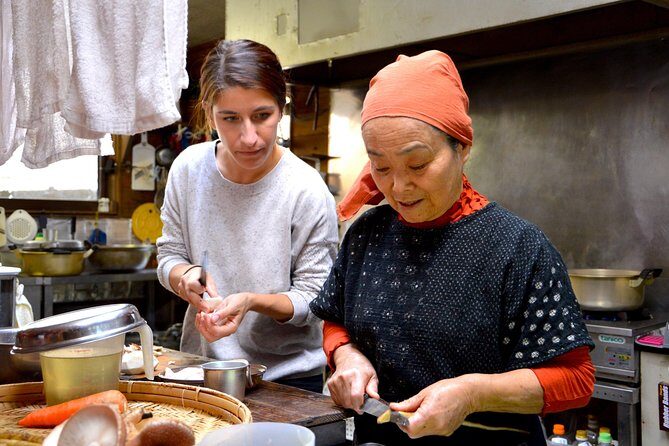
The farming portion takes place at Tateiwa Suigen Park (or a similar location). This is where you go from observer to helper.
Here’s what you can expect during the farm-to-table block (about 3 hours):
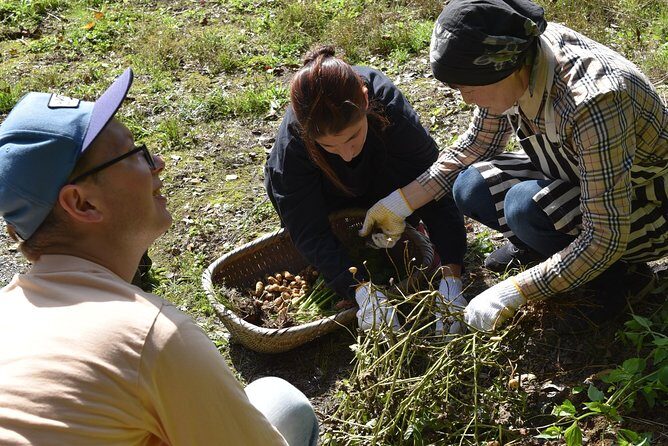
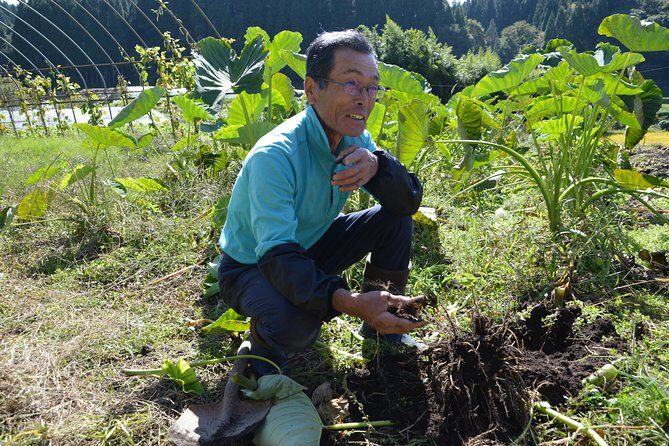
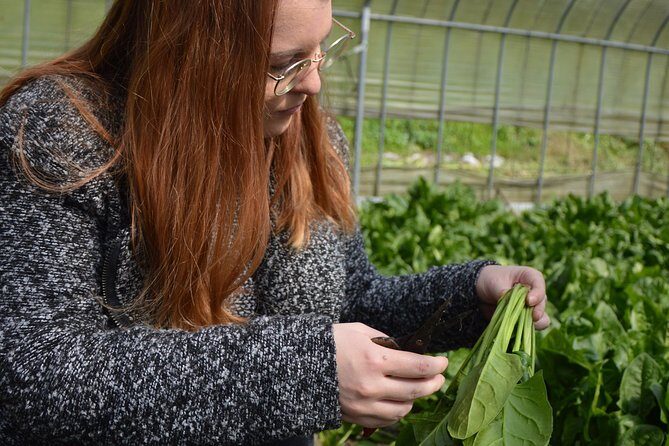
- You’ll harvest seasonal vegetables with locals
- You’ll prepare local cuisine together
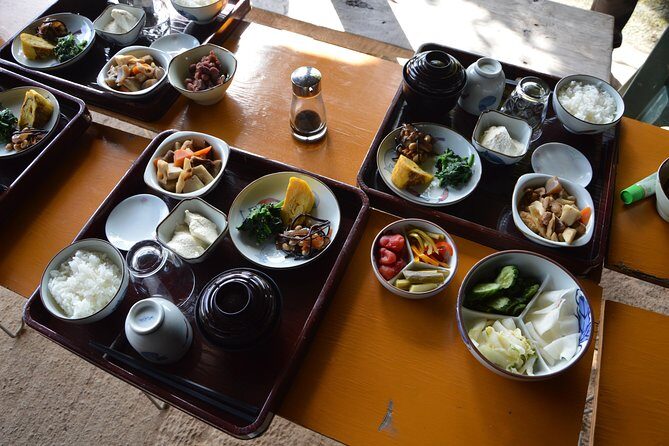
- You’ll share a genuine Japanese lunch made from locally sourced ingredients
That hands-on piece is the heart of the value. You’re not just watching someone else cook. You’re doing the small tasks—picking, preparing, assisting—so you understand the ingredients and rhythms of the place.
In the reviews, one highlight stands out: the food prepared by hosts Nuroko and Hiroko san gets described as simple yet amazing, and harvesting yam is mentioned as a fun part of the day. That’s a good sign. When people remember the ingredient (not just the venue), you’re getting a real local meal culture moment.
Practical tip: wear shoes you can trust. You’ll be outside and doing light physical work. Even if you’re not doing anything intense, you’ll want grip and comfort.
Why the Lunch Feels Different (This Is More Than Food)
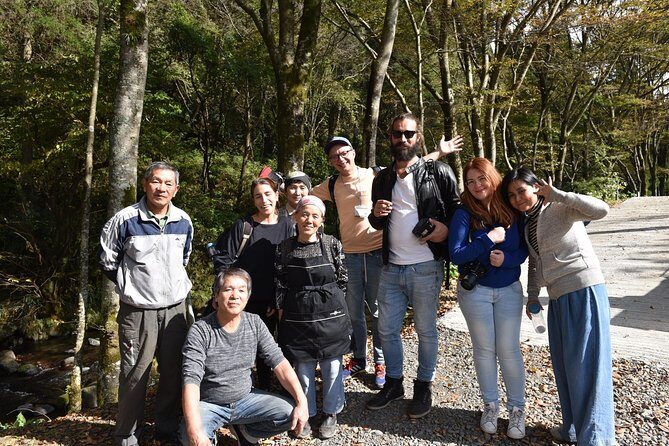
A lot of tours claim farm-to-table. This one is stronger because the meal is tied to participation. When you harvest the ingredients and then help prepare the food, the lunch becomes a moment of translation: you understand what you’re eating and why those flavors fit this area.
That matters for your travel brain. After hours of views and walking around viewpoints, it’s easy to feel like you just collected impressions. Here, you collect a connection. You’ll be sitting down with the same people who guided you—sharing a meal that reflects what’s locally available.
You’ll also get a better sense of rural culture through everyday interaction. The tour frames this as learning about life and culture in rural Japan, and that’s exactly what tends to stick: small conversations, practical explanations, and the warmth of people who are used to working the land.
One small caution: since it’s a shared meal and a hands-on experience, your day will move at farm speed. If you’re the type who likes a tightly timed, quiet itinerary with minimal contact, this may feel less structured than you expect—in a good way for many people, but not for everyone.
Private Group, English Guide, Pickup, and Real Timing
This is a private tour, meaning only your group participates. For couples, small families, and friends, that’s a big comfort factor. You can ask questions, take photos at your own pace, and spend more time exactly where your attention goes—especially important on viewpoint time when weather can shift quickly.
Pickup is offered, and the tour includes free transportation to the same spots where pickup operates. The day starts at 9:00 am at Daikanbo Lookout and ends at the farming location (Tateiwasuigen/Gonbei mura/other). The end location detail matters because you don’t finish back at the same exact point. You’ll finish where the farm experience takes place, and the tour provider notes that transportation is arranged to match those pickup zones.
Also pay attention to the note on physical readiness: travelers should have a moderate physical fitness level. That doesn’t mean you need to be an athlete. It means you should be comfortable with outdoor walking and active time in a rural setting.
Best part of the private format: it lets the guide do more than read facts. With time for back-and-forth conversation, you’ll likely get better explanations—especially about what you’re seeing at the caldera and what you’re working with at the farm.
Price and Value: Is $156.09 Worth It?
At $156.09 per person, this isn’t the cheapest thing you can book around Aso. But private tours don’t price like buffet lines—they’re paying for guide time, transport, and the full experience component.
Here’s what helps the price feel justified:
- You get a private English-speaking guide for the day’s flow
- Pickup and free transport are included, which reduces your hassle cost
- Daikanbo’s observatory time is roughly 1 hour, with admission free noted
- The farm portion is about 3 hours, and it’s hands-on: harvest, cook, and share lunch
- The experience package is designed as one connected half-day, not two separate bookings
When you break it down, the biggest value driver is the farm stop. Harvesting and cooking with locals takes time and coordination, and that’s hard to replicate on your own without local contacts. The caldera viewpoint is spectacular, but the farm-to-table interaction is what makes this tour feel like a memory, not just a stop.
Who should think hard about booking: if you want authentic rural Japan and you’re comfortable with active participation, you’ll likely feel you got your money’s worth.
Weather, Shoes, and How to Plan Around the Caldera Mood
This tour is weather dependent. That’s not a minor footnote here; the whole caldera experience depends on visibility and the look of the peaks.
If the sky clears, your Daikanbo viewpoint time tends to feel dramatic in the best way: deep caldera scale and the five peaks become the main character. If weather is rough, you may get a different experience level from the viewpoint. The provider notes that if it’s canceled due to poor weather, you’ll be offered another date or a full refund.
So how do you prepare?
- Bring layers for outdoor time at viewpoints
- Wear closed-toe shoes with grip for farm walking and light harvesting activities
- Keep expectations flexible for the caldera visibility—your best pictures happen when the weather cooperates
A small but smart strategy: treat the farm portion as the “anchor.” Even if the viewpoint isn’t perfect, the hands-on interaction stays the heart of the day.
Should You Book This Aso Caldera and Farm Experience Tour?
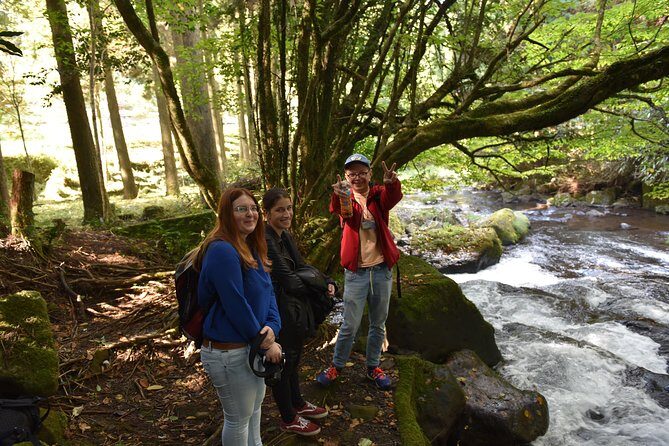
I’d book this if you want the rare combo: the big volcanic spectacle of Aso plus real, hands-on rural culture. You’ll get the caldera overview at Daikanbo first, then you’ll shift into working with locals and sharing a lunch made from local ingredients. That sequence is exactly what makes the tour more satisfying than a simple sightseeing loop.
You might skip it if:
- You strongly prefer low-walking, highly scheduled indoor stops
- You dislike weather-related uncertainty (because the caldera viewpoint depends on conditions)
- Your goal is only sightseeing photos and you don’t care about participating in a farm day
For most people, the decision is simple. If you’re traveling for more than checkboxes—if you want to meet locals, pick vegetables, and leave with a meal memory—this tour has strong odds of becoming one of your best half-days in Kyushu.
FAQ
How long is the Aso Caldera and Farm Experience Tour?
It’s a half-day tour. The plan includes about 1 hour at Daikanbo Overlook and about 3 hours at the farm experience area, plus time for transfers.
Where does the tour start and end?
The start is at Daikanbo Lookout, Yamada, Aso, Kumamoto (starting time 9:00 am). The tour ends at the farming experience location area, such as Tateiwasuigen Park / Gonbei mura / other.
Is pickup available?
Yes. Pickup is offered, and free transportation is also available to the same spots where pickup is provided.
Is this tour private?
Yes. It’s a private tour/activity, so only your group participates.
Does the tour include ticket admissions?
Admission tickets for both listed stops are noted as free.
What fitness level is needed?
Travelers should have a moderate physical fitness level.
What is the cancellation policy?
You can cancel for a full refund up to 24 hours before the experience’s start time. The experience requires good weather, and if it’s canceled due to poor weather, you’ll be offered a different date or a full refund.