REVIEW · OSAKA
Osaka Food Quest: Self-Guided Culinary & History Adventure
Book on Viator →Bookable on Viator
Osaka tastes better with a game plan. This self-guided food-and-history quest turns a Dotonbori walk into a clue hunt, with your smartphone as the host. I like how it pairs famous sights with practical local details, so you’re not just taking photos.
What I really like is the 10 puzzle challenges, which give structure when you’re trying to see a lot in a short time. The other win: you can move at your own pace and pause when lines, cravings, or detours hit. One drawback to consider: it’s app-dependent and there’s no physical guide, so if your phone connection is shaky, you’ll need patience.
In This Review
- Key points at a glance
- How this smartphone quest keeps Osaka from feeling like a checklist
- Starting at Ebisu Bridge: baseball mythology meets real shopping streets
- Konamon Museum: takoyaki culture you can actually see and touch
- Showa Taishu Horumon Dotonbori: the offal stop that separates curious from cautious
- Hozenji Temple (built in 1637): Fudo Myoo and the Namba entertainment era
- National Bunraku Theater: 753 seats, 159 seats, and why performance matters
- Kuromon Market and its black gate origin
- Namba Yasaka Shrine: a shrine moved because Osaka castle got built
- Price and time: is $7.85 really a good deal?
- What to bring (and how to avoid the app frustration)
- Who this Osaka Food Quest fits best
- Should you book this Osaka Food Quest?
- FAQ
- How long is the Osaka Food Quest?
- What do I need to start?
- Is there a physical tour guide with you?
- Where does the quest start and end?
- Can I pause and resume the quest?
- Are admission tickets included for stops?
- Is it available throughout the day?
- Is it a private experience?
- What is the cancellation rule?
Key points at a glance
- 10 puzzle-based challenges guide you through classic Dotonbori-and-market streets
- Self-paced flexibility: pause and resume whenever you want
- Smartphone-first experience: you get a mobile access code and mobile ticket, not a guide
- Food focused, not academic: each stop ties scenery to Osaka eating culture
- Iconic stops: Ebisu Bridge, Hozenji Temple, Kuromon Market, and the Bunraku Theater area
- Low cost, clear value at $7.85 per person for the quest content and storyline
How this smartphone quest keeps Osaka from feeling like a checklist
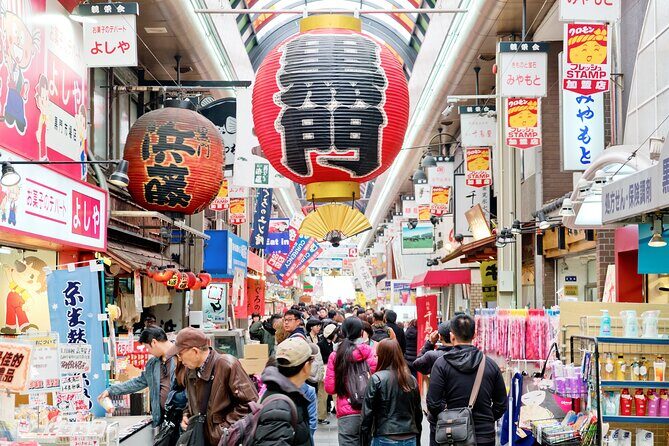
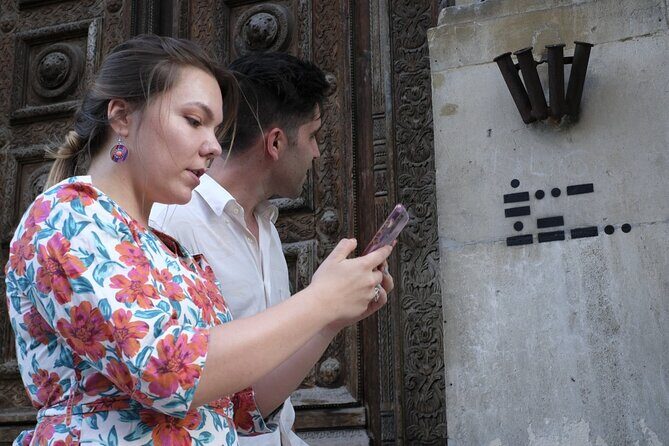
This isn’t a sit-and-listen tour. You’ll use your phone to solve 10 puzzles while walking through central Osaka, especially the Dotonbori area. The goal is simple: each clue nudges you to the next spot and explains how Osaka’s food culture connects to what you’re standing in front of.
Because it’s self-guided, you’re in charge of pacing. Want to linger near food stalls? Go ahead. Need a breather between stops? You can pause and resume. It also helps that this is set up for groups where only your group participates, so it’s not a scramble around a bus schedule.
The trade-off is also clear: there’s no physical tour guide. That means all the “where do we go now?” work falls to the app and your attention. If you’re the kind of person who likes a human guide to translate and steer, you might feel a little on your own here.
You can also read our reviews of more food & drink experiences in Osaka
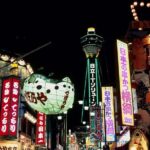
Starting at Ebisu Bridge: baseball mythology meets real shopping streets
You begin at 1 Chome-6 Dotonbori. The first stop is Ebisu Bridge, which connects the Shinsaibashi-suji and Ebisubashi-suji shopping districts. That alone makes it useful: it’s a natural walking hinge between where people shop and where they eat.
The story side adds Osaka flavor. Ebisu Bridge is tied to a legendary curse associated with the Hanshin Tigers. The quest question at this point is all about looking around and finding the right answer to move forward. That means you’ll slow down just enough to notice details you might otherwise miss.
Practical note: bridges and the surrounding streets can be busy, especially around meal time. If you want calm clue-solving, aim for off-peak hours and keep your phone brightness high so you can read without squinting.
Konamon Museum: takoyaki culture you can actually see and touch
After you leave Ebisu Bridge, your path leads to Konamon Museum. The theme here is very Osaka: takoyaki, often treated like the city’s comfort-food calling card.
Konamon Museum is described as a place where you can eat, learn, and make Takoyaki. In the quest, you’ll also hunt for answers by looking around, which turns the museum area from a quick photo moment into a guided walk-through.
If you’re hungry, this is a good checkpoint. Even if you don’t stop for a full meal, just knowing what you’re looking at helps you order smarter when you reach food stalls later. A lot of Osaka’s street-food charm comes from how everyday people talk about tradition through snack-sized bites.
Showa Taishu Horumon Dotonbori: the offal stop that separates curious from cautious
Next up: Showa Taishu Horumon Dotonbori. This is a restaurant specializing in beef offal (horumon). In other words, it’s not just another storefront you pass. It’s a clear signal that this quest expects you to notice how wide Osaka’s food scene can run.
You’ll still be solving another look-around challenge to continue. But even if you don’t plan to eat here, the value is in context: offal is part of Japanese dining culture, and Osaka is one of the places where that appetite shows up in everyday life.
Consideration: If offal isn’t your thing, you can still enjoy this as a cultural stop. Focus on the “why” behind food habits rather than forcing a taste.
Hozenji Temple (built in 1637): Fudo Myoo and the Namba entertainment era
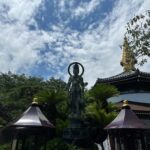
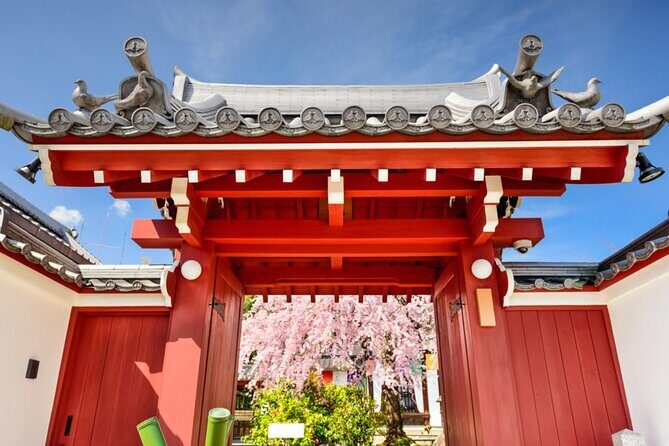
One of the more powerful stops is Hozenji Temple, built in 1637. The site pays homage to Fudo Myoo, one of the five guardians in Buddhism. This gives the quest a different mood: you go from food streets into a sacred, older Osaka atmosphere.
The story connects to time. In the 1600s, the Namba and Dotonbori area grew into a center for entertainment, with kabuki and bunraku performances happening in the district. That’s a great reminder that Osaka’s “street energy” has deep roots; entertainment and food culture often share the same crowded neighborhoods.
You’ll also solve another clue by looking around. That’s where the temple stop feels more than sightseeing. You’re paying attention to small details instead of rushing through.
A few more Osaka tours and experiences worth a look
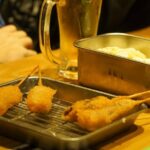
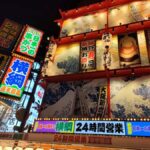

National Bunraku Theater: 753 seats, 159 seats, and why performance matters
From the temple, you move into the orbit of theater with the National Bunraku Theater. It was established in 1984 as the home of Bunraku in the Kansai region.
The theater layout is specific: a main hall with 753 seats and a small hall with 159 seats. The main hall is used mainly for Bunraku performances, but it can also host traditional Japanese dance and other forms of drama. That matters because it links food culture to performance culture—both shaped for the public street-adjacent audience.
As with other stops, your quest task is to look around and answer to continue. If you’re into the arts, this is a satisfying area to linger, even if you don’t catch a show. If you’re not, it still works because the puzzle forces you to notice architecture and context.
Kuromon Market and its black gate origin
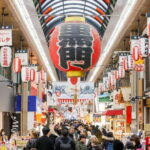
Next comes Kuromon Market, often called by its literal meaning: black gate. The name connects to a specific history thread here. The area opened as a fish market around 1822, and it received approval as an official market in 1902.
The story also points to the past landscape of the neighborhood. The name is said to come from the black gate of Enmyo Temple, which stood in the area until 1912 (the last year of the Meiji Period). That kind of detail is exactly why the quest works: it’s not random trivia. It’s tied to how and why a market like this became a daily hub.
You’ll solve another clue around this market area. Since it’s a market, you’ll likely want to slow down at stalls. Keep your budget flexible, and don’t feel pressure to “finish fast.” Kuromon Market rewards wandering.
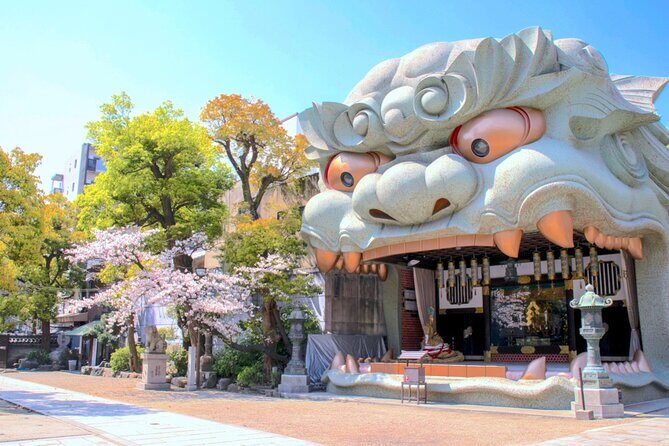
Namba Yasaka Shrine: a shrine moved because Osaka castle got built
Your final major history stop in this route is Namba Yasaka Shrine. The quest story here is political and geographic. It’s said to have been commissioned by Emperor Hanzei in honor of his father, Emperor Nintoku. The present-day shrine location ties to earlier planning: the shrine’s original site is said to have been in what is now Kawachi Matsubara City.
Then comes the city-changing moment. After Hideyoshi Toyotomi began construction of Osaka castle, the shrine was moved to its current location. That’s a very Osaka-style lesson: the city reshapes itself over time, and religious sites can relocate when power and building projects shift.
Again, you’ll answer a look-around challenge to finish that segment of the quest. It’s a nice wrap because it links everyday food streets back to the political engine that helped shape Osaka.
Price and time: is $7.85 really a good deal?
At $7.85 per person, you’re paying for the quest content: the mobile access code, the 10 puzzle-based challenges, and the storyline content tying food and history to real places. You’re not paying for a physical guide. You’re paying for direction, structure, and context while you walk.
Duration is listed as about 1 hour, but in practice you should plan for more. If you want time to read clues carefully, look around for answers, and stop briefly to taste snacks, set aside around 2 to 3 hours. A one-hour run is possible, but it tends to feel rushed. This kind of experience works best when you give yourself slack.
If you’re traveling on a tight schedule, the value still holds. The route covers major Dotonbori touchpoints, and the pacing lets you choose how much food time you want versus puzzle time.
What to bring (and how to avoid the app frustration)
This is smartphone-first, so plan like it’s a photo day.
Bring:
- A fully charged phone
- A way to keep reading comfortably (brightness up helps)
- A light layer if you tend to get cold in air-conditioned areas
Data and performance matter. One key point: the quest content is very small in size (about 2.5MB), so you’re not downloading huge maps inside the game. If the app feels slow, it’s often because your phone is fighting other network-heavy apps at the same time. Closing other apps can help your quest feel snappier.
Also, keep in mind that you’ll be navigating between different streets and landmarks. Start at the correct Dotonbori address, and use Google Maps in the background if you need extra orientation.
Who this Osaka Food Quest fits best
This quest is a strong match if you:
- Like walking routes that feel purposeful, not random
- Enjoy puzzle-style discovery over lectures
- Want a self-paced day in Dotonbori and nearby areas
- Travel as a couple or small group and want flexibility
It’s a less ideal match if you:
- Hate smartphone-based scavenger hunts
- Prefer a human guide to explain everything
- Want a guaranteed, low-friction experience with zero app reliance
Should you book this Osaka Food Quest?
Yes, if you want an easy, low-cost way to turn Dotonbori and Kuromon Market into a story you can follow step by step. The 10 puzzles give you built-in momentum, and the stops are tied to Osaka food culture plus specific historical anchors like Hozenji Temple (1637), Kuromon Market (around 1822/1902), and the Bunraku Theater (1984).
Book it when you have time to linger. Even if the quest can be done in about an hour, you’ll enjoy it more with a 2–3 hour mindset. And if you’re worried about app performance, download before you start, keep your phone charged, and expect the route to feel like a guided walk where you’re the guide.
FAQ
How long is the Osaka Food Quest?
The duration is listed as about 1 hour. In practice, it’s best to give yourself extra time if you want to read clues slowly and stop for food.
What do I need to start?
You’ll need the mobile access code for the quest and you’ll use your smartphone to solve the 10 puzzle challenges.
Is there a physical tour guide with you?
No. The experience is self-guided, and a physical tour guide is not included.
Where does the quest start and end?
It starts at 1 Chome-6 Dotonbori, Chuo Ward, Osaka, and ends at 2-chōme-9-19 Motomachi, Naniwa Ward, Osaka.
Can I pause and resume the quest?
Yes. You can pause and resume anytime.
Are admission tickets included for stops?
Some stops are marked as admission ticket free (like Ebisu Bridge and Kuromon Market). The food you choose to buy is not part of the quest content itself.
Is it available throughout the day?
The opening hours are listed as 12:00 AM to 11:59 PM, Monday through Sunday, during the listed validity dates.
Is it a private experience?
Yes. Only your group participates.
What is the cancellation rule?
You can cancel for free up to 24 hours in advance of the experience start time for a full refund. If you cancel within 24 hours, the amount paid is not refunded.