REVIEW · OSAKA
Osaka E-Bike Tour With A Local Guide
Book on GetYourGuide →Operated by When In Japan · Bookable on GetYourGuide
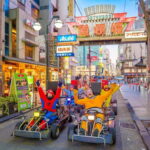
Easy riding, real Osaka neighborhoods, in 3 hours. This small-group e-bike tour strings together Den Den Town, Shitennoji, and Osaka Castle Park with electric pedal-assist that keeps you moving without turning it into a workout. The one thing to consider: you still need to feel comfortable riding a bike in city traffic and keep up with the pace for the full 3 hours.
Guides like Ko (and sometimes you’ll meet others under similar names such as Kosuke/Sukuna) bring the stops to life with clear English, local stories, and a focus on group comfort. If you want to cover lots of Osaka highlights in one go, this route is a smart use of your time—if you fit the height and health limits, and you can ride.
In This Review
- Key points to know before you go
- Why an e-Bike is the smartest way to see Osaka
- The 3-hour route: how the stops connect
- Den Den Town: anime culture you can browse, not just stare at
- Shitennoji Temple: oldest roots, calm pace
- Osaka Castle Park: postcard views plus local stories
- Nakanoshima Park: the calm pocket near the business district
- America Town: fashion and street style with an Osaka twist
- Namba Yasaka Shrine: the lion-head stage ending
- Guide power: what makes this tour feel worth it
- Price and value: what $57 gets you for 3 hours
- Who should book this Osaka e-bike tour
- Should you book this Osaka e-bike tour?
Key points to know before you go
- Pedal-assist makes the ride manageable even if Osaka’s distances surprise you on foot
- Den Den Town to Namba Yasaka Shrine keeps the day’s geography simple and efficient
- English live local guide with friendly humor and practical context at each stop
- Safety and comfort get attention with a small group limited to 7 people
- Photo-friendly stop at Osaka Castle Park plus picture spots you wouldn’t find solo
Why an e-Bike is the smartest way to see Osaka
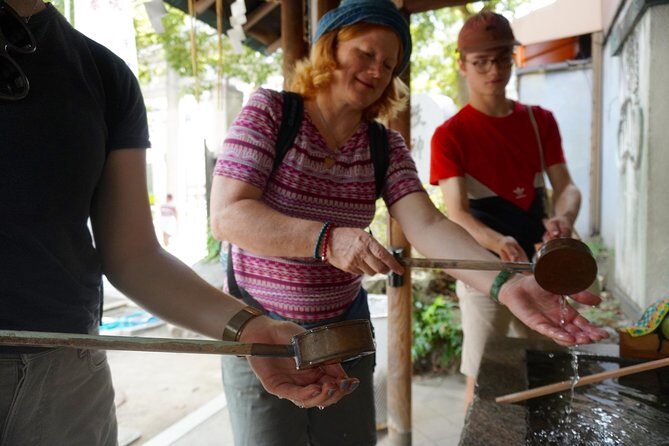
Osaka can feel like two different cities at once. You’ve got concentrated neighborhoods packed with shops and street energy, and then you’ve got pockets of calm—temples, gardens, river paths—where you can slow down and actually look.
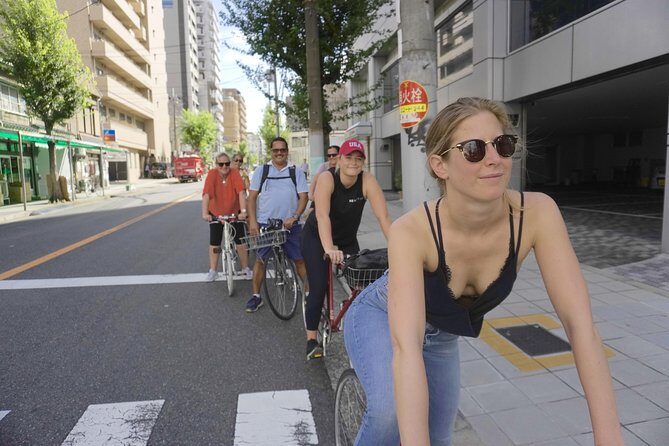
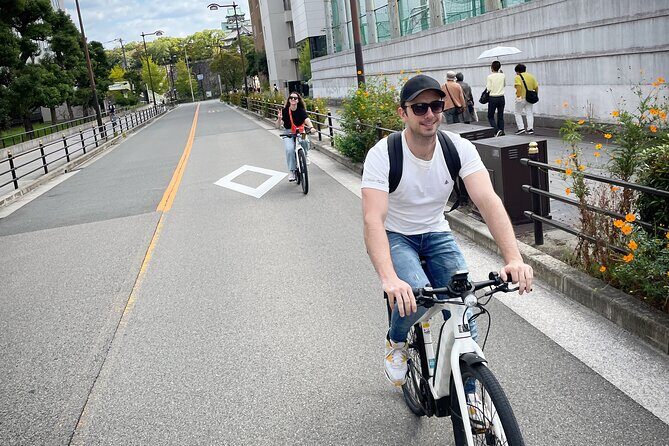
This tour’s e-bike approach is the key. The bikes use pedal-assist, which means you’re still doing the riding, but you’re not fighting every slope or stop-and-go moment. That matters in Osaka, where the streets can add up fast if you’re doing everything by foot or constantly changing transit lines. An e-bike lets you keep your head up and your time together, not hunched over at the end of your legs.
And the 3-hour timing is also a gift. It’s long enough to stitch together multiple “must-see” areas, but short enough that you can still enjoy dinner and the rest of your day without feeling like you used up all your energy.
One practical note: this is not a sit-and-ride scooter tour. If you can’t ride a bike comfortably, or if your body can’t handle steady cycling for 3 hours, you’ll likely feel the strain no matter how much the assist helps.
You can also read our reviews of more cycling tours in Osaka
The 3-hour route: how the stops connect
This is a “see a lot, waste less” itinerary. You’re moving through distinct parts of Osaka instead of circling the same few blocks.
The flow is built around variety:
- Den Den Town for anime culture and quirky shopping
- Shitennoji Temple for old-school Japanese Buddhism history and architecture
- Osaka Castle Park for the city’s biggest landmark energy
- Nakanoshima Park for green space near the business district
- America Town for trend-forward street style
- Namba Yasaka Shrine for a memorable Shinto ending at the lion-head stage
When it works, you get a quick mental map of Osaka: pop culture lanes → spiritual landmark → iconic city symbol → river-side calm → fashion district → shrine spectacle. It’s also the kind of route that helps you plan the rest of your trip because you’ll start recognizing districts and streets.
Den Den Town: anime culture you can browse, not just stare at
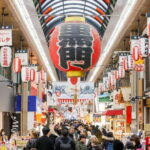
Den Den Town is where Osaka leans into its creative side. Expect shops packed with themed goods—manga, figures, collectibles, and all the oddball memorabilia that makes you wonder how some of it ever got made.
On this tour, the point isn’t just looking at signs. You get time to walk through and soak up the atmosphere, which is the best way to appreciate Den Den Town. If you try to rush it on your own, you end up only seeing the storefronts. Here, you get the chance to actually browse at a human pace while your guide keeps context flowing.
Why I like this stop for visitors: it’s easy to enter. You don’t need to “know” anime to enjoy it. It’s playful, visual, and very Osaka—part shopping arcade, part pop-culture museum, part scavenger hunt.
Potential drawback: if you’re not into collectibles or themed stores, this stretch might feel more “shopping-focused” than “sightseeing-focused.” You’ll still get the neighborhood vibe, but your enjoyment will depend on how much you like browsing.
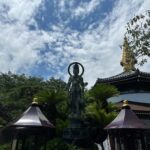
Shitennoji Temple: oldest roots, calm pace

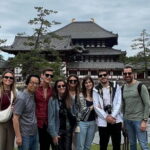
Shitennoji Temple is one of Japan’s earliest major Buddhist temples, and it’s a powerful contrast after the neon energy of Den Den Town. The architecture and the surrounding calm do a lot of work here. Even if you only spend a short time at each stop, Shitennoji gives you that slow-down feeling that temples are famous for.
Your guide typically connects the dots in plain English—how Japanese Buddhism shaped community life over time and what you’re seeing when you look at the grounds and buildings. That kind of context helps you avoid the “I saw a temple” problem and turn the visit into something you remember.
Practical tip for your experience: dress respectfully. Even if you’re just touring, a temple setting usually asks for a quieter tone—lower volume, less rushing, more looking.
Potential drawback: if you’re hoping for a fast, purely scenic stop, you’ll find this one leans more cultural. It’s worth it, but it isn’t just for photos.
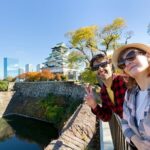
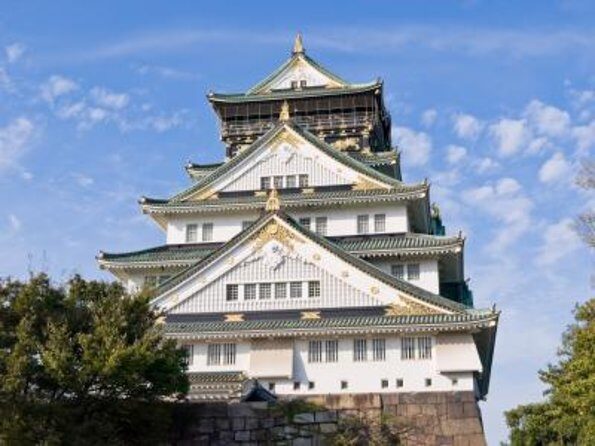
Osaka Castle Park: postcard views plus local stories
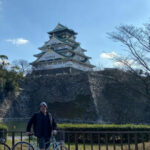
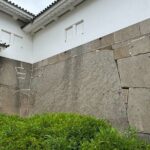
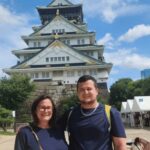
Osaka Castle Park is the big-name stop. The castle area is huge, and your brain can get overwhelmed fast if you’re visiting solo—so having a guide and an e-bike makes the whole thing easier.
What this stop gives you is a mix:
- Iconic landmark energy
- Open park space that’s great for photos
- The chance to hear local legends and history in a way that feels connected to Osaka, not like a textbook
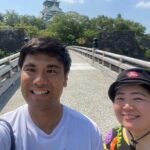
Many people love this moment because you can actually get good pictures without spending an entire day on logistics. With the e-bike, you can arrive, move around the park area, and still keep the rest of the tour intact.
Also, guides often help with photo timing and angle. In the experience descriptions, there’s a recurring theme: you don’t just get to the castle—you get pointed toward solid photo spots.
Potential drawback: weather matters. Parks and open areas feel it more than indoor stops. If it’s cold or hot, plan clothes that you can adjust quickly, and don’t rely on your jacket to do all the work.
You can also read our reviews of more guided tours in Osaka


Nakanoshima Park: the calm pocket near the business district
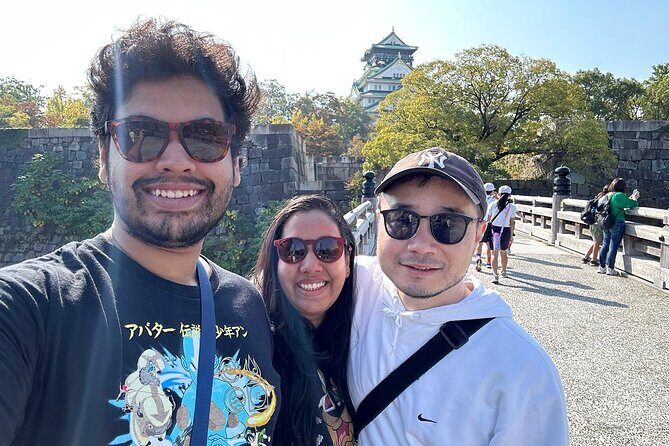
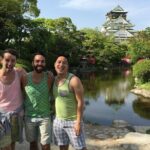
Nakanoshima Park is Osaka at its quieter pace. It sits in the business district, which makes it feel almost like a secret breath of air—gardens, wide paths, and riverside views where you can actually hear yourself think for a minute.
This stop is a smart “reset” after the castle landmark area. Your guide can frame why it matters as Osaka’s first public park, which adds meaning beyond the scenery. Even if you don’t memorize every detail, the point lands: Osaka isn’t only about big monuments and shopping streets. It also cares about public green space in the middle of modern life.
Why you’ll appreciate this as a cyclist: it’s the kind of stop where you can slow your body down too. You’re not constantly climbing or sprinting between places. You get to walk the paths, look out toward the water, and take a real break.
Potential drawback: if you’re strictly chasing “wow” sights every minute, parks can feel slower. Think of Nakanoshima as recovery and reflection time.
America Town: fashion and street style with an Osaka twist
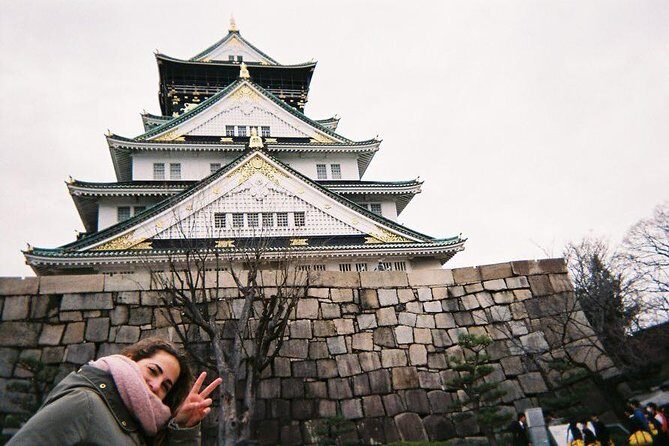
America Town is where Osaka shows off its style side. The vibe is trendy, the streets feel made for wandering, and the shops are the kind that turn your head even if you’re not shopping.
This is an enjoyable stop because it lets you do something simple: follow your curiosity. Look for clothing, accessories, and shop windows that feel different from the traditional tourist image of Japan. It’s a great place to notice how local neighborhoods adopt and reinterpret global trends.
Your guide’s job here is usually to help you connect what you’re seeing to the larger Osaka story—how districts develop identity, how shopping areas become social hubs, and how style becomes part of the city’s language.
Potential drawback: if you’re traveling light and hate shopping districts, you might treat this as a quick wander and photo stop. That can still be good, but it won’t feel like “must-do sightseeing” in the same way as the temple or castle.
Namba Yasaka Shrine: the lion-head stage ending
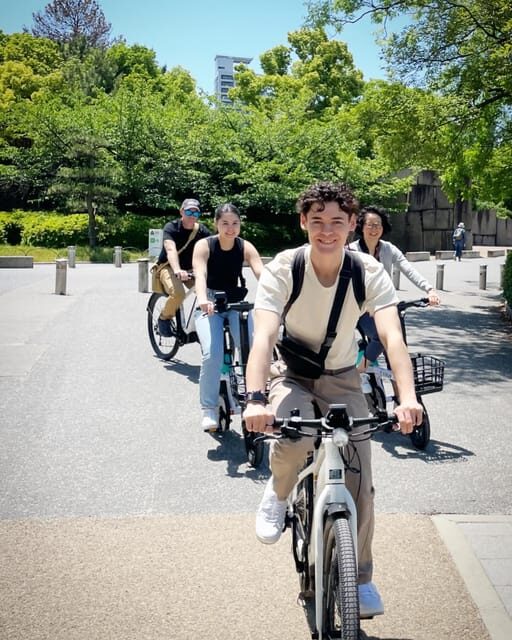
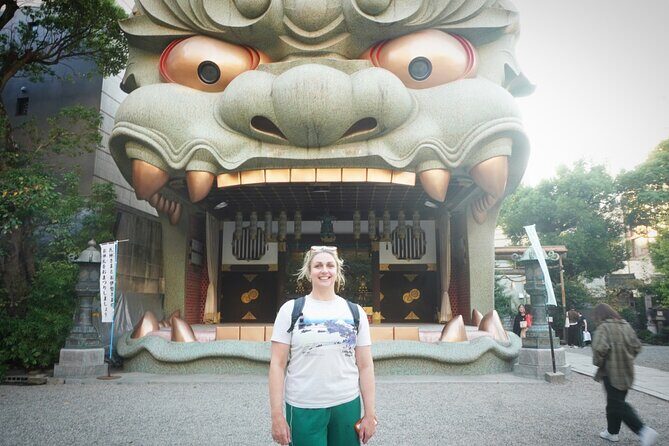
The tour finishes at Namba Yasaka Shrine, famous for a giant lion head stage. That kind of visual detail sticks in your memory because it’s not subtle. It’s the sort of feature that makes people stop, point, and take photos right away.
Your guide typically shares how Shinto fits into Japanese culture and daily life—what you’re looking at and why it shows up in places people visit and communities gather. That’s a satisfying ending, because it brings you back to Japan’s living tradition instead of ending on a shopping or view-heavy note.
Why I think this ending works: it’s dramatic but calm enough to feel like closure. You’ve seen pop culture, spirituality, landmark history, city parks, and street style. Then you land at a shrine with a clear, memorable symbol and cultural explanation.
Potential drawback: you may want to keep an eye on time and energy here, since it’s the final stop. If you arrive tired, the shrine’s main feature might feel like just another photo moment. If you’re feeling good though, it lands well.
Guide power: what makes this tour feel worth it
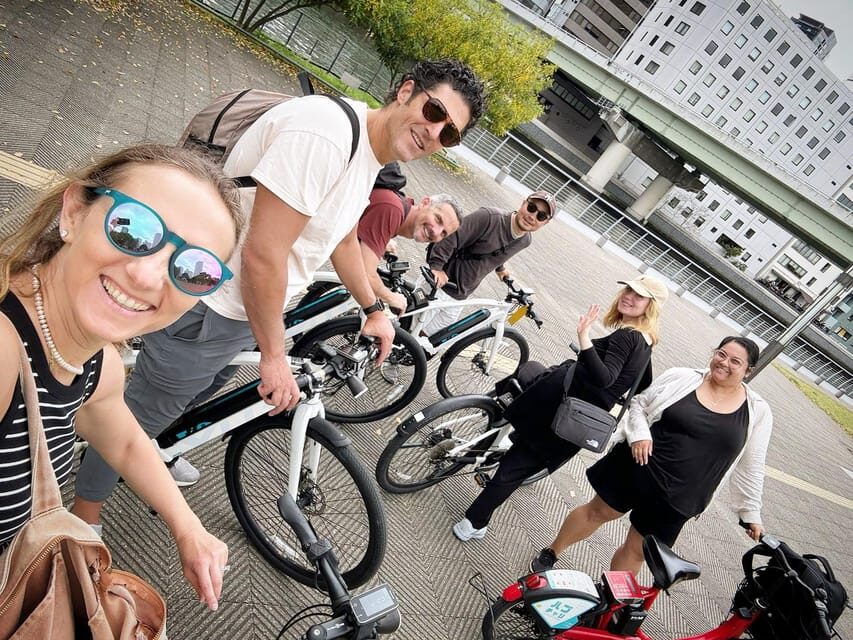
In a city like Osaka, a good guide can turn a simple route into a personal introduction. On this tour, the guides are repeatedly described as friendly, funny, and approachable—people who balance stories with practical guidance.
Ko is the name that shows up the most in the descriptions, and that’s a great sign. A guide with strong English, a relaxed humor style, and real comfort leading groups tends to do three crucial things:
- Keep the pace manageable for the whole group
- Make sure everyone feels safe on the bike
- Explain what you’re looking at without turning it into a lecture
The small group size matters here. Limited to 7 participants, you’re not lost in a crowd. It’s easier for the guide to monitor how everyone is handling the ride, especially at intersections and during stop-and-start moments.
Also, the e-bike setup and helmet being included makes it feel complete from the start. You’re not hunting for gear, and you can focus on the city.
Price and value: what $57 gets you for 3 hours
$57 for a 3-hour guided e-bike tour is a fair value when you look at what’s included and what it replaces.
Here’s the value equation I’d use:
- You’re not just seeing one district. You’re covering multiple areas that would take time by transit or foot.
- You’re getting interpretation at major landmarks like the temple and the castle area, which is what turns sightseeing into understanding.
- Your transport is handled. Electric bikes with pedal-assist plus a helmet are included, so the tour doesn’t feel like an add-on service.
Could you piece together the same stops on your own? Yes, but you’d still pay for transport and you’d spend more time figuring out routes, timing, and where to stand for good views. In 3 hours, the guide-led structure is what saves you.
My bottom line: if you want a compact Osaka orientation day—without burning your legs—this price can make sense.
Who should book this Osaka e-bike tour
This one fits best if you:
- Can ride a bike and feel comfortable cycling on city streets
- Are at least 14 years old and within the height limit of 140 cm
- Are between a workable fitness level and ready for continuous riding for 3 hours
- Prefer a guided route with cultural context, not just general roaming
It’s not intended for people with specific medical and mobility needs. The tour notes it isn’t suitable for:
- People with back problems
- People with mobility impairments
- People with heart problems
- People who can’t ride a bike
- People visually impaired
- People with low level of fitness
- People over 70 years
If you’re unsure, choose cautiously. Even with pedal-assist, the ride still demands balance, bike control, and basic endurance.
Should you book this Osaka e-bike tour?
I’d book it if you want a first-time Osaka plan that mixes anime culture, classic temples, a major landmark, parks, and street style without turning your day into a full-on marathon. It’s especially compelling for people who like clear pacing, a friendly English-speaking local guide, and the convenience of covering a lot of ground efficiently.
I would skip it if you can’t ride a bike comfortably, need more mobility support than the tour can provide, or you’d rather spend your time in just one neighborhood at a slow, wander-only pace. In that case, you might get more joy from a lighter self-guided day.
If you meet the basic ride requirements, this is a strong way to get your bearings fast and feel like you actually understand Osaka’s different sides.