REVIEW · NOBORIBETSU
Bamboo Ice Cave: Snowshoe to see a natural phenomenon!
Book on GetYourGuide →Operated by Nobo Tours · Bookable on GetYourGuide
Bamboo ice sounds unreal until you see it. This winter snowshoe outing in Hokkaido takes you into an abandoned mine cave near Noboribetsu to witness bamboo ice grow from frozen drips, then back out through quiet forests dusted in snow.
I especially liked the small group format (limited to 7), which keeps the pace human and the stops useful. And the day doesn’t skimp on comfort: you’ll get a hot drink plus lunch right near the cave, with homemade touches credited to Yasuko, the guide’s wife, who bakes sourdough for the sandwiches and finishes with chewy chocolate chip cookies.
One possible drawback: you need to be ready for real winter hiking. You’ll cover around 7km over uneven terrain, and conditions can change fast, so cold and weather tolerance matter.
In This Review
- Key highlights you’ll actually feel
- Bamboo ice in an abandoned mine near Noboribetsu
- How the 6-hour snowshoe day actually flows
- Walking the winter forest: snow bridges, footing, and pace
- Lunch by the cave: warm fuel in a snowy setting
- Getting close to bamboo ice formations
- What to wear on snowshoes (so you don’t suffer quietly)
- Guide-led details: where the day feels smooth
- Price and value for a 6-hour small-group winter day
- Who should book—and who should skip it
- Should you book the Bamboo Ice Cave snowshoe tour?
- FAQ
- Where is the Bamboo Ice Cave experience located?
- When does bamboo ice appear?
- How long is the snowshoe tour?
- How far do you walk during the tour?
- What is included in the price?
- What should I bring with me?
- Are there any clothing items that are not allowed?
- How big is the group?
- What happens if the weather is bad?
Key highlights you’ll actually feel
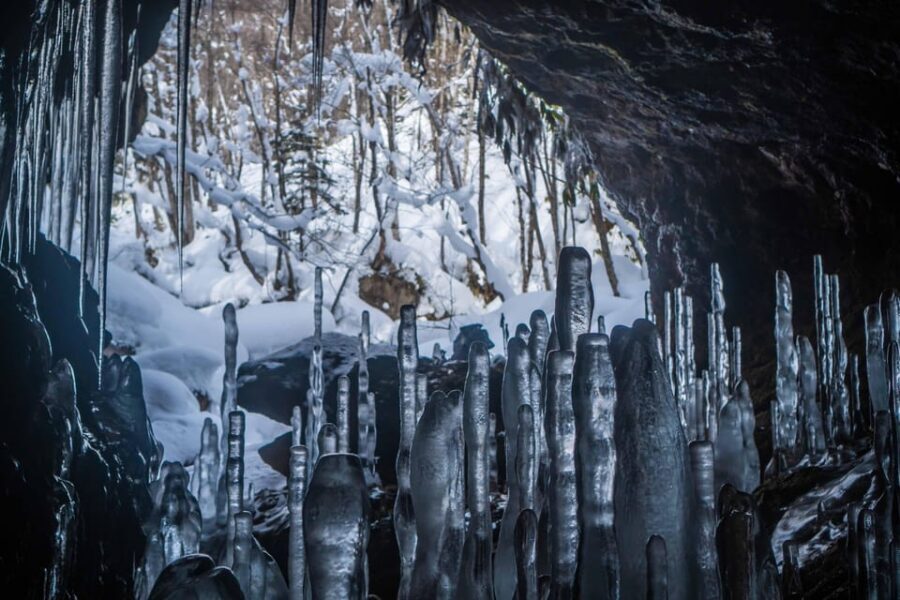
- Bamboo ice inside an abandoned mine cave near Noboribetsu, formed from dripping water freezing overnight
- Snowshoe trekking through a winter forest with small streams crossed on compacted-snow snow bridges
- Lunch under snow-covered trees with a warm drink at the cave area
- Stalactite and stalagmite ice formations up to 4m high that build over weeks each season
- Up-close guide storytelling in English and Japanese, with photo help and nature facts
Bamboo ice in an abandoned mine near Noboribetsu
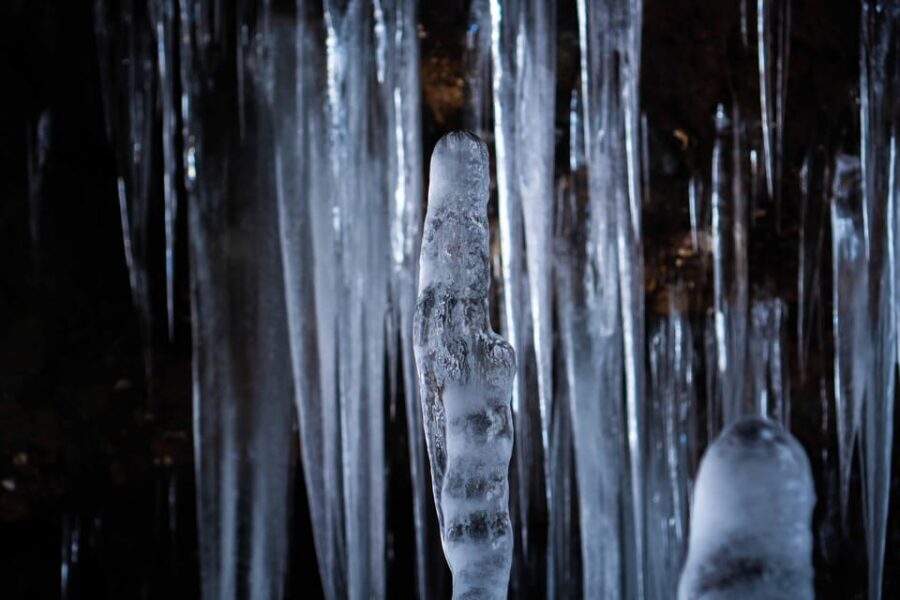
The whole point of this tour is the winter phenomenon called bamboo ice. In Hokkaido, it forms every winter for about 10 weeks in an abandoned mine cave near Noboribetsu. The formation happens because water drips from the ceiling and freezes at night, repeating the cycle again and again. Over time, that process grows ice like thin columns and branching pieces that can reach impressive heights, with stalactite and stalagmite formations up to 4 meters.
What makes this worth your time is how rare it is in Hokkaido. This particular type of cave ice is one of only three caves in the region where you can see bamboo ice. So yes, you’re doing a snowshoe walk in the winter woods—but you’re also arranging your day around a natural show that only runs for a short slice of the season.
You’ll also notice the setting fits the ice. The cave is in a mine area, which gives a different mood than a normal hiking spot. It’s part adventure, part science experiment you can see with your eyes. And if you’re the type who likes to understand what you’re seeing, your guide will connect the dots between freezing, dripping, and why the shapes change as the weeks go by.
A few more Noboribetsu tours and experiences worth a look
How the 6-hour snowshoe day actually flows
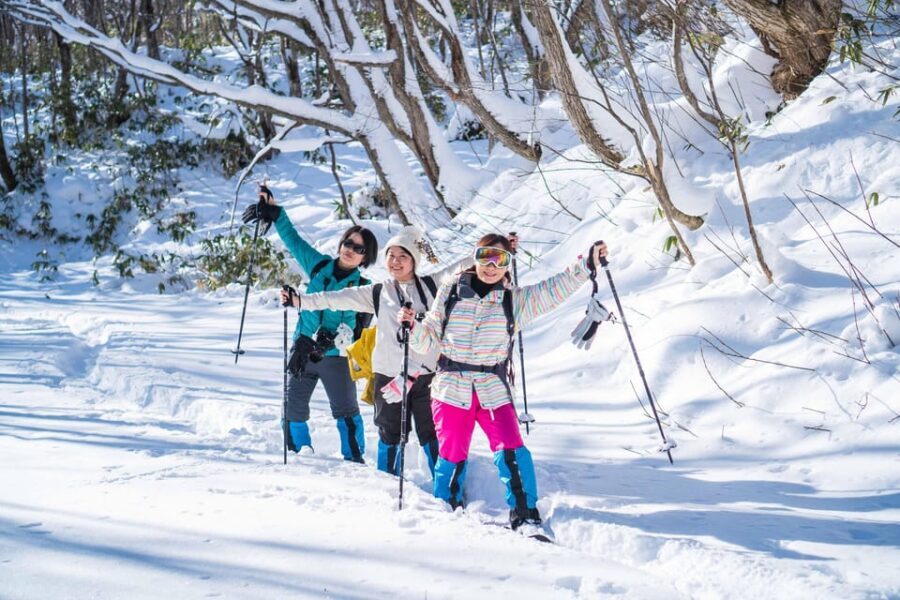
This is a 6-hour outing, built as one continuous loop. The day starts with pickup from your hotel or accommodation, then you head toward Noboribetsu. Along the way, the guide helps you get set with snowshoe gear—this tour supplies the snow shoes, poles, and gaiters—so you can focus on the walk, not equipment hunting.
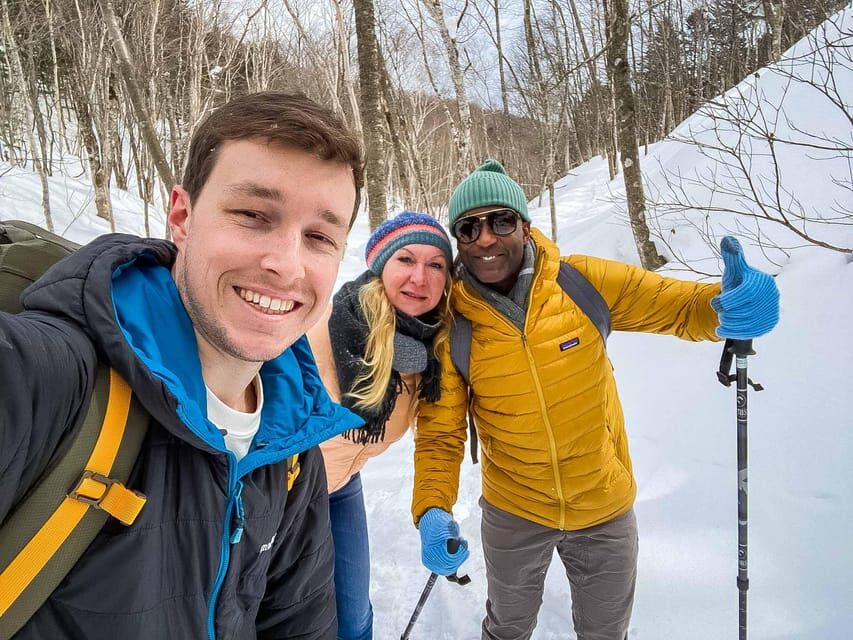
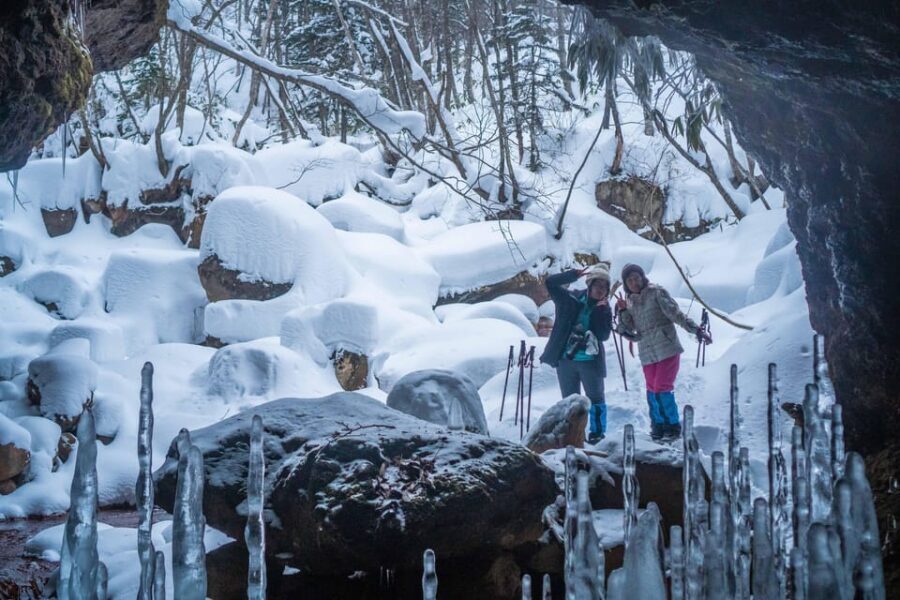
Once you start moving, the route is designed to be scenic and manageable. You’ll snowshoe through a winter forest where trees sit under snow. There are also several small streams on the way, and you cross them via snow bridges. These aren’t “look but don’t touch” bridges either. You’ll actually step across compacted snow, so stable footing matters.
You’ll cover about 7km total on uneven terrain. That distance doesn’t sound huge on a warm-weather hike map, but winter snowshoeing is slower work. The guide helps keep it steady with short breaks, and you’ll likely learn small nature facts during pauses so the walk doesn’t feel like one long slog.
Then you reach the cave area. That’s when you switch modes from “moving through snow” to “standing still and staring at ice.” You’ll eat lunch first, then go explore the bamboo ice. After that, the tour reverses—snowshoe back the same way and return to Noboribetsu by car.
Walking the winter forest: snow bridges, footing, and pace
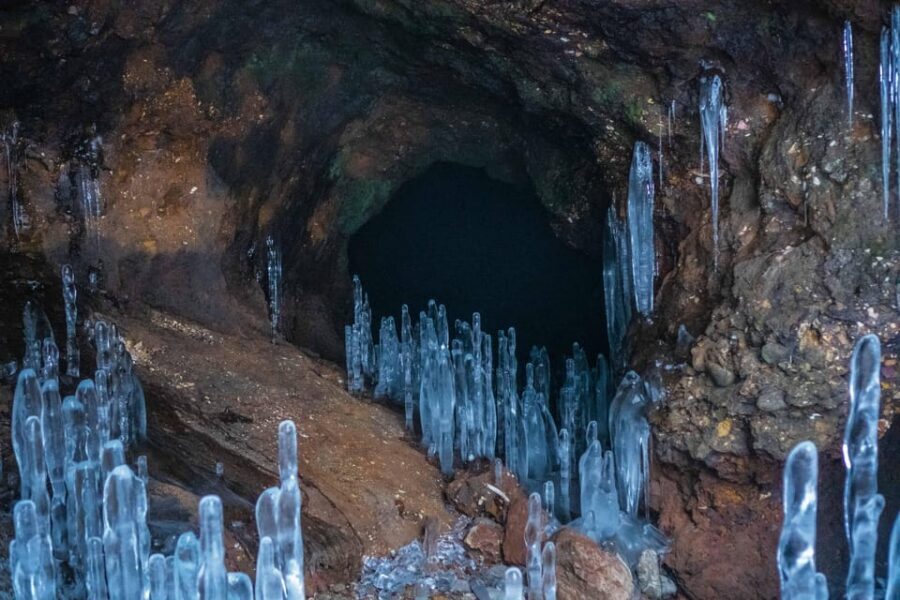
Snowshoeing in Hokkaido can feel oddly peaceful. The forest is quiet, the air is cold, and everything looks crisp. The practical part is that you’re still hiking over uneven ground. Snowshoe tracks can change with each patch of snow, and the guide’s role becomes important: they pace you, adjust stops, and watch footing so you don’t feel rushed.
The snow bridges over streams are one of the route details that make this more than just a straight line. The compacted snow bridge gives you a safe crossing, but your body still needs to treat it like a crossing—slow down, plant carefully, use the poles if the guide recommends it, and keep your weight balanced.
Group size helps here. With a small group limited to 7, the guide isn’t herding a crowd. You’re more likely to get those small “slow down here” corrections that keep everyone confident. In one experience, the guide also offered to take photos during the day and share them later, which adds a nice touch when you’re trying to enjoy the view instead of juggling a camera while walking.
A realistic drawback: if you don’t have warm layers and good gloves, your hands will pay the price first. Cold fingers make everything feel harder. So treat clothing prep as part of the hike, not an optional extra.
Lunch by the cave: warm fuel in a snowy setting
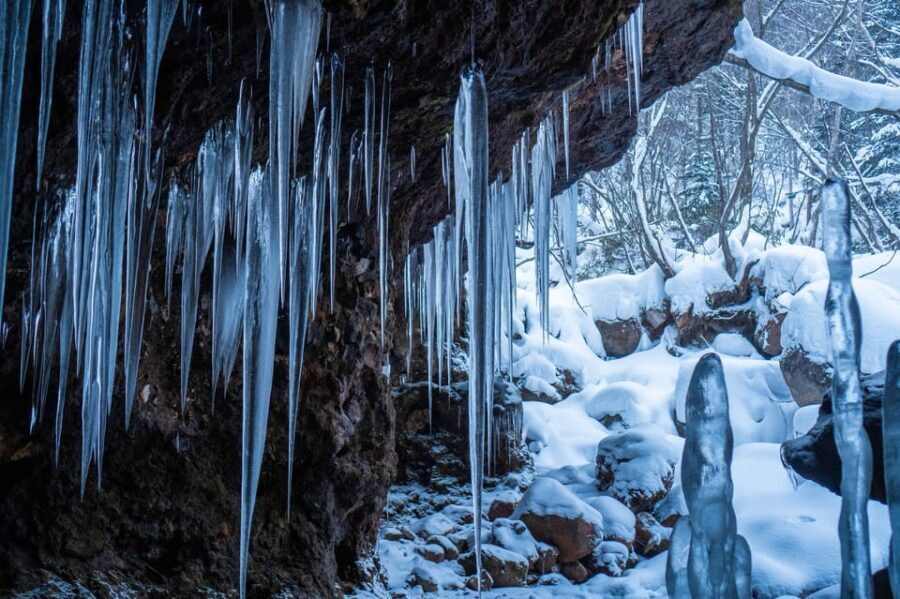
Once you arrive at the cave, the day shifts to comfort. You’ll have lunch and a hot drink near the cave area, eaten under snow-covered trees. That detail matters more than it sounds. In cold weather, you don’t just want food—you want warmth that lasts long enough to take the edge off before you explore the ice.
The lunch in practice seems to be a highlight for many people. One memorable touch is the homemade sandwich, including the bread, made by the guide’s wife, Yasuko. In another case, the hot chocolate at the cave area was called out as a welcome perk. It’s not just about calories; it’s about feeling looked after while you stare at something rare.
Then there’s the sweet finish: chewy chocolate chip cookies show up after the meal. That’s small, but it makes the whole experience feel like a full day, not a quick drive-by attraction.
This is also where you’ll want to slow your brain down for the ice. If you eat fast and rush back out, you miss the mood shift. I like using lunch as a buffer: get warm, hydrate a bit, then switch from trekking mode to observation mode.
Getting close to bamboo ice formations
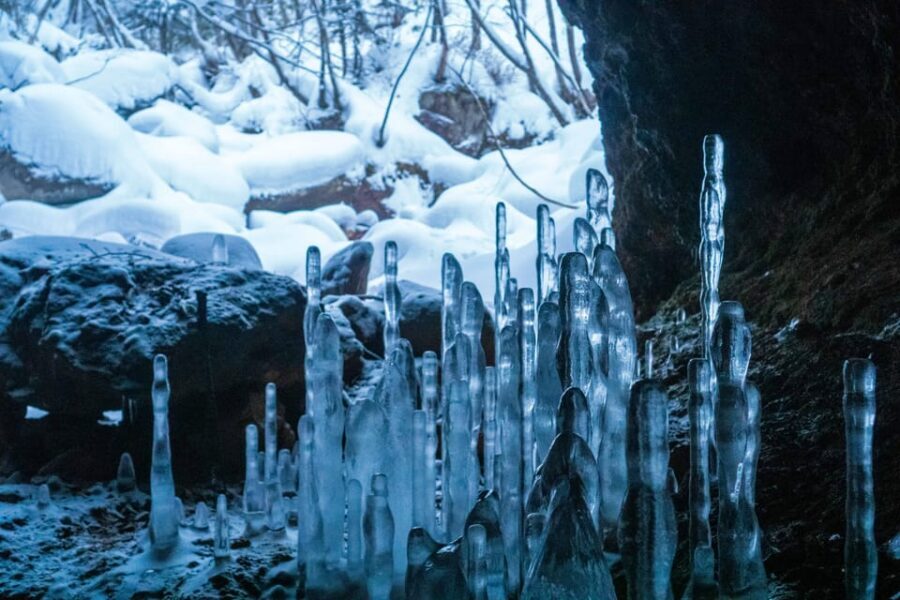
Exploring bamboo ice is the “wow” moment. The formations grow because of repeated freezing of dripping water. Inside the cave area, you’ll see ice shaped into stalactite-like and stalagmite-like forms, with growth that can reach up to 4 meters. The shapes can look delicate and structured at the same time, like nature built its own geometry.
What surprised me in places like this is how different ice can look from one angle to another. As the guide points out features, you start understanding that the bamboo ice isn’t one single object. It’s a set of repeating frozen drips that have built over time into columns and clusters.
You’ll also want to be patient here. The best viewing usually comes from stepping back, letting your eyes adjust, then walking a few steps to change your perspective. If you’re bundled up correctly, you can stand and look longer without feeling like you need to escape immediately.
Another practical point: caves can be cold and damp-feeling even when the walk outside was manageable. Your layers matter. If you overheat on the snowshoe section, you’ll still need the option to warm back up when you stop moving.
What to wear on snowshoes (so you don’t suffer quietly)
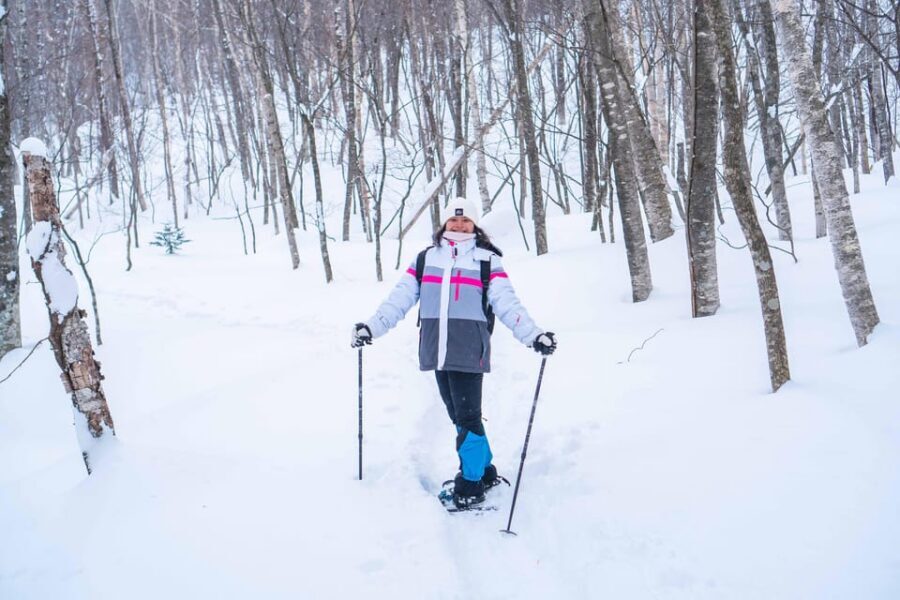
This tour is very clear about winter clothing. You need warm layers you can add or remove as you get hot or cold. The goal is comfort and mobility, not fashion.
Here’s what you should plan around:
- A windproof jacket (not just a hoodie)
- Gloves and a hat
- Sunglasses, because bright snow can be harsh
- Hiking shoes, plus warm socks that work with your footwear
- A daypack to carry what you need (water is explicitly on your list)
Avoid cotton when possible. Cotton holds onto moisture. In cold conditions, that can make you feel colder than you expected, especially if you sweat during the snowshoe hike.
Also note the clothing restrictions: jeans and skirts aren’t allowed. The reason is simple: movement in snowshoes and winter terrain is awkward with restrictive or heavy clothing. Choose something that lets you walk naturally and step carefully.
And prepare for bad weather even if the sky looks nice. Mountain weather can turn quickly in Hokkaido. That doesn’t mean panic. It means bring the gear and keep your attitude flexible, since the tour may be canceled or postponed if weather becomes unsafe.
Guide-led details: where the day feels smooth
The guide is a big part of why this tour works well. You’ll have a live guide in English and Japanese, and the best guides don’t just narrate—they help you feel ready before you move.
In particular, Aidan (also spelled Adian in one booking record) and the team style of leadership shows up in a few practical ways:
- Clear preparation and communication so you know what to wear and how the walk works
- Mini-breaks and stops timed to keep the group comfortable
- Nature facts shared along the way so the hike feels purposeful, not repetitive
- Help with photos, with some guests receiving photos after the tour
That matters because snowshoeing can be intimidating if you don’t have any confidence. When the guide keeps breaks short and useful, you start to relax. Then you can enjoy what you came for: the cave and the ice.
The small group format reinforces that. With fewer people, the guide can respond quickly to questions and adjust pace without slowing everyone down for long.
Price and value for a 6-hour small-group winter day
The price is $154 per person for a 6-hour experience. At first glance, it’s not “cheap.” But value in winter tours often comes from what you don’t have to manage yourself.
Here’s what this price covers:
- Snowshoe equipment: snow shoes, poles, and gaiters
- A hot drink
- Lunch
- Pickup and drop-off from your accommodation
- A live guide in English and Japanese
- A small group limited to 7
That’s a lot to bundle together for a remote winter activity. In many places, snowshoe rental, transportation, and a guided route can add up fast—especially when the activity depends on weather and seasonal timing. Here, you’re paying for the full package: gear, food, and a guide who knows where the ice is growing and how to navigate the walk.
The biggest way you can “lose value” is if you’re not physically suited to the day. This tour involves about 7km on uneven terrain in winter. If you’re not comfortable in those conditions, you won’t enjoy the ice as much as you should.
If you are comfortable hiking in winter, this looks like a solid deal: you’re spending a full half-day outside, using provided equipment, and getting a meal that keeps you warm instead of forcing you to buy snacks in the cold.
Who should book—and who should skip it
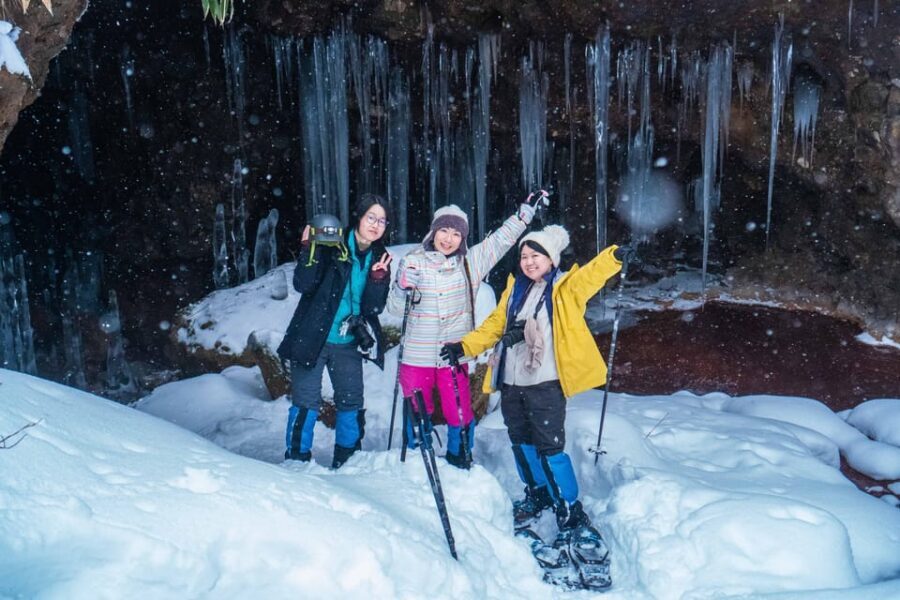
This tour is a good fit if you:
- Want a rare natural phenomenon with a real explanation behind it
- Enjoy winter walking and snowshoeing
- Like small group days with a calm pace
- Appreciate a guide who shares details and helps you take photos
- Are okay with cold and plan layers accordingly
It’s not suitable for people who fall into any of these categories: pregnant women, people with back problems, mobility impairments, wheelchair users, people with heart problems, people with respiratory issues, and people with a cold.
That list isn’t there to be strict. It’s there because the activity is physical and in cold weather. Even if you love nature, you don’t want to treat a winter hike like a casual stroll.
If you’re coming from a place where winter gear and hiking are not part of your routine, don’t guess. Use the tour’s guidance: warm layers you can adjust, windproof outerwear, gloves, hat, sunglasses, and shoes built for walking.
Should you book the Bamboo Ice Cave snowshoe tour?
I’d book this if you’re chasing something genuinely different from the usual snowy sightseeing. Bamboo ice isn’t available all year, it happens for about 10 weeks each winter, and it grows in an abandoned mine cave near Noboribetsu. Add a scenic snowshoe trek through forest and streams, plus lunch and hot drinks under snow-covered trees, and you’ve got a full, coherent day.
Skip it if you know you can’t handle cold or you’re limited by health concerns listed by the operator. Also skip it if you don’t want to commit to proper winter clothing. This tour rewards preparation. If you show up layered, stable on your feet, and ready to slow down and look at ice, it will feel like a one-of-a-kind experience rather than just another winter walk.
FAQ
Where is the Bamboo Ice Cave experience located?
It takes place in Hokkaido, Japan, near Noboribetsu. The bamboo ice is visible in an abandoned mine cave.
When does bamboo ice appear?
Bamboo ice forms every winter for about 10 weeks.
How long is the snowshoe tour?
The duration is 6 hours.
How far do you walk during the tour?
You’ll walk about 7km over uneven terrain.
What is included in the price?
Included items are snow shoes, poles, and gaiters, plus a hot drink and lunch. Pickup and drop-off are also included, and you’ll have a live guide in English and Japanese.
What should I bring with me?
You should bring a hat, hiking shoes, water, a jacket, gloves, and a daypack.
Are there any clothing items that are not allowed?
Yes. Jeans and skirts are not allowed.
How big is the group?
The group is small, limited to 7 participants.
What happens if the weather is bad?
If bad weather occurs, the tour will be canceled or postponed (if possible). The operator advises you to prepare for changing mountain weather even on sunny days.