REVIEW · FUKUOKA
Fukuoka Essentials: History, Culture, & Charms
Book on GetYourGuide →Operated by Remakr Japan · Bookable on GetYourGuide
A calm Zen walk ends with city lights. I love the Shofukuji temple stop for that quiet, centuries-old feeling, and I also really value the Hakata Station rooftop payoff for seeing the whole city in one glance. The one catch: this is mostly a walking loop, so comfy shoes matter and the pace won’t be for lounging.
This is a private, personalized outing (English and Czech). You meet at the CASETiFY studio store by the big clock, and you can also request a hotel meetup for central locations, so it’s easy to start without playing navigation games.
In This Review
- Key highlights you’ll actually care about
- Price and what you really get for $58 in Fukuoka
- Starting at CASETiFY by the big clock: the easiest way to begin
- Shofukuji Temple: Kyushu’s oldest Zen temple and your first “slow down” moment
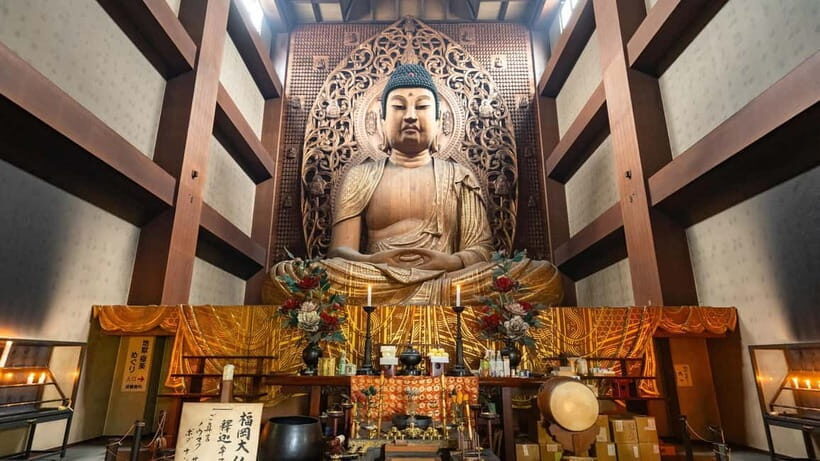
- Tochoji Temple and its Buddha statue: the visual punch you’ll remember
- Kushida Jinja: the main shrine energy and the Hakata Gion Yamakasa connection
- Kawabata Shopping Street: 15 minutes to see, hear, and taste local Fukuoka
- Sumiyoshi Jinja: unusual shrine architecture with a seaside calm
- Hakata Station rooftop: your skyline finale and the light-switch moment
- How the private guide changes the whole day
- Walking route realities: comfort, timing, and transport options
- Who should book this Fukuoka essentials tour
- Should you book this Fukuoka essentials walk?
- FAQ
- Where is the meeting point for the tour?
- How long is this Fukuoka tour?
- Is this tour private?
- What languages are the live guides available in?
- Is hotel pickup available?
- Are food, drinks, and attraction tickets included?
- Do I need to walk the whole time?
- What is the cancellation policy?
Key highlights you’ll actually care about
- Shofukuji Temple’s Zen calm: Kyushu’s oldest Zen Buddhist temple grounds the whole day.
- Tochoji’s Buddha statue contrast: you get a big visual moment that balances the quieter Shofukuji mood.
- Kushida Jinja and Hakata Gion Yamakasa: the shrine’s year-round energy connects directly to Fukuoka’s famous festival.
- Kawabata Shopping Street with real snack time: a short free window to see, hear, and taste the local rhythm.
- Sumiyoshi Jinja by the sea connection: an unusual shrine style with a calmer, more reflective vibe.
- Hakata Station rooftop panorama: an easy, high-impact finale as lights start to come on.
Price and what you really get for $58 in Fukuoka
At $58 per person, this isn’t trying to be an all-day marathon of paid attractions. It’s built around a tight set of highly meaningful places that you can reach on foot, plus a guide who helps you understand what you’re seeing as you walk.
You should think of the value in two ways. First, you’re paying for context: why these temples and shrines matter in Kyushu and how they fit into everyday Hakata life. Second, you’re paying for time-saved navigation in the center of town—starting right at a clear meeting point and moving efficiently between stops.
The duration is listed as 3 to 8 hours, and the included experience is described as a 3-hour tour. In practice, that range usually matters because you may want more temple time, more shopping arcade time, or a slower pace. The plan is flexible enough that it doesn’t feel like a rushed checklist.
One more practical note: food and drinks are not included, and tickets aren’t included. That’s normal for a walk like this, but it means you should budget for snacks at Kawabata and plan on getting your own drinks.
You can also read our reviews of more historical tours in Fukuoka
Starting at CASETiFY by the big clock: the easiest way to begin
Your meeting point is the CASETiFY studio store in アミュプラザ博多店. It’s right next to the main entrance, under the big clock. That detail matters. When you start in a mall complex with one obvious landmark, you spend less time texting, searching, and worrying you missed your group.
If you’re staying in a central location, you can request a hotel meetup. If not, you can still start from Hakata Station. Either way, the goal is simple: you should begin the day without turning your morning into a map-reading test.
Also, because this is private, you won’t be stuck waiting for a large group to assemble. That’s one of the reasons a compact walking route can feel smooth.
Shofukuji Temple: Kyushu’s oldest Zen temple and your first “slow down” moment
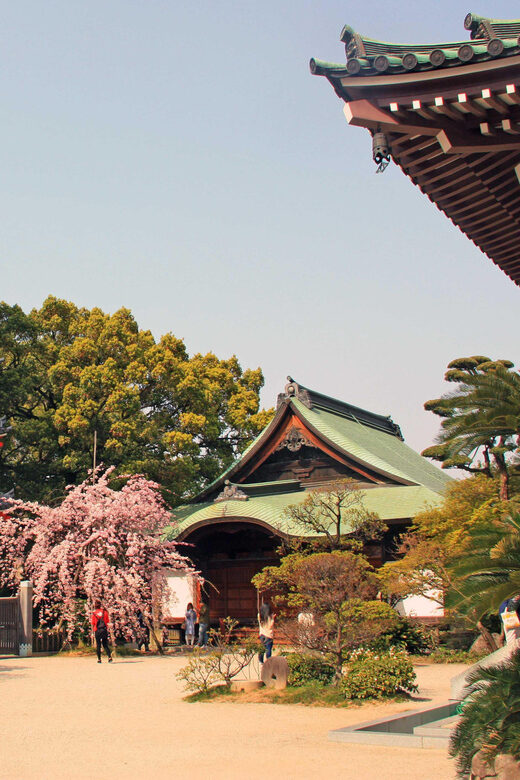
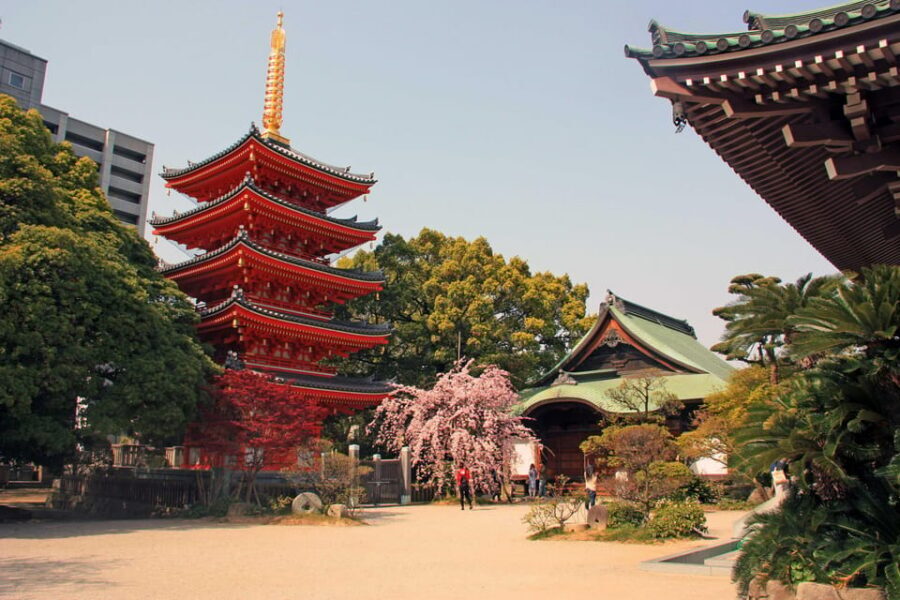
The day starts by walking toward Shojukuji (often written as Shofukuji in English). This is the kind of place where you feel the shift the second you enter. Zen temples aren’t just about buildings; they’re about pacing your mind.
What makes Shofukuji special in this route is that it’s framed as Kyushu’s oldest Zen Buddhist temple. You’ll get a guided tour, which helps you notice things you’d otherwise speed past—layout, atmosphere, and the quiet logic behind the space.
A useful way to experience Shofukuji is to pay attention to contrast. Look at how your eyes move from doorway to courtyard to garden-like areas. Then compare that feeling to later stops like Kushida Jinja, which is more festival-connected and lively, and Sumiyoshi Jinja, which leans toward seaside calm.
This stop is also a good “tone setter” if you’re new to Japanese religious architecture. Instead of throwing you into the most complicated site first, the tour begins with a clear Zen reference point.
Tochoji Temple and its Buddha statue: the visual punch you’ll remember
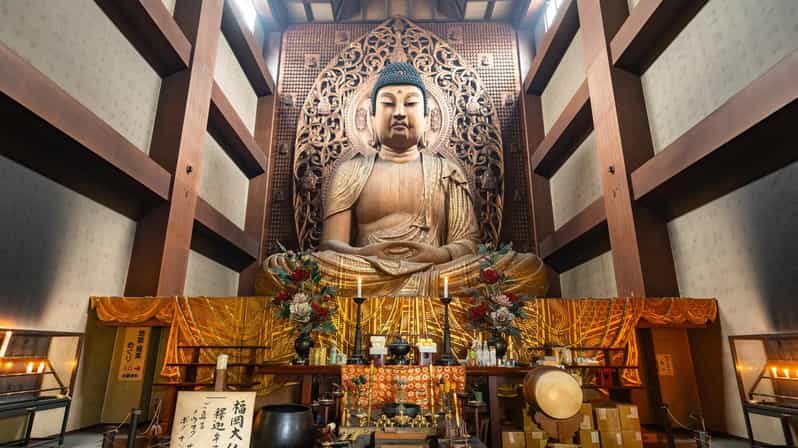
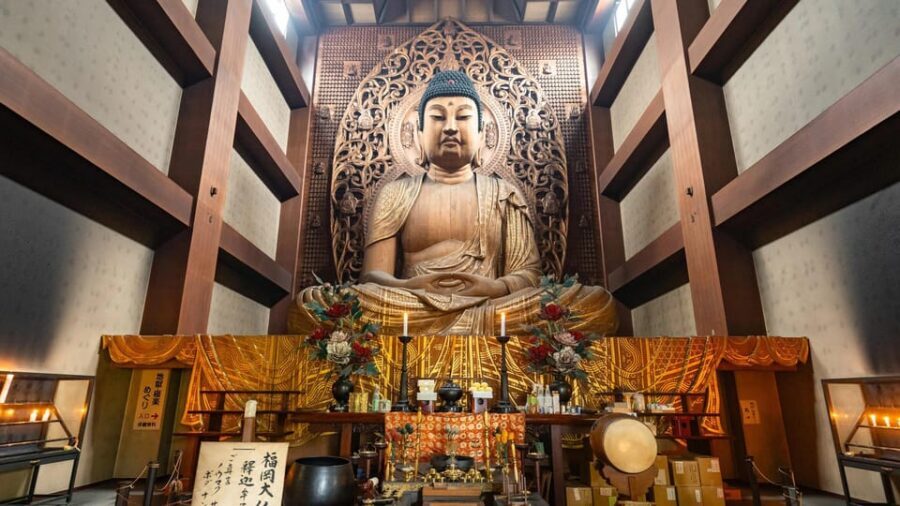
After Shofukuji, the route includes Tochoji Temple. You’ll have a guided tour here as well, and Tochoji is known for a magnificent Buddha statue.
This is a smart pairing. Shofukuji gives you the subtle, contemplative Zen feel. Tochoji gives you a strong focal point you can process with your eyes, not just your attention span.
If you’re the type who likes having one big image to anchor a trip, this is that moment. The statue also helps you understand a simple point: temples in this area aren’t only about quiet interiors. They also function as public spiritual landmarks that shape how people recognize the city.
If you’re sensitive to crowds, you might want to keep your expectations flexible. Even when a temple is calm, you’re still in a central urban area.
Kushida Jinja: the main shrine energy and the Hakata Gion Yamakasa connection
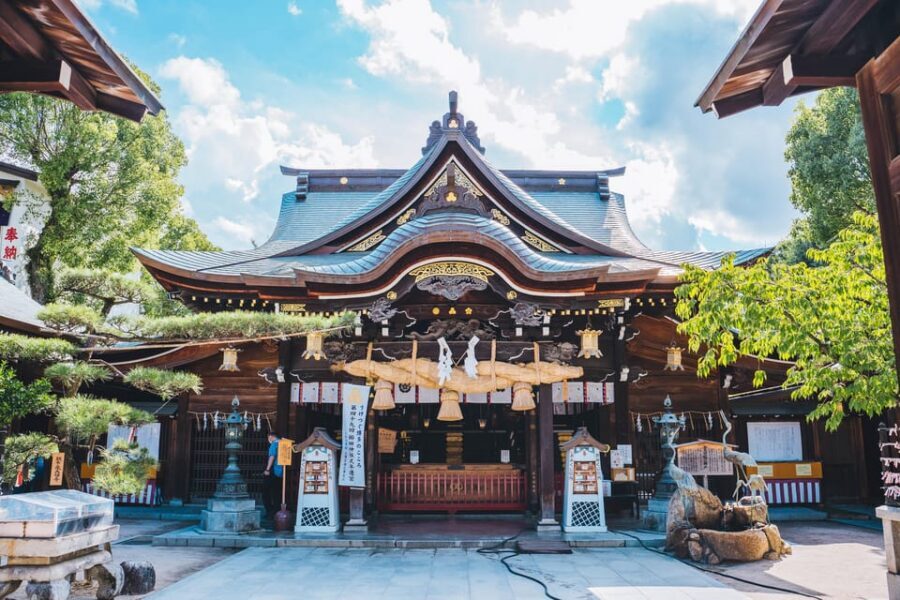
Next up is Kushida-jinja Shrine, described as Fukuoka’s main shrine. This is where the tour shifts from temple calm to shrine bustle—without losing the historical context.
Kushida Jinja is central to the famous Hakata Gion Yamakasa festival, and it has activity throughout the year. When a shrine is tied to a major event, you can often read the buildings differently: decorations and design choices start to feel like they were meant for something bigger than daily life.
In the guided portion, you’ll admire intricate details of the buildings, and you’ll learn the shrine’s background. That background matters because otherwise you might only see ornament and not understand function—how it connects community identity, timing, and local pride.
Practical tip: if you want photos, don’t just shoot straight-on. Let the guide point out where your angle captures the architectural details plus the street-level human flow. That’s the difference between a souvenir photo and a real sense of place.


Kawabata Shopping Street: 15 minutes to see, hear, and taste local Fukuoka
Then you hit Kawabata Shopping Street. This traditional arcade is the kind of place you can’t replicate from a brochure. Shops spill out with goods, food stalls add aromas, and the whole space hums with daily movement.
You’ll get free time here (about 15 minutes). That timing is short on purpose. It keeps the tour from turning into a shopping detour and keeps you focused on seeing what makes Hakata feel like Hakata.
What should you do with that quarter hour? Pick one thing you can actually finish. Either:
- buy a small snack or drink and eat it while walking, or
- grab one simple souvenir, then circle back with your eyes open for the next stop.
Because food and drinks aren’t included, treat this as your built-in chance to try something local without turning the trip into a meal plan. If you show up with an empty stomach, you’ll enjoy it more. If you show up full, you can still enjoy the atmosphere and browse.
One consideration: 15 minutes can feel rushed if you love shopping. The tour is private, so your guide can tailor pace somewhat, but don’t assume you’ll have an hour to browse every shop. If you want more arcade time, plan to extend your day after the tour ends.
Sumiyoshi Jinja: unusual shrine architecture with a seaside calm
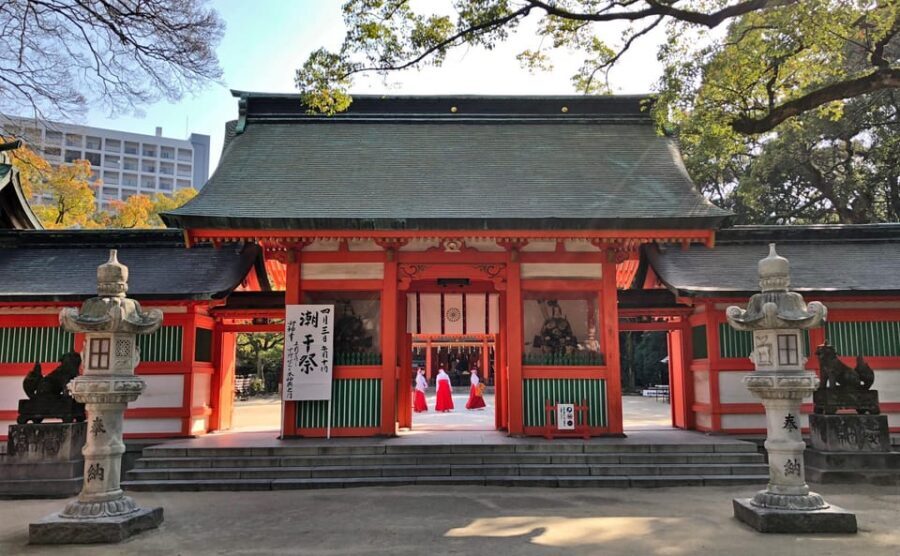
After Kawabata, you walk toward Sumiyoshi Jinja. This stop is framed as seaside serenity, and the tour highlights a distinctive architectural style that differs from most other shrines you may see.
The appeal here is tonal. Kawabata is sensory and busy. Kushida Jinja is energetic in its own way. Sumiyoshi Jinja shifts you toward something calmer and more reflective, helped by its connection to the sea.
You’ll wander its tranquil grounds with a guided tour, so you’re not left guessing what you’re looking at. Even if you’re not a temple-architecture expert, this kind of guided pacing helps you notice how the shrine’s design supports the mood of the place.
If you’re someone who gets temple-fatigue halfway through the day, this is a good place to refresh your attention. Not because it’s less interesting, but because it gives you permission to slow down.
Hakata Station rooftop: your skyline finale and the light-switch moment
To close the tour, you’ll reach Hakata Station and get scenic views on the way. Then you ascend to the rooftop for a breathtaking panorama of Fukuoka.
This is a smart finish. After temples, shrines, and an arcade, the rooftop view gives you orientation. Suddenly the city makes sense spatially. You can trace your mental route and connect the “old Hakata” sites you visited with the modern city around them.
As the sun dips, the city lights start to twinkle. That timing is built into the experience in a way that doesn’t require extra planning. You don’t have to hunt for a separate viewpoint with complicated transit. You get a high-impact view right where you’re already ending.
If you hate crowds at viewpoints, you should still consider that a rooftop at a major station can be busy. The upside is the view is easy to access and the route keeps you moving naturally.
How the private guide changes the whole day
The tour is private and personalized, with a local host who can tailor the day to what you care about and how fast you like to walk.
You’ll hear practical, on-the-ground answers along the way—questions about what you’re seeing, how to understand it, and what to do next in Fukuoka. One pattern in the tour style is the guide’s responsiveness: people have shared that the host is considerate about walking pace and can adjust if someone needs a slower, easier setup.
There’s also language support: English and Czech. That matters because temple and shrine explanations go much further when you can ask follow-up questions.
One more advantage: the guide can recommend other things to do, including shopping and restaurant ideas. That turns the tour into a starting point for your remaining time in the city, not just an end-of-itinerary event.
And yes, it can feel a bit like the guide is watching for what’s happening nearby. Some groups have ended up seeing unexpected city moments around Hakata Station during events, which is part of why this kind of guided walk can feel more alive than a fixed script.
Walking route realities: comfort, timing, and transport options
This is a walking experience with short transfer legs between stops. The schedule includes several on-foot segments—roughly 10 to 14 minutes between key areas, then a final return on foot to the meeting spot.
That’s manageable for many people, but plan it like an active city morning or afternoon. Wear shoes you can move in for a while. If you’re traveling with mobility constraints, you should talk to your guide in advance. The tour notes that hotel pickup is available on request for central locations, and walking pace can be adjusted.
Transportation beyond walking can be arranged at an additional cost. That’s useful if your body needs help for part of the route. I’d treat that as a planning tool, not a last-minute emergency.
Who should book this Fukuoka essentials tour
This is a strong fit if you want:
- A focused introduction to Hakata and Fukuoka in a few hours without overplanning.
- A mix of Zen temple calm, shrine festival connection, and local arcade life.
- Guided explanations that help you understand what you see, not just where to stand.
- A private format so your questions and pace are respected.
It also works well for families, including teens, because the route combines quiet places with street-level energy in short, digestible segments. And if you’re someone who prefers not to jump between far-flung districts, this loop keeps you in the center of the action.
If you only want one type of attraction—only temples, only shopping, or only views—you might feel like the tour bounces between vibes. But that variety is the point. You’re learning how Hakata functions as a real urban neighborhood, not a theme park.
Should you book this Fukuoka essentials walk?
I think you should book it if you want an efficient, human-paced way to see the core spiritual sites of Kyushu’s Hakata area plus the day-to-day street life that surrounds them. The payoff is strongest when you treat it as context-building: you walk through Shofukuji and Tochoji with understanding, you connect Kushida Jinja to the Hakata Gion Yamakasa spirit, you use Kawabata time for a quick taste of local life, and you end with a rooftop view that helps everything click.
You might skip it (or shorten your expectations) if you hate walking, need a long shopping window, or expect ticketed highlights and meals to be included. Food and attraction tickets aren’t part of the package, and Kawabata time is limited.
If your travel style is curious and practical, this tour is a good buy. It’s not trying to do everything. It’s doing the right things in the right order.
FAQ
Where is the meeting point for the tour?
You meet at CASETiFY STUDiO アミュプラザ博多店, right next to the main entrance under the big clock.
How long is this Fukuoka tour?
The duration is listed as 3 to 8 hours. The experience description also mentions a 3-hour tour with a local host.
Is this tour private?
Yes. It’s described as a private and personalized experience, and private groups are available.
What languages are the live guides available in?
The live tour guide is available in English and Czech.
Is hotel pickup available?
Hotel meetup is available on request for central locations.
Are food, drinks, and attraction tickets included?
No. Food and drinks are not included, and tickets to attractions are not included.
Do I need to walk the whole time?
This is a walking experience. Other transport can be arranged for an additional cost.
What is the cancellation policy?
You can cancel up to 24 hours in advance for a full refund.