REVIEW · KOBE
Kobe 6hr Private Tour with Government-Licensed Guide
Book on Viator →Operated by Japan Guide Agency · Bookable on Viator
Kobe is best with a local brain. I like that you get a government-licensed guide who explains Japanese culture and history as you go, and I love the flexibility to build a 3–4 stop plan that fits your interests. The catch: it is a walking tour, so wear real shoes and expect some extra paid add-ons like transport fares and ropeway/attraction tickets.
Kobe itself is compact and made for foot traffic, sliding from hillside views down toward the port. This tour is designed around that reality: you meet the guide on foot in a designated area, then stitch together the best parts of the city over about six hours. In the best version of this day, your feet do the sightseeing and your guide does the connecting-the-dots work.
In This Review
- Key highlights to look for
- Kobe on foot: how the 6-hour private setup really works
- Price and value: what $153.11 buys you in real life
- Mt. Rokko and Shin-Kobe Ropeway: the view stop that reshapes your whole day
- Port of Kobe Earthquake Memorial Park: quiet, specific, and worth your full attention
- Harborland, Kitano Ijinkan-gai, and Nankinmachi: three neighborhood flavors in 30-minute bites
- Kobe Harborland
- Kitano Ijinkan-gai
- Chinatown (Nankinmachi)
- Sake in Kobe’s Nada district: brewery museums you can actually learn from
- Hakutsuru Sake Brewery Museum
- Kobe Shushinkan Brewery
- Kiku-Masamune Shuzo Kinenkan
- Sawa no Tsuru Museum
- Akashi Kaikyo Bridge and Nunobiki Herb Gardens: big scenery without long planning
- Akashi Kaikyo Bridge
- Kobe Nunobiki Herb Gardens
- What the guides do best: government licensing that shows up in your day
- Who this Kobe tour fits, and who might want a different plan
- Should you book this Kobe 6-hour private tour?
- FAQ
- Is this a private tour or a group tour?
- How long is the Kobe tour?
- Can I choose which places we visit?
- Is pickup included?
- Are entrance fees and transportation included?
- Can I cancel for a full refund?
Key highlights to look for
- Government-licensed guide interpretation focused on culture and history, not just facts
- Pick 3–4 sites from a menu, so you do not waste time bouncing around
- Sake-focused stops in Nada including brewery museums and related memorial-style exhibits
- Kobe skyline and port contrasts from Mt. Rokko views to Harborland waterfront energy
- Earthquake remembrance with context at the Great Hanshin Awaji memorial park
- Public-transit friendly rhythm with the guide coordinating your route while you stay moving
Kobe on foot: how the 6-hour private setup really works
This is a private tour, so it is just your group with the licensed English-speaking guide. The timing is roughly 6 hours, and the structure matters: you are not signing up for a huge, nonstop checklist of everything Kobe. Instead, you choose your must-sees from the available options, usually ending up with 3–4 stops in the time window.
Because it is a walking tour, you should think of this as a “smart itinerary” more than a “chauffeured day.” The tour may include a pickup offered, but the practical detail is that you meet the guide on foot within a designated area in Kobe. You will likely move between sights efficiently, but you should still plan for stairs, sidewalks, and some distance between areas.
Also, the tour is listed with mobile ticket and group discounts, which is helpful if you are traveling with someone and want the experience to stay smooth day-of. One more detail that affects your day: transportation fees and entrance fees are not included, and lunch is also on you. That does not make the tour worse. It just means you should budget a little extra for transit fares and any paid tickets at your chosen stops.
You can also read our reviews of more guided tours in Kobe

Price and value: what $153.11 buys you in real life
At $153.11 per person, this tour is not a cheap “walk around with me” deal. It earns its value when you factor in three things:
First, the guide is government-licensed, with interpretation skills tied to Japanese culture and history. You feel that in how the day flows—your stops do not feel like random postcards. They connect, especially when you jump between foreigner-settler areas, port life, and Kobe’s modern identity.
Second, you are paying for the time advantage. Kobe is walkable, but picking the right sights and building a route takes mental effort. Having the guide handle the sequencing and pacing can save you from the classic mistake: choosing too many places that are inconvenient for your actual day.
Third, you get customization. Since you can select 3–4 sites, you can design a day around your interests: views and neighborhoods, or earthquake history plus sake culture, or bridge-and-gardens scenery. That’s hard to replicate with self-guided wandering unless you already know exactly what you want.
The main value trade-off is also simple: because entrance fees and transport costs are not included, your final out-of-pocket amount depends on which options you choose (especially any ropeways and bridge-related transit or paid activities). If you choose only free-entry areas, your budget stays tight.
Finally, planning helps. This tour is commonly booked about 92 days in advance on average. That suggests the guide availability is the real bottleneck, not the paperwork.
Mt. Rokko and Shin-Kobe Ropeway: the view stop that reshapes your whole day

If you want your Kobe day to start with a “wait—this is a great city” moment, Mt. Rokko is the move. Mt. Rokko is 931 meters and part of the Rokko mountain range that frames the city. In practical terms, it gives you that hillside backdrop that makes Kobe feel different from flat Osaka sightseeing.
The itinerary includes Mt. Rokko for about 30 minutes with admission listed as free. Then it pairs with Shin-Kobe Ropeway nearby, also slotted as a stop. Here’s the important budget reality: while the basic stop is listed with free admission, activity tickets are generally not included when you book this type of tour. So if you choose the ropeway option, expect to pay the ticket separately.
Why I like this as part of your plan: it acts like a reset. You come down from the views and immediately understand why Kobe’s port matters. And your guide can tie that scenery back to how people lived and moved across the city—useful context when you later hit Harborland and the earthquake memorial.
One consideration: ropeways and viewpoints can be weather-dependent. If fog or heavy rain rolls in, the “big panorama” payoff can shrink. Still, even on a gray day, the ride and the framing of the city can be worth it.
Port of Kobe Earthquake Memorial Park: quiet, specific, and worth your full attention
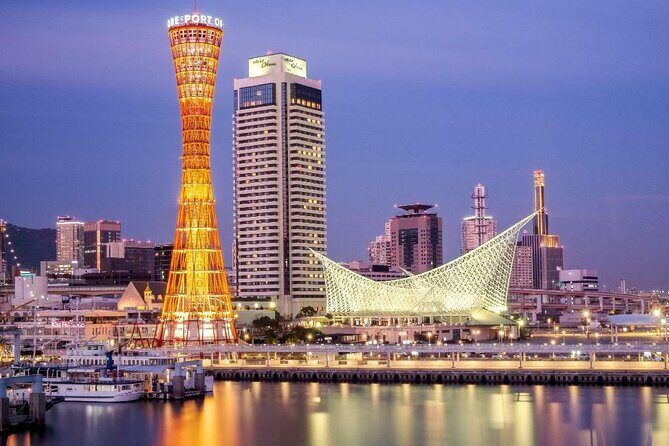
Kobe’s Great Hanshin Awaji Earthquake is not a distant headline. It is part of the city’s identity, and this memorial park is one of the clearest places to understand that.
The stop is focused on January 17, 1995 at 5:46 am, when the city was hit, leading to more than 5,000 deaths and the destruction of tens of thousands of homes. Admission is listed as free, and the visit time is about 30 minutes.
With a guide, this kind of stop stops being heavy in a vague way. You get the details in a way that makes the memorial feel grounded rather than symbolic. That matters because you will be walking Kobe later—through neighborhoods and waterfront areas—and it helps to know what “before and after” means on the ground.
If you are the type who appreciates meaningful context, this is a key stop. If you are avoiding emotional topics on vacation, plan your energy: this is one of the few stops that can change the mood of the day.
Harborland, Kitano Ijinkan-gai, and Nankinmachi: three neighborhood flavors in 30-minute bites
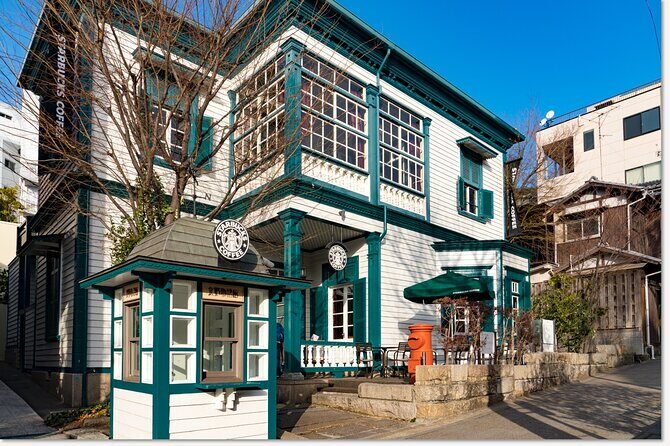
Kobe’s center can feel like a series of worlds stitched together. This tour uses short blocks so you can taste each without burning the whole day.
You can also read our reviews of more private tours in Kobe
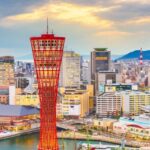
Kobe Harborland
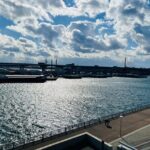
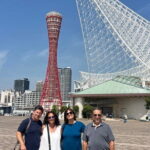
Harborland is a shopping and entertainment district between JR Kobe Station and the waterfront. It is listed as a 30-minute free-admission stop. Think of it as the “front porch” of the port—cafes, shops, and that sea-facing energy where Kobe shows you its modern face.
Kitano Ijinkan-gai
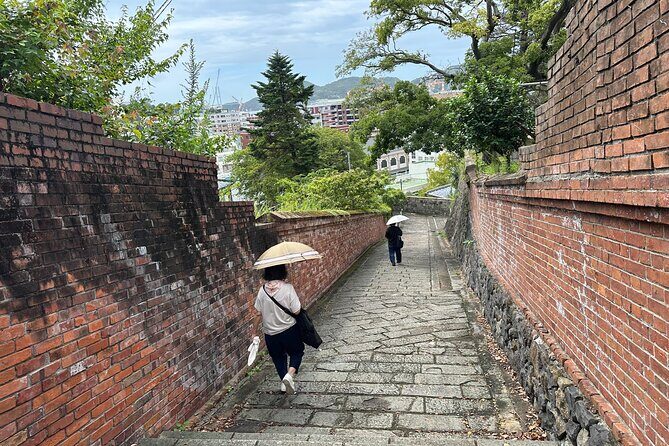
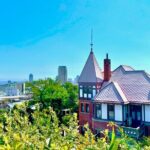
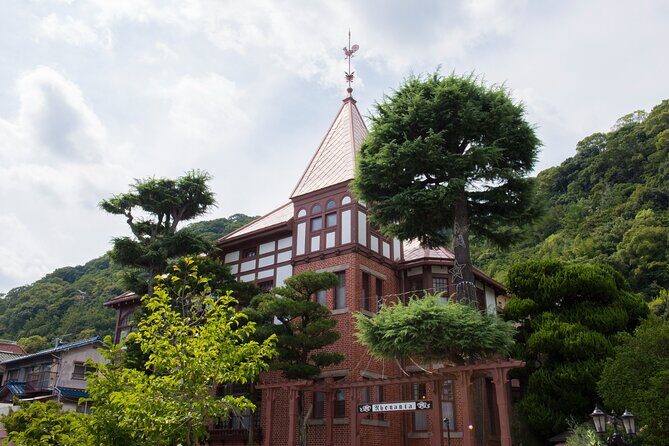
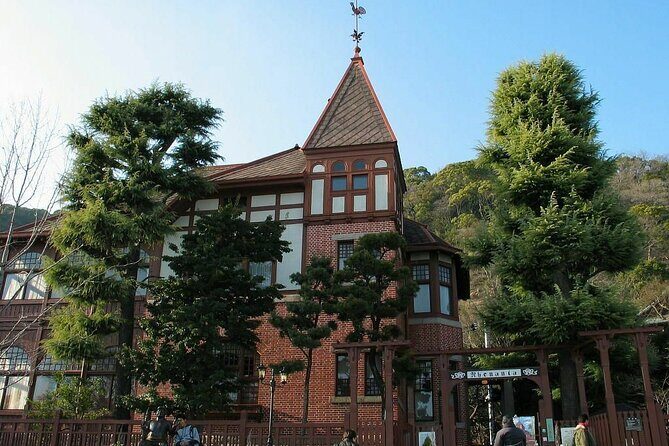
Then you walk into Kitano-cho and the Ijinkan-gai area, shaped by foreign merchants and diplomats after the Port of Kobe opened to foreign trade. It is another 30-minute stop with free entry.
This is the perfect contrast to Harborland. Harborland says port commerce today. Kitano says port relationships back then. And if your guide is doing their job well, you will start to see how the hillside settlement and the port economy connect.
Chinatown (Nankinmachi)
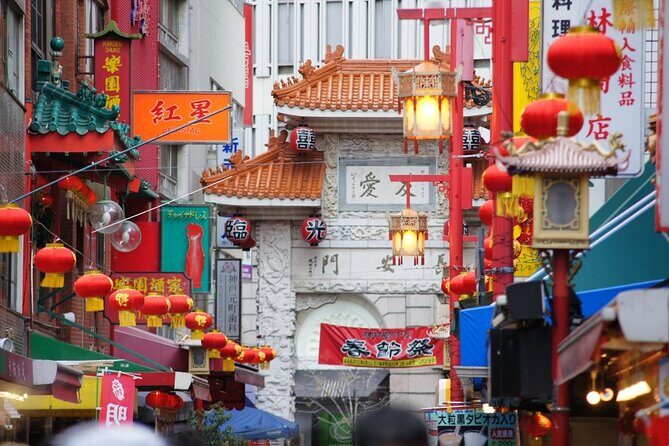
Finally, Nankinmachi is a compact Chinatown in central Kobe and a center for the Chinese community in the Kansai region. It is also about 30 minutes and free entry.
This works because the tour pacing keeps you from overthinking. You get a feel for the streets, the atmosphere, and the neighborhood identity in a short visit—then you move on.
The main drawback? Three neighborhoods means you will do more “quick impressions.” If you want long wandering time for photography or slow snacks, you may want to pick two of these three instead of all three.
Sake in Kobe’s Nada district: brewery museums you can actually learn from
This is where the tour becomes more than sightseeing. Kobe’s sake scene is big, and the tour gives you multiple entry points—especially options tied to the Nada district, which is described as Japan’s top sake producing region.
Why that matters: you are not just walking into a museum. You are learning how the ingredients and environment shaped the industry. The tour materials highlight why Nada became famous for sake—high-quality rice, favorable water, and good weather conditions.
Here are the standout sake-related stops from the available list:
Hakutsuru Sake Brewery Museum
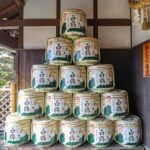
Hakutsuru’s museum is listed as free with about 30 minutes. You get a museum-style look at sake brewing heritage tied to Nada. For a lot of visitors, this is the easiest way to understand the process without needing insider language.
Kobe Shushinkan Brewery
Shushinkan includes a large shop selling sake and sake-related products, plus a restaurant that combines Japanese cuisine with sake. It also notes free guided tours of the sake warehouse held once per day.
That “once per day” line is your planning cue. If you care about the warehouse tour specifically, you will want to build your schedule around the guide’s suggested timing rather than assuming it fits any hour.
Kiku-Masamune Shuzo Kinenkan
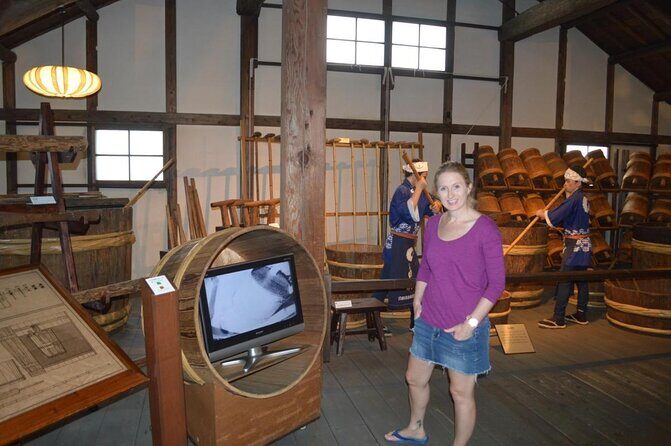
The Kiku-Masamune museum is housed in a nice wooden-plaster building, and it is described with atmosphere: exhibits of wooden tools, containers, and machinery, plus traditional music and atmospheric lighting. Again, it is listed around 30 minutes with free admission.
This is the kind of stop where the setting matters. A sake warehouse museum can sound dry on paper, but the lighting and sound cues help you keep paying attention.
Sawa no Tsuru Museum
Sawanotsuru opened in 1978 to commemorate the sake-brewing heritage of the Nada district. It was destroyed by the Great Hanshin Earthquake in 1995 and later continued with its purpose of remembering the brewing tradition.
This is a more reflective stop. If you already did the earthquake memorial park, this museum can feel like part two—how an industry and a community carried forward afterward.
My practical advice: if you love sake, pick one museum-style stop and one brewery/shop stop. Doing three full sake visits in one day can turn into information overload. The guide helps, but your enjoyment still needs space.
Akashi Kaikyo Bridge and Nunobiki Herb Gardens: big scenery without long planning
Catching a major view in Kobe can be tricky if you do it alone, because the city’s best viewpoints are spread out. This tour includes two options that create variety: one urban-meets-engineering wow moment and one calmer garden break.
Akashi Kaikyo Bridge
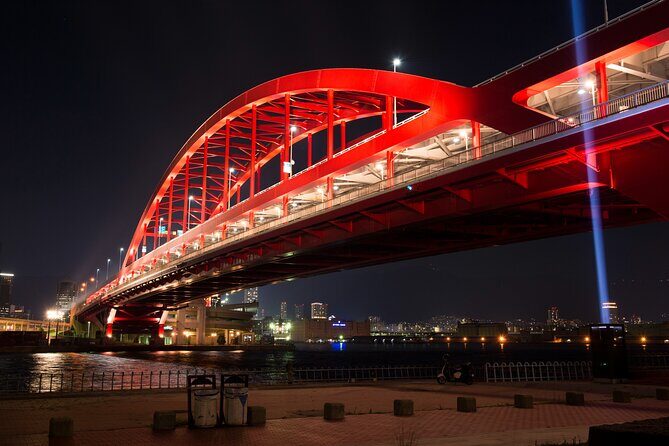
The Akashi Kaikyo Bridge is nearly four kilometers long and is described as the world’s longest suspension bridge. It opened in 1998 and spans the Akashi Strait between Kobe and Awaji Island. The itinerary lists it as a 30-minute free admission stop.
If you like bridges, engineering, or just huge scale, this gives you a clear “Kobe is more than shopping” angle. It can also work as a photo stop that feels different from typical temple or street scenes.
Kobe Nunobiki Herb Gardens
Nunobiki Herb Gardens & Ropeway is a scenic retreat above the city with over 200 varieties of herbs and seasonal flowers. The itinerary lists 1 hour and notes admission not included.
This is the counterweight to the port and sake parts of the day. After museums and memorial context, a garden is a chance to breathe, look closely, and reset your pace. The ropeway is also part of the experience, and since admission fees are not included, you’ll want to expect extra ticket costs for the ropeway/attractions.
Pick based on your mood: bridge for wow and structure, Nunobiki for quiet, color, and a slower tempo.
What the guides do best: government licensing that shows up in your day
The tour lives or dies on the guide. And here, the reviews and responses you’re shown underline a consistent theme: the guides do more than recite facts.
One named guide in the feedback is Harumi Sagayama. The praise is specific: she shared insights into Japanese culture while showing visitors the exact experiences they hoped for. There is also praise for her coordination—like getting the meeting spot right and keeping things running smoothly.
Another named guide is Yoshii Kenichi, with praise that the guide gave information reaching back “centuries,” plus smooth routing so the day stayed efficient. That lines up with what this tour promises: a national government-licensed guide interpreter certification, which requires a good understanding of Japanese culture and history.
So what does that look like for you? It looks like your walk becomes a story. When you pass through foreign settlement areas and then hit port and quake remembrance, the day stops feeling like unrelated stops. The guide helps you connect the dots with language you can actually use—no academic lecture required.
A small but real tip: if you want this to feel effortless, tell the guide upfront what you want most (views, sake, neighborhoods, earthquake history). That is how the customization works, and it is the difference between a good tour and a tour that feels made for you.
Who this Kobe tour fits, and who might want a different plan
This is a good fit if you want:
- A first-time Kobe day with a smart route
- A sake-and-history leaning itinerary (Nada museums and related stops)
- A calm but efficient pace that still includes viewpoints and neighborhoods
- A guide-led explanation so you understand what you’re seeing
It may be less ideal if you:
- Hate walking or have limited mobility. This is still a walking tour, even with transit connections.
- Want zero extra payments. Since transportation fees and entrance fees are not included, your final costs depend on your selections.
Good news: the tour notes that most travelers can participate and service animals are allowed, which helps for many people.
Should you book this Kobe 6-hour private tour?
Book it if you want Kobe to make sense fast and you value context—especially if you care about culture, port history, and sake. The best version of this tour is a guided day where your guide turns separate stops into one coherent picture.
Skip it or adjust your expectations if you prefer a car-based “point-to-point” day with minimal walking, or if you want a very long time in just one place. Since the structure targets 3–4 stops in six hours, you get breadth over deep stays.
My practical checklist: pick one viewpoint stop (Mt. Rokko or bridge), choose one neighborhood cluster (Harborland/Kitano/Chinatown), and then add a sake stop that matches your curiosity (museum vs brewery/warehouse tour). If you do that, the day feels balanced instead of stuffed.
FAQ
Is this a private tour or a group tour?
It is a private tour/activity, meaning only your group participates.
How long is the Kobe tour?
The tour is about 6 hours.
Can I choose which places we visit?
Yes. The tour is customizable, and you choose 3–4 sites from the list of options provided.
Is pickup included?
Pickup is offered, but the tour notes that it is a walking tour and you meet the guide on foot within a designated area in Kobe.
Are entrance fees and transportation included?
No. Transportation fees, entrance fees, and lunch are not included. The guide entry fees are only covered for sights listed under what to expect.
Can I cancel for a full refund?
Yes. You can cancel for a full refund if you cancel at least 24 hours before the experience starts. If you cancel less than 24 hours before, the amount paid is not refunded.
If you tell me which 3–4 stops you’re leaning toward (views, sake museums, neighborhoods, or the earthquake memorial), I can suggest a tight order that keeps walking sensible.