REVIEW · KOBE
Kobe: Kobe City Highlights Guided Tour – Shrine, Port, Tower
Book on GetYourGuide →Operated by DeepExperience, Inc. · Bookable on GetYourGuide
Kobe rewards quick planning, and this short tour is a smart way in. You get Ikuta Shrine with its matchmaking and weaving blessings, then you roll straight into Chinatown before finishing with Port Tower-level harbor views in just 2–3 hours. I especially like how the guide keeps the pace friendly while still hitting the must-sees, and how the stop choices connect Kobe’s spiritual side to its port-city identity. The only drawback: it’s a tight route, so if you want long sits for snacks or shopping, you’ll feel the clock.
One more thing I appreciate: the tour includes admissions and a live English-speaking guide, so you’re not left figuring out which tickets matter. You’ll still need to cover your own food and drinks, and Port Tower ascent is optional, which is great if you prefer photos over extra stairs and time.
In This Review
- Key highlights worth your attention
- A fast way to get your bearings in Kobe
- Ikuta Shrine: matchmaking and weaving blessings, made meaningful
- From shrine streets to Nankinmachi: Chinatown with a plan
- A quick stop with reflection: Kobe’s earthquake memorial moment
- Meriken Park: where the harbor finally slows you down
- Kobe Port Tower: optional climb, big views, and that rotating-café idea
- Price and value: what you really get for $45
- Tour pacing: small-group feel and English-guided clarity
- Who should book this Kobe highlights tour
- Should you book this Kobe highlights tour?
- FAQ
- How long is the Kobe highlights guided tour?
- What language is the guide?
- Where do we meet the guide?
- Is admission to the attractions included in the price?
- Is food included?
- Do I have to go up Kobe Port Tower?
- What is the cancellation policy?
Key highlights worth your attention
- Ikuta Shrine’s matchmaking + weaving blessings, explained in plain English
- Nankinmachi Chinatown time with street food and a guided circuit
- Meriken Park harbor views that slow the pace for a breath
- Kobe Port Tower observation deck with the option to skip the climb
- Short-walk format that works well when you’re tight on time
A fast way to get your bearings in Kobe
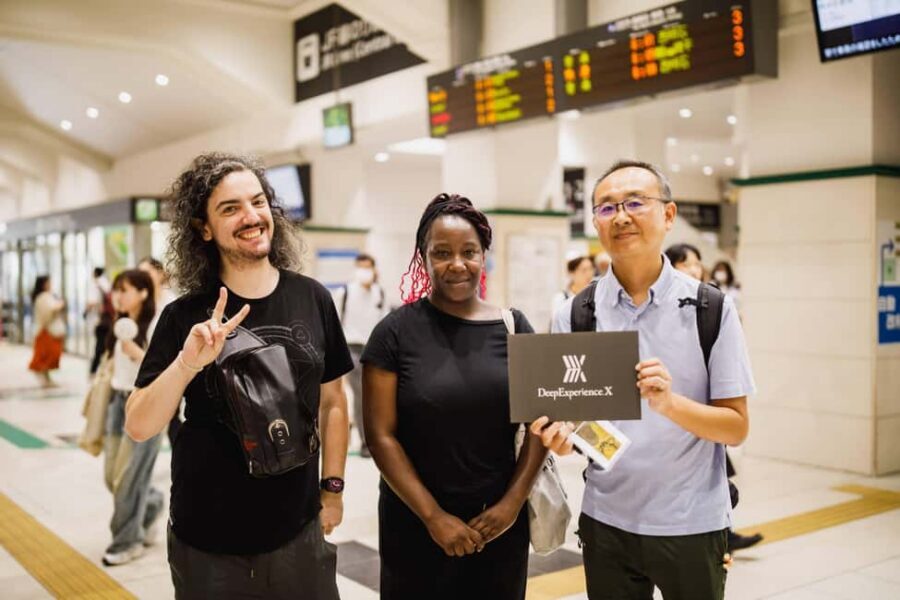
This tour is built for travelers who want real Kobe without turning the day into a marathon. You meet your guide at the torii gate of Ikuta Shrine, with the guide holding the yellow DeepExperience logo sign, and then the walking route gradually unfolds around the city’s three “stories”: religion, neighborhoods, and the harbor.
The timing is what makes it work. The tour is designed around a 2–3 hour window, and it keeps moving just enough that you’ll see key spots without feeling rushed every five minutes. In the experience, I like that the guides seem to tailor the rhythm to the group—one guide (Cana) was specifically noted for pacing and leaving enough time for shopping, while others (Aki, Kaori, Yayoi, Satoshi) were praised for staying on the agenda and answering questions.
If you’re visiting Kobe as a day stop or you already have plans later, this format is easy to plug in. If you’re the kind of traveler who wants to linger at every stall and take 40-minute photo breaks, I’d still recommend it—but go in knowing the tour prioritizes coverage, not long free time.
You can also read our reviews of more guided tours in Kobe


Ikuta Shrine: matchmaking and weaving blessings, made meaningful
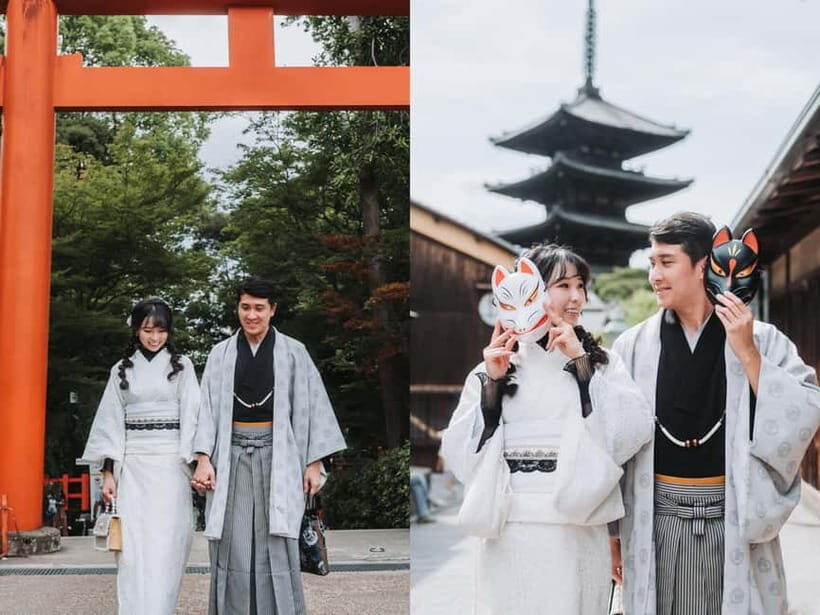
Your first stop is Ikuta Jinja (Ikuta Shrine), one of Kobe’s well-known Shinto shrines. You’ll start with guided time here (about 30 minutes), and that’s a big deal. Shrines can be quiet, beautiful, and a bit mysterious when you don’t know what to look for. With a guide, you’re more likely to notice the details that explain the shrine’s role in daily beliefs—especially the shrine’s connection to matchmaking and weaving blessings.
Why that matters: this isn’t just a pretty entrance with statues. The idea of prayers tied to relationships and craft luck gives you a human angle on Kobe. It also helps you understand why people visit, what they hope for, and what kind of atmosphere you’ll want to respect.
Practical tip: wear comfortable shoes. Even though the route isn’t long, shrine-to-streets walking adds up, and you’ll want your feet happy for the rest of the day.
From shrine streets to Nankinmachi: Chinatown with a plan
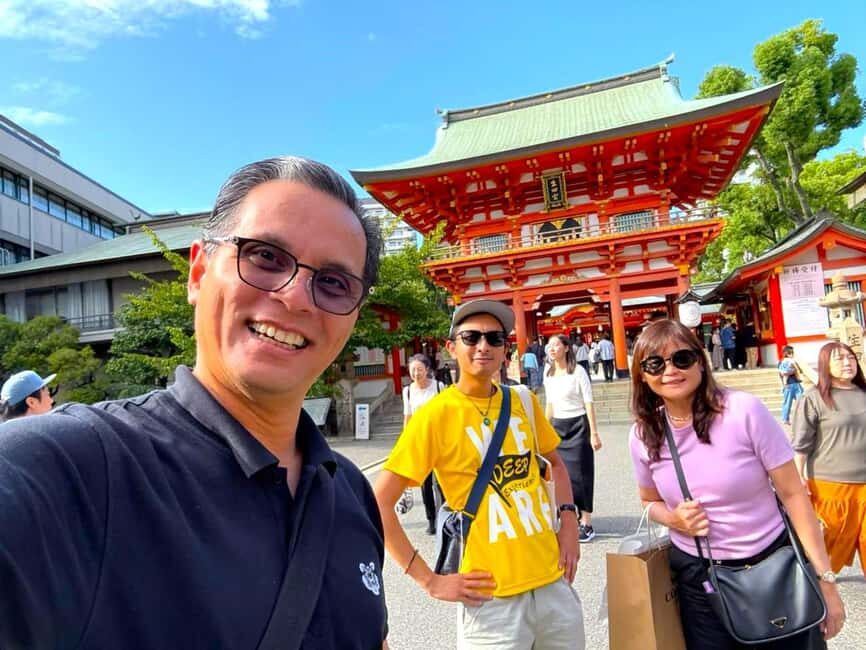
After Ikuta Shrine, the tour shifts to city energy with Nankinmachi, Kobe’s Chinatown. You’ll get guided time plus a focused block for street food and exploring the market area (about 45 minutes).
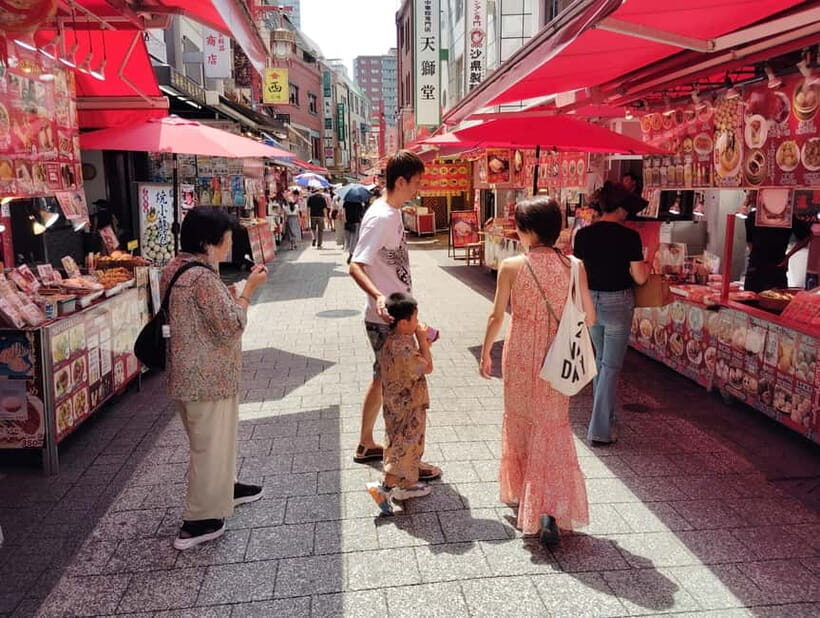
This is one of the best parts of the itinerary if you like food that feels local even when it’s not Japanese. Chinatown in Kobe carries the flavor of the port era—ships brought people, and communities followed. You’ll see that in the shops, signage, and the way people move through the lanes. The guide’s job here is important: without guidance, it’s easy to get stuck wandering randomly. With a plan, you spend your time where the tastings and “what to try” feel most logical.
Also, Chinatown is a great time to reset your travel senses. You’ve got a calm start at the shrine, then suddenly you’re in a neighborhood where the streets are practical, crowded, and full of snack-smell momentum. If you’ve ever wished your Japan day had one “street-level” section, this is it.
A note on expectations: the tour doesn’t include food and drinks, so budget for snacks. The good news is you only have a short window, so you’re less likely to overspend. Think “sample and choose,” not “meal and linger.”
A quick stop with reflection: Kobe’s earthquake memorial moment
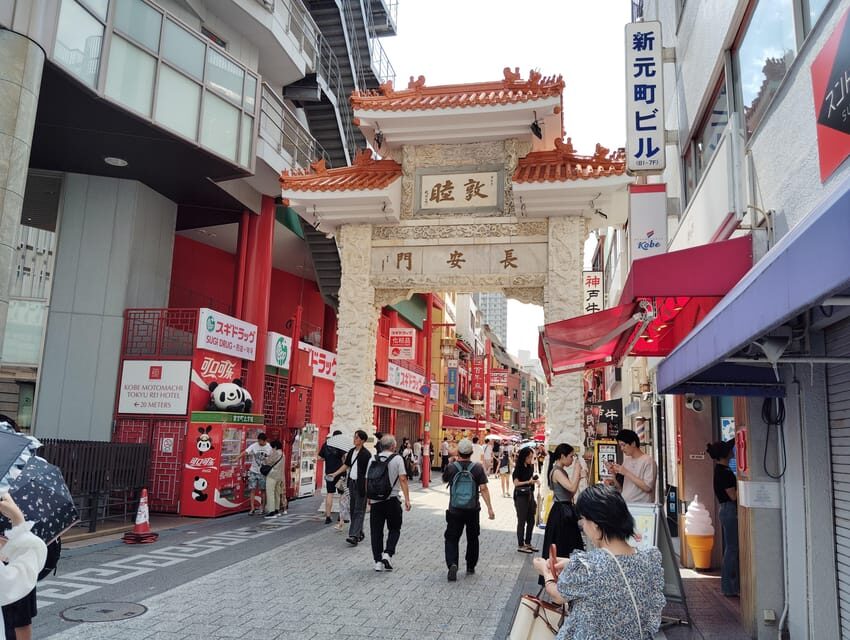
In between Chinatown and the next harbor section, the route includes an additional short guided segment that connects Kobe’s modern identity to the 1995 earthquake. One of the tour notes highlights an earthquake memorial stop as part of the experience.
This matters because Kobe isn’t just a postcard port city. It’s a city that rebuilt after a major shock, and that shows up in the way visitors are guided—through small moments of reflection that don’t take over the day. If you prefer your history compact and meaningful, this is an efficient way to include it without derailing the tour.
If you’re the type who gets emotionally affected by memorials, plan to move slowly through this section, even if the group keeps a steady pace. It’s okay to go quiet here.
Meriken Park: where the harbor finally slows you down
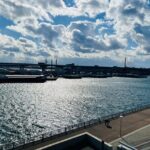
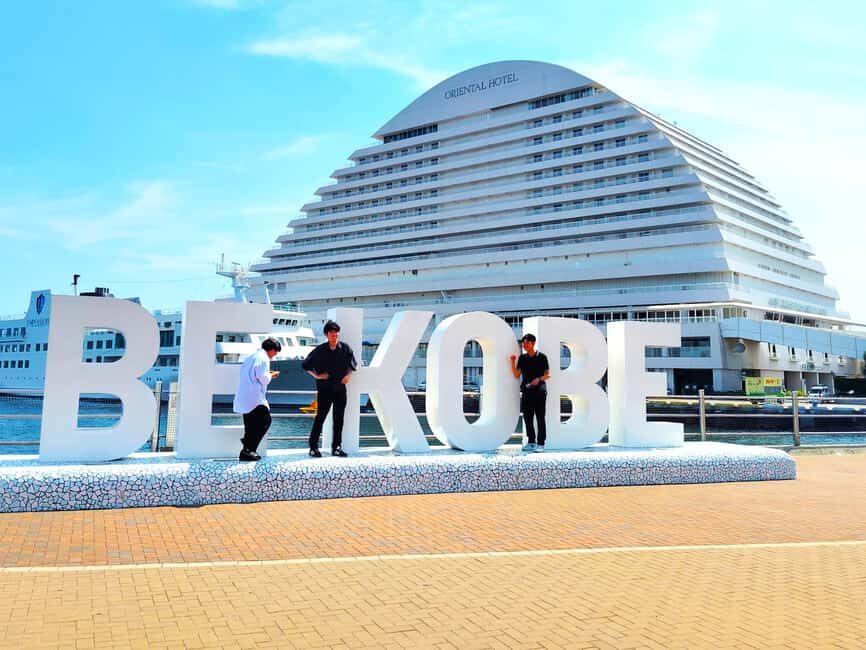
Next up: Meriken Park, a waterfront green space where Kobe’s maritime character is easy to feel. You’ll have guided time here (around 15 minutes), plus a short walking connection afterward.
This is where the tour’s “balance” shows. After shrine symbolism and Chinatown noise, Meriken Park gives you open space and wide sightlines. You’re not stuck between walls of shops or inside structures—you’re placed so you can actually see the port area and get your photos right.
Why I like this stop: it turns the day into a full loop. You start with prayers, move into multicultural street life, then end with the water. That arc makes Kobe feel like a city with links, not just a series of separate attractions.
Practical tip: bring a light layer. Waterfront air can feel cooler than you expect, especially if the wind picks up.
You can also read our reviews of more city tours in Kobe

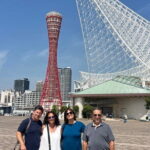
Kobe Port Tower: optional climb, big views, and that rotating-café idea
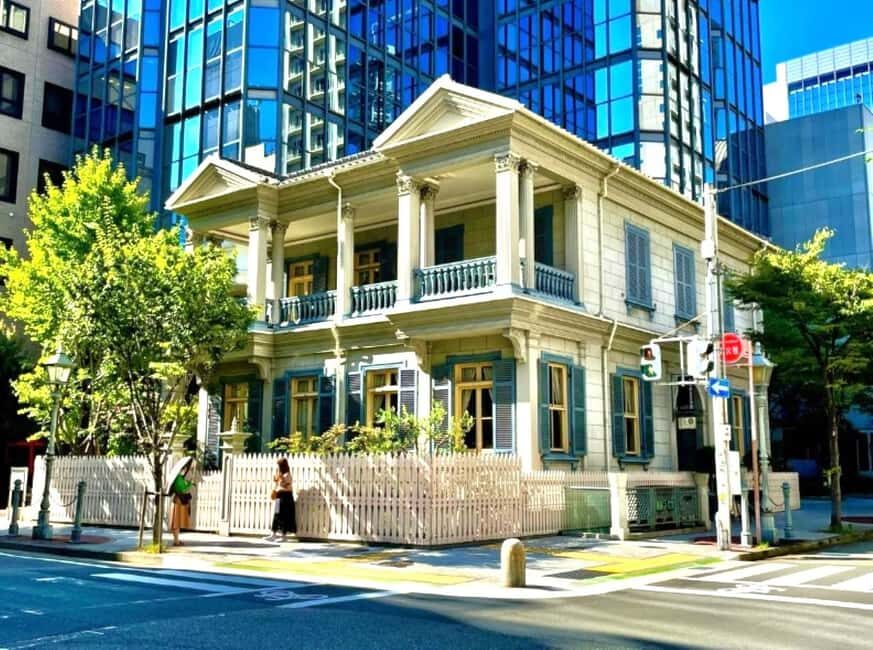
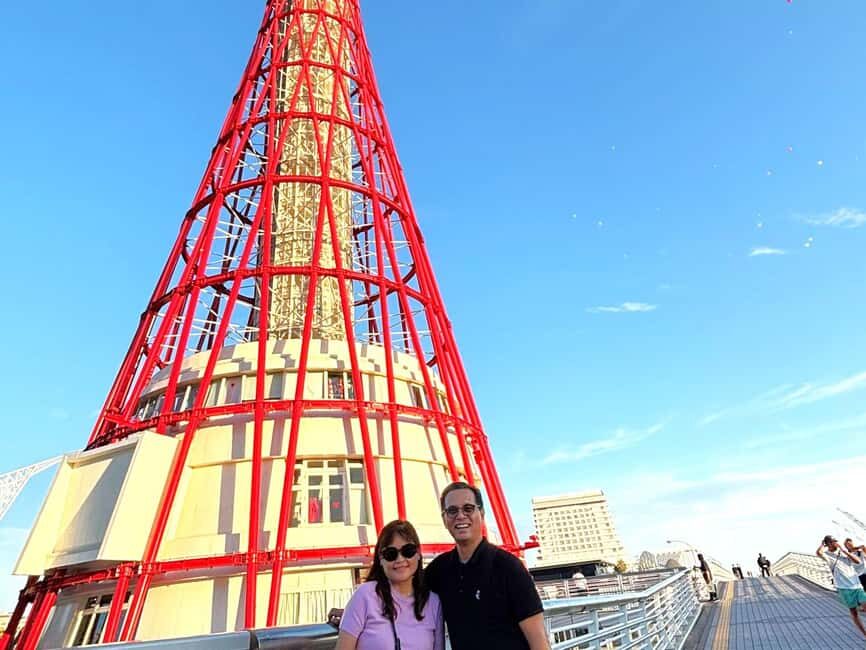
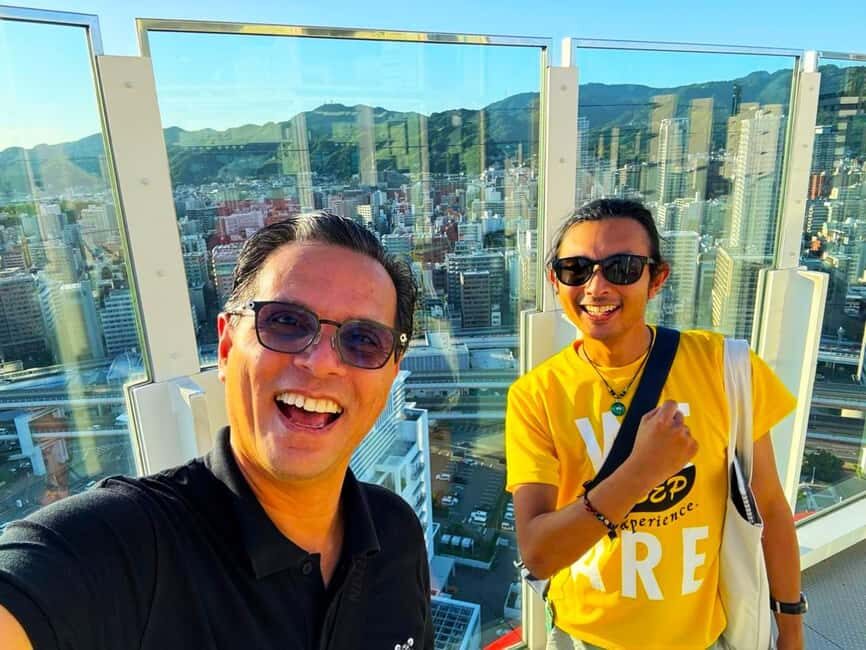
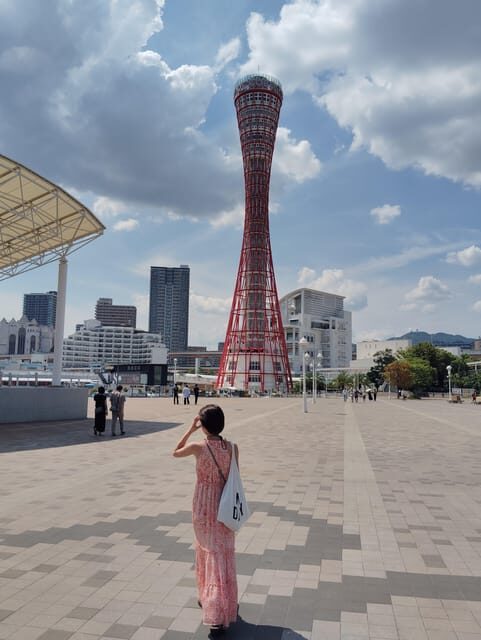
The tour ends at Kobe Port Tower, with a guided portion of about 40 minutes. The tower has a classic silhouette and is often nicknamed the beauty of iron towers. If you want panoramic views of the harbor and the skyline, this is your payoff.
The best part is also the most flexible part: Port Tower ascent is optional. That means you can choose based on your energy level and your priorities. If you’re happy with exterior photos and don’t want extra time on stairs/elevators, you can still enjoy the visit. If you want the big view, go up and take your time scanning the coastline and landmarks.
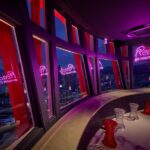
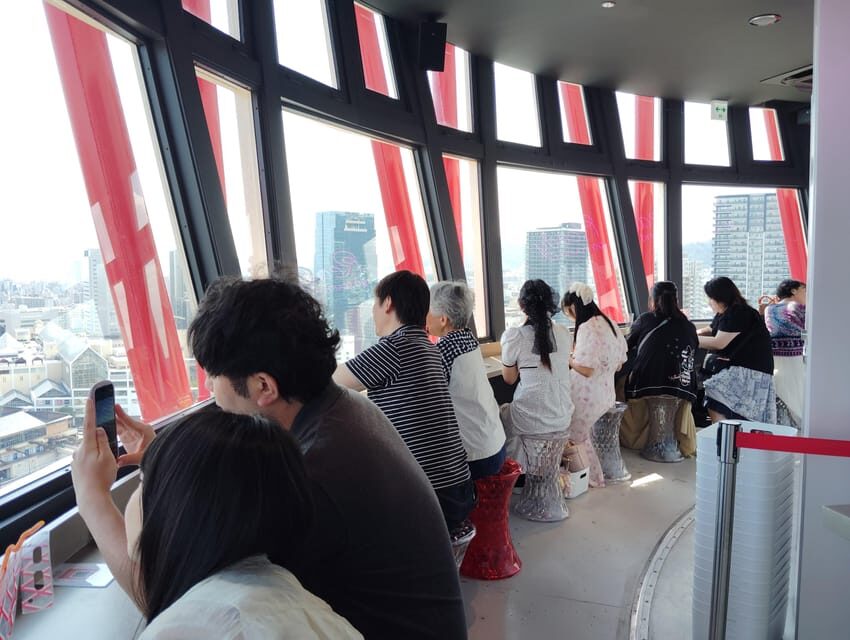
Inside, there’s also a rotating café, which gives you an easy way to enjoy the tower experience without turning it into a strict sightseeing mission. Even if you don’t plan to stay long, it’s a nice option for a break while enjoying the views.
If you’re traveling with a group, this optional choice helps prevent the classic “everyone wants something different” problem. One person can focus on the deck view, while another might prefer a simpler inside visit.
Price and value: what you really get for $45
At $45 per person for a 2–3 hour guided route, the value comes down to three things: guidance, admissions, and efficiency.
First, you’re not paying for a vague “walking tour.” You’re paying for a guide to connect the dots—Ikuta Shrine meaning, what to notice in Chinatown, and how to place Meriken Park and the Port Tower in Kobe’s larger story. Multiple guides were praised for answering questions and keeping the agenda moving at a comfortable group pace.
Second, admission fees to visited attractions are included. That matters because a “cheap” walking tour can quickly become expensive if you’re buying tickets one-by-one for the best viewpoints.
Third, you get a compact route that hits the highlights without forcing you to manage transfers, ticket lines, and route planning across multiple areas on your own.
What’s not included is also clear: food and drinks. That’s normal for this style of tour, but you should budget for at least a couple of snacks in Chinatown and any optional drinks. If you show up hungry, you’ll likely spend a little more (and probably enjoy it more). If you’re trying to keep costs down, you can sample lightly and save your bigger meal for later.
Tour pacing: small-group feel and English-guided clarity
This is a live English tour, and it’s offered as private or small groups. That tends to make the experience smoother—more question time, fewer awkward pauses, and better control of the walking pace.
From the guide notes, you can expect leaders who are attentive and can adjust to your interests. For example:
- Aki met the group at the shrine and guided the flow so stops matched the plan.
- Kaori was highlighted for being considerate of interests and timing.
- Yayoi was praised for general excellence and attentiveness.
- Satoshi was noted for friendliness and for answering questions in detail.
- Cana was specifically called out for maintaining pace and leaving enough time for shopping afterward.
That’s the kind of practical service you want on a short tour: not just facts, but help translating what you’re seeing into something you can remember.
Who should book this Kobe highlights tour
Book it if:
- You’re short on time and want major Kobe sights in one go.
- You like walking tours, but you want structure so you’re not guessing what matters.
- You want an easy mix of spirituality, city neighborhoods, and harbor views.
- You’d rather spend money on a guide than on transit complexity and ticket hassle.
Consider skipping or thinking twice if:
- You want lots of free time for independent exploration and long food stops.
- You’re already planning a deep, slow dive into one neighborhood (Chinatown or the port area) and don’t want a timed route.
Should you book this Kobe highlights tour?
If you want a clear, efficient introduction to Kobe, I think this one makes sense. The route covers the big emotional beats—Ikuta Shrine’s prayers, the street-food energy of Nankinmachi, a calm pause at Meriken Park, and a high-reward finish at Kobe Port Tower with an optional climb. And because admissions are included while food isn’t, you can control your costs without losing the key stops.
For most visitors, it’s a “do this on day one” style experience. It helps you understand Kobe quickly, so your later wandering feels smarter and less random.
FAQ
How long is the Kobe highlights guided tour?
The tour lasts about 2 to 3 hours.
What language is the guide?
The live guide is available in English.
Where do we meet the guide?
Meet your guide in front of the torii gate of Ikuta Shrine. The guide will be holding a yellow sign with the DeepExperience logo.
Is admission to the attractions included in the price?
Yes. Admission fees to the visited attractions are included.
Is food included?
No. Food and drinks are not included.
Do I have to go up Kobe Port Tower?
No. Port Tower ascent is optional, and you can choose not to go up.
What is the cancellation policy?
Free cancellation is available up to 24 hours in advance for a full refund.