REVIEW · WAKAYAMA PREFECTURE
Mt. Koya Sacred 4hr Private Tour with Government Licensed Guide
Book on Viator →Operated by Japan Guide Agency · Bookable on Viator
Four hours on Mt. Koya changes how you see it. This private, government-licensed walk lets you choose the exact 2–3 spots you want, guided by an English-speaking local who can explain what you’re looking at. It’s designed to avoid big-group rush and formality, while still giving you context you’d miss on your own.
I especially like the custom itinerary. You’re not stuck doing a fixed checklist; you can shape the route around temples, sacred halls, and the parts of Koyasan that interest you most. I also like the pacing: it’s a true walking tour where you can stop for questions, photos, and a moment of quiet.
One thing to consider: this experience is heavily dependent on your guide’s English and communication style. Most guides are excellent (I saw that clearly in the way guides like Miyuki and Naka handled the day), but the one real weak spot in the feedback is inconsistent English ability—so I’d set expectations that you may need patience.
In This Review
- Key things I’d circle before you go
- Mt. Koya in 4 hours: a realistic, meaningful taste
- Price and what you’re really paying for
- Kōyasan Station meets “slow travel” on foot
- Choosing your 2–3 stops: how to make it fit your interests
- Koyasan Okunoin: candles, graves, and Kobo Daishi’s shadow
- Kongobu-ji Temple: Shingon’s headquarters energy
- Danjo Garan: sacred ground with a 9th-century origin
- Reihokan Museum: why treasures matter (even if you’re not into museums)
- Daishi Kyokai admin center: modern faith administration in old surroundings
- Tokugawa’s Mausoleum: when political power gets close to the sacred
- Guides make or break the day: English quality and on-the-ground calm
- Who this tour suits best
- Quick tips to get the most from your 4 hours
- Should you book this Mt. Koya private tour?
Key things I’d circle before you go
- Pick your 2–3 stops from the Koyasan highlights list, instead of following a set route
- Government-licensed local English-speaking guide with a focus on Shingon Buddhism context
- Private tour means it’s just your group, not a shared scramble with strangers
- Walking plan from Kōyasan Station and back to the same meeting point
- Weather-aware flexibility, since guides have handled rain while still covering major sights
- Entrance fees vary by stop, so you’ll want a small budget for what isn’t included
Mt. Koya in 4 hours: a realistic, meaningful taste
Mt. Koya feels like a place with rules, not just scenery. The main power here is spiritual gravity—candles, incense, stone paths, and the sense that this mountain was built for a long, patient kind of living. A four-hour private walk doesn’t try to “see everything.” Instead, it helps you understand what each space is for, so your photos don’t feel like random snapshots.
The tour’s format matters. You’re not herded. You’re guided. That shift turns the experience from sight-seeing into meaning—especially when you learn who Kobo Daishi (Kukai) is in the story of Shingon Buddhism, and why Koyasan became a sacred destination.
You can also read our reviews of more guided tours in Wakayama Prefecture
Price and what you’re really paying for
At $108.72 per person for about 4 hours, this is priced like a small, focused private experience. The trade-off is the usual one: you’re paying for a licensed guide and personalization, not for transportation or entry costs.
Here’s the value equation that matters in real life:
- Included: the local English-speaking guide, and the right to choose 2–3 sites.
- Not included: transportation fees, lunch, and some entrance fees (not every stop charges).
So you should budget for a few potential extras. The two entries explicitly marked as not included are Koyasan Okunoin and Tokugawa’s Mausoleum. Everything else listed here is marked as free (temples and museum stops), which helps keep the overall cost under control if you plan your choices smartly.
Kōyasan Station meets “slow travel” on foot
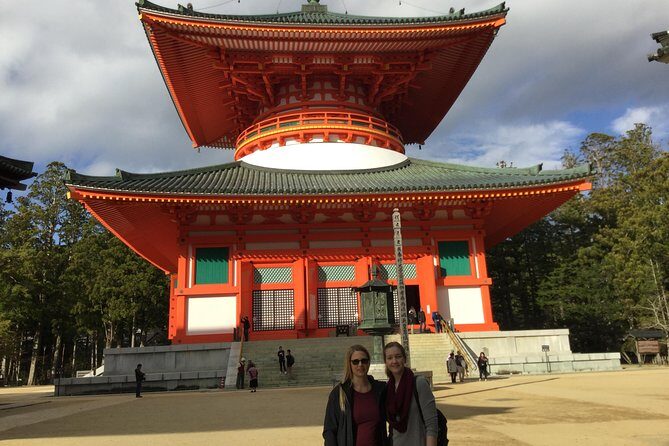
This tour meets you at Kōyasan Station, and pickup is on foot. It ends back at the same meeting point. That’s practical for two reasons: you won’t spend time hunting for a new location, and you can treat the walking as your built-in “arrive and settle” time.
Because it’s a walking tour, comfortable shoes matter more than you’d think. Mt. Koya can also feel damp or slippery when weather turns. One guide (Miyuki) led a tour during rain and still managed to cover the attractions, but the key lesson is to come prepared and let your guide set the pace.
Good to know:
- Service animals are allowed.
- Most travelers can participate, but you’ll still be walking.
- You cannot combine multiple tour groups, so it stays truly private.
Choosing your 2–3 stops: how to make it fit your interests
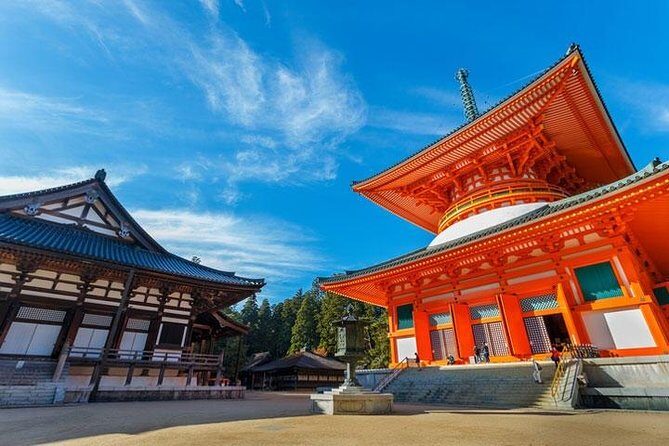
The best part of this tour is that you’re not forced into a single route. You select 2–3 spots from the set of major Koyasan sights, and your guide builds the day around that.
If you want the “big sacred centerpiece” experience:
- Choose Koyasan Okunoin plus one other temple or museum stop.
If your interest is history and religious structure:
- Pair Kongobu-ji with Danjo Garan and/or the Reihokan Museum.
If you’re into influential families and why they mattered to the faith:
- Add Tokugawa’s Mausoleum (note: entry is not included).
A smart strategy: pick one “must-see” that you really care about, then add one that satisfies your curiosity. Two stops can feel just-right. Three stops can work well if you’re comfortable moving on foot and don’t mind a tighter rhythm.
Koyasan Okunoin: candles, graves, and Kobo Daishi’s shadow
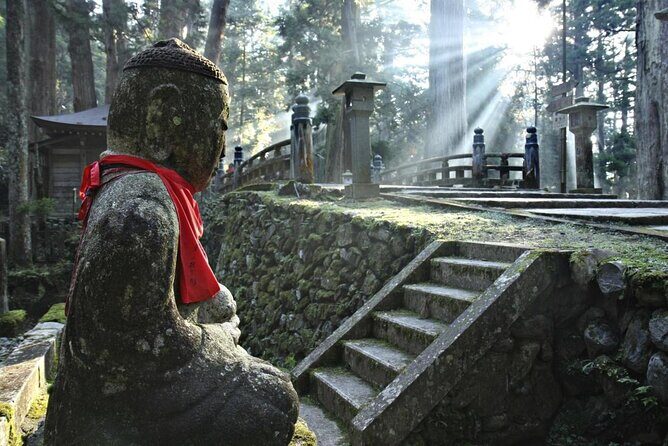
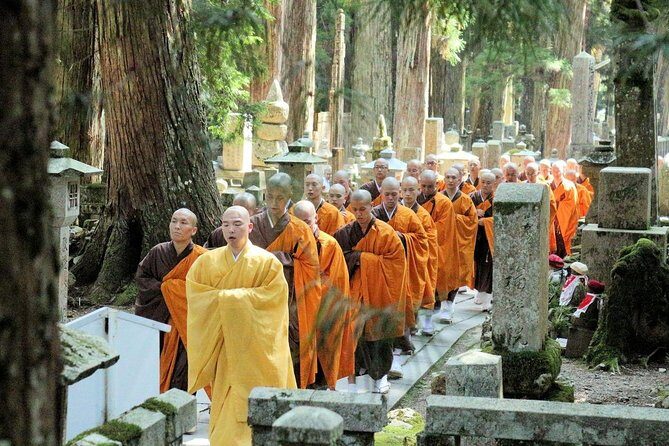
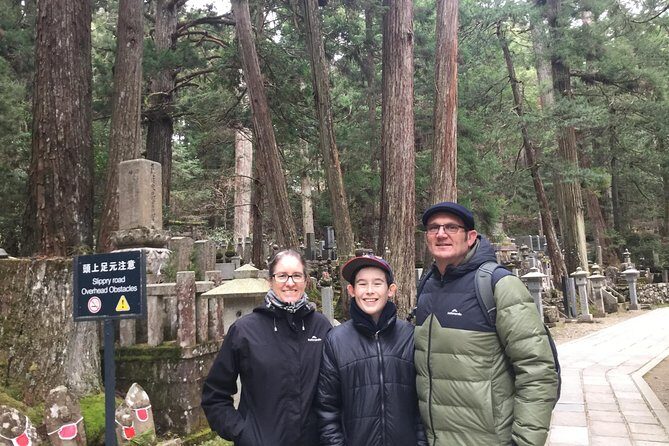
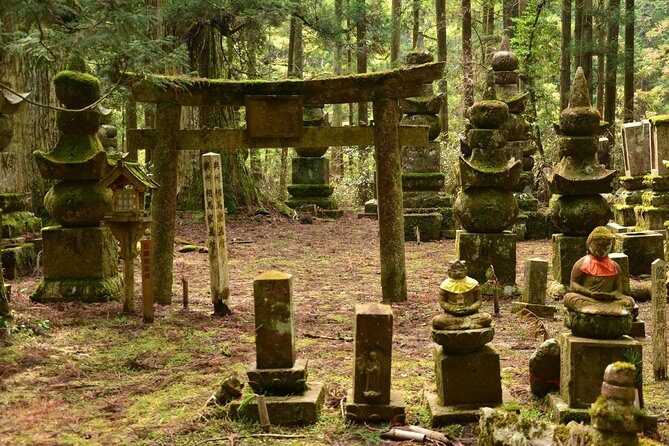
Koyasan Okunoin is the heart of Mt. Koya. This is where the story becomes intensely physical—stone markers, solemn pathways, and the feeling that people come here to think slowly, not just to pass through.
This is also the stop that connects directly to the founder figure. Kobo Daishi (Kukai), a central person in Shingon Buddhism, rests here, and many prominent personalities’ graves line the area. That matters because your guide can explain how the sacred geography works: the mountain isn’t just a backdrop. It’s part of the religious logic.
Practical note: the Okunoin admission ticket is not included. That doesn’t make it a deal-breaker, but it does mean you should plan ahead so you’re not surprised mid-day.
You can also read our reviews of more private tours in Wakayama Prefecture
Kongobu-ji Temple: Shingon’s headquarters energy
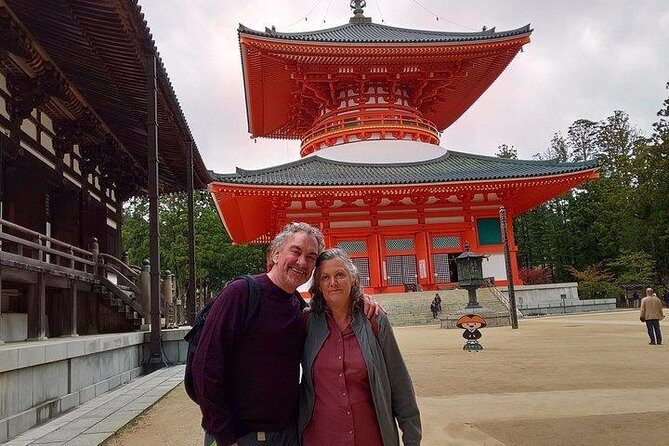
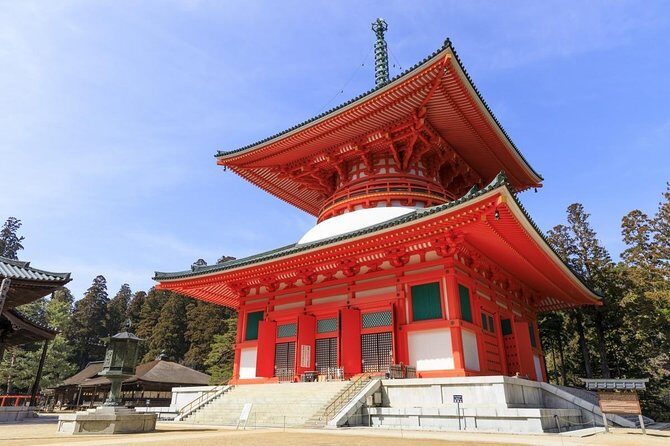
Kongobu-ji Temple is the main headquarters of the Shingon Sect. The scale here is clear from the numbers: thousands of temples across Japan and millions of followers worldwide. Even if you don’t know all the terms, you’ll feel the importance quickly.
This stop is also more visually “readable” for many visitors. You’ll be able to see religious artifacts and sliding-door paintings (fusuma). A private guide is useful here because those details are easy to overlook when you’re walking without context.
This one is free entry as listed. So it’s a great anchor stop if you want maximum value while keeping your entrance-fee budget lower.
Danjo Garan: sacred ground with a 9th-century origin
Koyasan Danjo Garan is one of the two most sacred sites on Mt. Koya. The key idea is founding-location power: Mt. Koya was founded on this ground, and Kobo Daishi held a groundbreaking ceremony here back in the 9th century.
This is where your guide’s role really earns its keep. Without explanation, it can feel like “another holy complex.” With context, you start to understand why the layout and the ritual importance would matter to practitioners across centuries.
Entry here is free. And with the time listed at about 30 minutes, this is a good “third stop” if you choose to add more to your route.
Reihokan Museum: why treasures matter (even if you’re not into museums)
Koyasan Reihokan Museum exists for a purpose: to preserve religious and cultural treasures of Koyasan. The museum’s entrance hall is styled after Byodoin Temple in Uji, and it has multiple exhibition areas.
Even if you’re not a museum person, this stop can change how you interpret the temples you just saw. Temples here aren’t only architecture. They’re connected to artifacts, teachings, and the preservation of belief.
Time is about 30 minutes, and entry is free as listed. In a four-hour plan, it’s a smart add-on because it gives your eyes a different kind of experience without stealing the day.
Daishi Kyokai admin center: modern faith administration in old surroundings
Koyasan Daishi Kyokai is the administrative center of Shingon Buddhism’s educational mission—responsible for spreading the teachings of Kobo Daishi. The complex includes two buildings, and a guide can help connect what you’re seeing to the practical structure behind religious life.
This stop is shorter (about 30 minutes) and listed as free. It’s the kind of place that might feel “less scenic” on paper, but it rounds out the story. A mountain temple visit can otherwise feel like only atmosphere. This adds the behind-the-scenes part.
Tokugawa’s Mausoleum: when political power gets close to the sacred
Tokugawa’s Mausoleum was built in 1643 by the third Tokugawa shogun, Iemitsu, so the family would have a mausoleum near Kobo Daishi’s mausoleum. If you like how faith and politics interacted in Japan, this is a compelling stop.
The entry here is not included. That’s worth factoring into your budget if Tokugawa’s connection is part of what you want to learn.
Time is about 30 minutes, so it works well when you want one more specific storyline without stretching the day.
Guides make or break the day: English quality and on-the-ground calm
Most of the praise in the feedback focuses on guides who were friendly, professional, and able to handle the day smoothly. One guide named Miyuki is specifically called out as very friendly and knowledgeable, and the tour still ran effectively even during rain. Another guide named Naka is praised for professionalism and for making the experience enjoyable.
Still, there’s one hard lesson from the lowest-rated feedback: English can be a weakness for some guides. In one case, the guide’s English was described as extremely poor, and the visitor felt they didn’t get useful information during the 4 hours.
My practical takeaway for you:
- If clear English explanations are a top priority, I’d go into the booking with a focus on communication style, not just the fact that the guide is English-speaking.
- Bring the mindset that this is a walking tour with explanations, but you should still be ready to point at what you’re seeing and ask simple questions.
Also, be realistic about weather. When heavy rain and thunder happen, rail service in the town base near Koyasan can be temporarily closed (that’s exactly the kind of disruption guides may plan around). Your guide can’t control the weather, but a good one can help you keep moving when the day gets tricky.
Who this tour suits best
This is ideal if you:
- Want a private Mt. Koya experience without the big-group pressure.
- Care about understanding Shingon Buddhism basics like who Kobo Daishi is and why Koyasan is built around his legacy.
- Like customizing your day—2–3 stops chosen by you feels more personal than a fixed route.
It’s also a good fit if you’re short on time. A four-hour format is limited, but it’s focused. You can still walk meaningful parts of the holy area and leave with a coherent storyline.
If you dislike walking, plan for slower movement. And if you need highly detailed English explanations, consider setting yourself up for success by choosing a guide known for strong communication (the names that show up positively in feedback are Miyuki and Naka).
Quick tips to get the most from your 4 hours
- Wear shoes you can walk in for real. You’re not just doing a slow stroll.
- Bring a layer. Places on the mountain can feel cooler, especially if clouds roll in.
- Decide your “theme” before you meet your guide: founder story, temple headquarters, or preservation/treasures.
- Budget for entrance fees at Okunoin and Tokugawa’s Mausoleum since they’re marked not included.
- If rain hits, don’t panic. A capable guide has shown you can still cover the key sights.
Should you book this Mt. Koya private tour?
Book it if you want an explanation-rich Mt. Koya day and you value personal pacing. The structure—government-licensed guide, private setting, and the ability to choose your 2–3 sites—is built for visitors who want more meaning than a checklist.
I’d think twice if:
- Clear English is non-negotiable for you, and you’re very sensitive to misunderstandings.
- You’d rather spend your time with museums and temples only, not the broader sacred geography and religious context that a guide will bring.
If you fall in the first camp, you’re likely to love the feeling of having the mountain explained in plain terms while you walk through it at human speed.