REVIEW · HIROSHIMA
Hiroshima Experience: History, Culture & Nature Tour
Book on GetYourGuide →Operated by Adina · Bookable on GetYourGuide
That kind of day changes how you look at a city. This guided walk connects Hiroshima’s most solemn memorial sites with standout places for architecture and calm garden time. You start at the Gates of Peace and end around the atomic-bomb ground zero area, then continue to Hiroshima Castle and Shukkeien Garden—a smart combo for first-timers.
Two things I really liked: Adina’s storytelling approach and the way the tour makes each stop feel purposeful, not just photo ops. I also appreciate that it mixes Peace Memorial Park weight with lighter moments like castle grounds and quiet paths in the garden.
One consideration: the pacing is tight in a 2-hour window. If you’re hoping for slow sightseeing or lots of time to stage the perfect photos at the end of the walk, plan to move with the group and don’t rely on extra minutes.
In This Review
- Key things that make this tour worth your time
- From Gates of Peace to the Atomic Bomb Dome: how this walk feels
- Peace Memorial Park stops you can follow without getting lost
- Atomic Bomb Dome and the Hypocenter Monument: respectful viewing with practical photo tips
- Hiroshima Castle: seeing samurai-era architecture without the full-day commitment
- Shukkeien Garden: the calm counterpoint (with koi and seasonal beauty)
- Price and timing: what $19 really buys you in 2 hours
- Languages, comfort, and what to bring to feel relaxed
- Who this guided walk is best for (and who should skip it)
- Should you book this Hiroshima Experience tour?
- FAQ
- How long is the Hiroshima Experience tour?
- How much does the tour cost?
- Where does the tour start and where does it finish?
- What places are included on the tour?
- What languages are available for the live guide?
- Is the tour wheelchair accessible?
- What should I bring?
- Is there free cancellation?
- Are there different starting times?
Key things that make this tour worth your time
- Adina’s guide style brings meaning to each monument, not just dates and names
- Peace Memorial Park key points like the Children’s Peace Monument and the Bell of Peace are easy to follow
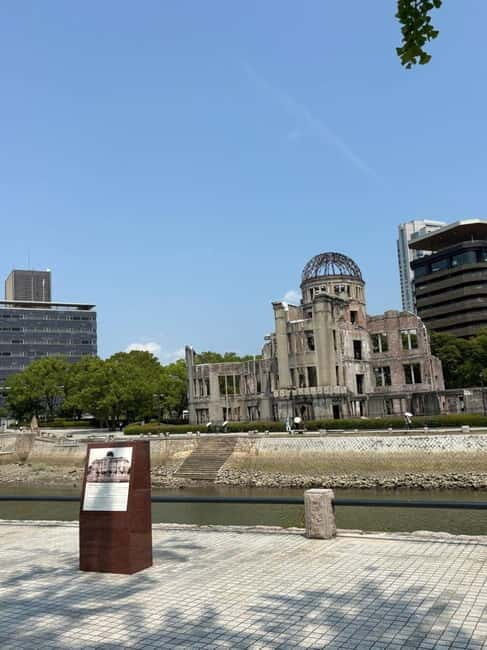
- Atomic Bomb Dome focus helps you understand what you’re looking at, right on site
- Hiroshima Castle + Shukkeien Garden give you a balanced change of mood without adding extra tours
- Short duration works great if you want the big highlights without losing a whole day
From Gates of Peace to the Atomic Bomb Dome: how this walk feels
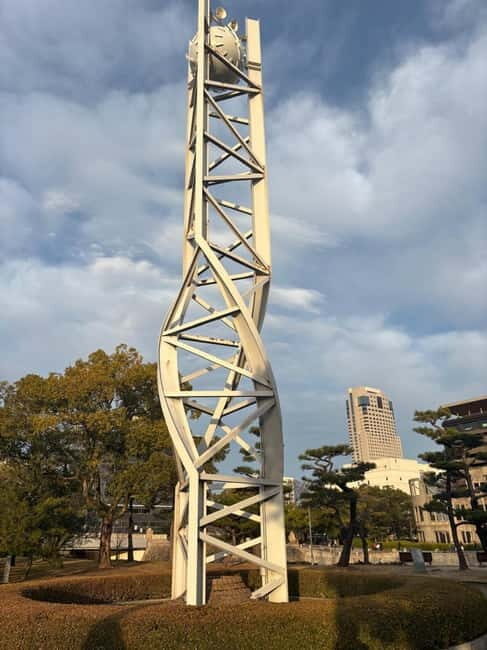
Hiroshima can hit you fast, and this tour is built for that. You begin at the Gates of Peace, where the mood sets immediately. From there, you move through a sequence of memorial stops that guides your eyes—so you’re not just standing in front of plaques, wondering what matters most.
Adina, a PhD researcher with a passion for storytelling, keeps the information clear and human. The best part is that you’re not overloaded with facts you can’t hold onto. Instead, you hear the events of August 6, 1945, and you also get the big-picture idea of how Hiroshima has worked toward peace over time.
This is a walking tour, so your best mindset is simple: comfortable shoes and a willingness to pause. If you treat each stop like a mini conversation—what happened here, why it matters—you’ll get more out of the 2 hours than you might expect.
You can also read our reviews of more historical tours in Hiroshima

Peace Memorial Park stops you can follow without getting lost
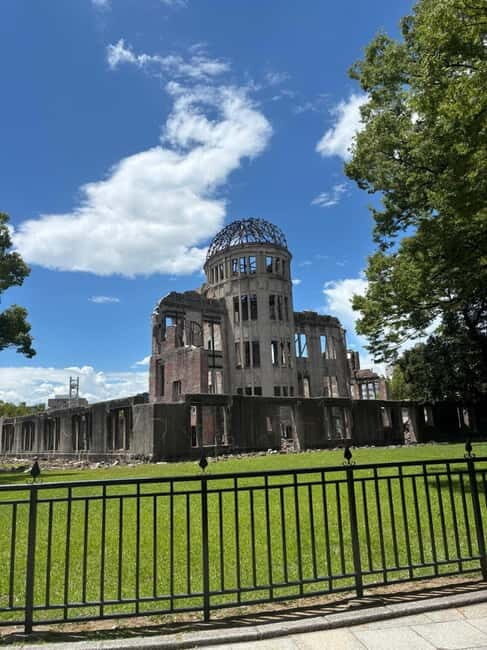
The Peace Memorial Park portion isn’t random. It’s a guided route of key landmarks you can actually connect into a story.
- Prayer Fountain: This is one of those quiet points where you’re meant to slow down and reflect. Even if you’re not a journal person, it helps your brain switch from sightseeing mode into attention mode.
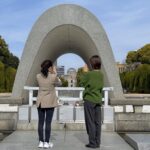
- Hiroshima National Peace Memorial: You’ll learn what the memorial is designed to communicate, and why it’s kept at the center of how people remember the bombing.
- Children’s Peace Monument: This stop lands differently than the larger memorials. It forces a shift from war history to the real cost for families and the future.
- Bell of Peace: This is where the tour’s peace theme becomes more than a slogan. You’ll understand what the bell represents and why it’s part of Hiroshima’s ongoing message.
Then you’re at the Atomic Bomb Dome. I like tours that don’t rush this moment. You’re guided to look at what survived, how the space is framed, and what you should take from it emotionally and historically. That guidance matters because the dome isn’t just a building—it’s a symbol, and symbols need context to read properly.
Atomic Bomb Dome and the Hypocenter Monument: respectful viewing with practical photo tips
The Atomic Bomb Dome is the headline sight, but don’t let that trick you into speeding through. What makes it powerful is the way it sits in a city that continues to move around it. You’re not watching a museum diorama. You’re standing in the same world where rebuilding happened.
After the dome, the tour finishes at the Hiroshima Atomic Bomb Hypocenter Monument. I appreciate that the route ends at a point that brings the story down to location. It helps your understanding click: you can see where “the event” happened, and you can hold that in your mind instead of keeping it abstract.
About photos: one downside to note is that the late-afternoon session can feel tight for picture-taking. If you care about getting clean shots without crowds or glare, arrive ready to work fast. Use a camera or phone with stabilization if you have it, and don’t plan on perfect angles at every stop—plan for good memories first, technical perfection second.
Also, remember you’re walking through memorial space. Keep your phone at a thoughtful volume, pause for the guide’s key moments, and only frame photos during the natural breaks. That approach will also help you avoid feeling rushed.
Hiroshima Castle: seeing samurai-era architecture without the full-day commitment
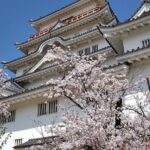
Once you’ve carried the memorial story, the tour moves you toward a totally different mood: Hiroshima Castle. This isn’t a distant detour. It’s a shift from remembrance to place—how people once organized life around power, defense, and design.
What I liked here is that the tour connects the castle to its role as a home of samurai lords. You’re not just looking at walls; you’re understanding why they were built and how the setting works. Even if you don’t know Japanese castle history ahead of time, a guided context turns the visit from random sightseeing into a readable structure.
In a short walk like this, you won’t get a “go-in-depth for hours” experience. But you will get enough to appreciate the architecture and the logic of the grounds. If you’re the type who likes to look at layout—where things sit, how spaces relate—this part of the tour pays off.
Practical tip: take a quick breath after the memorial area. Your legs and your mind both need a reset. Then let the castle be the visual reward of the day.
Shukkeien Garden: the calm counterpoint (with koi and seasonal beauty)
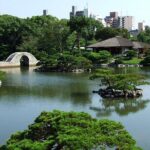
After castle time, you end in Shukkeien Garden, a traditional Japanese garden designed for quiet viewing. This is the kind of stop where the pacing naturally slows, because the space invites it.
You’ll move through paths with koi ponds and seasonal beauty built into the garden design. The value here isn’t only the scenery—it’s what it does to your mood after the memorial sites. Hiroshima’s story is heavy, and the garden gives you a way to come back to yourself without feeling like you’re ignoring what you just learned.
If you’re traveling in a group, this is also where you’ll likely enjoy the least “performative” part of the tour. Nobody needs to keep talking over anything. You can step back, look, and let your eyes adjust.
One note: gardens reward good walking shoes. Smooth paths still mean uneven ground sometimes, and you’ll be on your feet a lot in a 2-hour experience overall.


Price and timing: what $19 really buys you in 2 hours
For $19 per person and a 2-hour total duration, the value comes from the mix. You’re not only paying for entry to one major site. You’re getting a guided walking route that covers Peace Memorial Park landmarks, the Atomic Bomb Dome area, plus Hiroshima Castle and Shukkeien Garden.
In practical terms, you’re paying for interpretation. Without a guide, you might read plaques and move on quickly. With Adina, you’re able to connect the dots: events, meaning, and the way Hiroshima frames its commitment to peace.
That said, pay attention to pacing. Some people have found the tour runs a bit tighter than what you might expect from the advertised 2 hours. So if you have another timed plan right after, build in buffer time. And if you’re a slow photographer who needs a few extra minutes at each stop, go in with the mindset that this is a guided highlight route, not a leisurely browse.
The practical sweet spot is clear: you want the big emotional and architectural highlights in one guided session, with less guesswork and more context.
Languages, comfort, and what to bring to feel relaxed
This tour runs with an English-speaking guide, and Adina’s service also includes Hindi and Urdu. That’s a strong help if you want real guided explanation rather than struggling through your own translations.
The tour is wheelchair accessible, and it’s explicitly a walking itinerary. Your comfort will make or break the experience more than people expect. Wear comfortable shoes. Bring water, especially because you’ll be moving between multiple stops. And yes, bring your camera if you like to document details—just remember that memorial spaces are for respect first, photos second.
If you’re sensitive to intense emotions, plan your day so you don’t have a stressful schedule immediately after. This route can be mentally heavy before the castle and garden lighten it up.
Who this guided walk is best for (and who should skip it)
This Hiroshima Experience tour is a great fit if you want:
- A first-timer route that hits the key memorial landmarks without needing to research every plaque
- A quick way to see both the solemn sites and the calmer side of Hiroshima in one outing
- A guided explanation led by someone with research background and strong storytelling skills
It may not fit as well if you:
- Need extra time at each stop for long self-guided reading
- Prefer slow, unstructured sightseeing
- Want long photo sessions where each landmark is treated like its own half-hour shoot
If you’re the kind of traveler who likes clarity, context, and a clear route, this tour fits your style.
Should you book this Hiroshima Experience tour?
I’d book it if you’re trying to get your bearings in Hiroshima fast and you want the story behind what you’re seeing. Starting at Gates of Peace, continuing through Peace Memorial Park landmarks and the Atomic Bomb Dome area, then switching moods at Hiroshima Castle and Shukkeien Garden is a smart way to cover a lot without feeling chaotic.
Skip it if you’re the type who needs long, quiet solo time at memorials before moving on. This is a guided walking highlight route, and you’ll get the best results if you go with the group and let Adina’s direction shape your experience.
FAQ
How long is the Hiroshima Experience tour?
It lasts 2 hours.
How much does the tour cost?
The price is $19 per person.
Where does the tour start and where does it finish?
It starts at the Gates of Peace and finishes at the Hiroshima Atomic Bomb Hypocenter Monument.
What places are included on the tour?
You visit Peace Memorial Park, the Atomic Bomb Dome area, Hiroshima Castle, and Shukkeien Garden.
What languages are available for the live guide?
The tour is offered with a live guide in English, Hindi, and Urdu.
Is the tour wheelchair accessible?
Yes, the tour is wheelchair accessible.
What should I bring?
Bring comfortable shoes, a camera, and water.
Is there free cancellation?
Yes, you can cancel up to 24 hours in advance for a full refund.
Are there different starting times?
Check availability to see starting times.