REVIEW · FUKUOKA
Fukuoka’s Sacred Path: Temples, History & Culture
Book on GetYourGuide →Operated by Fukuoka Adventures · Bookable on GetYourGuide
Zen, shrines, and a fountain show in three hours. This Hakata walk links Shōfukuji’s quiet with the buzz of Canal City in a very manageable afternoon route.
I especially like two parts: first, stepping into Japan’s earliest Zen roots at Shōfukuji, founded by Eisai in 1195. Second, you don’t just do temples and shrines—you also get a real-world breather with the Canal City water and light show.
One thing to plan for: it’s a proper walking-and-standing afternoon. Wear comfortable shoes, because the route moves between several sites close enough to explore, but not so close you can rush through.
In This Review
- Key highlights you’ll feel the most
- Why Hakata’s sacred path works best as a walk
- Starting at Casetify Studio: an easy meet-up in Hakata
- Shōfukuji Zen Temple: Japan’s first Zen calm (and Eisai’s story)
- Tōchōji Temple: the 10.8-meter Great Wooden Buddha and its underworld passage
- Kushida Shrine: Shinto roots and the Hakata Gion Yamakasa float culture
- Canal City Hakata: when history meets a water show
- Sumiyoshi Shrine: safe-travel protection and a quieter finish
- What you’ll learn from a guide who talks like a person
- How long it takes (and how to pace yourself)
- Price and value: why $77 can make sense
- Who should book this tour
- Quick checklist before you go
- Should you book Fukuoka’s Sacred Path?
- FAQ
- What languages is the tour offered in?
- How long is the walking tour?
- Where do I meet the guide?
- Which sites are included in the tour?
- What is included in the price?
- Is food or transportation included?
- Is this a group tour or private?
Key highlights you’ll feel the most
- Shōfukuji Zen Temple, Japan’s first Zen temple and a calm start that changes your pace
- Tōchōji Temple’s Great Wooden Buddha (10.8 meters) plus an underground passage idea about the afterlife
- Kushida Shrine and the Hakata Gion Yamakasa connection, with festival culture you can actually see
- Canal City’s fountain show as a modern counterpoint right in the same neighborhood
- A guide who keeps things conversational, with patience and lots of practical context
- Clear etiquette and daily-life perspective on how Buddhism and Shintoism show up together
Why Hakata’s sacred path works best as a walk
Hakata is one of those places where spirituality isn’t sealed off behind walls. It’s woven into streets, schedules, and seasonal festivals, so a walking route makes you slow down in the right places and keep your bearings.
You’ll start near Hakata Station and then spend about 3 hours moving site to site on foot. The pace is relaxed enough to ask questions, not just follow a checklist.
You can also read our reviews of more historical tours in Fukuoka
Starting at Casetify Studio: an easy meet-up in Hakata
Meet just outside Hakata Station’s West Exit, in front of the Casetify Studio at Amu Plaza Hakata. It’s a handy landmark if you’re arriving from elsewhere in Fukuoka or catching a train.
Because you begin at a major station area, you can also plan your day around this tour without stress. If you’re trying to fit sightseeing before dinner, this is a strong way to do it.
Shōfukuji Zen Temple: Japan’s first Zen calm (and Eisai’s story)
Your first guided stop is Shōfukuji Zen Temple, often described as Japan’s first Zen temple. It was founded in 1195 by the monk Eisai, who helped introduce Zen Buddhism from China.
What I like about this start is that it sets a tone. Zen temples are about attention—simple spaces, careful rules, and a slower mindset—so even if you’re not there to “perform” anything spiritually, you’ll naturally shift gears.
You’ll stroll the grounds with a guide, take in the traditional wooden architecture, and learn about Zen philosophy and meditation. This is also the spot where it helps to ask what silence or stillness means in practice, not just as an idea.
Practical note: expect to be on your feet and looking up. A camera is useful here, especially for the wooden details and the calm atmosphere.
Tōchōji Temple: the 10.8-meter Great Wooden Buddha and its underworld passage
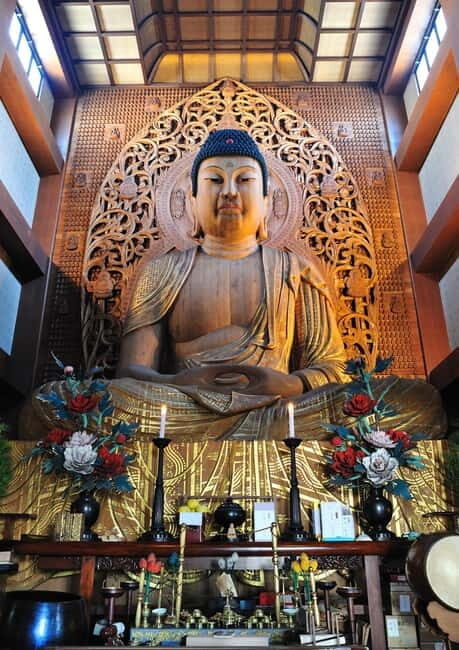
Next up is Tōchōji Temple, one of Fukuoka’s most important Buddhist sites. The headline is Japan’s largest wooden Buddha, standing about 10.8 meters tall, which is the kind of scale that makes you stop talking and just look.
The other memorable element is the underground passage. It’s described as a symbol of the journey through the afterlife, so you’re not only seeing a famous object—you’re also hearing a story about what a person is meant to think about along the way.
This is also where the guide’s style really matters. If your guide is good (and multiple guides connected with this tour are praised for patience and conversational clarity), you’ll get more than facts. You’ll get meaning: why this design exists, and how that symbolism fits into ordinary religious life.
Keep an eye on your footing down there. Even if it’s not physically demanding, temple passages often require steady steps and a slower pace.
Kushida Shrine: Shinto roots and the Hakata Gion Yamakasa float culture

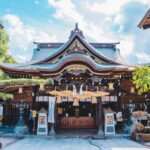
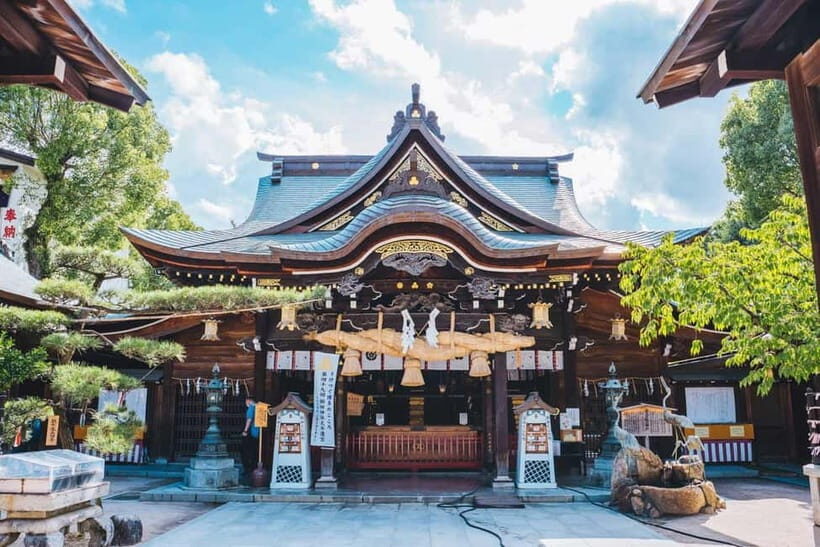
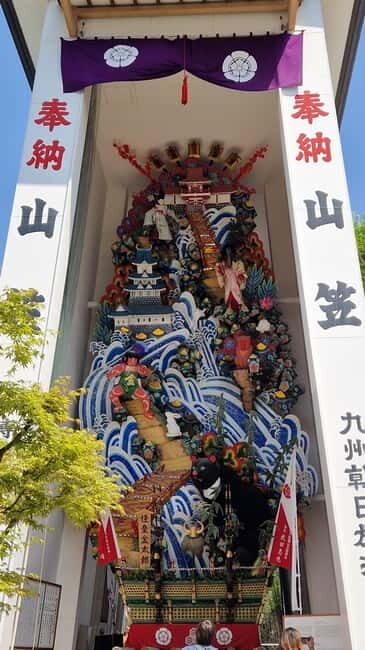
Then you shift from Buddhist space to Kushida Shrine, a historic Shinto shrine closely tied to the Hakata Gion Yamakasa festival. This shrine is a major symbol of Fukuoka, and that festival connection is the reason many people get excited even when they’re not visiting in summer.
If the festival float is on display during your visit, it’s one of those “you have to see it” moments. The Yamakasa floats are famous for energy and craftsmanship, and the shrine gives that festival culture a grounded, local setting.
What’s useful here is how a good guide connects the dots between ritual and community. You’ll learn about the traditions that bring the city to life and what that festival means for people who live around these spaces year after year.
Also, Kushida Shrine is a good place to pay attention to Shinto etiquette. Even simple behavior—where you stand, how you observe, how you keep your voice down—helps you show respect without making it complicated.



Canal City Hakata: when history meets a water show
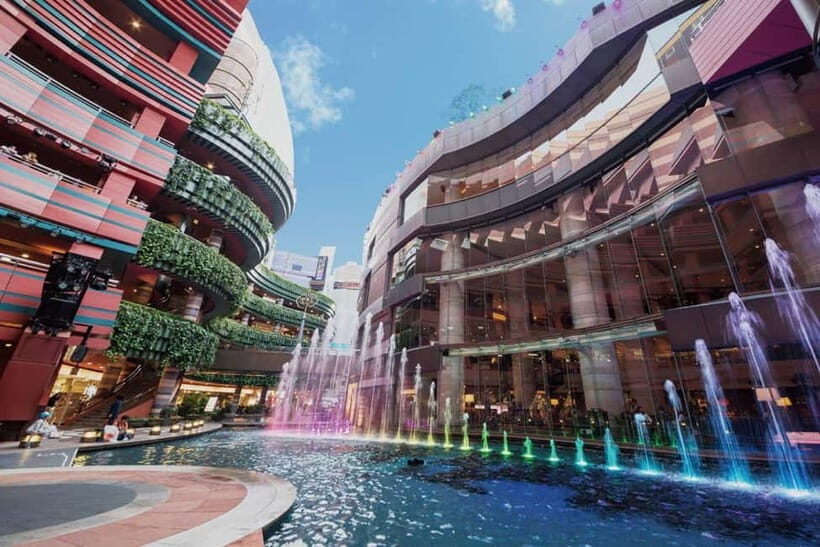
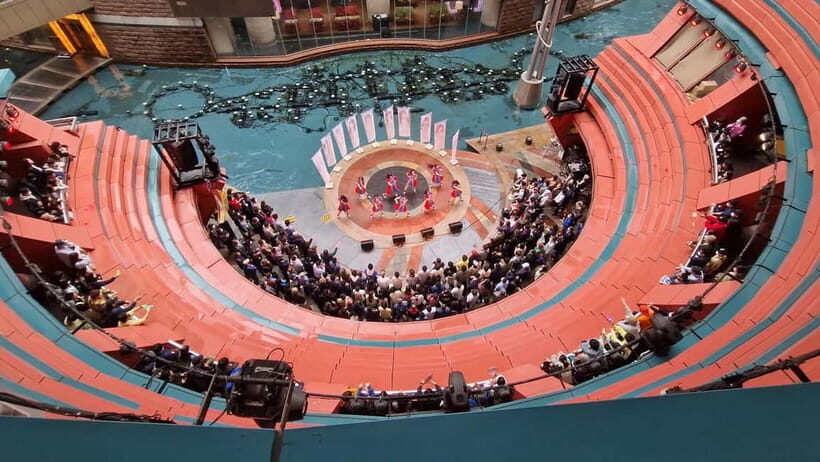
After the temples and shrine, the route moves into modern Hakata at Canal City Hakata. This is a shopping and entertainment complex, but the tour uses it for one specific highlight: the fountain show.
The show mixes lights, music, and water artistry. It’s a different kind of experience than a temple hall or shrine courtyard, but it works because you’ve just spent time learning how space and timing matter in religious life. Then you get a timed performance that’s playful and easy to watch.
The stop is short—about 15 minutes—so I’d treat it like a quick reset rather than a full stop-and-stare attraction. If you want photos, plan your angle early so you’re not scrambling when the action starts.
This modern break also makes the tour feel balanced. You’re not spending all afternoon in one mood.
Sumiyoshi Shrine: safe-travel protection and a quieter finish
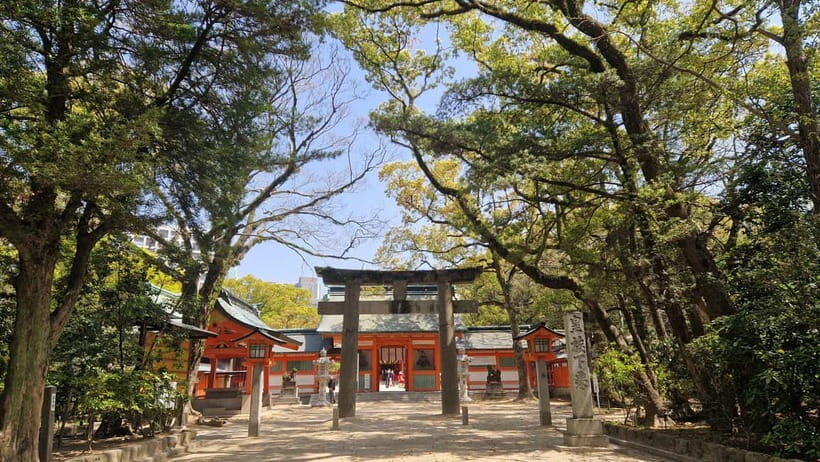
The final guided site is Sumiyoshi Shrine, dedicated to protection and safe travels. The shrine is noted as one of the oldest Sumiyoshi shrines, and it’s recognizable for its distinctive vermillion torii gates.
I like the way this ending feels. After the festival connection and the fountain show, you land in a more reflective space. It gives you a chance to slow down before wrapping up.
You’ll get a guided visit (about 25 minutes), and then you’ll have time to soak in the atmosphere as the group finishes and heads back on foot. If you came looking for spiritual roots, this is a satisfying last stop because it’s practical in theme: safety, guidance, and protection for the journey.
What you’ll learn from a guide who talks like a person
This tour is designed for conversation, not just observation. It’s offered in English and German, and conversational Japanese is available as well, which can be helpful if you want to ask small follow-up questions about what you’re seeing.
The most praised aspect across guide feedback is the human side: patience, clear explanations, and easygoing talk. Guides like Andy, Paula, and Arianna are noted for being organized and for making the experience feel relaxed rather than rushed.
You’ll also pick up real-world etiquette and how Buddhism and Shintoism show up together in everyday practice. Even if you’re not going deep into doctrine, those details change how you behave at each stop.
One more practical bonus: the guides provide useful after-tour tips. That matters because the tour covers the highlights, but your day still needs a next step—where to eat, where to wander, and how to keep your momentum in Hakata.
How long it takes (and how to pace yourself)
This is a 3-hour walking tour, and the route includes short walking sections between sites. Some stops are guided longer than others, like Shōfukuji and Tōchōji, while Canal City is a brief, focused visit for the fountain show.
If you’re the type who likes to absorb at your own speed, a small group/private group setup can help a lot. It usually means the guide can slow down for questions and adjust the pace so you don’t feel herded.
If you’re sensitive to weather, check conditions before you go. You’ll be outside between stops, and temple/shrine time also involves standing and looking for details.
Price and value: why $77 can make sense
At $77 per person for about 3 hours, you’re paying for more than entry-level sightseeing. Your ticket buys guided visits to four major spiritual sites (Shōfukuji, Tōchōji, Kushida Shrine, Sumiyoshi Shrine), plus a Canal City fountain show stop.
That combination matters for value. The tour is stitching together a coherent Hakata story—Zen origins, Buddhist monumental art, Shinto festival culture, and then a modern show—so you’re not spending your time figuring out how to connect everything on your own.
You also get interpretive context: what symbols mean (like the underground passage), why festivals matter (like Gion Yamakasa), and how etiquette works in real life. For many people, that’s the difference between “I saw places” and “I understand what I saw.”
The one tradeoff is also clear: transportation costs and food and drinks aren’t included. So if you’re building a tight day budget, add local transit and your meal plan separately.
Who should book this tour
I think this works especially well for:
- First-timers in Fukuoka who want Hakata highlights in a short afternoon
- People who like guided context, especially around religion and local customs
- Travelers who enjoy a mix of old and new, since you get both temples/shrines and Canal City
- Anyone who prefers a small group pace instead of a large, noisy crowd
It might be less ideal if you want a very hands-on workshop style (this is still a walking guided experience). And if you dislike walking between multiple stops, you’ll need to go in with realistic expectations about foot time.
Quick checklist before you go
Bring:
- Comfortable shoes (you’ll be on your feet)
- A camera for temple details and shrine scenes
- Money for souvenirs
Plan:
- Check the weather before you head out
- Wear clothing you can move comfortably in, since you’ll be outside at multiple points
Should you book Fukuoka’s Sacred Path?
If you want a smart, guided way to understand Hakata beyond surface photos, this is a solid choice. The best part is the structure: you get meaningful stops in a short time, plus a guide who explains things in a patient, conversational way.
I’d book it if your ideal afternoon includes both quiet temple atmosphere and a modern break at Canal City. And I’d hesitate only if your schedule can’t handle walking between several sites.
If you’re deciding between wandering alone and having a guide connect the dots, this tour leans toward the second option. You come away with stories, etiquette tips, and a clear sense of why these sacred spaces matter in daily Fukuoka life.
FAQ
What languages is the tour offered in?
The tour is offered in English and German. Conversational Japanese is also available.
How long is the walking tour?
It lasts about 3 hours.
Where do I meet the guide?
You meet just outside Hakata Station’s West Exit, in front of the Casetify Studio at Amu Plaza Hakata.
Which sites are included in the tour?
You’ll visit Shōfukuji Zen Temple, Tōchōji Temple, Kushida Shrine, and Sumiyoshi Shrine. There’s also a stop at Canal City Hakata for the fountain show.
What is included in the price?
The price includes a local guided 3-hour walking tour, visits to the listed temples and shrines, and the Canal City fountain show stop, along with stories and insights into Buddhism, Shintoism, and local traditions.
Is food or transportation included?
No. Transportation costs and food and drinks are not included.
Is this a group tour or private?
It’s described as a private group, with a small group experience aimed at being more personal.