REVIEW · FUKUOKA
Hakata Old Town Walking Tour Tracing the True History of Fukuoka
Book on Viator →Operated by JTB Global Marketing & Travel Inc. · Bookable on Viator
Hakata Old Town makes time feel closer. This 3.5-hour walking tour connects temple landmarks, festival traditions, and everyday local culture, with a tea break that actually tastes like the region. I especially like the way the route mixes Hakata’s shrines/temples with a stop that shows how people lived, and I also appreciate the included visit to a 300-year-old tea shop for kabusecha and a teacake.
For me, the best part is practical: you get an English-speaking guide to point out what you’d likely miss on your own as you move through tight old-street blocks. One group I saw described a guide named Miyoko as on time, kind, and knowledgeable, which matches the tone this tour seems built for. The main consideration is simple: you’ll be walking the full time (about 3 km) and you’ll want moderate stamina and easy shoes.
In This Review
- Key highlights you’ll care about
- Hakata Old Town on foot: what you’ll actually do in 3.5 hours
- Jotenji Temple and Sennen-no-Mon: your first real taste of old Hakata
- Tochoji Temple and the Fukuoka Daibutsu: the skyline moment
- Mitsuyasu Seikaen tea stop: kabusecha from Yame plus a teacake
- Hakatamachiya Furusatokan: a replica house that teaches local life
- Kushida Shrine: where the Gion Yamakasa tradition shows up year-round
- Why this route feels like real Hakata (and not a rushed checklist)
- Price and value: what you’re paying for at $190.49
- Practical tips: how to keep the day comfortable and smooth
- Should you book the Hakata Old Town Walking Tour?
- FAQ
- What is the meeting point and the tour ending location?
- How long is the Hakata Old Town walking tour?
- What does the kabusecha tea stop include?
- Are entrance fees included?
- What if entry is not possible at a shrine or temple?
- How much walking is involved and is it suitable for everyone?
Key highlights you’ll care about
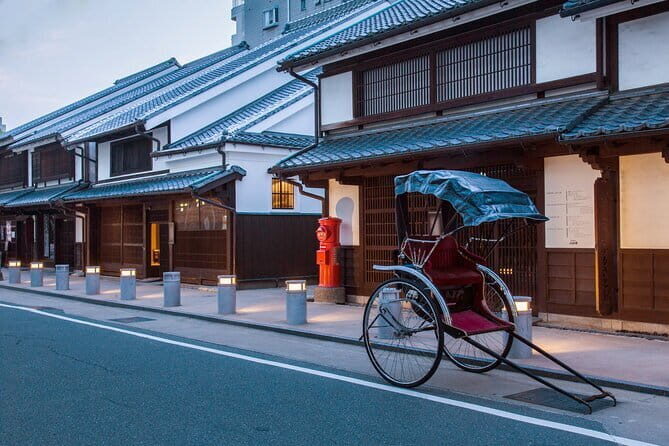
- Small group size (up to 10 travelers) makes it easier to ask questions while walking.
- Tochoji Temple includes a five-story pagoda and the Fukuoka Daibutsu (Great Buddha) on site.
- Mitsuyasu Seikaen Tea Leaf Shop is a 300-year-old stop with kabusecha from Yame plus a teacake.
- Hakatamachiya Furusatokan uses a traditional Hakata townhouse replica to explain local customs and annual events.
- Kushida Shrine ties straight into the Gion Yamakasa festival tradition, with kazariyama floats displayed year-round.
- Flexible itinerary (with alternatives) if a temple/shrine can’t be entered on the day.
Hakata Old Town on foot: what you’ll actually do in 3.5 hours
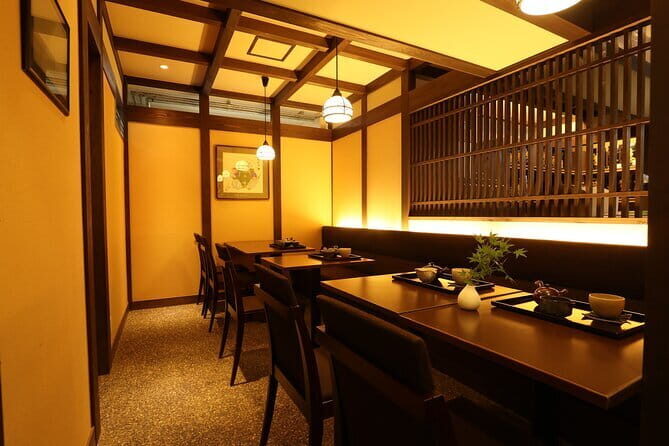
This tour runs about 3 hours 30 minutes and stays focused on the Hakata Old Town area. You start at the Fukuoka City Tourist Information Center at Hakata Station (12:00 pm) and finish at Kushida Shrine, a short walk from JR Hakata Station.
Expect a steady walking pace. The tour is designed as a full walking itinerary—around 3 km—and it’s best if you have moderate physical fitness and wear comfortable footwear. If you’re late, you can’t join partway through, so plan to arrive early and take your time getting oriented.
Group size is capped at 10 travelers, which is a big deal in a neighborhood like this. Smaller groups mean fewer bottlenecks at gates and temple approaches, and it’s easier for your guide to keep everyone moving without rushing. You’ll also have a mobile ticket for the day, which reduces paperwork friction.
You can also read our reviews of more walking tours in Fukuoka

Jotenji Temple and Sennen-no-Mon: your first real taste of old Hakata
Stop 1 is Jotenji Temple, but the real value is how you enter the old-town feel right away. On the way to the temple, you’ll take a stroll through Hakata Old Town and pause at Sennen-no-Mon, described as a welcome gate in the old area.
That kind of stop matters. In Japan, gates and thresholds aren’t just decoration—they’re cues that you’re stepping into a different rhythm: narrower streets, older sight lines, and places locals have used for generations. Even if you love temples mostly for photos, this “walk first, look second” approach helps you understand what you’re seeing.
Jotenji itself is a quick stop (about 15 minutes in one season listing, and longer in another), and admission is free. You’ll want to treat it like a warm-up rather than a full attraction stop.
Tochoji Temple and the Fukuoka Daibutsu: the skyline moment
Stop 2 is Tochoji Temple, where the highlight is its five-story pagoda—something locals have latched onto as a new symbol of Hakata. Even from a walking path, a multi-tier pagoda changes how you look at the street around it. It gives you a reference point, like your body can’t help but turn toward it.
Tochoji also houses the Fukuoka Daibutsu (Great Buddha). The tour notes it as Japan’s biggest, so you’re not just getting another statue stop. This is the kind of landmark that makes the tour feel worth the money because you’re compressing multiple “anchor” sights into a short route.
Time here is about 20 minutes (with seasonal variation). That’s not long enough for a deep, slow wander, but it’s enough to see the structures and hear the context your guide provides. Admission is included for this stop, so you don’t need to juggle cash or tickets mid-tour.
Mitsuyasu Seikaen tea stop: kabusecha from Yame plus a teacake
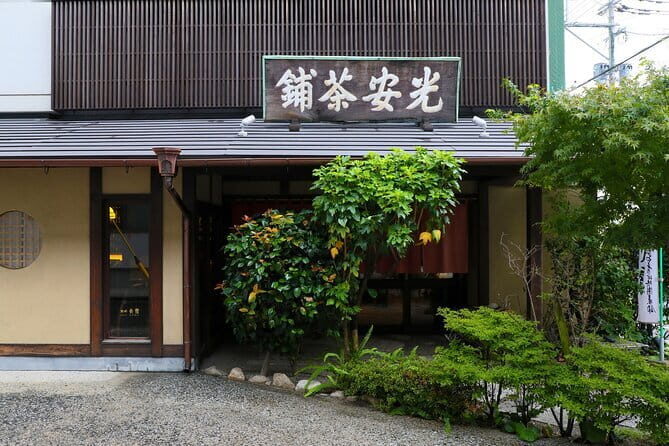
Stop 3 is the one food stop on the route, and it’s built for flavor, not just a photo break. You visit Mitsuyasu Seikaen, described as a 300-year-old tea leaf shop, then you get to try kabusecha—green tea from Yame (a well-known tea-producing area in Fukuoka).
The tea description is practical: kabusecha has little bitterness and a strong umami character. In plain terms, it’s often easier to enjoy than harsher green teas, especially if you’re not a lifelong tea person. The shop also includes local Japanese confectionery, and the tour specifically lists a teacake charge as included.
You’ll have about 40 minutes at the shop in one season listing (and about 30 in another). That timing gives you enough space to sit, taste, and reset before you move back into temples and shrines. If you’re planning your day in Fukuoka, this is also a smart pacing choice: a warm break in the middle of a walk helps you stay comfortable.
Hakatamachiya Furusatokan: a replica house that teaches local life
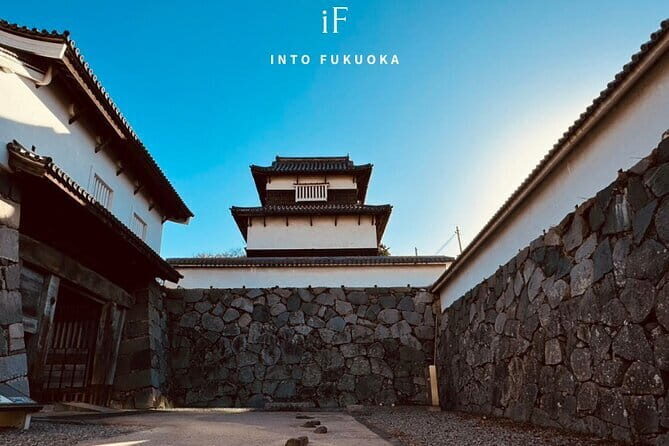
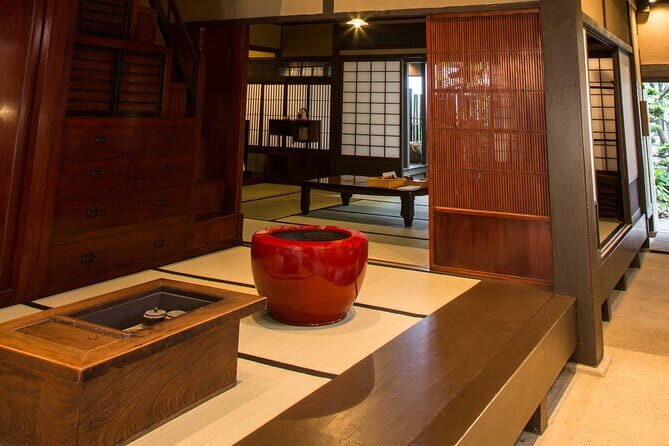
Stop 4 is Hakatamachiya Furusatokan, which is a replica of a traditional Hakata townhouse. Instead of treating history like captions on walls, this stop is oriented around exhibits that explain daily life and seasonal rhythm—annual events, handicrafts, and the “good old days” of Fukuoka.
This is a strong mid-tour pivot because you get out of “big landmark mode” and back into human scale. You’ll likely pick up how local traditions connect to the festival calendar and why certain crafts and habits matter. It’s the kind of stop that makes the shrines later feel less random.
Time here is about 25 minutes in one listing (and up to 40 in another). That range matters. In a shorter visit, focus on the parts that explain events and crafts; in a longer visit, you’ll have time to linger at more exhibits. Admission is included.
You can also read our reviews of more historical tours in Fukuoka
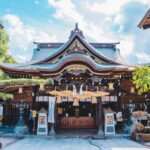
Kushida Shrine: where the Gion Yamakasa tradition shows up year-round
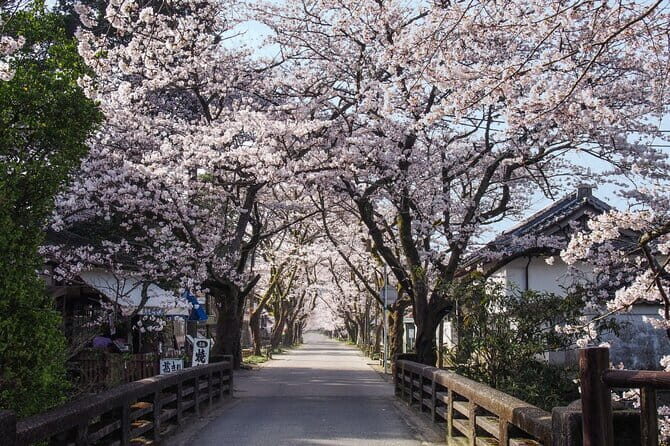
Stop 5 is Kushida Shrine, and the tour frames it as Hakata’s tutelary shrine with the oldest history. This is also the connection point to the Hakata Gion Yamakasa festival, since the tour notes the festival is offered here.
What you’ll find especially interesting is the mention of kazariyama floats displayed all year round. That detail changes the experience. Even if you’re visiting outside festival season (and most people are), you still get to see the objects that normally steal the spotlight when the city comes alive.
Kushida Shrine is a free admission stop and lasts about 20 minutes. The tour ends in front of the shrine, so it also works well for your afternoon planning. Since the shrine is about a 15-minute walk from JR Hakata Station, you can naturally transition to dinner or a second neighborhood wander.
Why this route feels like real Hakata (and not a rushed checklist)
The tour’s promise isn’t just temples for temples’ sake. Hakata is described as having a unique blend of customs, traditions, and food culture tied to trade with the Asian continent. That matters because it explains why the area doesn’t feel like one single “type” of Japan.
On this route, you see that blend through structure and timing. Temples and shrines create the spiritual framework. Furusatokan offers the domestic framework. Then tea and sweets add the everyday taste layer. When those pieces connect, the old streets stop being background scenery and start feeling like a lived-in story.
The included tastings help you stay present too. Tea and confection are a natural break, but they also give you something concrete to remember when the day gets busy. It’s easier to recall a flavor and a place than it is to recall five random facades.
Your guide’s job is also crucial here. A good local guide helps you see patterns: why this shrine matters for festivals, why certain buildings catch attention, and how the old-town approach changes what you notice from street level. This tour is structured so the “why” lands while you’re walking, not after you’ve already moved on.
Price and value: what you’re paying for at $190.49
At $190.49 per person, this isn’t a budget stroll. But you’re not only buying a guide; you’re buying a set of specific, included elements that add up:
- English-speaking guide for about 3.5 hours
- Admission fees included on the listed paid/required stops
- Mitsuyasu Seikaen tasting with kabusecha and local Japanese confectionery (teacake charge included)
- A tight route through multiple anchor sites: Jotenji, Tochoji, Mitsuyasu, Furusatokan, and Kushida Shrine
If you compare this to doing it on your own, the time savings and “insider pointing” are the real value. You could certainly walk Hakata Old Town independently. The difference is that you’d be guessing what’s most meaningful, and you might waste time figuring out entrance rules or the best order.
So the honest way to frame it: this tour is best value if you want guidance plus a curated flavor stop. If your priority is maximum freedom and you’re comfortable researching shrine/temple context yourself, you might spend less DIY. But if you’d rather show up and let the route do the work for you, the price makes more sense.
Also worth noting: the tour is capped at 10 people. That small-group structure usually costs more than large group tours, and it’s part of why the experience feels easier to manage as you move.
Practical tips: how to keep the day comfortable and smooth
This tour is straightforward, but small details decide whether it feels pleasant or stressful.
Wear shoes you can walk in comfortably. You’ll be on your feet for about 3 km across multiple stops, and the route depends on roads and stamina. The tour also warns that timing between stops can shift based on road conditions and participants’ pace, so don’t schedule a tight connection right after the tour ends.
Arrive a bit early at the start point near Hakata Station. Late arrivals can’t join partway through, which can ruin your day. If you want photos, give yourself a few extra minutes at each stop rather than trying to sprint through for perfect angles.
If you’re thinking about mid-tour transit, know this: you can use public transportation partway, but you’d need to cover the fare. The tour is designed as a continuous walk, so it’s usually better to stick to the route unless you have a specific mobility need.
One more practical heads-up: entry at shrines/temples isn’t guaranteed. If access isn’t possible, the tour will lead you to alternative destinations listed in the plan (such as Waka Hachimangu Shrine, Myoraku-ji Temple, Engaku-ji Temple, or Ryugu-ji Temple). You won’t get refunds for that switch, but the tour is set up to keep the experience going.
Should you book the Hakata Old Town Walking Tour?
You should book it if you’re in Fukuoka for a short stay and you want a middle-of-the-day plan that blends landmarks, a festival-connected shrine, and a real tea tasting. It’s also a good fit if you like your sightseeing guided by someone who can connect the dots—what a temple symbolizes, how a festival ties into a shrine, and why a townhouse replica matters.
You might skip or swap this tour if you’re mainly chasing DIY freedom, or if you don’t enjoy structured walks where your time at each stop is limited. The duration and walking distance are fixed enough that this won’t feel like slow wandering.
Overall, I’d call it a smart pick for first-timers in Hakata who want more than just “see temples, take photos.” The route is built to make Hakata feel coherent, with tea from Yame as the tasty anchor and Kushida Shrine as the festival payoff.
FAQ
What is the meeting point and the tour ending location?
You start at the Fukuoka City Tourist Information Center Hakata Station (1-1 Hakataekichūōgai, Hakata Ward). The tour ends in front of Kushida Shrine (1-41 Kamikawabatamachi, Hakata Ward), which is about a 15-minute walk from JR Hakata Station.
How long is the Hakata Old Town walking tour?
The duration is about 3 hours 30 minutes. The itinerary includes time at five stops, and total timing may vary depending on road conditions and participant stamina.
What does the kabusecha tea stop include?
At Mitsuyasu Seikaen Tea Leaf Shop, you’ll have kabusecha and local Japanese confectionery. Admission and the teacake charge are listed as included.
Are entrance fees included?
Yes. Admission fees are included for the stops that list admissions included, including Tochoji Temple and the tea shop and Hakatamachiya Furusatokan.
What if entry is not possible at a shrine or temple?
If entry isn’t possible due to circumstances on the day, the guide will lead you to alternative destinations listed for the tour. The listed alternatives include Waka Hachimangu Shrine, Myoraku-ji Temple, Engaku-ji Temple, and Ryugu-ji Temple.
How much walking is involved and is it suitable for everyone?
It’s a walking tour with about 3 km total walking. The tour notes a moderate physical fitness level is required, and you should wear clothing and shoes easy for walking.
![Departing from Takayama [Regular sightseeing bus] World Heritage Sites Shirakawago and Gokayama Ainokura - Stop 1: Ainokura Gassho Community in Gokayama (A Quieter First Impression)](https://images.thejapantraveler.com/wp-content/uploads/departing-from-takayama-regular-sightseeing-bus-world-heritage-sites-shirakawago-and-gokayama-ainokura.jpg)