REVIEW · FUKUOKA
Fukuoka City walking with public transport sightseeing Tour
Book on Viator →Operated by Shannon Lefebvre · Bookable on Viator
Fukuoka shrinks when you ride transit right. This private walking tour stitches together top sights with public transport and short on-foot stretches, so the city stays manageable instead of turning into a big scramble.
It’s in central Fukuoka, with easy connections between neighborhoods, plus pickup and drop-off at a local hotel.
I love how Shannon Lefebvre keeps the day efficient and comfortable, using the subway and street-level routes to cover more ground than a slow, all-walking plan. I also like the mix of mood: a calm shrine blessing, classic street shopping energy, and then big skyline payoff from Fukuoka Tower.
The only drawback is the pace. You’re out for about 7 to 8 hours with multiple stops and walking legs, so bring comfortable shoes and expect a solid day on your feet.
In This Review
- Key highlights at a glance
- Why Fukuoka feels easy: walking + subway that saves time
- Price and value: what you’re really paying for
- Starting at Hakata Station: the launch point that makes the day work
- Stop 1: Sumiyoshi Shrine and a calm Shinto blessing
- Stop 2: Yanagibashi Rengo Market for retro shopping energy
- Stop 3: Tenjin Underground Shopping Center (and why underground works here)
- Stop 4: Ohori Park Japanese Garden for a slower reset
- Stop 5: Fukuoka Castle remains and a nearby history museum
- Stop 6: Sannomaru Square + Maizuru Park and the kimono fitting experience
- Stop 7: Nishijin shopping district and 13th-century defense echoes
- Stop 8: Nishijingen Genkoborui bulwark—Mongolian wall remnants close up
- Stop 9: Fukuoka Tower for the 123-meter view payoff
- Stop 10: Momochi Seaside Park and the boardwalk breeze
- Stop 11: Hakata Station rooftop lookout and train-watching finale
- The pace, comfort, and who this fits best
- Weather reality check and what to bring
- Should you book this Fukuoka walking + public transport tour?
- FAQ
- How long is the Fukuoka City walking with public transport sightseeing tour?
- Is this a private tour?
- How many people are in the tour?
- Where does the tour start and end?
- Is hotel pickup included?
- Is lunch included?
- Do I get a mobile ticket?
- What should I know about weather and cancellations?
Key highlights at a glance
- Private for your group (up to 8 people), so the route feels personal rather than mass-tour timed
- Hotel pickup and drop-off, plus a mobile ticket to keep logistics simple
- Public transport plus walking, letting you see real neighborhoods without feeling stuck
- Mongol-era defenses theme through Nishijin and the wall remnants at Genkoborui
- Two major viewpoints: Fukuoka Tower (123 meters up) and Hakata Station’s rooftop/observatory
- Lunch included, either a sit-down option or something on the go
Why Fukuoka feels easy: walking + subway that saves time
Fukuoka is a big city, but the sightseeing core stays fairly compact. That matters because this tour is designed around smart movement: short walks where it’s pleasant, then quick rides where it prevents you from backtracking.
You don’t just hop between attractions. You also get the rhythm of the city—streets, markets, underground corridors, and parks—so the day feels like you’re living the city for a while. And because it’s a private setup, you’re not stuck waiting for the slowest pace in a large group.
One practical win: the route leans on areas that connect well to Hakata Station and the Tenjin hub. In plain terms, you spend less time figuring out directions and more time looking at the places you came for.
You can also read our reviews of more walking tours in Fukuoka
Price and value: what you’re really paying for
At $260.12 per group (up to 2) for a 7–8 hour private day, the math works best when you want convenience and a guide-led route rather than DIY hopping. This isn’t just someone walking beside you—it’s a planned flow that uses public transport to link distant-feeling sights without wasting hours.
You also get a few cost-savers baked in:
- Pickup and drop-off at a local hotel
- Lunch provided (sit-down or on-the-go)
- Admission included for several highlights, with other stops listed as free
If you’re traveling as a couple or a pair of friends, that “up to 2” structure can feel especially reasonable for a whole day. If you’re going solo, it may feel pricier, but the private format can still be worth it when you want a tight plan and minimal stress.
Starting at Hakata Station: the launch point that makes the day work
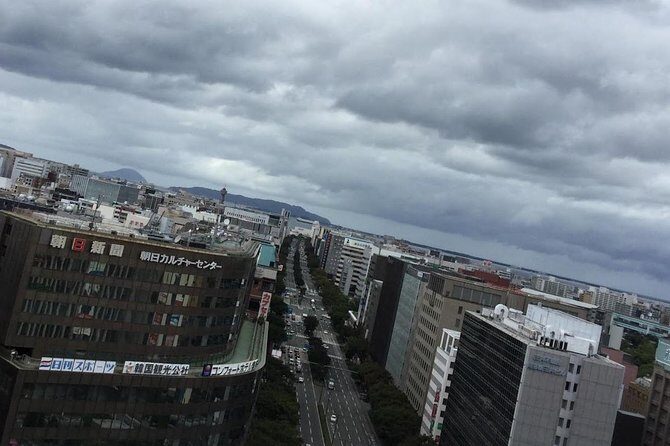
Most good Fukuoka plans begin with Hakata Station, and this one starts right there. The meeting point is at Hakata Station (中央街-1-1 / 博多駅), and the tour ends back at the same place—nice and simple for planning dinner afterward.
Hakata Station isn’t just a commuter hub. The tour uses it as a practical base first, then as a final “how the city moves” finale later in the day. That structure is smart: you’ll build familiarity early, then appreciate the big views when you’re fresh enough to enjoy them.
Also, you’ll likely spend less time hunting for a meeting point than with tours that scatter starts across the city. When the logistics are smooth, you can actually enjoy the itinerary.
Stop 1: Sumiyoshi Shrine and a calm Shinto blessing

You begin at Sumiyoshi Shrine, with about 20 minutes on site. It’s a gentle opening to the day—less shopping, more atmosphere—so your brain switches gears from travel mode into local rhythm.
The tour includes a Shinto blessing, which is a meaningful way to start. Even if you’re not a religion-focused traveler, it’s a respectful cultural moment that doesn’t feel like a performance.
Practical note: a shrine stop tends to be slower and quieter, and that’s good. It’s like the tour’s warm-up before it becomes a full-on city sampler.
Stop 2: Yanagibashi Rengo Market for retro shopping energy
Next comes Yanagibashi Rengo Market (about 15 minutes). This is the step-back-in-time feel you want in a city tour: older-market vibes, small shops, and a “you’re in the neighborhood” atmosphere.
What I like about this kind of stop is that it doesn’t demand you understand everything. You can enjoy the sights and textures, and let the guide’s framing do the heavy lifting.
This is also a good break between bigger attractions. Short market time is often the sweet spot: enough to feel the character, not so long that you get stuck waiting around when you’re eager to move on.
You can also read our reviews of more city tours in Fukuoka

Stop 3: Tenjin Underground Shopping Center (and why underground works here)
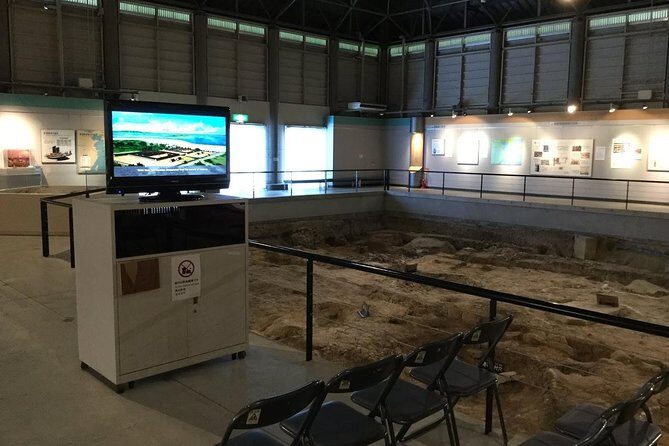
At Tenjin Underground Shopping Center (about 20 minutes), you’ll see how Fukuoka shops when weather, traffic, or time makes the surface less convenient. Underground shopping centers can feel strange at first, but they’re also exactly where a local city shows its practical side.
The tour’s time here is tight, so it doesn’t turn into a slow browse. Think of it more as orientation: how Tenjin’s shopping world connects, where people naturally flow, and what kind of stores and street life you’re dealing with.
If you like strolling through “everyday” places, you’ll appreciate this stop even if you don’t plan to buy much.
Stop 4: Ohori Park Japanese Garden for a slower reset
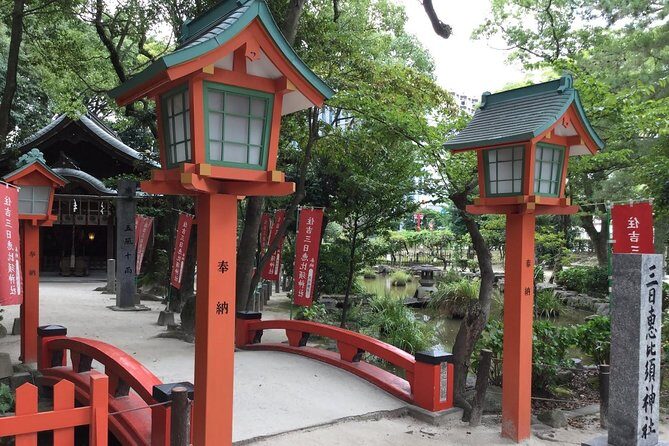
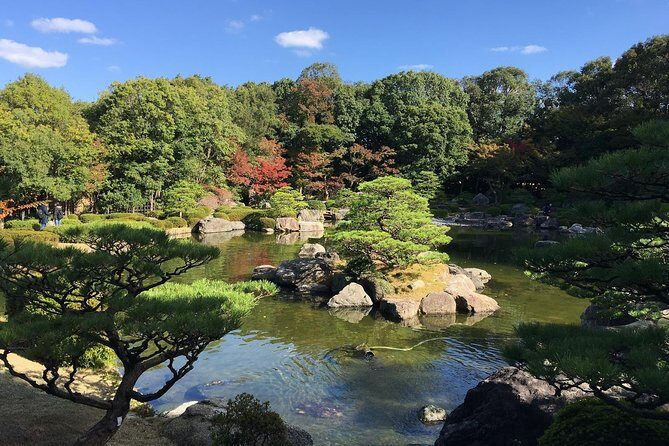
Then you get your nature-and-calm reset at Ohori Park Japanese Garden (about 30 minutes), with admission included. This is the kind of stop that gives your day contrast: after shrine, market, and shopping energy, you’re suddenly in a garden where you can just look.
The garden is included as a highlight, and the time allocation reflects that. You’re not rushed through it like a photo stop; you get enough minutes to walk the space at a relaxed pace.
If you travel with someone who likes scenery but not museums, this is the bargaining-chip stop. Even if gardens aren’t your thing, it’s a welcome breathing space in a packed itinerary.
Stop 5: Fukuoka Castle remains and a nearby history museum
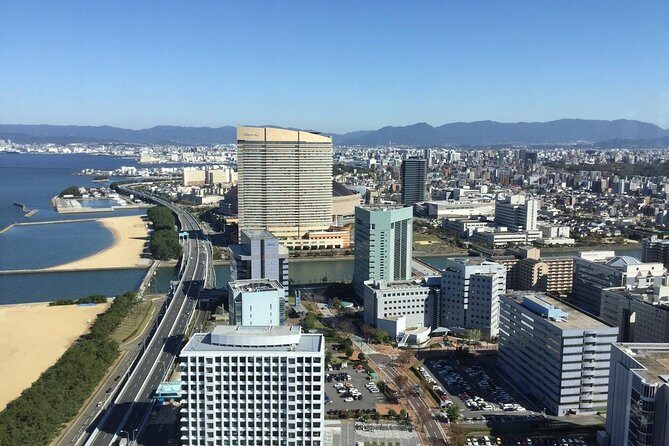
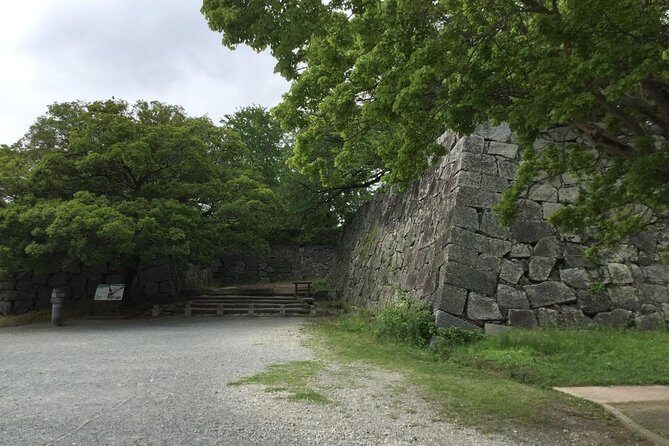
Fukuoka Castle Remains (about 30 minutes) is listed with the nearby history museum. The vibe here is peaceful and relaxing, which is important because it balances the more commercial parts of the day.
This stop works well because it’s both place-based and context-based. Seeing the remains lets you visualize the site, and the museum angle helps translate the bigger story into something you can remember later.
One thing to keep in mind: if you’re not into museums, you can still enjoy the area as an open, calmer walk. But if you do like history, pairing the remains with museum context is a solid use of time.
Stop 6: Sannomaru Square + Maizuru Park and the kimono fitting experience
At Sannomaru Square and Maizuru Park, you’ll have a longer cultural block (about 45 minutes) with admission included—specifically a kimono fitting experience. This is one of the most fun stops on the route because it’s interactive, not passive.
Kimono fitting isn’t just about dressing up. It’s a practical cultural experience you can share with someone later in photos and conversation. And it breaks up the sightseeing with something hands-on.
A small consideration: this stop takes longer than most others. So it’s a good idea to keep your schedule mindset flexible—this is where you slow down on purpose.
Stop 7: Nishijin shopping district and 13th-century defense echoes
Nishijin Shopping District (about 20 minutes) adds street-level character. You get a quick look at an arcade-like street scene, and nearby you’ll see remnants tied to the 13th-century wall defenses built to protect Fukuoka from the Mongol advance.
What I like here is the way it turns history into something you can literally spot in a real neighborhood. You’re not only reading about it—you’re noticing traces where life continues around it.
This stop is short on purpose, so you’ll get the context without running out of steam before the next wall site.
Stop 8: Nishijingen Genkoborui bulwark—Mongolian wall remnants close up
The tour then targets the bigger historical clue at Nishijingen Genkoborui Bulwark (about 10 minutes). The focus is on the Mongolian wall remnants in central Fukuoka, and it’s described as a real find because it’s not the kind of thing you would necessarily expect to discover in the middle of daily city life.
Even with a short time window, a site like this can land well because the “wow” comes from the contrast: modern streets around you, older defenses in view.
If you like history but hate long museum marathons, this is a good compromise: fast, visual, and memorable.
Stop 9: Fukuoka Tower for the 123-meter view payoff
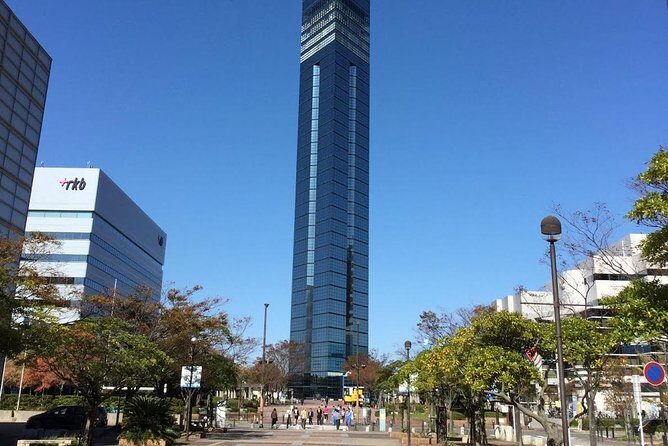
Up next is the day’s skyline moment: Fukuoka Tower (about 25 minutes) with admission included. The views are from 123 meters above the ground, which is high enough to make you feel how Fukuoka spreads out.
This stop is valuable even if you’re not a big viewpoint person. Once you see the city from above, the earlier stops start to make sense. Distances shrink mentally. Neighborhood layout becomes easier.
It’s also a strong “weather check.” If skies are clear, this is when your photos look dramatically better. If clouds roll in, you still get a different kind of atmospheric city view.
Stop 10: Momochi Seaside Park and the boardwalk breeze
At Momochi Seaside Park (about 15 minutes), the tour shifts to a lighter tone. You’ll walk along the Momochi Boardwalk and enjoy sea breezes, plus you’ll pass major landmarks including the Hilton Hotel, Fukuoka PayPay Dome, and MarkIs.
This section works as a decompression moment before the final transportation hub stop. It also helps break up the day so your body doesn’t feel like it’s nonstop walking.
The best part is that it’s “city meets coast” without turning into a long bus excursion. You’re getting an easy, scenic walk right where you need it.
Stop 11: Hakata Station rooftop lookout and train-watching finale
Finally, you finish back at Hakata Station with about 30 minutes for rooftop/outlook time and an observatory. The big draw is watching trains come and go in the station area, including the Shinkansen.
This is a fun ending because it matches the tour style. Earlier, public transport helped you cover the day. Here, public transport becomes the spectacle.
If trains are your thing, you’ll enjoy this a lot. Even if trains aren’t your thing, it’s still a satisfying “wrap-up” view that makes your day feel complete.
The pace, comfort, and who this fits best
This tour is built for travelers with moderate physical fitness. That doesn’t mean you need to be an athlete; it means you should be comfortable with several short walking segments spread across a full day.
Because you’re combining walking and transit, you won’t feel stuck in one long grind. But you also won’t have endless free time at every stop. It’s a “see a lot, enjoy it, move on” style.
I’d recommend it most for:
- Couples or small groups who want a guided route without car transfers
- Visitors who like mixing culture with city life (shrines, markets, parks, viewpoints)
- People who don’t want to spend the whole day reading maps and guessing transit lines
Weather reality check and what to bring
This experience requires good weather. That’s not a minor detail here because the route includes several outdoor walking segments and an open-air boardwalk.
If you’re booking close to the date, watch the forecast and pack smart. Comfortable walking shoes and a light rain layer (just in case) can make a difference.
Should you book this Fukuoka walking + public transport tour?
If you want a Fukuoka day that feels efficient, local, and varied, I think this is a strong pick. The biggest reason is the combination: private pacing, smart public transport links, and a lineup that covers serene shrine moments, street shopping, garden calm, wall-side history, and serious city views.
Book it if you like structure but not rigidity. You’ll still get to look, stroll, and enjoy stops in a reasonable way, and the route helps you see more than you could easily DIY in a single day.
Skip it (or at least rethink it) if a full day with multiple walking legs sounds exhausting. This is a 7–8 hour outing. Good shoes are not optional.
FAQ
How long is the Fukuoka City walking with public transport sightseeing tour?
It lasts about 7 to 8 hours.
Is this a private tour?
Yes. It’s listed as a private tour/activity, and only your group participates.
How many people are in the tour?
The tour can accommodate up to 8 members.
Where does the tour start and end?
It starts at Hakata Station (中央街-1-1 / 博多駅) and ends back at the same meeting point.
Is hotel pickup included?
Pickup is offered, including pickup and drop-off at a local hotel.
Is lunch included?
Yes. Lunch is included during the tour, either a sit-down option or something on the go.
Do I get a mobile ticket?
Yes. A mobile ticket is included.
What should I know about weather and cancellations?
The experience requires good weather. If it’s canceled due to poor weather, you’ll be offered a different date or a full refund. If you cancel yourself, it’s non-refundable and cannot be changed for any reason.