REVIEW · FUKUOKA
Fukuoka: Hakata Temple District Guided Walking Tour
Book on GetYourGuide →Operated by Reelu inc · Bookable on GetYourGuide
Hakata’s temple district hits different on foot—cool, calm, and packed with stories. This 2-hour guided walking tour is designed to connect you to Fukuoka’s spiritual sites and the roots of the famous Hakata Gion Yamakasa festival, with time for photos at the key landmarks. You start right near the action, then gradually shift into shaded temple paths where you can slow down and actually notice details.
I especially love how the tour pairs landmark sights with real context. Tochoji Temple’s Great Buddha isn’t just a photo stop; you also get a sensory look at Buddhist cosmology through the Hell and Paradise experience. I also like that you end at Kushida Shrine, where the Yamakasa decorations are shown year-round, so the festival vibe feels present even outside festival season.
One possible drawback: Shofukuji’s interior isn’t open during this walk, so if you’re hoping for a full inside-the-building visit, your best payoff is the gardens and architecture from the outside.
In This Review
- Key points at a glance
- Entering the temple quarter from Gion Station
- Hakata Sennen Gate to Jotenji: how Yamakasa starts
- Tochoji Temple: the Great Buddha plus Hell and Paradise
- Shofukuji: Japan’s first Zen temple (and what you’ll see)
- Kushida Shrine: Yamakasa decorations year-round and easy photo angles
- How the tour really flows in 2 hours
- Price and value: what you’re paying for
- Who this tour suits best (and who should skip it)
- Guides matter: clear explanations in English or Spanish
- A few practical tips before you go
- Should you book this Hakata temple district walking tour?
- FAQ
- Where does the tour start?
- What is the duration of the tour?
- What are the main stops on the walk?
- Is the entrance fee to Tochoji Temple included?
- Can I access the interior at Shofukuji during the tour?
- What languages are the live guides?
- Is the tour wheelchair accessible?
- Is there free cancellation?
Key points at a glance
- Tochoji’s Great Buddha plus the Hell and Paradise sensory stop
- Jotenji Temple as the origin story link to Hakata Gion Yamakasa
- Shofukuji, Japan’s first Zen temple, with calm gardens and Chinese-style architecture
- Kushida Shrine for year-round Yamakasa decorations and easy photo angles
- English or Spanish guiding, with Kyoko specifically noted for patient, clear explanations
- Photo stops built in across multiple stops, not just one quick snapshot
Entering the temple quarter from Gion Station
You meet near the heart of Hakata at Gion Station, at Exit 4 on the Airport Subway Line. From there, you’ll walk into the older part of the city, and the feel changes fast: street noise softens, and you start moving through quiet, serene paths where you can hear your footsteps more than your thoughts.
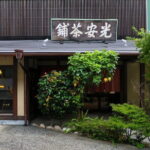
The tour starts at the Hakata Sennen Gate, which works like a symbolic threshold. It’s the kind of place where you can get your bearings in one second, because it visually signals that you’re stepping into a different era of Fukuoka. If you like history but also like keeping it practical, this approach is a win: you’re not just reading plaques, you’re getting the atmosphere first.
Along the way, you might catch seasonal flowers and—yes—friendly cats. They’re not the focus of the tour, but they add that real-life neighborhood texture that guidebooks never quite capture.
You can also read our reviews of more walking tours in Fukuoka

Hakata Sennen Gate to Jotenji: how Yamakasa starts
After you gather at Gion Station, there’s an early photo stop that gives you a minute to settle, frame a shot, and orient yourself. Then you move to Jotenji Temple, where the guided portion centers on the festival origin story.
Jotenji is described as the birthplace of the Hakata Gion Yamakasa festival. That single fact changes how you’ll view the later decorations at Kushida Shrine. Instead of thinking of Yamakasa as just a big float event, you start connecting it to temple beginnings and local tradition. For many people, that’s the main “aha” of the tour: the festival isn’t random entertainment—it has roots you can actually point to.
The timing is smart here. You spend about 20 minutes at Jotenji with a guided component, which is long enough to absorb the story without turning the walk into a lecture marathon. And because the pace stays walking-friendly, you’re still fresh when you hit the bigger wow stop at Tochoji.
Tochoji Temple: the Great Buddha plus Hell and Paradise
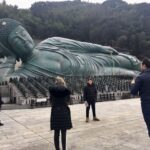
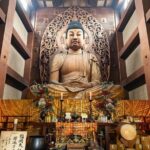
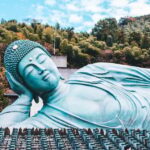
Next comes Tochoji Temple, the star stop for most visitors. You’ll have both a photo stop and a guided visit here, around 30 minutes total. The headline is the Great Buddha of Fukuoka, housed at Tochoji, and it’s described as one of the largest Buddha statues in Japan. Even if you’re not a “big statues” person, the size and setting tend to make you pause. It’s hard not to feel small in the best way.
What makes Tochoji more than a single-icon visit is the built-in storytelling experience called the Hell and Paradise tour. It’s a sensory journey through Buddhist cosmology, and in this tour it comes with admission included. Translation: you don’t just see religious art; you get a guided explanation of how belief systems are organized—conceptually and emotionally—inside the temple setting.
Practical tip: if you want your best photos, aim to step back and compose first, then move in closer. Statues like this often photograph better when you include some architectural context, so you can show scale.
Also note the tour includes the entrance fee to Tochoji, which matters for value. You’re paying for access rather than hoping you’ll stumble into the right hall on your own.
Shofukuji: Japan’s first Zen temple (and what you’ll see)
After the Tochoji highlight, you head to Shofukuji, with another photo stop plus a guided segment of about 20 minutes. Shofukuji is called Japan’s first Zen temple, which is exactly the kind of fact that helps you appreciate what you’re looking at. You’re not just visiting a calm garden; you’re standing on early Zen ground in Japan.
Here’s the important expectation-setting: interior access isn’t available on this tour. That doesn’t make Shofukuji a letdown, but it does change what you should focus on. Your payoff is the outside experience—serene gardens and Chinese-style architecture—plus the guide’s interpretation so you know what to notice.
Think of it like this: if you love architecture and peaceful landscaping, Shofukuji is the best “slow down” part of the route. If you were hoping for multiple indoor rooms, you’ll need to adjust your expectations.
Tip for comfort: Zen temple gardens can be gentle and quiet, which is wonderful—but it also means you’ll want sturdy shoes. The whole point is that you’re walking through calm pathways, not racing across cobblestones.
Kushida Shrine: Yamakasa decorations year-round and easy photo angles
Your final major stop is Kushida-Jinja (Kushida Shrine). You’ll have about 30 minutes here, including a photo stop and a guided visit. If Tochoji gives you the spiritual heavyweight moment, Kushida Shrine gives you the festival visual payoff.
Kushida Shrine is a guardian shrine for Hakata, and it’s the place where Yamakasa decorations are displayed year-round. That matters a lot. Even if you’re visiting outside the festival dates, you still get that unmistakable Yamakasa look—so the story you learned at Jotenji doesn’t fade as soon as you leave the temple district.
This is also one of the best photo moments on the tour. The decorations are a ready-made backdrop, and the shrine setting helps you frame the culture instead of just photographing random street corners. If you like taking pictures but hate awkward crowds, this stop tends to be a good mix: “popular” without feeling like a theme park.
One more practical detail: the tour ends back at Gion Station, so you don’t have to plot a long return walk when you’re already tired.
You can also read our reviews of more guided tours in Fukuoka



How the tour really flows in 2 hours
A lot of short walking tours fail because they cram too much and then rush everything. This one mostly avoids that by giving each stop a clear purpose.
- Early orientation near Hakata’s symbolic gate
- Festival origin story at Jotenji
- Big centerpiece + sensory experience at Tochoji
- Quiet Zen architecture and gardens at Shofukuji
- Year-round festival visuals at Kushida Shrine
Because the total time is 2 hours, you shouldn’t expect a deep, room-by-room religious studies class. Instead, think of it as a “best of” sequence that’s meant to help you read the district like a local.
Also, you’ll be outside for much of the tour. That’s great for atmosphere, but it means your clothing choices matter. Comfortable shoes, a light layer, and sun protection all help—especially in warmer seasons.
Price and value: what you’re paying for
At $51 per person for a 2-hour guided walk, this price sits in the “reasonable” zone for a structured, multi-stop cultural experience in Fukuoka. You’re paying for three things that are hard to replicate on your own:
- A planned route that hits the core temple and shrine points in a logical order.
- Interpretation that connects each site to a bigger story—especially Yamakasa origins.
- Included access where it counts. The tour includes the entrance fee to Tochoji, and the Hell and Paradise component is positioned as part of that value.
When you compare that to doing the sites solo, the “cost” isn’t just money—it’s time spent figuring out what matters. A good guide helps you focus on the details that make the places feel different from one another.
One thing to keep in mind: the tour doesn’t include a meal. If you plan to eat after, schedule it soon—don’t leave it for a long wander, because the tour ends right back at Gion Station.
Who this tour suits best (and who should skip it)
This is a strong fit for you if:
- You want an efficient way to see Hakata’s temple district without overplanning.
- You enjoy cultural context, not just sightseeing.
- You like calm walking through historic neighborhoods.
- You’re interested in how religious sites tie into local festival traditions.
It’s less ideal if:
- You expect extensive interior temple access at every stop (Shofukuji interior access isn’t available here).
- You need a meal included to feel satisfied on a short tour.
- You dislike walking. This is described as walking through quiet and serene paths, but it’s still continuous walking for about 2 hours.
If you’re traveling with someone who likes photos, this tour is also a good match. Most stops offer photography opportunities, and the decorations at Kushida Shrine give you some of the easiest photo results.
Guides matter: clear explanations in English or Spanish
One of the easiest ways to judge a walking tour is to look at how people react to the guide. Here, the guidance is offered in English and Spanish, and Kyoko has been specifically noted for being kind, informed, and patient, with lots of answers for curious questions.
That matters on this particular route because the meaning of what you’re seeing isn’t always obvious on the surface. The origins story of Hakata Gion Yamakasa at Jotenji, the cosmology theme at Tochoji, and even the design choices at Shofukuji all benefit from a guide who can explain without rushing you.
So if you’re the type who stops mid-walk to ask why something is shaped a certain way, this tour’s format supports that.
A few practical tips before you go
- Bring comfortable walking shoes. You’re moving between multiple sites in a short window.
- Plan to take photos. Photography is allowed at most locations, and the tour builds in photo stops.
- Keep an eye out for cats and seasonal flowers. They’re not guaranteed attractions, but the district often delivers that neighborhood charm.
- Dress for the season. The tour runs in all seasons and is mostly outdoors, so adjust for sun, rain, or cooler weather.
Should you book this Hakata temple district walking tour?
Book it if you want a focused, high-value way to understand Hakata beyond the train station and shopping streets. The combo is strong: festival origins at Jotenji, Tochoji’s Great Buddha plus the Hell and Paradise experience, Zen calm at Shofukuji, and the photo-friendly year-round Yamakasa decorations at Kushida Shrine. It’s the kind of tour that makes the district feel connected, not random.
Skip it if you’re looking for lots of indoor time at Shofukuji or you need a meal included. Also, if you hate walking through quiet areas, this may feel too calm.
FAQ
Where does the tour start?
The tour meets at Gion Station, specifically at Exit 4 on the Airport Subway Line.
What is the duration of the tour?
The tour lasts about 2 hours.
What are the main stops on the walk?
You’ll visit Hakata Sennen Gate, Jotenji Temple, Tochoji Temple, Shofukuji, and Kushida Shrine, then return to Gion Station.
Is the entrance fee to Tochoji Temple included?
Yes. The entrance fee to Tochoji is included.
Can I access the interior at Shofukuji during the tour?
No. Interior access is not available on this tour, but you can still enjoy the gardens and architecture.
What languages are the live guides?
The tour offers live guiding in English and Spanish.
Is the tour wheelchair accessible?
Yes, the tour is listed as wheelchair accessible.
Is there free cancellation?
Yes. You can cancel up to 24 hours in advance for a full refund.