Sumo has a way of making you sit up straight. This Kyushu Grand Sumo Tournament viewing tour pairs reserved seating at Fukuoka Kokusai Center with an English-speaking national government licensed guide—so you understand what you’re watching, not just that it’s loud and dramatic.
What I love most is the mix of a pre-match lecture plus reserved A-class chair seating, which helps you feel oriented the moment you arrive. I also like that you get takeaway materials like The Sumo booklet and the banzuke-hyo rankings table, so you can track wrestlers and build a little rooting habit. One thing to consider: the “best view” comes with 3rd-floor seating, and you may have to wait briefly to be escorted to your chair if ceremonies start right when you enter.
In This Review
- Key things that make this tour work
- Why Fukuoka’s Kokusai Center seats you for real sumo
- The warm-up: Sun Palace Hotel’s 20-minute sumo lesson
- Ceremonies and timing: 15:40, 16:00, and the 18:00 bow-twirling
- The English guide experience: Mimi makes the rituals click
- Price and what you truly get for $261
- Small-group comfort and the practical notes that save your day
- Who should book this sumo viewing tour?
- Should you book this Kyushu Grand Sumo Tournament viewing tour?
- FAQ
- What time does the Kyushu Grand Sumo Tournament viewing tour start?
- How long is the tour?
- Where do I meet the guide?
- Where does the tour end?
- What seat type do I get for the grand sumo tournament?
- Will I get my own set of seats if I’m with a group?
- Is an English guide interpreter included?
- Are meals included?
- Is there free Wi-Fi during the tour or at the venue?
- Is there luggage storage at the venue?
- Will Yokozuna ceremonies happen on every day?
- Can I cancel for a refund?
Key things that make this tour work
- Pre-bout lecture at Sun Palace (about 20 minutes) to translate the rituals into real meaning
- Reserved A-class chair seating at Kokusai Center, on the 3rd floor
- English guide interpreter who explains rules, history, and what to look for during bouts
- Ceremony timing built into the schedule, including bow-twirling at 18:00
- Small group size (up to 9 people) for more personal attention
Why Fukuoka’s Kokusai Center seats you for real sumo
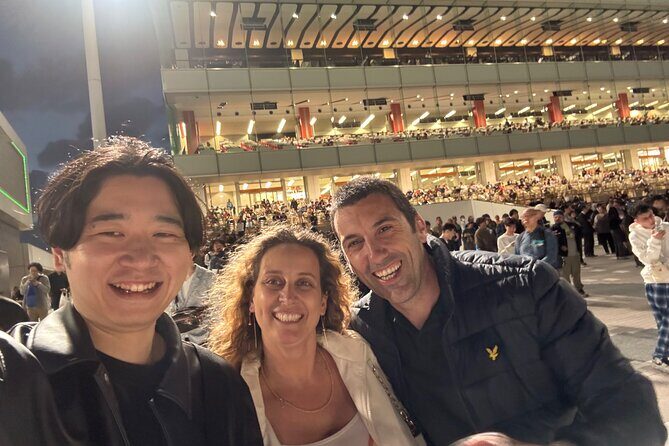
If you’ve only seen sumo on TV, the first surprise is scale. Not in a huge-stadium way—more like the athletes feel close, even when you’re not on the floor. At Fukuoka Kokusai Center, this tour gives you A-class reserved chair seating in the 3rd-floor section. That’s not “ringside,” but the advantage is practical: you’re not fighting crowds, and you’re not guessing where the action will be.
Chair seating also changes the experience. Sumo matches come with pauses, rituals, and sudden bursts of action. A solid chair means you can actually watch the whole flow without your back turning into a complaint department. Plus, you’ll be in the right place for the tournament’s big moments at the end of the year, when the field and momentum feel extra serious.
There’s one trade-off. You don’t get to pick exact seats, and your group may not be seated together depending on reservations. If you’re traveling with people who need to be side-by-side, plan on a quick meetup point before the escorted seating begins and keep expectations flexible.
You can also read our reviews of more guided tours in Fukuoka

The warm-up: Sun Palace Hotel’s 20-minute sumo lesson
The tour starts at Sun Palace Hotel in Hakata (meeting time is 1:45 pm). Before you even step into the arena, your licensed English guide interpreter runs a short lecture—about 20 minutes—designed to make the later bouts make sense.
This is the part I think you’ll quietly appreciate the most. Sumo isn’t just grabbing and throwing. It’s also etiquette, timing, and a whole set of signals that look like tradition until you know what they mean. Having the guide walk you through the rules and key concepts early helps you follow what’s happening when things speed up.
You also receive materials that turn the session from passive watching into active following:
- The Sumo booklet in English
- banzuke-hyo, a table of rankings
I especially like that the guide doesn’t treat this as a trivia lecture. The point is to give you a fast mental map so you can understand each bout’s flow—what matters, what doesn’t, and why certain rituals happen when they do.
Ceremonies and timing: 15:40, 16:00, and the 18:00 bow-twirling
Once you move to Fukuoka Kokusai Center, the schedule starts stacking important moments close together. The tour includes entry for the main tournament viewing block, with clearly defined highlights.
Here’s what to expect in order:
- 15:40: Makuuchi wrestler ceremonial entrance and the Yokozuna ring entrance
- The Yokozuna entrance depends on whether a Yokozuna is present—so don’t be surprised if it doesn’t occur.
- 16:00: Makuuchi division sumo matches
- 18:00: Bow-twirling ceremony
That bow-twirling moment is one of those “now I get it” experiences. Once you understand it’s part of acknowledging performance and presence, it stops being just a showy flourish and starts feeling like another layer of match culture.
One practical wrinkle: you might have to wait to be taken to your seat if a match or a procession is underway when you arrive. That’s normal in venues like this—don’t interpret it as a problem. It’s just the schedule of the arena controlling the flow, and you’ll be escorted once the active event ends.
Also note the guide stays with you into the venue. That matters because you’re less likely to get stuck trying to translate signage while the day’s rituals move forward at full speed.
The English guide experience: Mimi makes the rituals click
The heart of this tour is the English guide interpreter, a national government licensed professional. The goal isn’t to overwhelm you with textbook detail. It’s to help you recognize what you’re seeing.
In my favorite kind of cultural tour, you leave with a handful of moments that stay with you. Here, one review mentioned that the guide, Mimi, explained the rituals and history of sumo, then connected it to the wrestlers’ storylines. That’s exactly the sweet spot: you’re not just learning what sumo is, you’re learning how to watch it like you care.
You’ll also get help understanding the rules so you don’t miss what causes a bout to end. Sumo has its own logic, and once you understand the basics, you stop watching just the takedown and start noticing the build-up—stance, timing, balance, and strategy.
Because the group is capped at 9 travelers, the guide can also keep the tone personable. If you have questions about what you’re seeing, you’re more likely to get an actual answer instead of a rushed “look it up later.”
Price and what you truly get for $261
At $261 for about 4 hours 15 minutes, this isn’t a bargain in the “cheap seats” sense. But it also isn’t just a ticket. You’re paying for three things that add up in value:
1) Reserved A-class viewing at the tournament
2) An English licensed interpreter who adds context before and during the viewing
3) The included English materials—The Sumo booklet and the banzuke-hyo
If you’ve ever tried to plan sumo viewing on your own in a different language, you know how much time and uncertainty can pile up. Here, you get the structure: start with a short orientation, then go straight into the venue at the right time.
What’s not included matters for budgeting:
- meals and drinks
- transportation to and from the meeting and end points
- hotel pick-up/drop-off
- gratuities and other personal expenses
One more thing: there’s no free Wi-Fi listed for the tour. That’s not a dealbreaker, but it’s useful to know if you were planning to rely on online check-in help or messaging during the program.
Small-group comfort and the practical notes that save your day
This tour runs smoothly if you come prepared. A few details are worth putting on your radar early.
Mobile ticket: You’ll receive a mobile ticket. Keep it accessible on your phone. If your phone has a low battery, charge beforehand.
Seating logistics: You’ll have A-class reserved chair seating on the 3rd floor, but exact seat selection isn’t part of the deal. If you travel with friends or family, plan to meet up before the escorted seating gets you settled.
Smoking rules: Smoking isn’t allowed inside the venue. It’s the kind of rule that reduces stress—no searching for where you can step out.
No luggage storage: There are no coin lockers or luggage storage service in the venue. If you’re carrying large bags, leave them somewhere else or travel lighter. This is one of those “I’m glad I read this” points because arenas don’t work like airports.
Group size and attention: With a maximum of 9 travelers, you’ll generally feel like the guide can keep track of the group without turning it into a herd.
Kids: Only one child age 0–3 per adult can join for free, and they won’t receive grand sumo viewing seats. They must sit on a parent or guardian’s lap. Also, ages are determined based on the participant’s age on the day of the tour. For anyone under 18, you’ll need parental permission in writing, and for those under 15 or not yet in middle school, a parent/guardian must join.
Who should book this sumo viewing tour?
This is a strong fit if you want sumo to be more than background entertainment. If you care about understanding what’s happening—rules, rituals, and why ceremonies matter—this format does that well.
It’s also a good choice if:
- you want English support rather than self-guided guessing
- you prefer reserved seating so you can focus on the action
- you’d like a small-group experience in Fukuoka instead of a big, impersonal crowd
If you only want the cheapest possible way to see sumo, you may find this price high. But if you value comfort, translation, and a better viewing experience, $261 starts to look more reasonable.
Should you book this Kyushu Grand Sumo Tournament viewing tour?
If your goal is to understand sumo while you watch it—this is an easy yes. The biggest reason is the structure: you get a short English lecture at Sun Palace, then you watch the Makuuchi bouts and ceremonies at Kokusai Center with the guide right there to help you follow along.
The biggest “no for some people” factor is timing and space. You’re on 3rd-floor reserved chairs, and you may have a bit of waiting while the arena cycles through processions. If you’re the type who hates any schedule friction, you might find that annoying. If you’re okay with that, you’ll likely enjoy the day far more.
Overall, this is the kind of tour that turns a traditional sport into something you can actually follow in real time—then carry home in your memory with a few names, rules, and rituals that finally make sense.
FAQ
What time does the Kyushu Grand Sumo Tournament viewing tour start?
The tour start time is 1:45 pm.
How long is the tour?
The duration is about 4 hours 15 minutes.
Where do I meet the guide?
You meet at Fukuoka Sunpalace Hotel & Hall, 2-1 Chikkōhonmachi, Hakata Ward, Fukuoka.
Where does the tour end?
The tour ends at Fukuoka Kokusai Center, 2-2 Chikkōhonmachi, Hakata Ward, Fukuoka, after the sumo matches finish.
What seat type do I get for the grand sumo tournament?
You receive A-class reserved chair seating (3rd floor seats).
Will I get my own set of seats if I’m with a group?
Depending on reservations, group members may not be seated together, and requests for specific seats are not accepted.
Is an English guide interpreter included?
Yes. The tour includes a National Government Licensed English Guide Interpreter.
Are meals included?
No. Meals and drinks are not included.
Is there free Wi-Fi during the tour or at the venue?
No free Wi-Fi access is listed as included.
Is there luggage storage at the venue?
No coin lockers or luggage storage service are available in the venue.
Will Yokozuna ceremonies happen on every day?
The Yokozuna ring entrance will not take place if there are no Yokozuna present.
Can I cancel for a refund?
Free cancellation is available, and you can cancel up to 24 hours in advance for a full refund.