REVIEW · KYOTO
Private & Custom KYOTO Walking Tour – your Travel Companion
Book on Viator →Operated by Japan Private Tours · Bookable on Viator
Kyoto can feel like a maze. This private, custom walking day is built to keep you moving with confidence, with an English-speaking guide handling the heavy lifting. You get a route designed around your interests, plus support with things that usually slow people down, like ticket planning and talking with vendors.
I especially like the private, up-to-5 group format because you can ask questions and change pace without it turning into a rush-hour shuffle. I also like that the tour is flexible in theme: temples, shrines, and classic Kyoto neighborhoods all show up in one day, with photo help and on-the-ground guidance along the way.
One thing to consider: the guide experience can vary. The tour has delivered standouts like Jinshi, Femin, Dalivanh, and Karl, but there are also complaints about guide knowledge and even last-minute replacement due to illness in at least one case—so you’ll want to set expectations clearly before you start.
In This Review
- Key things to know before you go
- Why this Kyoto tour feels easier than going solo
- Price and value: when $265.82 per group is a smart deal
- What “custom” really means in an 8-hour walking day
- The Golden Pavilion and Pure Water Temple: the classic start
- Sannenzaka and Ninenzaka streets, then Yasaka Shrine in Gion’s orbit
- Fushimi Inari-taisha’s torii experience: short time, big impact
- Arashiyama: bamboo forest and Tenryuji Temple time plan
- Nishiki Market and Gion: food streets and photo-friendly corners
- The Silver Pavilion and Sanjusangendo’s 1001 Kannon statues
- Kyoto Imperial Palace and Nijo Castle: power in stone and wood
- Eikando Zenrinji Temple: Jodo sect, Nanzenji’s neighbor, autumn pull
- Photos, tickets, and restaurant help: how the support actually helps
- Guide quality can make or break the day
- Who this Kyoto walking tour fits best
- Should you book this private Kyoto walking tour?
- FAQ
- How long is the Kyoto walking tour?
- What’s the group size limit?
- Is pickup available?
- Are entrance fees included?
- Do I need to arrange transportation?
- Will I have a guide who speaks English?
- How do mobile tickets work for this experience?
- What are the daily operating hours?
- Is the tour refundable if I cancel?
Key things to know before you go
- Private and custom: your walking route is tailored to your interests, not a rigid script
- English-speaking guide support: navigation, questions, and practical help when you need it
- A day packed with Kyoto icons: Golden Pavilion, Pure Water Temple, torii trails, Arashiyama, and more
- Admission fees often aren’t included: several stops require paid tickets, while some are free
- Walking-heavy itinerary: it’s designed for a full day, so plan for stamina
- Guide quality matters: the reviews show a wide range, so confirm your plan up front
Why this Kyoto tour feels easier than going solo
Kyoto has a way of eating your time. Not because it’s hard to understand, but because you’ll spend energy figuring out where to go next, how to get there, and what to say once you arrive. This tour is built around the idea that you shouldn’t waste your limited time doing logistics.
A big win is the private guide model. You’re not herded into one fast pace. You’re not stuck staring at signage with your phone at 3% battery. Your guide is there to help you communicate, take photos, and get practical answers so you can focus on the sites themselves.
You also get real planning support. The tour description includes help with booking tickets and itinerary planning, and that matters in Kyoto where the “right time” can change everything about your experience. Even if you’re not obsessed with temples, having someone map out the day can turn a potentially chaotic route into a smooth sequence.
You can also read our reviews of more walking tours in Kyoto

Price and value: when $265.82 per group is a smart deal
The price is listed as $265.82 per group (up to 5) for about 8 hours. On paper, that sounds high if you’re traveling solo. Split it among a couple people and it starts looking a lot more reasonable. With five people in your group, the per-person cost becomes much easier to swallow for a private guide day.
This price also isn’t just “someone walks with you.” You’re paying for:
- Navigation and problem-solving (so you don’t lose time)
- English-speaking guidance (so you’re not guessing at what you’re seeing)
- Help with tickets and planning for stops that require them
- A route that aims to match your interests, rather than forcing you into someone else’s plan
The drawback is that it’s not cheap for families or individuals who want flexibility but don’t need a guide. If your goal is only one or two sites, you might be better off with a smaller plan. But if you want an organized, high-contact day with major highlights, the value can be strong.
What “custom” really means in an 8-hour walking day
Kyoto is the kind of city where “custom” can either be amazing or just marketing. In this case, the tour is described as tailor-made based on your interests, and that shows up in the way the day mixes different types of Kyoto experiences.
You get a menu of iconic stops—Kinkaku-ji, Kiyomizu-dera, Fushimi Inari-taisha, Arashiyama, Gion, Ginkaku-ji, Sanjusangendo, the Kyoto Imperial Palace, Nijo Castle, and Eikando Zenrinji. Some areas lean spiritual and scenic, while others lean street-level and cultural, like the preserved district streets of Sannenzaka and Ninenzaka and the shopping energy of Nishiki Market.
The practical reality: an 8-hour day is intense. Even if it’s private and tailored, you’ll still be choosing. If your dream is to linger, this kind of route can feel like a series of well-chosen sprints. On the flip side, if you want to hit top sights efficiently and understand what you’re looking at, it works well.
The Golden Pavilion and Pure Water Temple: the classic start
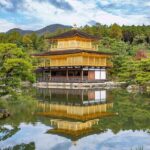
A common opening point is Kinkaku-ji (Golden Pavilion). You’re looking at a 30-minute visit, with admission ticket not included. This Zen temple is described as the retirement villa of Shogun Ashikaga Yoshimitsu—so even in a short time, you’re not just seeing a pretty building. You’re stepping into a site tied to the power and aesthetics of a shogunate era.
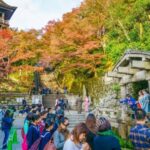
Next is Kiyomizu-dera (Pure Water Temple) for about 45 minutes, with admission ticket not included. It’s known for its wooden stage projecting about 13 meters above the hillside below. That staging feature is exactly the sort of detail you’ll appreciate more when someone explains it clearly, without you having to hunt down context on your own.
What I like about starting with these two: they set a visual baseline. You can then compare later scenes—other pavilions, other temple halls, other shrine spaces—without your brain feeling like it’s starting from zero every time.
Sannenzaka and Ninenzaka streets, then Yasaka Shrine in Gion’s orbit
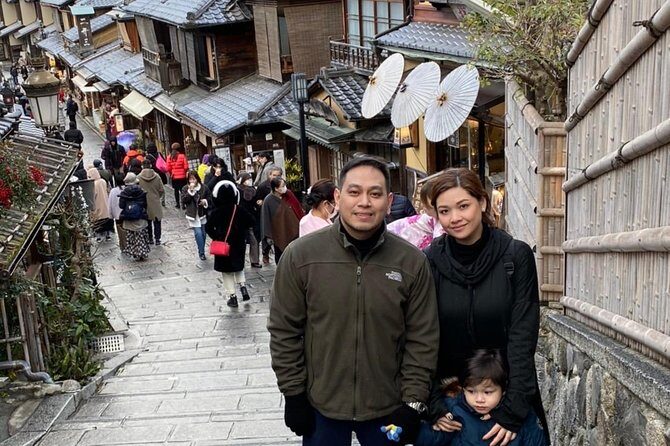
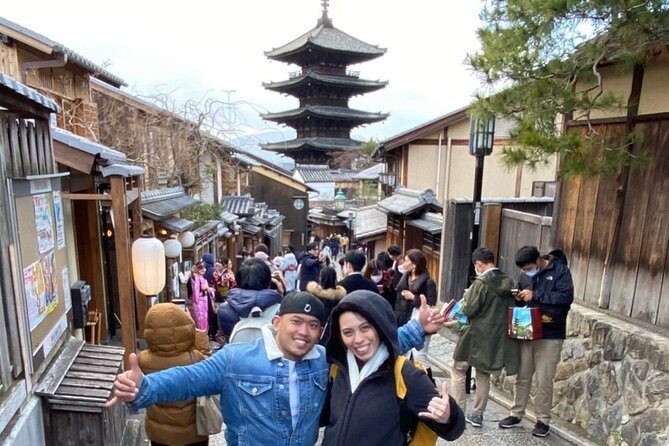
Then the route shifts from major monuments to the “walk-through” side of Kyoto. Sannenzaka and Ninenzaka are preserved districts, typically 45 minutes, and admission is free. This is where Kyoto turns from landmark photos into human-scale streets: small lanes, old-style streetscapes, and the feeling that you’re inside the city’s story rather than just viewing it.
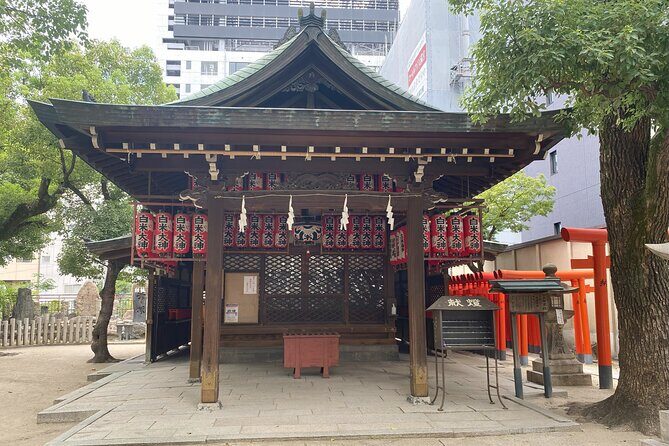
After that comes Yasaka Shrine (often tied to Gion) for about 30 minutes, with admission not included. It’s described as famous for the Gion Matsuri held every July—one of Japan’s best-known festivals. If your timing overlaps with festival season, it can add extra meaning. If not, you still get the shrine’s role as a center for that cultural rhythm.
A note on timing: these stops are shorter, which is smart for a full day. It means you don’t burn hours in one place. It also means you should decide up front what you care about most—street details, shrine meaning, or photo opportunities—so your guide can help you hit the right balance.
You can also read our reviews of more private tours in Kyoto



Fushimi Inari-taisha’s torii experience: short time, big impact
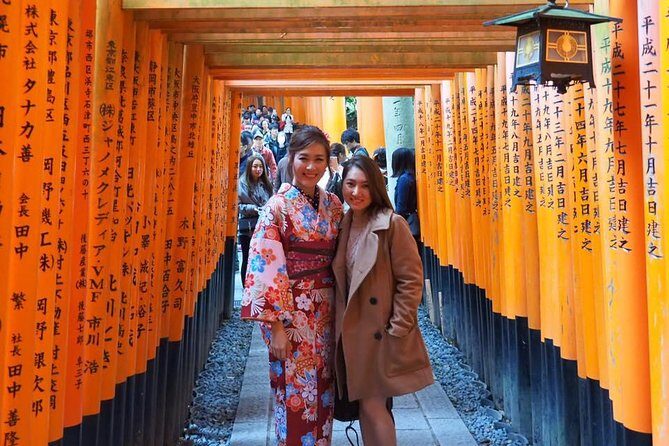
Fushimi Inari-taisha is included as a quick hit: about 15 minutes, and admission is free. This is the torii-gate experience people dream about—vermilion gates stretching across a network of trails behind the main building.
With only 15 minutes, you won’t do everything the shrine is capable of. So treat this as a taste. If torii gates are your number one “must,” you’ll want to talk to your guide about whether you want to trade time from another stop to extend this one. A short visit is great if you mainly want the iconic look and orientation.
I also like that a quick stop here keeps your day from turning into a single long hike. Kyoto can be walk-friendly, but not every day is made for maximum distance.
Arashiyama: bamboo forest and Tenryuji Temple time plan
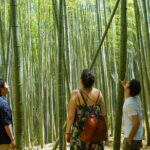
Arashiyama is where the route moves into a different mood. It’s described as the second most sightseeing district in Kyoto since the Heian Period, filled with temples, shrines, and bamboo. This portion is about 1 hour, and admission is not included.
You also get specific mentions:
- Bamboo Forest (called out as its own segment)
- Tenryuji Temple, one of Kyoto’s five Zen Temples, founded in 1339
Tenryuji is the type of stop where context matters. A guide can point out what you’re looking at and why it matters, so you don’t just walk through scenery and move on.
The main consideration: Arashiyama’s charm can tempt you to slow down and linger. Since the schedule shows only about an hour, you’ll need to decide what you want most from this section—bamboo photos, temple atmosphere, or a bit of both.
Nishiki Market and Gion: food streets and photo-friendly corners
Next comes the day’s street-level energy. Nishiki Market Shopping District is about 40 minutes, and admission is free. It’s described as a narrow street of multiple blocks, lined with more than one hundred shops and restaurants, known as Kyoto’s kitchen.
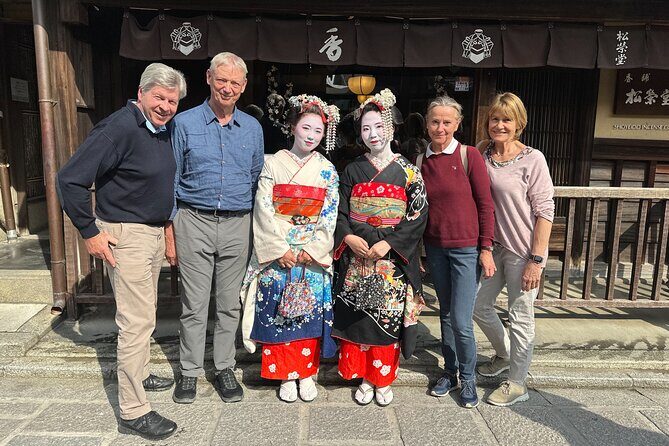
Then you’ll hit Gion for about 30 minutes, also free entry. Gion is Kyoto’s famous geisha district. Even if you’re not there to seek anyone out, the neighborhood itself tells the story—older Kyoto vibes, side streets, and the feeling of arriving somewhere carefully preserved.
If you want to do well at these stops, have a plan. Decide whether you’re shopping, snacking, or just wandering for atmosphere. Your guide can help with communicating and restaurant planning, which is a practical edge when menus and counters are moving fast.
The Silver Pavilion and Sanjusangendo’s 1001 Kannon statues
After Gion, the tour shifts again into temple land.
Ginkaku-ji (Silver Pavilion) appears next, typically 30 minutes, admission not included. It was built by Ashikaga Yoshimasa, the grandson of Yoshimitsu (the Golden Pavilion connection is part of the attraction). It’s a good counterpoint to Kinkaku-ji because it gives you another perspective on the Ashikaga era’s taste.
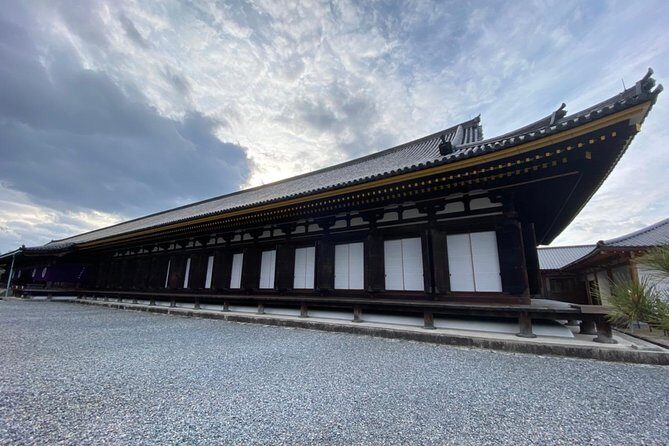
Then Sanjusangendo Temple takes over at about 30 minutes, admission not included. It’s famous for 1001 statues of Kannon, the goddess of mercy. This is the kind of stop where sheer scale hits you fast, but you’ll enjoy it more when someone explains what Kannon represents and why the building is known for that specific collection.
A short time here can still be powerful. With a guide, you’re less likely to miss the reason the place is famous and more likely to notice what makes the statues and hall distinctive.
Kyoto Imperial Palace and Nijo Castle: power in stone and wood
You also get two major “seat of authority” stops, each with a different style.
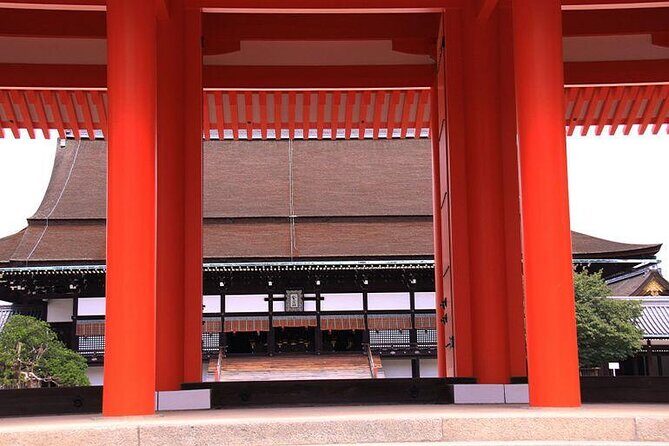
Kyoto Imperial Palace is listed as about 30 minutes, admission free. The site used to be the residence of Japan’s Imperial Family until 1868, when the emperor and capital moved to Tokyo. Even without getting lost in details, you can feel the change in scale between imperial spaces and temple spaces.
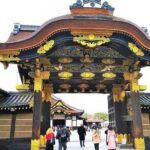
Then Nijo Castle is about 45 minutes, admission not included. It was built in 1603 as the Kyoto residence of Tokugawa Ieyasu, the first shogun of the Edo Period, and his grandson Iemitsu completed the palace buildings 23 years later.
These two stops make sense together because they bookend Japan’s political story: imperial residence, then shogunate power. If you like understanding the “who mattered when” angle of Kyoto, these are worth giving your attention.
Eikando Zenrinji Temple: Jodo sect, Nanzenji’s neighbor, autumn pull
The final temple stop is Eikando Zenrinji Temple (Eikandō) for about 45 minutes, admission not included. It belongs to the Jodo sect, and it’s located just north of the larger Nanzenji complex. It’s described as famous especially in autumn.
This matters because it hints at what you should expect: seasonal charm. If you’re visiting in autumn, you might see why the reputation is strong. If you’re not, you’ll still get a quieter end-of-day temple with a clear identity, rather than another stop that blends into the background.
Photos, tickets, and restaurant help: how the support actually helps
The tour description emphasizes assistance throughout the trip, including navigating, ticket help, photo support, and help with communicating with local vendors and booking restaurants.
In real terms, this can mean:
- Your guide can help you plan around what needs tickets and what doesn’t (the schedule includes both paid-entry and free-entry stops)
- You can ask practical questions as you walk, instead of saving them for later
- You spend more time seeing, less time translating
You’ll also use a mobile ticket, and the tour includes pickup offered. Private transportation isn’t included, so don’t expect the tour company to handle a car for you. But the “companion” support can still reduce friction if you’re switching between transit options or walking segments.
Guide quality can make or break the day
Here’s the honest part. The overall rating is 3.9 from 23 reviews, and the written feedback shows a wide spread.
The high points include guides who were praised for enthusiasm, patience, and answering questions. Names that appear include Jinshi, Femin, Karl, Dalivanh, and Rio—with comments that they handled the day well and made time feel enjoyable even for seniors.
The low points mention lack of knowledge about Japan or Kyoto, getting the direction wrong, and one report about a guide being unwell the night before with a last-minute replacement arranged. I can’t tell you how often this happens. But I can tell you what to do about it.
Before your tour day, confirm:
- the list of stops you want (and which ones you’re willing to cut)
- the pace you can handle
- any ticket needs tied to your dates and timing
- what you want most: temples, shrines, markets, or neighborhood wandering
If your guide isn’t coming prepared with a clear plan, you’ll feel it fast. If they are prepared, this kind of tour can feel like having a friendly, competent Kyoto translator plus a personal route designer.
Who this Kyoto walking tour fits best
This is a strong match if you:
- want a private guide and don’t want to wrestle with navigation
- care about understanding what you’re seeing, not just collecting photos
- are traveling with a small group up to 5 people
- like a mix of top landmarks and neighborhood experiences (not only monuments)
It’s also a good fit for visitors who value structure in a city that can easily scramble your schedule. The 8-hour format works well for first-timers who want major highlights without building the day from scratch.
If you’re the type who loves long, unplanned wandering for hours with zero schedule, you might find the pacing limiting. With a set day like this, you’re choosing a lot in one day—so decide what matters most before you go.
Should you book this private Kyoto walking tour?
My take: book it if you want a guided, high-efficiency Kyoto day with major sights plus street-level districts, and if you’ll use the guide for planning, photo help, and ticket support. The value improves a lot when you share the cost across a small group.
Skip it (or at least go in with eyes open) if you hate walking for long stretches, or if your top priority is only one site where you want maximum time. Also, because the guide-quality range shows up in the feedback, I’d treat pre-trip confirmation as non-negotiable.
If you do book, do one simple thing that changes everything: send your guide a clear note about what you want most—Golden Pavilion style history, torii-focused time, food and shopping streets, or palace and castle architecture—so your “custom” day actually matches your idea of Kyoto.
FAQ
How long is the Kyoto walking tour?
The tour runs for about 8 hours.
What’s the group size limit?
It’s a private tour for your group, with up to 5 people per group.
Is pickup available?
Yes, pickup is offered.
Are entrance fees included?
No. Entrance fees are not included, and some stops list admission as not included while others are free.
Do I need to arrange transportation?
Private transportation is not included. The tour notes that it’s near public transportation.
Will I have a guide who speaks English?
Yes, the guide is described as English-speaking.
How do mobile tickets work for this experience?
The tour includes a mobile ticket.
What are the daily operating hours?
It runs Monday through Sunday from 6:00 AM to 10:00 PM.
Is the tour refundable if I cancel?
No. The experience is non-refundable and cannot be changed for any reason, and the amount paid will not be refunded.