Shibuya eats fast and thinks fast. This family friendly, small-group food walk takes you through Shibuya’s everyday food stops and places most guidebooks skip, while you can ask questions the whole way.
I really like two things about this tour. First, the structure works for real humans: a professional guide keeps the pace moving and sets you up to taste across Shibuya without guessing what to order. Second, you get more than food—local culture stops like an alleyway hangout and Shibuya Crossing help connect the flavors to the neighborhood.
One consideration: it’s a walking tour. With about 4 hours on your feet (and multiple stops), it’s best if you’re comfortable moving around Shibuya’s busy streets.
In This Review
- Quick hits before you go
- Why Shibuya Feels Like a Food Walk, Not a Checklist
- Price and Value: When $205 Makes Sense
- Meeting at Hachiko and How the Timing Works
- Shibuya 109: Street Food Energy You Can Feel
- Nonbei Yokocho: A Back Alley That Explains Nightlife
- Shibuya Crossing: The 15-Minute Photo That Teaches People-Watching
- MEGA Don Quijote: 24H Shopping, Snacks, and Useful Chaos
- Miyashita Park: A Modern Stop on the Yamanote Line
- Hachiko Statue: Ending With Meaning (Not Just Photos)
- What You Actually Eat: Variety Without Guessing
- Family-Friendly Without Being Stiff
- Who This Tour Is Best For
- Should You Book This Shibuya Hidden Flavors Food Tour?
- FAQ
- How long is the Shibuya Hidden Flavors tour?
- How many people are in the group?
- Where does the tour start and end?
- What food is included?
- Are drinks included?
- Is alcohol included?
- Is hotel pickup or drop-off included?
- What are the main sights you’ll visit?
- What’s the cancellation window?
Quick hits before you go
- Small group (max 8) means you’ll actually get answers, not just follow along.
- 4 to 5 food stops are chosen for variety, with flavors like sushi, chocolates, Japanese meats, and more.
- Nonbei Yokocho back-alley vibe shows how locals spend their night, not just how to pose for photos.
- A 24H MEGA Don Quijote stop mixes snacks with practical Tokyo shopping.
- Guide flexibility can matter, like one guide named Hiromi tailoring the experience for a child (including a Pokémon Center stop).
Why Shibuya Feels Like a Food Walk, Not a Checklist
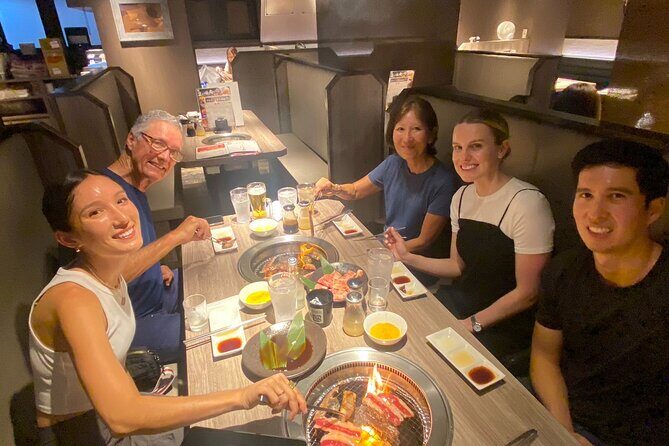
Shibuya is famous for its big signs, big crowds, and big crossings. But the fun on this kind of food tour is that Shibuya is also a place where people eat in between errands, on the way to shopping, and after work. That’s the angle I love: you don’t just see Shibuya—you start to understand how the neighborhood runs on food and small moments.
The tour is designed as a half-day walk, not a sit-and-sip event. You’ll spend time at a mix of sensory locations: a busy shopping street filled with local rhythm, a narrow back alley known for nighttime energy, and the kind of scramble crossing that turns people-watching into a sport. It’s a smart way to learn Shibuya if you only have a limited amount of time.
And because it’s family friendly, the vibe stays approachable. You’re not expected to handle heavy nightlife pacing or complicated food logistics. You’re there to taste, ask, and keep moving at a comfortable walking tour tempo.
A few more Tokyo tours and experiences worth a look

Price and Value: When $205 Makes Sense
At $205 per person for about 4 hours, this isn’t a “budget snack walk.” But it can still be good value if you care about two things: (1) food variety you can trust, and (2) local context that saves you time.
Here’s what you do get for the money:
- A professional guide for the full walking time
- 4 to 5 food stops, selected by the guide
- Two soft drinks and water included
- A city walking and culture focus, not just eating
A big hidden cost in Tokyo is decision fatigue. If you’re wandering on your own, you can spend a lot of time figuring out where to go and what to order—especially in districts like Shibuya where there’s a lot of everything. Paying for a guide reduces that friction. You’re paying for taste guidance and a route that keeps you from wasting hours.
Also, the sight stops themselves are admission free on this route. That matters because it means the tour value is concentrated on the food choices and the local explanations, not ticket math.
Meeting at Hachiko and How the Timing Works
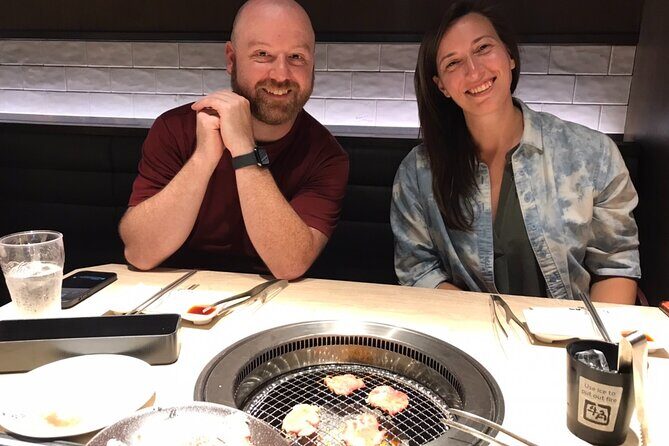
You’ll meet at the Hachiko Statue in Shibuya (2 Chome-1 Dogenzaka, Shibuya, Tokyo). The tour ends back at the same meeting point, which makes your day simpler if you’re using public transit and you want everything to circle back.
The group size is capped at 8 travelers, which is exactly the sweet spot for asking questions without feeling like you’re slowing a big pack down. If you like interaction—wanting explanations about what you’re eating, or asking what to do next—this setup helps.
It’s also a mobile ticket experience, which typically makes check-in smoother than paper tickets. The pacing is stop-by-stop, with time built in for each area so you’re not just sprinting from one photo to another. Expect a mix of walking and short stays—enough time to taste and look around, not so much time that you feel stuck.
Shibuya 109: Street Food Energy You Can Feel
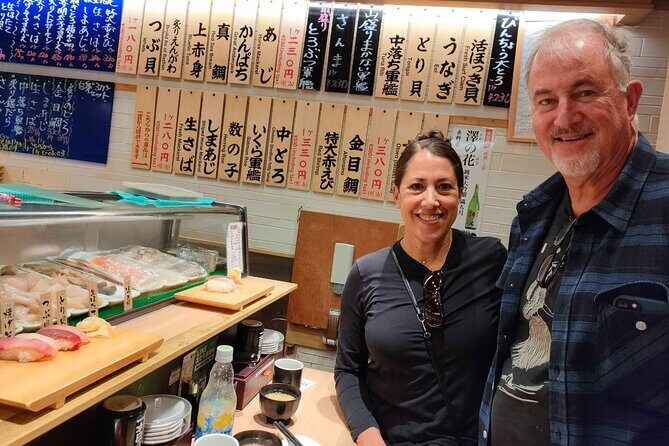
Shibuya 109 is the kind of place you can walk past a dozen times and still not fully understand. On this tour, you’ll spend about 45 minutes in that area, starting with a local street environment where thousands of eaters and diners come for quick bites and casual food culture.
Even if you’re not shopping for the newest fashion trends, this stop is useful because it teaches you how food fits into the flow of the district. Tokyo isn’t always about “one special restaurant.” Often it’s about eating in the middle of life: grabbing something to go, stepping into an izakaya-style setting, or pausing between errands.
The practical takeaway for you: after this stop, you’ll be better at spotting where food is integrated into the neighborhood instead of isolated in one location. That’s the kind of skill that pays off when you keep exploring after the tour.
Nonbei Yokocho: A Back Alley That Explains Nightlife
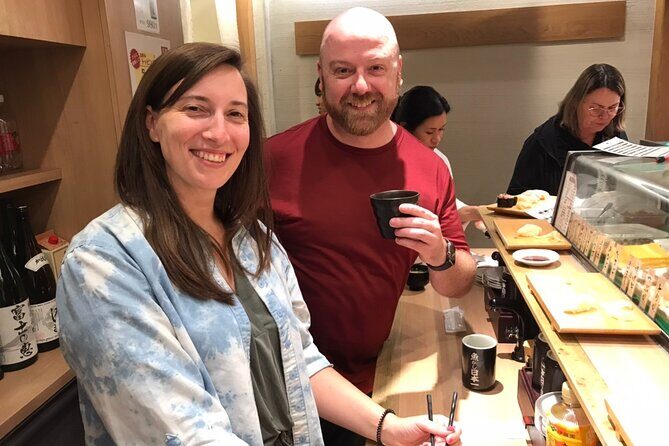
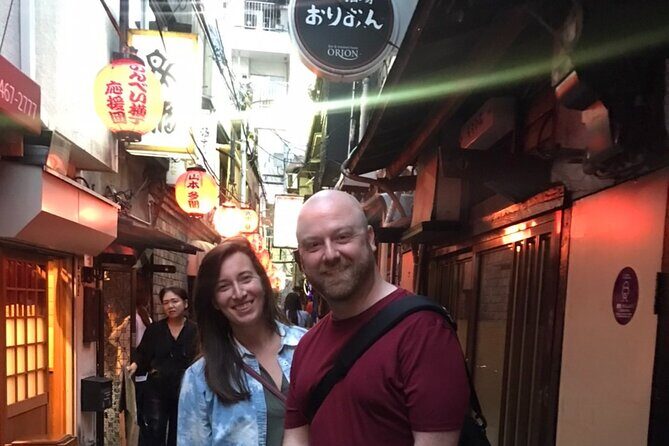
One of the most interesting parts of the route is Shibuya Nonbei Yokocho—a narrow back alley that many people miss. You’ll get about 30 minutes here, focused on how Japanese people spend their nights and how this kind of area works socially.
This is where the tour shifts from big Shibuya landmarks to smaller, more human scale. Back alleys like this are where you learn what nightlife feels like beyond loud clubs and neon billboards. Even if you’re not planning to party later, you’ll understand why these lanes stay busy: food, conversation, and a casual sense of routine.
A drawback to keep in mind: back alleys can be tighter and more crowded depending on the time of day. It helps to wear comfortable shoes and be ready for a bit of close-quarters walking.
You can also read our reviews of more guided tours in Tokyo

Shibuya Crossing: The 15-Minute Photo That Teaches People-Watching
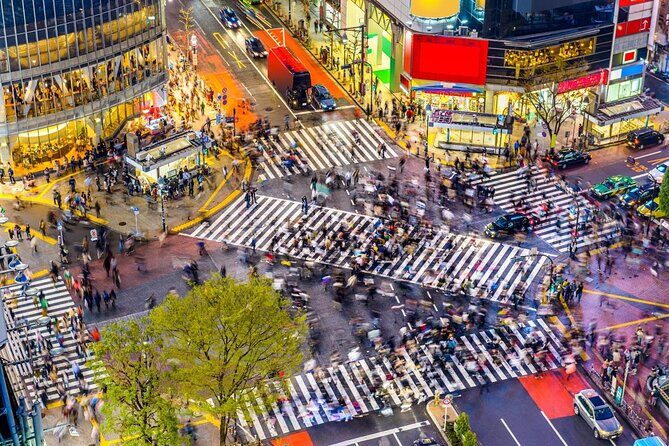
Then comes Shibuya Crossing, the famous scramble that turns into a constant moving stream. You’ll have about 15 minutes here, which sounds short, but it’s enough to get oriented and take photos without turning it into a long standstill.
What I like about including this stop is the contrast. After the alley context, the crossing feels like a different world—one powered by pure flow. It helps you grasp Shibuya’s scale: this district is built for motion, and food is part of that motion.
Quick tip for your timing: give yourself permission to do the basics fast—look up at the buildings, watch the crowd pattern for a minute, then snap your photo and move on. The tour’s timebox keeps it from turning into wasted minutes in the middle of a human river.
MEGA Don Quijote: 24H Shopping, Snacks, and Useful Chaos

A full hour at MEGA Don Quijote Shibuya is a big chunk, and it’s one of the most practical parts of the route. This is one of Japan’s busiest shopping spots, and it’s open 24 hours, selling everything from sweets and cosmetics to food and even electric devices.
Even if you don’t plan to buy much, this stop helps you read Shibuya like a local. You’ll see how people snack and how convenience-style shopping blends with fun. For many first-time visitors, it’s also the most comforting “I can handle this” environment—because you know where to find daily items and treats without hunting.
Possible consideration: it’s a large, crowded store. If you dislike dense crowds indoors, go with a calm expectation—use the hour to browse with purpose, and keep your family or group together while you compare options.
Miyashita Park: A Modern Stop on the Yamanote Line

Next up is Miyashita Park, which is a renovated addition to Shibuya’s ever-changing city scene. You’ll spend about 30 minutes, and the key detail is that it’s a three-story shopping spot along the Yamanote line corridor.
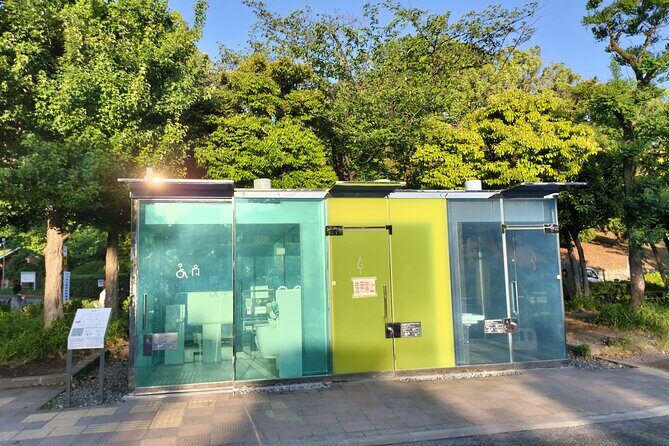
This stop is less about eating in a specific lane and more about seeing how Shibuya reinvents itself. It’s a good place to observe how new public space gets folded into shopping and casual hangouts. If you like modern Tokyo architecture and want a break from the busiest street levels, this works.
What you might get out of this stop:
- A sense of where Shibuya’s energy goes after the big intersections
- A calmer pocket to regroup
- Another chance to pick up snacks or drinks if you want to keep your day going
Hachiko Statue: Ending With Meaning (Not Just Photos)
The tour finishes by looping back around to Hachiko, Shibuya’s unofficial landmark. You’ll spend about 45 minutes here as part of the full route pacing.
Hachiko matters because it anchors the tour. After food, shopping, and crowds, you get a quiet emotional reference point: a story about loyalty and daily waiting at Shibuya Station, even after Hachiko’s master passed away. It’s one of those local narratives that gives the neighborhood a heartbeat.
Also, from a practical angle, ending here is convenient. It’s easy to find, and it helps you reset your bearings for whatever you do next—dinner, shopping, or heading back toward your hotel.
What You Actually Eat: Variety Without Guessing
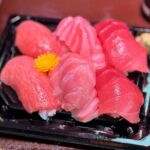
The tour promises multiple flavors across Shibuya, and that variety is the whole point. You’ll sample fresh sushi, chocolates, Japanese meats, and more. Since the food stops are chosen by your guide (not a fixed menu you can’t adapt), you’ll avoid the common tourist trap of repeating the same type of food or choosing places that look good but aren’t right for your tastes.
I like that the tour includes drinks too: two soft drinks and water. That sounds small, but in Tokyo heat or humidity, it can make the difference between enjoying the walk and feeling drained.
If you have kids, pay attention to how this tour is described as family friendly. One example from an earlier experience involved a guide named Hiromi who modified the tour for a child and even took the family to the Pokémon Center in Shibuya, which the child loved. That’s the kind of responsiveness that makes a food tour feel human instead of scripted.
Family-Friendly Without Being Stiff
This isn’t a “silence and observe” tour. It’s built for questions. With a small group, you’re more likely to get direct answers about what you’re eating, where it comes from, and what the local culture expects in that moment.
For families, flexibility is key. If your child gets excited by something in the neighborhood, the tour’s small size can make it easier to adjust without derailing everyone else. Based on the guide flexibility shown by Hiromi in at least one instance, I’d treat this as a tour that can accommodate real-life needs.
Still, remember the basic rule of walking tours in Tokyo: comfy shoes and patience. Even a family-friendly food tour means you’ll move between streets and stores.
Who This Tour Is Best For
This Shibuya food walk is a strong match if you:
- Want a guided way to eat without wasting time researching
- Like a mix of food and street-level culture
- Are traveling with kids or someone who benefits from a friendly guide
- Prefer smaller groups and two-way conversation
It’s less ideal if you want a long, slow museum-style experience or if you hate crowds—because Shibuya is Shibuya, and even the shopping areas can get intense.
Should You Book This Shibuya Hidden Flavors Food Tour?
I’d book it if you want Shibuya to feel understandable within a half day. The route hits the big stuff (like Shibuya Crossing) and the everyday stuff (like Nonbei Yokocho and Shibuya 109) plus a practical shopping stop at MEGA Don Quijote. You get the chance to taste a range of foods—sushi, chocolates, Japanese meats, and more—without having to figure out where to start.
I’d skip it or reconsider if your group can’t handle walking or crowded streets, or if you already have a solid plan for food and only want one type of meal. But for most people, this is a smart way to eat your way through Shibuya while learning how the neighborhood thinks.
FAQ
How long is the Shibuya Hidden Flavors tour?
It lasts about 4 hours walking time.
How many people are in the group?
The tour has a maximum of 8 travelers.
Where does the tour start and end?
It starts at the Hachiko Statue in Shibuya and ends back at the same meeting point.
What food is included?
You’ll have 4 to 5 food stops chosen by your guide, with flavors that include sushi, chocolates, Japanese meats, and more.
Are drinks included?
Yes. The tour includes 2 soft drinks and water.
Is alcohol included?
No. Alcoholic beverages are available to purchase, but they’re not included.
Is hotel pickup or drop-off included?
No, hotel pick up or drop off is not included.
What are the main sights you’ll visit?
The route includes Shibuya 109, Shibuya Nonbei Yokocho, Shibuya Crossing, MEGA Don Quijote Shibuya, Miyashita Park, and the Hachiko Statue.
What’s the cancellation window?
You can cancel for a full refund up to 24 hours before the experience start time.