REVIEW · TOKYO
Tokyo Toilet Tour
Book on Viator →Operated by Tanaka's Tokyo Tours · Bookable on Viator
Toilets in Tokyo, but make it art. This private, customized walk turns the question Where are the bathrooms? into a tour of architect-designed toilets and small-scale design moments you’d otherwise miss. I like how personal attention keeps the pace friendly, and you can steer the day toward what you care about. A possible drawback: it’s a niche theme, so if you want classic big sights all day, you may feel a bit underfed.
The route is built for first-timers who want Tokyo to feel usable fast. You’ll walk between landmarks and local neighborhoods with a guide from Tanaka’s Tokyo Tours, and you’ll end near Ebisu Station after about 3 hours 30 minutes. Guides can also explain the design ideas and the Shibuya redevelopment story, which is especially fun if you’re the kind of person who pauses for details.
In This Review
- Key Things To Know Before You Go
- A Private Tour That Makes Tokyo Feel Legible
- Yoyogi Hachimangu Shrine: Shigeru Ban’s Transparent Cubicle
- Miyashita Park: Tadao Ando in the Shibuya–Harajuku In-Between
- Shibuya Crossing: The Iconic Interruption (and Why It’s Smart)
- Nabeshima Shoto Park: Kengo Kuma in a Residential Calm
- Ebisu Neighborhood Toilets: The Art of Everyday Use
- What Your Guide Adds (So It’s Not Just a Walk of Toilets)
- Price and Timing: When This Is Great Value
- Getting There and Day-of Tips That Actually Help
- Should You Book the Tokyo Toilet Tour?
- FAQ
- How long is the Tokyo Toilet Tour?
- Is this tour private?
- How many people are in a group?
- Where does the tour start and end?
- What’s included in the price?
- What is not included?
- Do you need tickets for the stops?
- Do I get a mobile ticket?
- How does cancellation work?
- When will I receive confirmation after booking?
Key Things To Know Before You Go
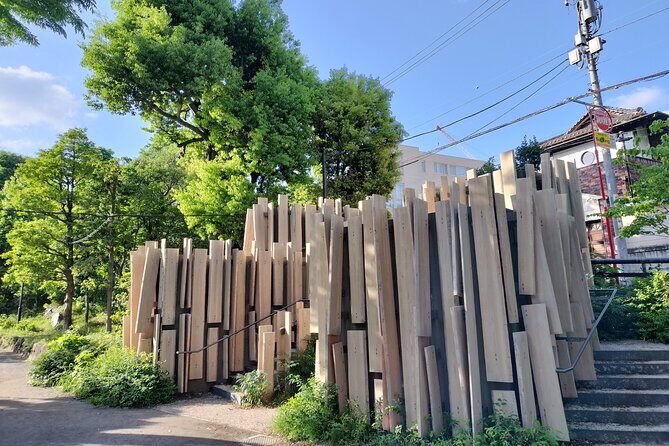
- Architects behind the toilets: Shigeru Ban, Toyo Ito, Tadao Ando, Kengo Kuma, Fumihiko Maki, Kashiwa Sato, and Nao Tamura show up around Shibuya and Ebisu.
- Film connection at Yoyogi Hachimangu: the spot links to Wim Wenders’ Perfect Days in a very specific way.
- Mostly free stops: the itinerary’s toilet and park locations list free entry.
- A Shibuya walk that avoids only-the-same-views: you’ll move through side streets and smaller parks rather than just riding the train in a loop.
- Private and small: up to 4 people per group with a guide, so you’re not stuck watching over shoulders.
- No lunch, no car: you’ll need to plan your own meal break and rely on walking/public transit.
A Private Tour That Makes Tokyo Feel Legible
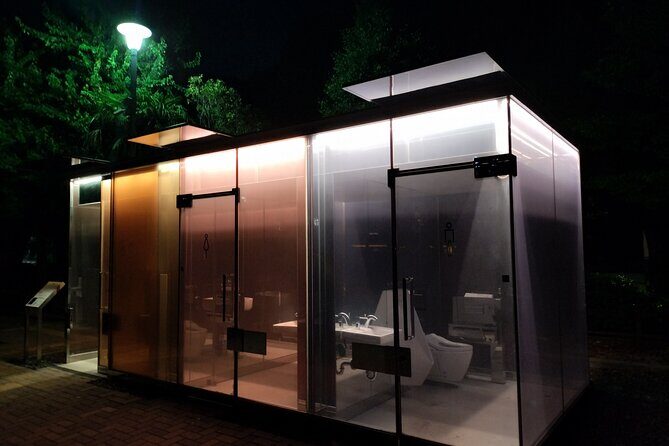
Tokyo can be a lot when it’s your first day. The city is huge, the transit is fast, and the neighborhoods can feel like separate worlds. This tour’s strength is that it’s private and designed around your needs. Instead of being herded from one “must-see” photo stop to the next, you can get a guide to help you understand what you’re actually looking at, then follow that logic when you go off on your own later.
What I especially like is that the tour is positioned as an introduction to Tokyo, not just a one-theme novelty. Your guide can customize the day based on your pace and interests, which matters for couples, families, and solo travelers. If your group wants more sightseeing, the concept includes popular Tokyo anchors like Tsukiji Market, Meiji Jingu, or the Imperial Palace, while still keeping the day guided. If you’re here for design and architecture, the toilet focus becomes a great through-line.
The other practical win: you get a guide who can pace you. This route includes short stops (like crossing Shibuya Crossing) and longer ones (parks and neighborhoods where you can look around). That mix keeps it from feeling like a rushed checklist.
You can also read our reviews of more tours and experiences in Tokyo.



Yoyogi Hachimangu Shrine: Shigeru Ban’s Transparent Cubicle
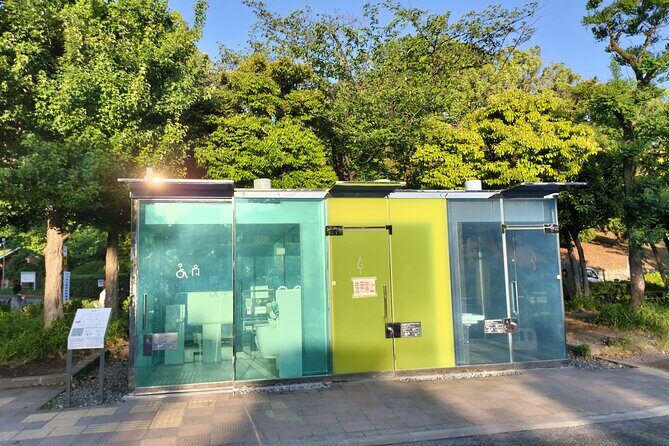
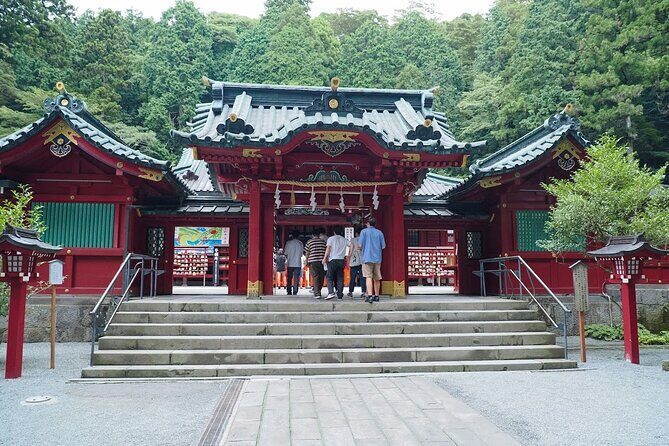
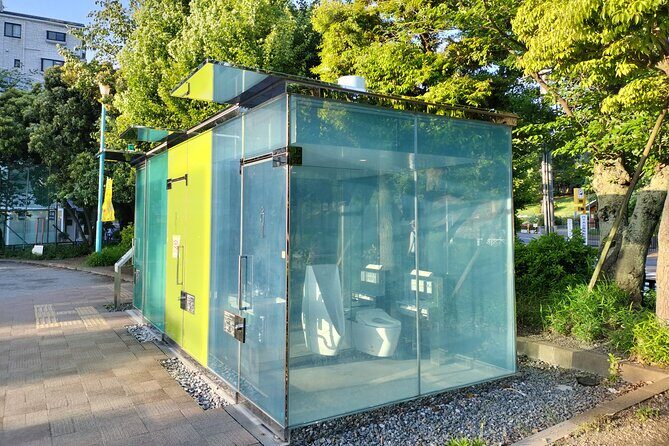
Stop one is Yoyogi Hachimangu Shrine, a calm start tucked into Shibuya. Here you’ll see toilets designed by Shigeru Ban featuring a transparent cubicle concept, plus toilets linked to Toyo Ito. The setting is next to a small Shinto shrine, and the whole atmosphere is a reminder that Tokyo design doesn’t always scream for attention. Sometimes it’s quiet, framed by a sacred space, and you’re meant to notice details slowly.
There’s also a film connection that makes this stop extra fun. The tour ties the site to Wim Wenders’ Perfect Days, where the main character has a lunch break here. If you’re a fan, this is one of those “wait, that’s real” moments. Even if you’re not, you’ll likely enjoy the contrast between a traditional shrine setting and forward-thinking architectural ideas.
How to enjoy it:
- Look at how the cubicle concept affects privacy and openness. Even without special knowledge, you can feel the design logic.
- Take your time with the surrounding grounds before and after the toilet viewing. The shrine area makes it easier to slow down instead of treating the stop like a quick restroom break.
Time on site is about 30 minutes, and admission at this stop is listed as free. It’s a good launchpad if you want to settle into Tokyo rhythms before moving into busier areas.
Miyashita Park: Tadao Ando in the Shibuya–Harajuku In-Between
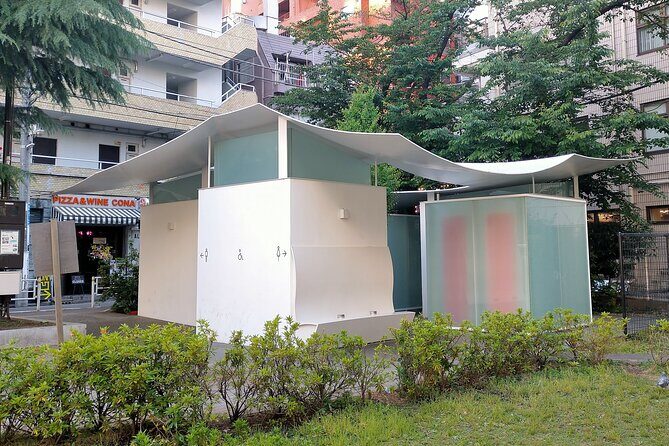
Next up is Miyashita Park, placed between Shibuya and Harajuku. That location matters because it’s not the usual “only Shibuya” bubble. It’s also a redevelopment zone that has seen major changes in recent years, which your guide can help translate into what you’re seeing now.
Here you’ll find toilets designed by Tadao Ando. Ando’s name alone signals a certain kind of architectural thinking, and seeing it applied to something as everyday as a toilet is a great reminder: design culture in Japan doesn’t stop at museums and towers. It’s in the practical stuff too.
This is also a stop where I think you’ll feel the value of the private guide. It’s easy to walk through parks and miss why one part feels different from another. A good guide helps you connect the dot between architecture, public space, and the way people move through a neighborhood.
What to watch for:
- The way the toilets fit into the park environment rather than feeling bolted on.
- How the park setting changes the mood compared with the shrine start. Parks and public spaces in Tokyo can feel engineered for comfort, even when the design is bold.
This stop is about 30 minutes, and admission is free as listed. It’s a nice mid-tour break because parks naturally give you a chance to catch your breath and regroup.
Shibuya Crossing: The Iconic Interruption (and Why It’s Smart)
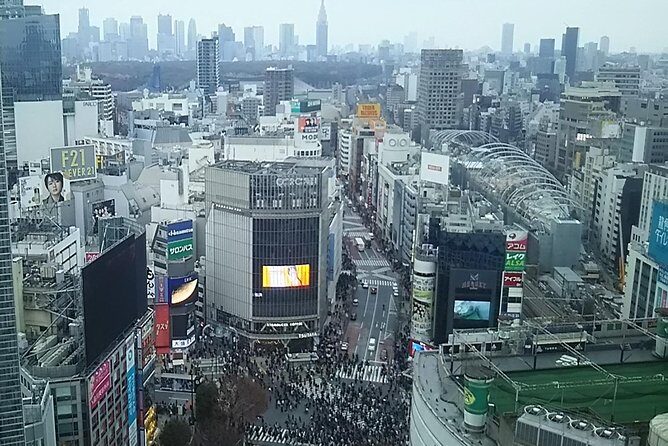
Then it’s Shibuya Crossing. It’s not about toilets here. It’s about context. You’ll cross the iconic intersection on your way to the next location, which keeps your day from feeling like you’re walking through design exhibits only.
I like this kind of short add-on because it gives you an immediate anchor. After a park and a shrine, you step into one of Tokyo’s most photographed scenes for just a few minutes, then move on while it’s still fresh.
How to handle it:
- Keep your camera ready, but don’t turn this into a half-hour production. This stop is brief by design.
- Use it as a moment to reset direction and pace. Your guide’s timing helps you avoid getting stuck in the flow for no reason.
Time here is about 5 minutes, and there’s no admission required. If you’re trying to see as much as possible in a single afternoon, this quick intersection hit makes the route feel more like a real Tokyo day and less like a straight line between toilet stops.
Nabeshima Shoto Park: Kengo Kuma in a Residential Calm
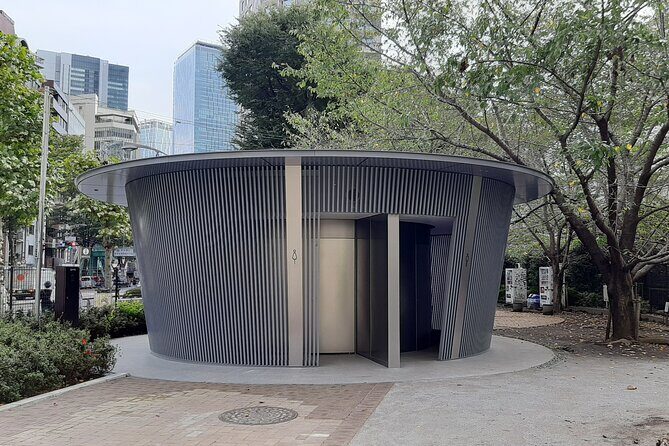
Stop four is Nabeshima Shoto Park, in a quieter residential area about a kilometer away from the main station. That “about a kilometer” detail is important: you’re not just taking a quick hop between tourist zones. You’re walking into a part of Tokyo that feels more like where people live, which changes how the architecture feels in your eyes.
The toilet at this location is designed by Kengo Kuma, another heavyweight name in modern Japanese architecture. Again, the fun part isn’t only the architect’s name. It’s the setting: a small park in a residential area where you can step out of the Tokyo spotlight and observe design in a calmer frame.
This is a shorter stop, around 15 minutes. That means you’ll want to arrive with the right mindset: don’t wait for a lecture. Instead, think of it like a guided “look closer” exercise. You’re there to notice how design impacts everyday comfort, privacy, and the relationship to open space.
Why this stop is worth it:
- Residential Tokyo changes your pace. You’ll feel the neighborhood scale.
- Kuma’s name is recognizable, and seeing a top-tier architect applied to a basic public need makes Tokyo’s design culture feel practical, not just theoretical.
Admission is listed as free, and it’s a nice transition point before you head into Ebisu.






Ebisu Neighborhood Toilets: The Art of Everyday Use
The final area is Ebisu, one station south of Shibuya. Ebisu often feels a bit different from the most frantic parts of Tokyo, and that helps close the tour in a way that feels less chaotic than a day that ends right in the densest core.
Here you’ll see toilets designed by Fumihiko Maki, Kashiwa Sato, and Nao Tamura. This is the kind of stop where your guide can really add value by putting the designs into a bigger story. In particular, guides for this tour are described as explaining the history of the Shibuya City project and the architects involved, which can make the day feel like more than a string of photos.
Time here is about 30 minutes, and it’s a strong finale because it gives you space to compare styles. You can mentally map what each architect seems to prioritize. Even without technical vocabulary, you can sense differences in how the structure relates to light, line, and the sense of personal space.
When I’m planning a design-themed day, I like to end where I can still wander after the tour. Since the tour finishes at Ebisu Station, you’ll be close to transit to keep your afternoon going without needing a complicated route out.
What Your Guide Adds (So It’s Not Just a Walk of Toilets)
A theme tour works only if the guide connects it to your real travel day. This tour is built around that. Your guide can customize your day and explain what you’re seeing. In the reviews, guides like Ken are singled out for being friendly and informative, and for walking you through the Shibuya redevelopment and the architects involved.
That matters because toilet design can sound odd on paper. On the ground, it becomes a lens for seeing Tokyo. You start noticing how public infrastructure is treated like architecture, not afterthought. You also start noticing how neighborhoods are shaped by city planning decisions. Tokyo’s design doesn’t just show up in big museums; it shows up in daily movement.
To get more out of the tour, come ready with a couple of questions:
- Which toilet features are meant for comfort versus privacy?
- What changed in the Shibuya area that you can point to around these stops?
- If I’m coming back for independent exploring, what neighborhood patterns should I follow?
Also, use the theme to train your Tokyo awareness. Every time you see a restroom structure, it’s an opportunity to look at how Tokyo handles public space. That skill pays off later, even if you never think about toilets again.
Price and Timing: When This Is Great Value
The price is $223.34 per group for up to 4 people, for about 3 hours 30 minutes. If you’re traveling solo, that price can feel steep compared with group tours. But if you’re splitting it between two, three, or four people, the value can improve fast. The private factor isn’t just comfort; it’s time and attention. You’re paying for a guide who can tailor what you do and help you interpret Tokyo’s spaces while you’re in them.
A big value point here is that the stop list includes free admissions at the named locations. You’re not paying extra to see the structures. The other big value point is that the day’s walking route helps you learn the geography between Shibuya and Ebisu, plus the in-between areas around parks.
Timing is also realistic. Three and a half hours is enough to get a meaningful introduction without eating your whole day. And because the day ends near Ebisu Station, you’re not stranded far from transit after the tour.
One thing to plan for: this tour does not include lunch or private transportation. That means you’ll want to build in a meal plan before or after, and assume you’ll be using walking and public transport as part of your day. If you’re the kind of traveler who wants an all-in-one day with no gaps, you’ll need to add those basics yourself.
Getting There and Day-of Tips That Actually Help
The start point is Yoyogi Fukamachi Mini Park in Tomigaya, Shibuya (address listed in the tour details). The tour ends at Ebisu Station (JR Yamanote Line and Tokyo Metro Hibiya Line).
Because the meeting and ending points are near public transportation, this is relatively easy to plug into a first-day or second-day Tokyo schedule. Still, do yourself a favor: give yourself buffer time to locate the exact start area. Tokyo is signage-heavy, but it’s also easy to arrive at the wrong corner of a busy station-adjacent area.
Wear good walking shoes. The tour includes multiple parks and neighborhoods plus a quick Shibuya Crossing segment. The tour also notes a moderate physical fitness level, which is a polite way of saying you’ll be on your feet and moving.
A small but useful idea: since you’ll be looking at details, plan to keep your phone charged and your camera accessible. Also, if you’re going specifically for the Perfect Days connection, it helps to re-familiarize yourself with the film moments ahead of time so you can connect the design to the story while you’re there.
Should You Book the Tokyo Toilet Tour?
If you like design, architecture, and Tokyo’s habit of treating everyday structures as serious public spaces, this tour is a smart pick. The combination of a private guide, a walk that moves through real neighborhoods, and architect names you can’t stop googling afterward is exactly the kind of Tokyo experience that makes you feel you “get” the city faster.
I’d say book it if:
- You’re a first-timer who wants a Tokyo introduction that feels personal.
- You enjoy theme tours when the theme is grounded in real place and real explanations.
- You’re a fan of Wim Wenders’ Perfect Days and want the actual site connection.
I’d hesitate if:
- You mainly want the big classic sights with minimal walking.
- You’re not interested in architecture and public design, because the day’s focus is the toilets and the spaces around them.
For a perfect fit, think of it as your design-and-neighborhood orientation. Afterward, you’ll know where you are in Shibuya/Ebisu, and you’ll have a sharper eye for the city’s everyday choices.
FAQ
How long is the Tokyo Toilet Tour?
It’s about 3 hours 30 minutes.
Is this tour private?
Yes. It’s a private tour/activity, and only your group participates.
How many people are in a group?
The price is per group for up to 4 people.
Where does the tour start and end?
It starts at Yoyogi Fukamachi Mini Park in Tomigaya, Shibuya, and ends at Ebisu Station.
What’s included in the price?
A private tour guide is included.
What is not included?
Lunch and private transportation are not included.
Do you need tickets for the stops?
The listed stops in the itinerary show free admission (including Yoyogi Hachimangu Shrine and the parks).
Do I get a mobile ticket?
Yes. The tour uses a mobile ticket.
How does cancellation work?
Cancellation is free if you cancel up to 24 hours in advance of the experience’s start time for a full refund.
When will I receive confirmation after booking?
You’ll receive confirmation within 48 hours of booking, subject to availability.