REVIEW · TOKYO
Kappabashi Knife Shopping Tour with Government-Licensed Guide
Book on Viator →Operated by Japan Guide Agency · Bookable on Viator
Knife shopping meets Tokyo food culture. This tour strings together Tsukiji Outer Market and Kappabashi with a government-licensed, English-speaking guide, so you shop with context, not guesswork.
I especially like the knife education side—how Japanese cooking links to different knife styles—because it helps you buy smarter, not just prettier. I also like the street-energy stops, including the plastic display food shops you’ll see around Kappabashi and Asakusa.
One thing to consider: this is a walking plan (with pick-up described as on foot), so you’ll want comfortable shoes and stamina for a few hours outdoors.
In This Review
- Key points worth knowing
- How the 4-hour knife tour is paced
- Meeting your government-licensed guide and getting moving
- Stop 1: Tsukiji Outer Market for the wholesale food context
- Stop 2: Kappabashi Dougu Street for serious kitchen tools
- Stop 3: Asakusa shopping streets for old-school Tokyo flavor
- Finishing near Tokyo Skytree for optional extra time
- Price and value: what $107.50 buys you
- What’s included, what’s not, and how to plan
- Who this tour is best for
- Should you book this Kappabashi knife shopping tour?
- FAQ
- How long is the tour?
- Does the tour offer pickup?
- What’s included in the $107.50 price?
- What costs extra?
- Are Tsukiji Outer Market, Kappabashi Street, and Asakusa ticketed?
- Is free cancellation available?
Key points worth knowing
- Licensed English guide to help you understand what you’re seeing and how to shop
- Tsukiji Outer Market stop with a real wholesale-food angle
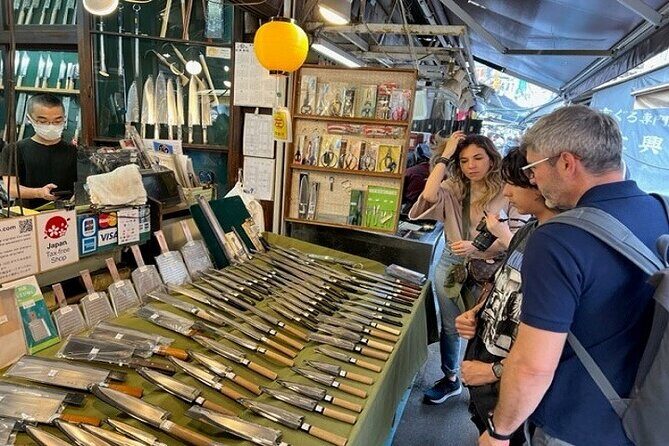
- Kappabashi Dougu Street focus on Japanese kitchen tools and knives at reasonable prices
- Asakusa shopping streets add classic Tokyo street browsing to the knife mission
- Time to finish near Tokyo Skytree if you want to keep exploring on your own
How the 4-hour knife tour is paced
This is a straightforward, half-day Tokyo outing built around three areas: Tsukiji, Kappabashi, and Asakusa. Expect around 4 hours total, with time for stops and the movement between them.
I like the structure. It keeps the tour tight enough that you don’t feel dragged through a museum loop, but you still get proper time to look at shops and street displays. If you’re a food person or you cook at home, the flow makes sense: you start at a food source, then you head to the tools.
Price is $107.50 per person for a licensed local English-speaking guide, and the tour also notes group discounts. For Tokyo, that’s not a bargain-bus price, but it’s also not an inflated private-guide fantasy number. You’re paying for language support and shopping guidance in specific areas that are easy to feel lost in.
You can also read our reviews of more guided tours in Tokyo

Meeting your government-licensed guide and getting moving
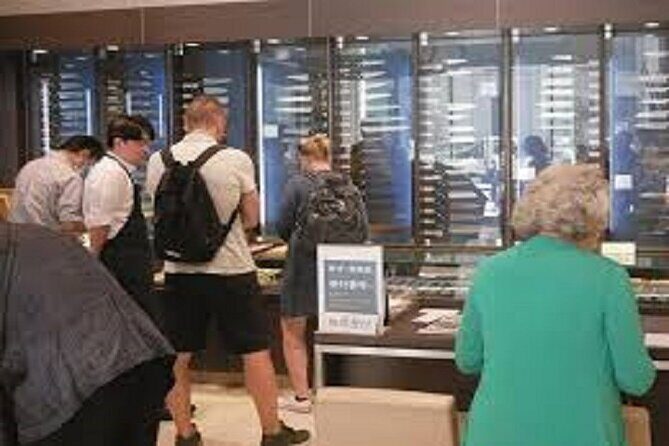
You meet your guide on foot within a designated Tokyo area. The tour also offers pickup, but the key detail is that pickup is described as on foot—so you should plan to walk a bit even before you reach the first main stop.
The tour uses a mobile ticket, which keeps things simple on your phone. It’s also described as private in the sense that only your group participates, and you can’t combine multiple tour groups. Translation: you should get more of a small-group experience rather than being mixed into a large crowd.
Also, keep in mind that the tour is near public transportation. That matters because it gives you flexibility if you want to arrive early or continue your day nearby after the tour ends.
Stop 1: Tsukiji Outer Market for the wholesale food context
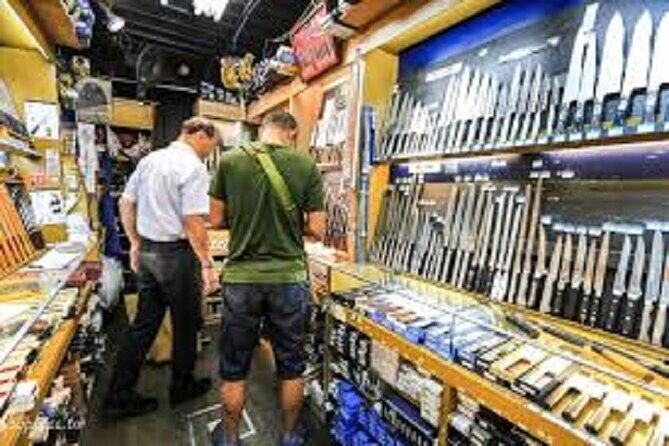
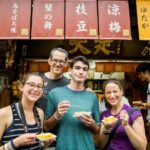
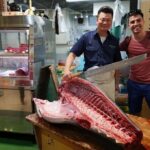
Your first stop is Tsukiji Fish Market, specifically Tsukiji Outer Market. This is the wholesale side of the story, and it’s the part where a lot of the restaurants and retailers come to source ingredients.
What I like here is the context. You’re not just shopping for kitchen gear out of nowhere. You’re seeing where the food supply culture lives, which makes the knife obsession feel grounded.
The itinerary info notes there are about 400 shops crammed into a roughly 400-meter area. That density is part of the fun. You’ll likely see lots of food-facing storefronts in a compact space, which means you can absorb the atmosphere quickly.
Practical consideration: Tsukiji Outer Market is compact and active. If you’re prone to getting overwhelmed in tight places, it can help to keep your eyes on your guide and your route for the first chunk of the visit.
Stop 2: Kappabashi Dougu Street for serious kitchen tools
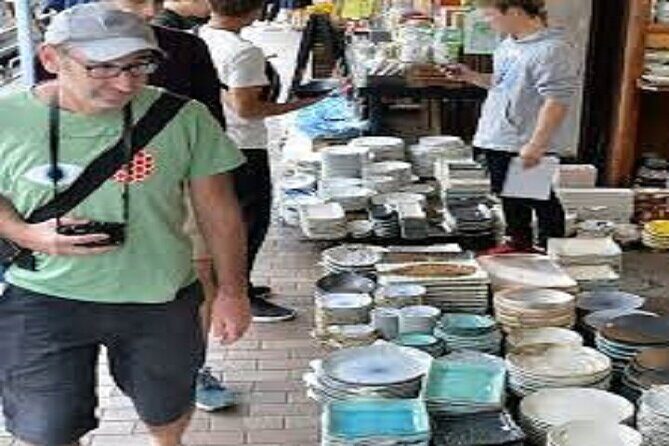
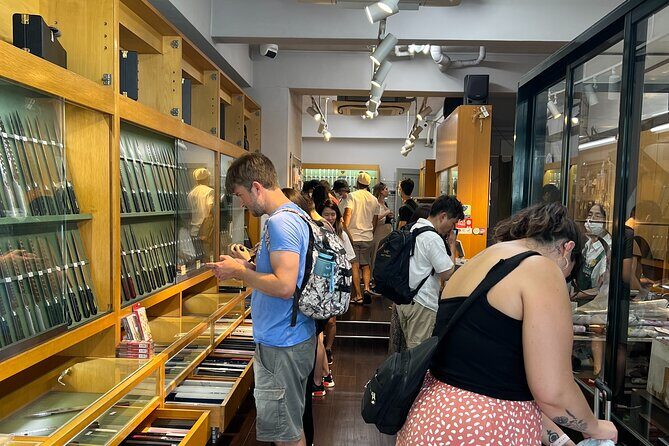
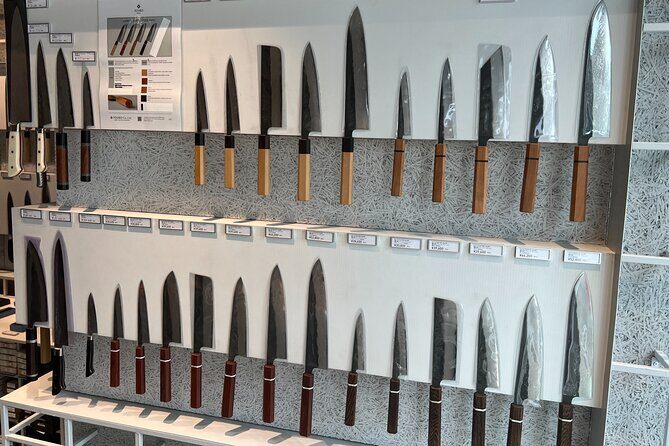
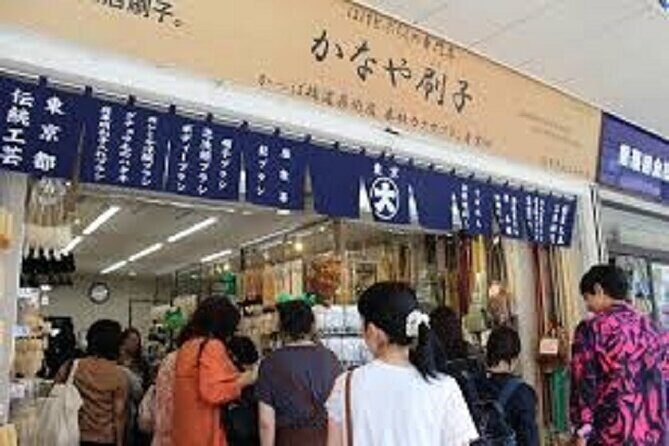
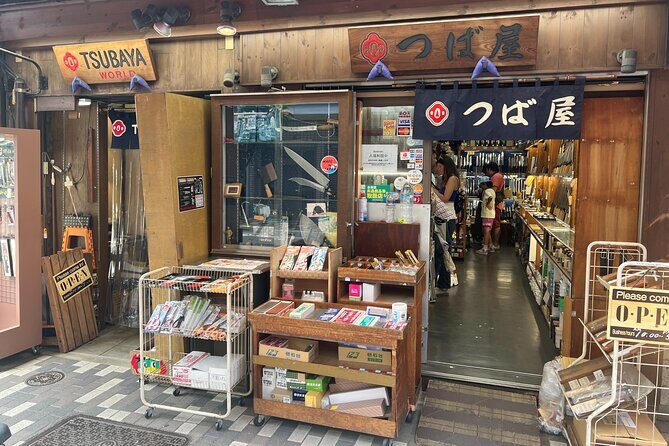
Next comes Kappabashi Dougu Street, also referred to as the Kappabashi knife and kitchenware corridor. This street is known for supplying the food and beverage industry, and the tour frames it as a place that’s “long flourished” as a source for kitchen tools.
I like this stop because it’s where the tour’s knife promise becomes real. The itinerary highlights high-quality Japanese kitchen ware and knives at prices described as reasonable, and that’s exactly what you want when you’re trying to compare options without getting sticker shock every five minutes.
You’ll also learn about different types of knives used in Japanese cooking. Even if you’re not buying on day one, that kind of primer helps you understand what you’re seeing in shop displays. It can turn a random wall of knives into a set of tools with purpose.
One extra detail I’m glad this tour includes: plastic display food shops nearby. You’ll see these models of dishes that you recognize from restaurants across Japan. They’re a small thing, but they connect the kitchen-tools world to the dining world. Plus, they’re fun to look at, even if your wallet is on vacation.
Tip for your shopping mindset: go in thinking about how you cook at home. Blade size, intended use, and how often you’d realistically pick up a tool matter more than any shiny branding. The guide support is what makes it less stressful.
Stop 3: Asakusa shopping streets for old-school Tokyo flavor
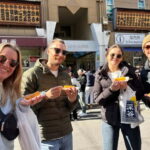
After Kappabashi, the tour shifts into Asakusa. You get about 1 hour here, which is a good amount for a short cultural breath without turning the day into a full temple-and-shopping marathon.
The tour ties Asakusa to the Nakamise-dori Shopping Street route from the Kaminarimon gate to Senso-ji Temple. Even if you don’t do a deep sightseeing program, this area gives you that classic Tokyo street feel: lots of smaller shops, traditional-style browsing, and a sense of long-running tourist flow.
Why this stop works in the context of knife shopping: it breaks the “tools only” spell. You can look at everyday street goods after focusing on kitchen gear. It also makes the whole tour feel less like a single-purpose errand and more like a real Tokyo day out.
Drawback to consider: Asakusa can be popular, so expect crowds in the main street areas. If you want photos, pick moments where you can get them without walking into the heaviest foot traffic.
You can also read our reviews of more shopping tours in Tokyo
Finishing near Tokyo Skytree for optional extra time
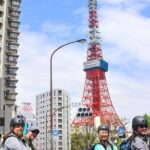
The tour is set up so you can finish your experience and optionally continue toward Tokyo Skytree. That’s a solid choice if you want a skyline finish, views, and a change of pace.
However, the tour data includes an important money note: Skytree entry fees are not covered for both the guide and the guests. So don’t budget for Skytree assuming it’s included. If you want to go up, plan to pay that separately.
I also like that this gives you control. If you finish and feel done, you can head back. If you’re still energetic, Skytree offers a natural next step without needing to reorganize your entire day.
Price and value: what $107.50 buys you
At $107.50 per person for roughly 4 hours, the big value is the combination of:
- a licensed English-speaking guide,
- access to very specific shopping zones (Tsukiji Outer Market and Kappabashi),
- and structured time so you’re not spending your day wandering in the wrong streets.
Knife shopping in Japan isn’t just browsing. Quality varies, terminology matters, and it’s easy to miss the distinctions that would help you choose the right tool. This tour’s strongest selling point is that you’re not doing that alone.
Also, several stops are noted as free in the itinerary schedule: Tsukiji Outer Market, Kappabashi Street, and Asakusa don’t require paid entry for the visit itself based on the tour info. That means your core spend is mainly about guidance and time, not constant ticket costs.
One more value angle: the tour is private for your group, and you can’t combine groups. Even if group sizes are not huge, this setup is usually better for pacing—especially in shopping areas where questions come up fast.
What’s included, what’s not, and how to plan
Included:
- Licensed Local English Speaking Guide
- Meet-up with guide on foot within a designated Tokyo area
- Pickup offered
- Mobile ticket
- Group discounts (availability depends on the booking situation)
Not included:
- Transportation fees
- Entrance fees
- Lunch
- Other personal expenses
- Tokyo Skytree entry fees (not covered for guide or guests)
That list matters because it affects how you budget the full day. If you need to take trains between areas, you’ll pay those separately. If you plan to eat, bring money for lunch and snacks since it’s not included.
Also keep in mind: you cannot combine multiple tour groups. That’s not a bad thing, just a reminder that you should expect a more contained tour environment rather than a blended crowd.
Who this tour is best for
This is a great fit if you:
- want Japanese kitchen knives and kitchenware but you don’t want to figure out the process alone
- love food culture and want the story behind the tools
- like a short, efficient Tokyo itinerary with time for streets and shopping
It’s also a good choice if you want structure. The route ties together food sourcing (Tsukiji), tools (Kappabashi), and classic Tokyo street browsing (Asakusa). That combination feels natural.
I’d think twice if you:
- have trouble with walking for a few hours (this tour is explicitly a walking tour)
- want a fully seated, low-foot-traffic experience
- are not interested in knives or kitchen tools at all, since that’s the tour’s core reason for existing
Should you book this Kappabashi knife shopping tour?
I’d book it if your goal is to buy or understand Japanese kitchen knives without wasting time in the wrong shops or with the wrong questions. The guide piece is what turns this from a random shopping stroll into an actually useful experience.
Skip it only if you want a lot of major attractions packed in. This is not that kind of day. It’s a focused half-day built around food culture, kitchen tools, and street Tokyo—then you’re free to continue toward places like Tokyo Skytree on your own schedule.
If you’re on the fence, here’s my simple test: do you care about how knives relate to Japanese cooking, or are you just hoping to window-shop? If it’s the first one, this tour is built for you.
FAQ
How long is the tour?
The tour is about 4 hours (approx.), with 1 hour allocated each for Tsukiji, Kappabashi Street, and Asakusa.
Does the tour offer pickup?
Yes. Pickup is offered, and the tour also notes that pickup is on foot. You’ll also meet the guide on foot within a designated area in Tokyo.
What’s included in the $107.50 price?
You get a licensed local English-speaking guide and a mobile ticket, plus meet-up with the guide on foot in a designated Tokyo area. The tour also offers group discounts.
What costs extra?
Transportation fees, entrance fees, lunch, and other personal expenses are not included. Tokyo Skytree entry fees are not covered for either guests or the guide.
Are Tsukiji Outer Market, Kappabashi Street, and Asakusa ticketed?
The itinerary schedule lists admission ticket free for Tsukiji Outer Market, Kappabashi Street, and Asakusa.
Is free cancellation available?
Yes. You can cancel for a full refund up to 24 hours before the experience starts. If it’s canceled less than 24 hours before, the paid amount is not refunded. A minimum number of travelers is required, and if it doesn’t meet that minimum, you’ll be offered a different date or a full refund.