REVIEW · TOKYO
Tokyo walking tour around Imperial Palace and Tokyo Station
Book on GetYourGuide →Operated by gotcha Corporation · Bookable on GetYourGuide
Tokyo’s great in-between spaces are the point here. You’ll move from Tokyo Station’s historic core straight to the Imperial Palace outer gardens—all at walking speed. I especially like how the route threads together big-city scale and calm stone-and-iron details, without turning the day into a checklist.
Two things I’d put at the top: the chance to see Tokyo Station from multiple angles, including the view from KITTE and the Japan Post building area, and the way the guide brings the Imperial Palace’s Nijubashi bridge story to life. You’re not just looking at landmarks; you’re learning what they’re for and why they were built where they were.
One consideration: this is a concentrated 2-hour walk, so you’ll want comfortable shoes and a bit of patience for crowds around Tokyo Station and the gates near the palace.
In This Review
- Key highlights you’ll actually use
- Getting your bearings: Marunouchi’s power-block meets palace quiet
- Tokyo Station from street level to picture-perfect: what KITTE changes
- Meiji Seimei Kan: high-end architecture without the museum vibe
- Imperial Palace outer garden edges: the calm transition is the point
- Nijubashi Bridge: the history lesson you can see
- Sakuradamon Gate: finishing with a real sense of place
- Price and value for a 2-hour small group
- Who this tour suits best (and who should think twice)
- Quick practical tips before you go
- Should you book this Tokyo Station and Imperial Palace walking tour?
- FAQ
- How long is the Tokyo walking tour?
- What is the price per person?
- How big is the group?
- What languages are available for the live guide?
- Where do I meet the guide?
- Where does the tour finish?
- What landmarks are included on the walk?
- Is there free cancellation?
Key highlights you’ll actually use
- Small group (max 4) means questions get answered, and your guide can adjust the pace
- Tokyo Station + Japan Post/KITTE viewing gives you a classic photo angle without hunting for spots alone
- Marunouchi and high-rise office architecture show you why this district looks the way it does
- Nijubashi Bridge is the emotional center, with an on-the-walk history explanation
- Sakuradamon Gate ties the “business Tokyo” walk to the palace boundary
- Ending at Kasumigaseki Station makes it easy to continue exploring nearby
Getting your bearings: Marunouchi’s power-block meets palace quiet
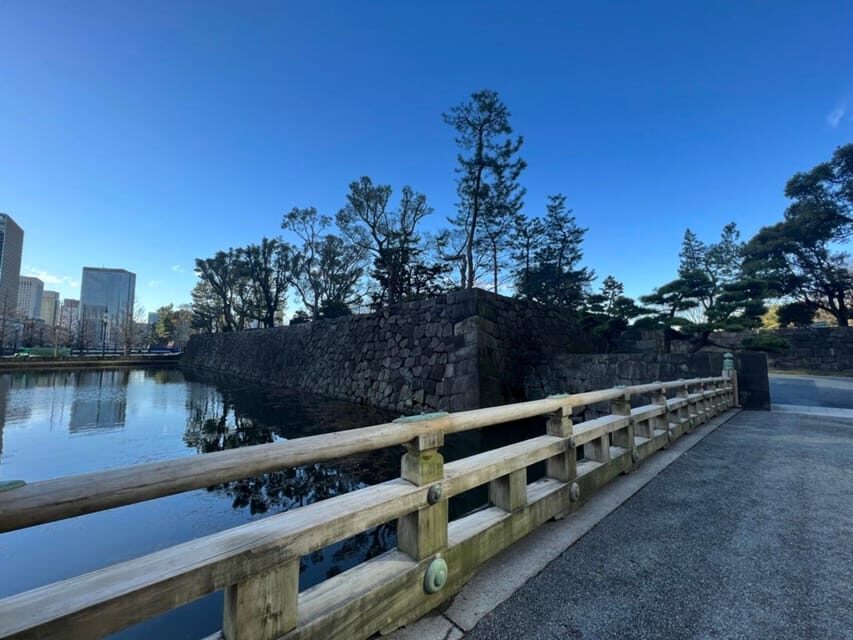
I like tours that help you understand the city shape fast. This one starts in Marunouchi, right by central Tokyo’s transport and business hub, so within minutes you’re grounded in where things connect: stations, big streets, and that sudden shift toward palace grounds.
The Marunouchi area has a long backstory. The district here was purchased and developed by Mitsubishi Corporation starting in 1890, and you’ll feel that corporate-era planning in the broad streets, purposeful building designs, and the way key structures line up visually. When your guide points out sightlines and building placement, it stops being random architecture and becomes a map you can carry in your head.
I also like the practical rhythm. Instead of sprinting from one “must-see” to another, you’re walking with stops that make sense: a station-focused section, then a controlled transition toward the Imperial Palace boundary area. That pacing matters because Tokyo’s center can feel overwhelming if you arrive with no plan.
You can also read our reviews of more walking tours in Tokyo

Tokyo Station from street level to picture-perfect: what KITTE changes
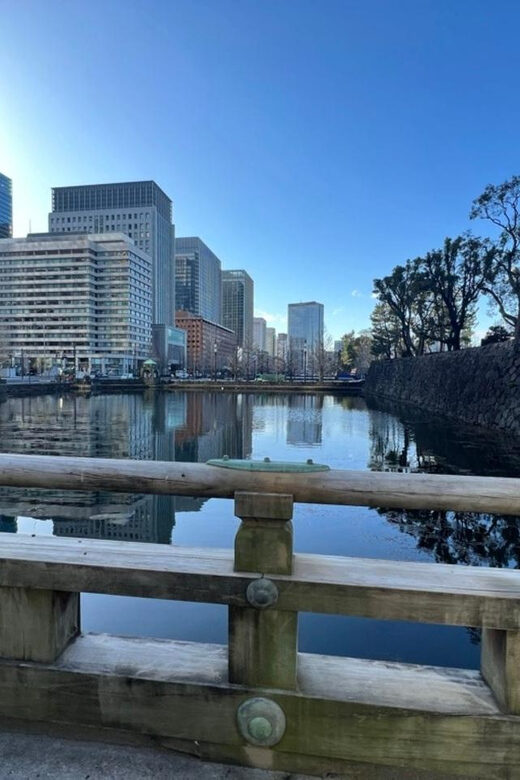
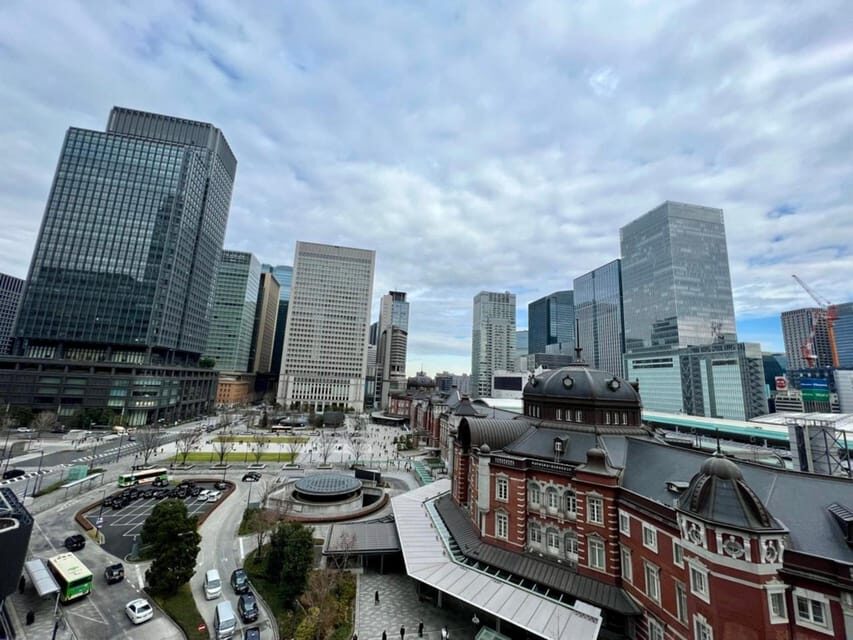
Tokyo Station can be a lot. Even if you’ve seen photos, being in front of it for real brings a mix of history and nonstop motion. One reason this tour works is that it gives you more than one look, instead of just posing in front of the facade.
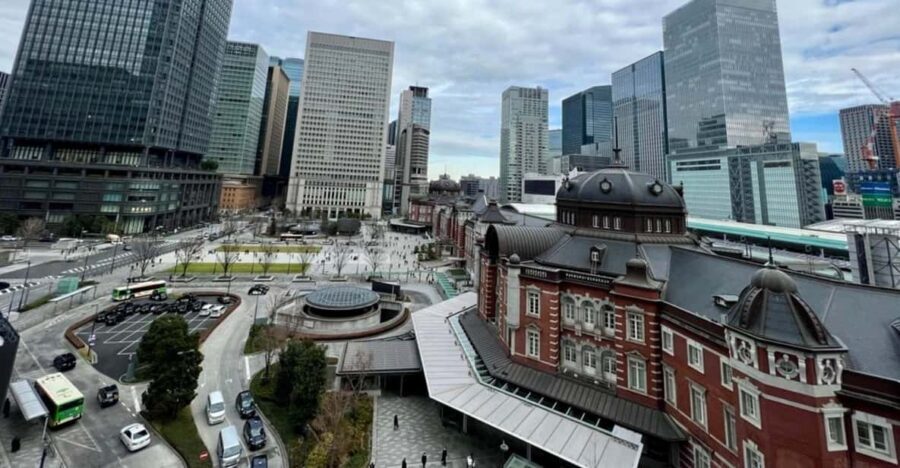
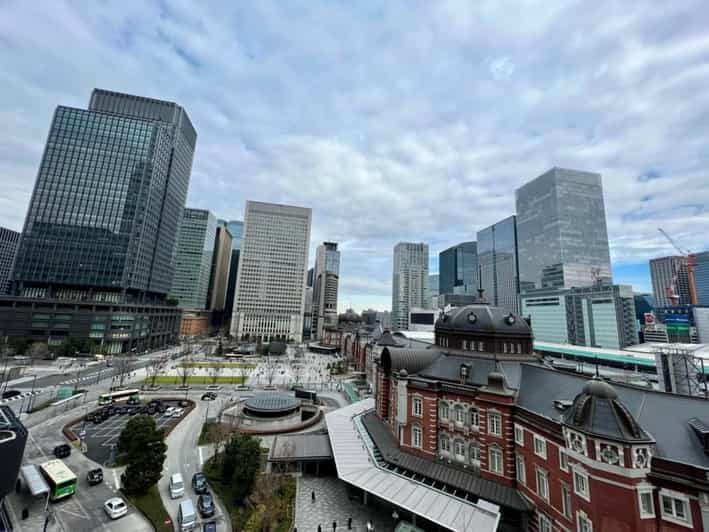
You’ll spend time around Tokyo Station and the Marunouchi buildings nearby, then move into the Japan Post building area (KITTE). That’s a key moment because KITTE changes the photo game. Getting a view back toward Tokyo Station from the KITTE side lets you frame the station in a way that’s hard to recreate if you’re only outdoors.
I like the guide’s approach to these photo stops. The goal isn’t perfect Instagram angles. It’s understanding what you’re photographing: the station’s central role as a gateway, the geometry of the surrounding buildings, and how the station sits inside the city rather than being just a single monument.
As you walk, you’ll also get quick context for the surrounding architecture around Marunouchi. You’ll see names like Tokyo Station’s key adjacent landmark buildings and the way office towers and retail blocks create a “street wall” effect. It’s city planning you can actually see.
If you’re traveling solo or with family and you want an easy way to hit the area’s big hits without wasting time wandering, this part is the best use of your 2 hours.
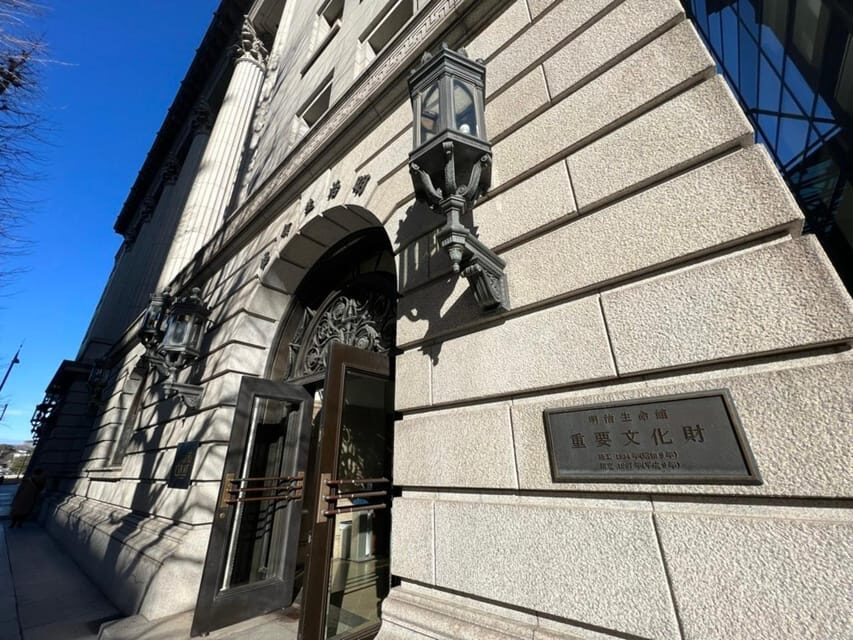
Meiji Seimei Kan: high-end architecture without the museum vibe
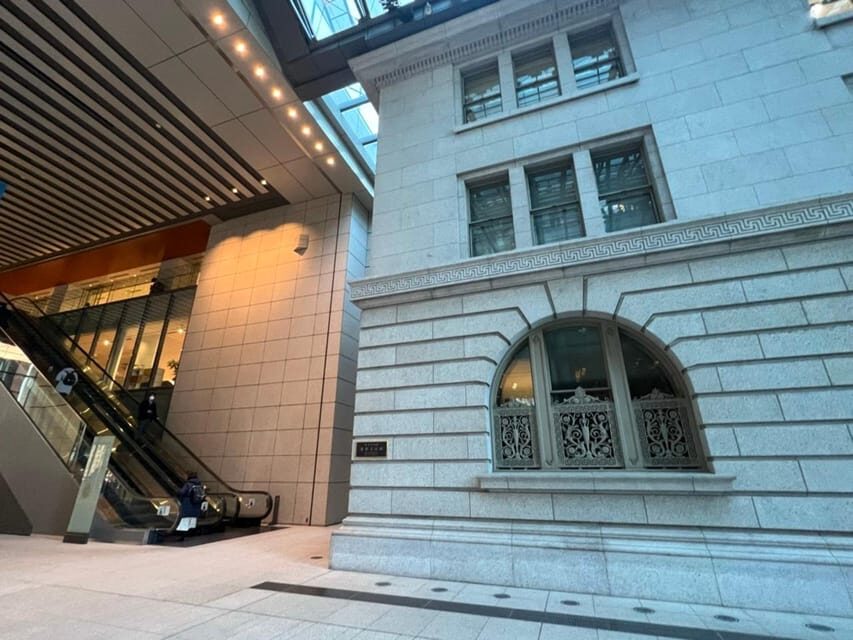
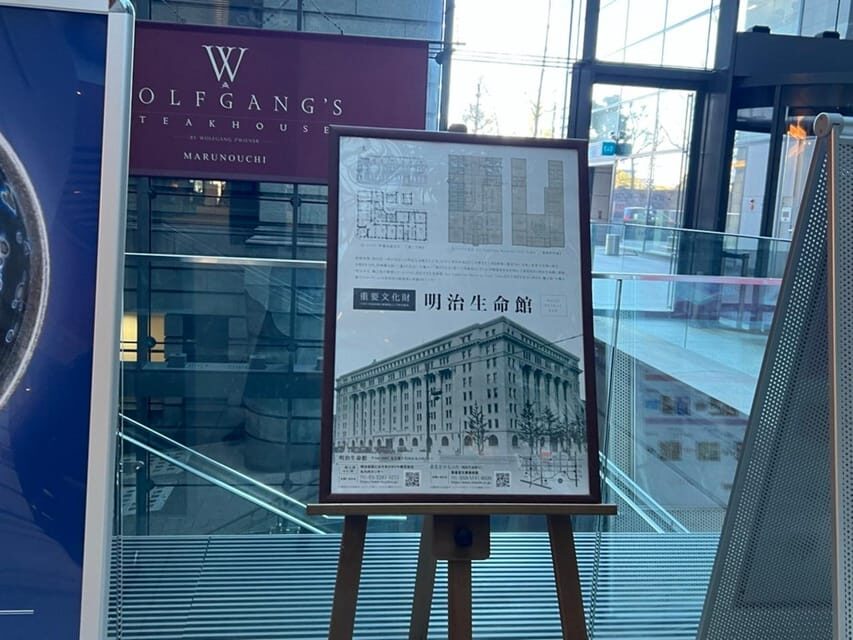
After the station energy, the route shifts into the more elegant, office-tower style side of Marunouchi. One stop on the way is Meiji Seimei Kan, a building you’ll recognize from the way it anchors the district’s look.
Why I like this stop: it’s the bridge between two travel mindsets. On one hand, Tokyo Station is obvious and busy. On the other hand, buildings like this can feel harder to “read” if you don’t know what you’re looking for. Your guide helps you notice proportions, materials, and the overall design language that gives the area its polished feel.
You also get a break from constant crowd movement. Even when you’re in the center of Tokyo, the sidewalks around the Marunouchi business core can feel more spacious than the smaller lanes you find elsewhere. It’s a good section for regrouping, swapping phone batteries, and getting your next move straight.
If you’re a design nerd, you’ll love it. If you’re not, it’s still useful because it teaches you how Tokyo’s business district expresses identity through architecture, not signage.
Imperial Palace outer garden edges: the calm transition is the point
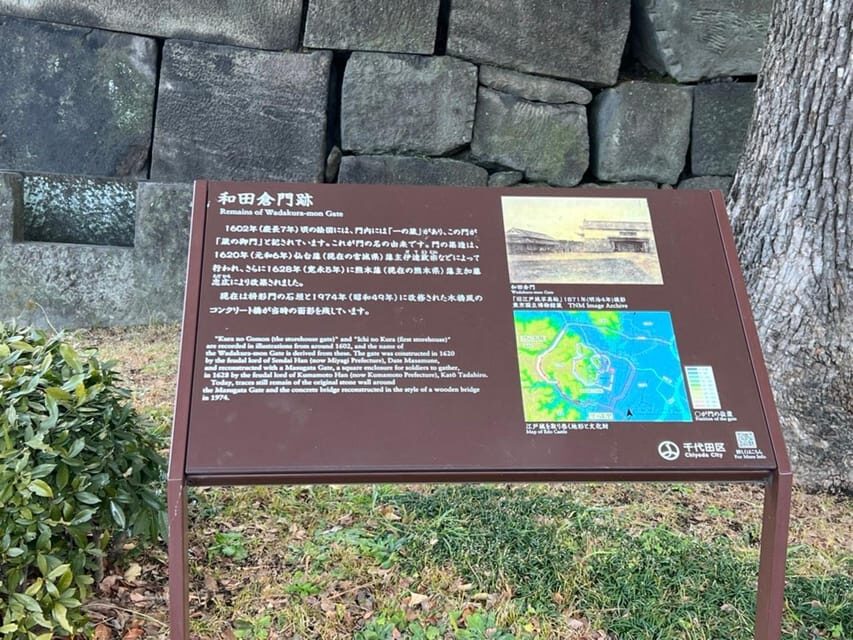
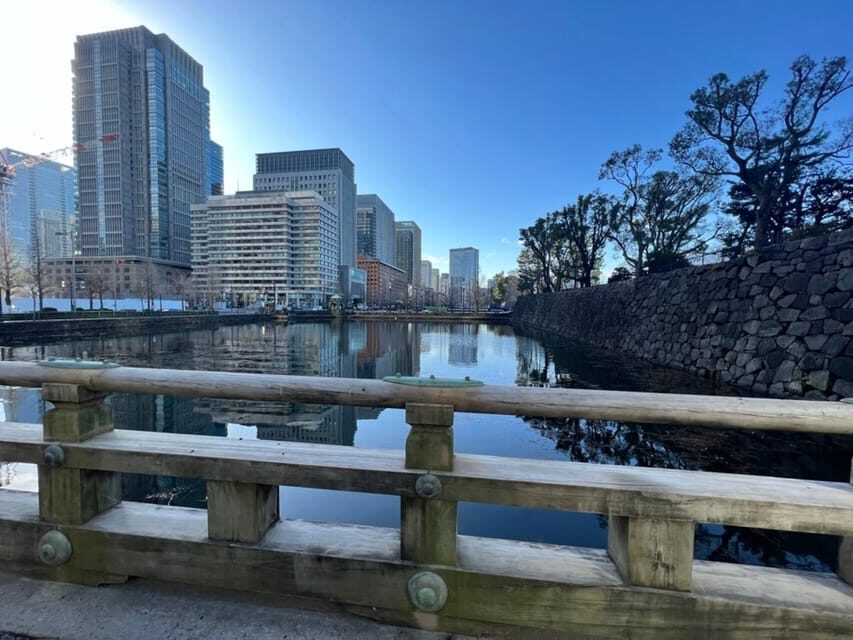
Then the walk gently changes character. You move toward the Imperial Palace outer garden area and the palace boundary gates. This part is special because it’s Tokyo’s version of “quiet power.”
You’re not touring inside the palace grounds. Instead, you’re walking the outside edges where you can see gate approaches and stone-and-iron elements that mark the palace as both historic and guarded. That matters: it keeps expectations realistic. You’re there for the atmosphere, the architecture, and the important views from the public side.
I also like that your guide frames what you’re seeing with story. Imperial architecture isn’t just decorative, and the guide’s explanations help you connect the forms to purpose—how entrances and walls communicate security and status, and how the grounds function as a boundary in the middle of a city.
This is also where small-group format earns its keep. With only up to four participants, you’re less likely to feel swallowed by the crowd at gates. You can pause, look longer, and actually hear the details you came for.
Nijubashi Bridge: the history lesson you can see
The emotional centerpiece is Nijubashi—the stone and iron bridges that act as a major front entrance visual. This stop isn’t just a photo op. Your guide explains the bridge’s history and what makes it such a recognizable piece of Japan’s ceremonial architecture.
Why this works so well: bridges like Nijubashi are built to be seen. The shape, materials, and placement are doing the work of both connection and statement. When you’re standing there, you can feel how a bridge becomes a stage. Your guide helps you notice that it’s not only about crossing water or approaching a gate. It’s about controlled access and a carefully designed visual approach.
This is the kind of storytelling that makes the rest of your trip easier. Once you understand why Nijubashi is positioned and designed the way it is, you start spotting similar thinking across Tokyo’s historic sites: entrances that signal importance, materials that age well and look formal, and urban planning that protects sightlines.
If you care about architecture and history but don’t want a long museum-style lecture, this 30-minute section is the perfect middle ground.






Sakuradamon Gate: finishing with a real sense of place
From Nijubashi, you head toward Sakuradamon Gate. This is where the walk feels complete. You’re moving from the bridge approach to the boundary entrance, so the story lands: how the landscape and built structures guide you toward the palace.
Sakuradamon gives you that last “look and understand” moment. It helps you connect earlier views and bridge context to a gate form that’s instantly recognizable and deeply symbolic. Even if you’ve only seen it in images before, standing near it gives the scale and seriousness you can’t get from a screen.
The route then ends at Kasumigaseki Station, which is useful because it’s one of those stations that makes your next step easy. You’re not left stranded far away from rail lines. You finish where Tokyo’s transit network keeps working smoothly.
Price and value for a 2-hour small group
At $49 per person for 2 hours, the value depends on what you want from Tokyo. If your goal is to save time and reduce stress while still seeing meaningful architecture, this pricing is fair. You get a guided walk covering a concentrated area that’s otherwise easy to explore incorrectly—especially around Tokyo Station where crowds and entrances can be confusing.
Also, the small group size matters here. Up to four participants isn’t just a comfort perk. It affects how the guide can shape your experience. And in practice, the guide style is one of the strongest selling points: guides like Mikio have a reputation for being flexible with the plan, Masahito for asking preferences early, and Miho for making the area feel like an enjoyable introduction rather than a rushed tour.
If you’re traveling with teens, this kind of adaptive guidance can be the difference between everyone tolerating a walk and everyone actually engaging with what they see.
If your travel style is purely independent and you love wandering with no structure, you might do this area on your own. But if you want the “why” behind what you’re looking at, a guided format is what keeps the time from feeling wasted.
Who this tour suits best (and who should think twice)
This tour fits well if you want:
- A first-timer friendly route through Tokyo’s most recognizable landmarks
- Architecture and urban planning context, not only photos
- A guide-led pace that keeps you moving but still allows questions
It’s especially good if you’re staying near the Imperial Palace or around Tokyo Station, since you’re not doubling back across town. And if you’re bringing multiple generations, the format tends to work because the stops are varied: grand station visuals, formal garden edges, and a bridge-and-gate sequence that’s easy to follow.
Think twice if:
- You’re expecting to go deep inside the Imperial Palace itself (this is focused on the outer garden area and gates)
- You prefer a long, slow sightseeing day rather than a tight 2-hour loop
Quick practical tips before you go
- Wear comfortable walking shoes. This is short, but you will cover distance.
- Bring a charged phone/camera. KITTE and the station viewpoints are where your photos will reward you most.
- Keep your camera ready around the gate areas. The best angles can be time-sensitive when crowds shift.
- If you’re sensitive to noise, understand you’ll start in a high-energy station district and then move toward calmer palace edges.
Should you book this Tokyo Station and Imperial Palace walking tour?
Yes, if you want a high-value use of 2 hours and you like seeing the story behind the scenery. The pairing of Tokyo Station + Marunouchi architecture with the Imperial Palace gate sequence (Nijubashi to Sakuradamon) gives you a balanced Tokyo contrast: business precision, then historical ceremony.
Book it if you’d benefit from an expert guide who can shape the route to your interests. The guide style highlighted by past participants leans toward flexibility and real conversation, which is exactly what you want in a short tour.
Skip it only if you’d rather roam freely with no structured context, or if your priority is spending lots of time inside palace grounds.
FAQ
How long is the Tokyo walking tour?
It lasts 2 hours.
What is the price per person?
The price is $49 per person.
How big is the group?
It’s a small group limited to 4 participants.
What languages are available for the live guide?
The tour is offered in Japanese and English.
Where do I meet the guide?
Meet in front of the police box near the Tokyo Station Marunouchi South Exit, at 1-9-1 Marunouchi, Chiyoda-ku, Tokyo 100-0005.
Where does the tour finish?
The tour ends at 霞が関駅 (Kasumigaseki Station).
What landmarks are included on the walk?
You’ll see Tokyo Station and nearby buildings including the Japan Post building (KITTE), the Meiji Seimei Kan area, the Imperial Palace outer garden, Nijubashi Bridge, and Sakuradamon Gate.
Is there free cancellation?
Yes. You can cancel up to 24 hours in advance for a full refund.