REVIEW · TOKYO
Small Group Japanese Calligraphy Workshop Experience
Book on Viator →Operated by nomuno · Bookable on Viator
A quiet room and a single brush can change your whole pace. This Japanese calligraphy (shodo) workshop in Tokyo turns learning into a hands-on craft session, taught by a master calligrapher in a small group. The setting is laid-back, but the instruction is serious.
I really like two things: the chance to practice right away (not just watch), and the fact that the workshop gives you a finished piece you can keep and feel proud of. The one thing to consider is that it’s held in a restaurant space, and if you arrive expecting a flashy studio, the calm, almost off-hours vibe can feel a little quiet at first.
In This Review
- Key things to know before you go
- Shodo in Tokyo: why this workshop feels different
- Where you meet: Monja Kuriya (Higashiikebukuro)
- What happens during the 1-hour lesson
- Step 1: Get oriented to Japanese calligraphy
- Step 2: Write your name (or nickname) in Japanese
- Step 3: Write one Japanese word (or your favorite word)
- Step 4: Walk away with a finished art piece
- The restaurant setting: calmer than a studio, more Japanese than a hall
- Price and value: $55.52 for practice, not just watching
- Who this is best for (and who might want something else)
- Mobile ticket and how to plan your timing
- What to do with your new calligraphy at home
- Should you book this Tokyo shodo workshop?
- FAQ
- Where do I meet for the calligraphy workshop?
- How long is the Japanese calligraphy workshop?
- Do I need to bring calligraphy supplies?
- What will I write during the class?
- Is there an English guide?
- What’s the group size?
- Is food included?
- Can I cancel for a full refund?
Key things to know before you go
- Max 7 people: you’ll get closer attention than in big classes.
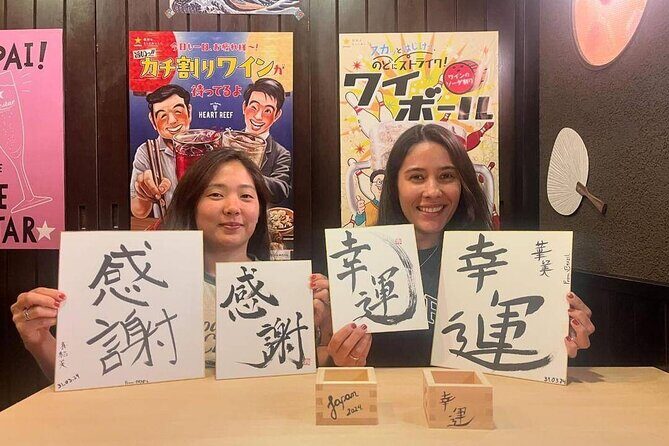
- Write your name in Japanese: plus one chosen Japanese word or your favorite word.
- Equipment included: brush and tools are provided, so you can travel light.
- Restaurant lesson setting: the class happens inside a Japanese restaurant atmosphere.
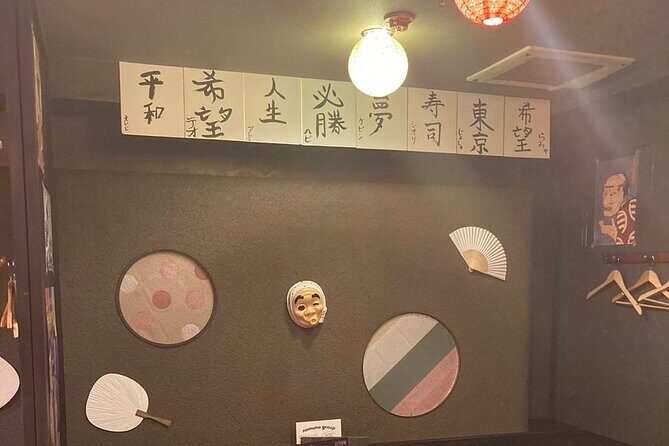
- Your work may be displayed: one piece can be put on the wall like an autograph if you’re okay with it.
- English guide support: you won’t be left guessing while learning the basics.
Shodo in Tokyo: why this workshop feels different
Tokyo has plenty of souvenirs, but learning shodo gives you something personal. Calligraphy in Japan isn’t only about pretty handwriting—it’s about form, rhythm, and attention. In a one-hour class, you won’t become an expert, but you can absolutely get the core feel of Japanese brush technique and leave with a piece that looks like it belongs in a Japanese home.
This workshop is built around practice, not performance. You don’t just learn what characters look like; you actively write them, guided step-by-step. That matters because calligraphy is physical. Your wrist, brush angle, pressure, and breath all show up on the paper.
The small group size helps too. With up to seven people, the guide can check what you’re doing as you go. In my kind of travel, I like experiences where I can ask a question without shouting or waiting through a crowd.
A few more Tokyo tours and experiences worth a look


Where you meet: Monja Kuriya (Higashiikebukuro)
You’ll meet at Monja Kurya Restaurant, in Toshima City, Higashiikebukuro: 1-chōme 25 東輝ビル 2F3F. The end is the same place, so you’re not dealing with a long transit shuffle or a second meetup point.
This is convenient if you’re staying around central Tokyo neighborhoods where local train access is easy. The tour also says it’s near public transportation, which usually means less wrestling with taxis and more time focused on the class.
One practical tip: check the building and floor number twice when you arrive. The address includes a bit of building detail (2F/3F). In Tokyo, that kind of precision saves time and stress.
What happens during the 1-hour lesson
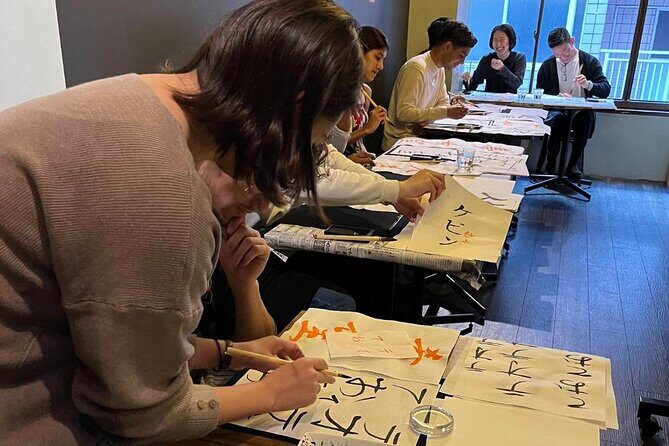
Think of the lesson as a guided workshop where you learn the basics and then apply them quickly. The total duration is about 1 hour, so the pacing is tight. You’ll get enough time to learn the strokes and then put them into your own characters.
Step 1: Get oriented to Japanese calligraphy
You start with instruction from the professional guide, with English guidance included. You’ll learn how Japanese calligraphy is done with a brush—how strokes begin, how they travel, and how they finish. Even if you’ve never held a brush before, the format is designed to help you succeed early.
This is where the “master calligrapher” element matters most. A skilled teacher can correct the details you’d never notice on your own, like brush tilt and how the line thickness changes when you press more or ease up.
Step 2: Write your name (or nickname) in Japanese
Next, you practice writing your name or a nickname in Japanese. This is a big deal for visitors because it turns abstract symbols into something personal. It’s also motivating: you’re not learning only to copy—you’re creating something that belongs to you.
If you’re choosing between your real name and a nickname, go with whatever you’ll enjoy displaying. You’ll be able to keep your work, and the more meaningful the characters are, the more you’ll want to show them off.





Step 3: Write one Japanese word (or your favorite word)
After that, you write one Japanese word of your choice or your favorite word. The goal is for you to leave with a second piece that reflects your personality—something you can remember.
If you’re not sure what to pick, choose a word that’s simple enough to write cleanly. You want something that gives you a good learning payoff within the short time frame.
Step 4: Walk away with a finished art piece
The workshop is set up so you end with something you can keep. One of your pieces may be displayed on the restaurant wall like an autograph if you don’t mind. That’s a fun touch, and it makes the class feel more like a real local experience than a one-off tourist activity.
The restaurant setting: calmer than a studio, more Japanese than a hall
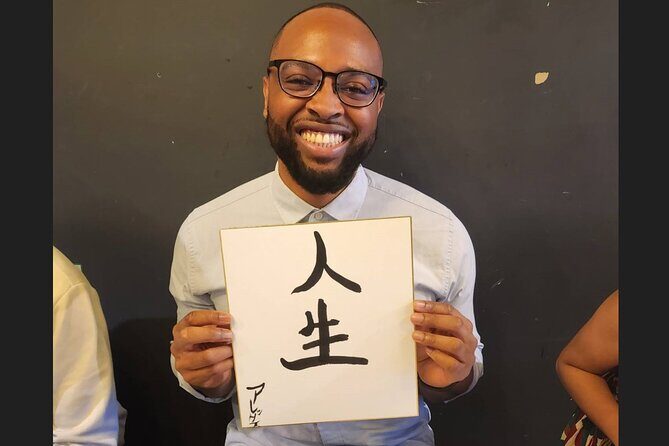
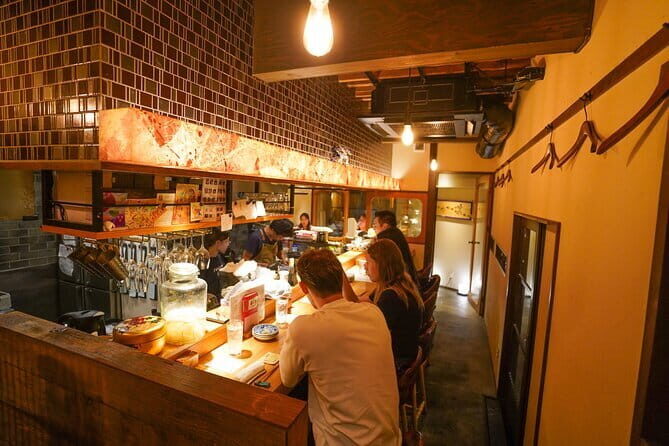
This workshop takes place in a Japanese restaurant. In the experience format, the class happens in off-hours, which creates a quieter environment than you might expect.
That quiet can be a plus. When the space is calm, you can focus on the brush work without distractions. You also get a more everyday feel, since the experience isn’t staged in a glossy workshop building. It’s more like you’re being taught in a real local space after the normal rush.
Still, here’s the one consideration: if you’re the type who expects constant background energy, the setting might feel too subdued at first. The good news is that a quieter room helps you hear directions and concentrate on your strokes.
Price and value: $55.52 for practice, not just watching
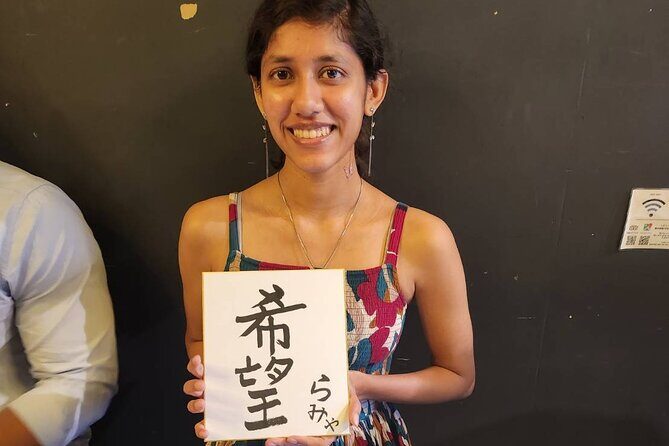
At $55.52 per person, this workshop is positioned as a serious but accessible craft class. The price includes a professional guide, all necessary equipment, and an English guide.
That’s where the value comes in. Japanese calligraphy tools are not complicated, but you don’t want to hunt them down in Tokyo—especially if you only need them for one session. By providing equipment, the class saves you time and hassle, and you can focus on learning the technique instead of logistics.
It’s also good value because you’re in a small group (up to 7). In a bigger class, your corrections can get delayed. Here, you can typically get more targeted help while you write.
One more practical note: the workshop does not include food or drinks. That’s totally normal for short craft lessons, but plan your meal either before or after so you’re not stuck deciding mid-session.
Who this is best for (and who might want something else)
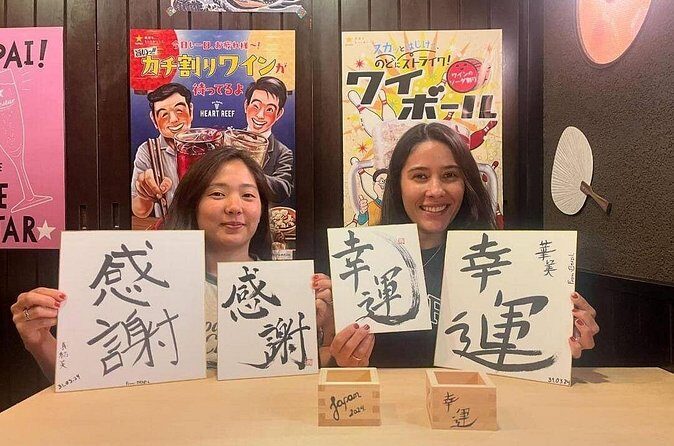
You’ll likely love this if you want a hands-on Tokyo activity that feels genuinely Japanese. It’s especially good for people who like taking home a tangible souvenir made by themselves.
It’s also a strong choice if you’re traveling in a small group with friends and want something that feels social but not crowded. Since the class is capped at seven, you’ll still have your own desk-space focus, not just a shared spectacle.
You might want to choose a different activity if you’re looking for a long, museum-style cultural tour. This one is short and practical. The reward is skill practice and a finished piece, not a deep lecture or hours of viewing displays.
Mobile ticket and how to plan your timing
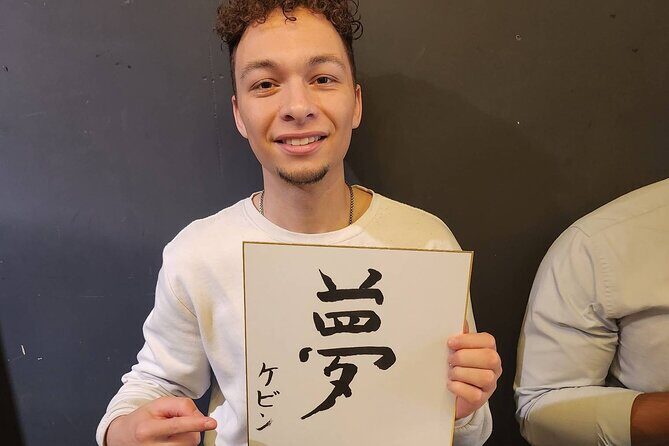
You’ll receive a mobile ticket, which makes arrival easier. Still, you should treat it like any Tokyo meetup: arrive a few minutes early so you can locate the correct floor and settle in without stress.
The workshop duration is about 1 hour, and it starts where you meet and ends back at the same spot. That means it’s easy to build into a day without requiring complicated rerouting.
One more detail that affects planning: the booking is typically made well ahead (on average, 104 days in advance). If your dates are fixed, don’t wait until the last minute to secure a spot.
What to do with your new calligraphy at home
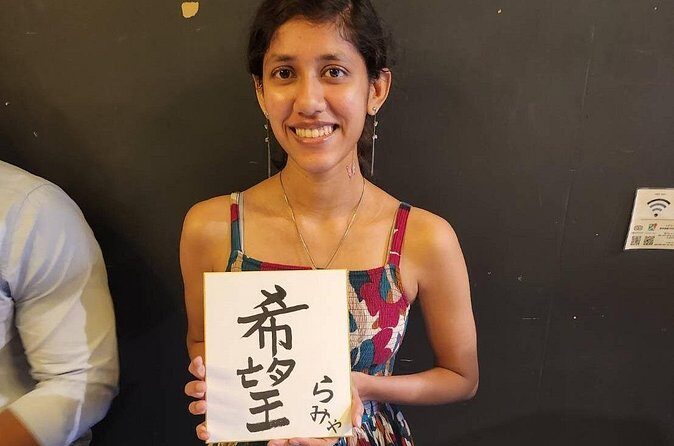
Your paper art is meant to be kept, and you’ll likely want to display it right away. If you’re the type who travels with a small frame kit or a way to protect paper, this is a good candidate for that. Even if you don’t, you can still keep it safely with careful packing—especially since your piece may be one of your chosen characters.
Also, the real win is that you’ll learn how letters are built in a traditional way. That means you’ll have the basic strokes and approach to try writing again later, even if you’re just practicing one word on scrap paper.
Should you book this Tokyo shodo workshop?
Yes—if you want a short, meaningful Tokyo activity where you actively learn a craft. The combination of small group size, equipment provided, and the chance to write your name plus a Japanese word makes this feel worth the money.
It’s also a smart pick if you like experiences that are rooted in real places, not only designed for tourists. The restaurant setting, plus the option to display your work on the wall, gives the class a personal, local touch.
If you dislike quiet, highly focused environments, or if you hoped for a long, multi-hour cultural program, you may prefer something longer. But for most visitors, this is a clean, practical way to learn shodo and take home something real.
FAQ
Where do I meet for the calligraphy workshop?
You’ll meet at Monja Kurya Restaurant, located at Japan, 170-0013 Tokyo, Toshima City, Higashiikebukuro, 1-chōme 25 東輝ビル 2F3F. The activity ends back at the meeting point.
How long is the Japanese calligraphy workshop?
The workshop lasts about 1 hour.
Do I need to bring calligraphy supplies?
No. All necessary equipment is included, so you don’t need to bring brushes or tools.
What will I write during the class?
You’ll practice writing your name (or nickname) in Japanese and one Japanese word (or your favorite word).
Is there an English guide?
Yes. The experience includes an English guide.
What’s the group size?
This activity has a maximum of 7 travelers, so you get a more personalized experience.
Is food included?
No. Food and drinks are not included.
Can I cancel for a full refund?
Yes. There is free cancellation, and you can cancel up to 24 hours in advance for a full refund.