REVIEW · HIROSHIMA
Hiroshima: Peace Memorial Park and Atomic Bomb Dome Tour
Book on GetYourGuide →Operated by Hussain · Bookable on GetYourGuide
Two hours, one unforgettable lesson in peace. This guided walk takes you through Hiroshima Peace Memorial Park and the Atomic Bomb Dome while tying each landmark to what the city faced and how it rebuilt afterward. It’s not just a sight-seeing loop. It’s a clear, respectful route through memory, context, and the meaning of peace.
I especially like two things. First, the guide work connects the big story to individual human realities, so the park stops feel specific instead of abstract. Second, I like the pace: you hit major points like the cenotaphs and the view from Aioi Bridge without it feeling rushed or slow.
One consideration: this is a walking tour, and it’s not suitable for people with mobility impairments or wheelchair users. Plan for significant walking, wear sturdy shoes, and bring water because there’s no food on the tour.
In This Review
- Key highlights worth planning around
- Why this Peace Memorial Park route makes sense
- Gates of Peace and Prayer Fountain: setting the tone
- Hiroshima Peace Memorial Park: where context turns grief into meaning
- Flame of Peace, Cenotaphs, and the sound of the Peace Bell
- Children’s Peace Monument and Sadako Sasaki’s cranes
- The memorial halls and international names: Junod and Norman Cousins
- Aioi Bridge to Atomic Bomb Dome: reading the skyline
- Finish at the Hypocenter Monument: leaving with the full arc
- Price and value: why $23 for two hours feels fair
- Practical tips so you can focus (and not suffer)
- Who should book this tour, and who might skip it
- Should you book Hiroshima’s Peace Memorial Park and Atomic Bomb Dome walk?
- FAQ
- How long is the Hiroshima Peace Memorial Park and Atomic Bomb Dome tour?
- Where is the meeting point?
- What sites are included in the tour?
- Is food included?
- What languages are the guides available in?
- Is photography allowed?
- What should I bring?
- Is the tour suitable for wheelchair users or people with mobility impairments?
- Does it run in bad weather?
Key highlights worth planning around
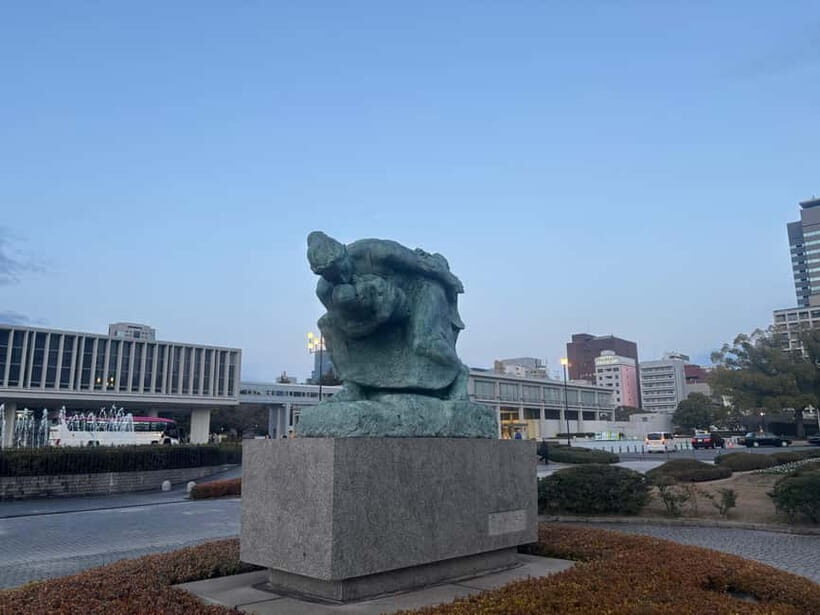
- Peace Memorial Park sequence: you’ll move through the prayer fountain, Flame of Peace, children’s monument area, and memorial halls in a logical flow.
- Atomic Bomb Dome view angle: you’ll approach the dome with context, not just a photo stop at the fence line.
- World-view memorial stops: you’ll see markers that broaden the story beyond Hiroshima, including the cenotaph for Korean atomic bomb victims.
- The “why” behind Hiroshima’s selection: the tour explains the factors behind why this city was targeted and what that meant.
- City rebuilding theme: you’ll get the arc from 1945 to modern Hiroshima, so the visit doesn’t end at grief.
- Small practical perks: many guides end with local recommendations (including food ideas like okonomiyaki), which helps after the heavy part.
Why this Peace Memorial Park route makes sense
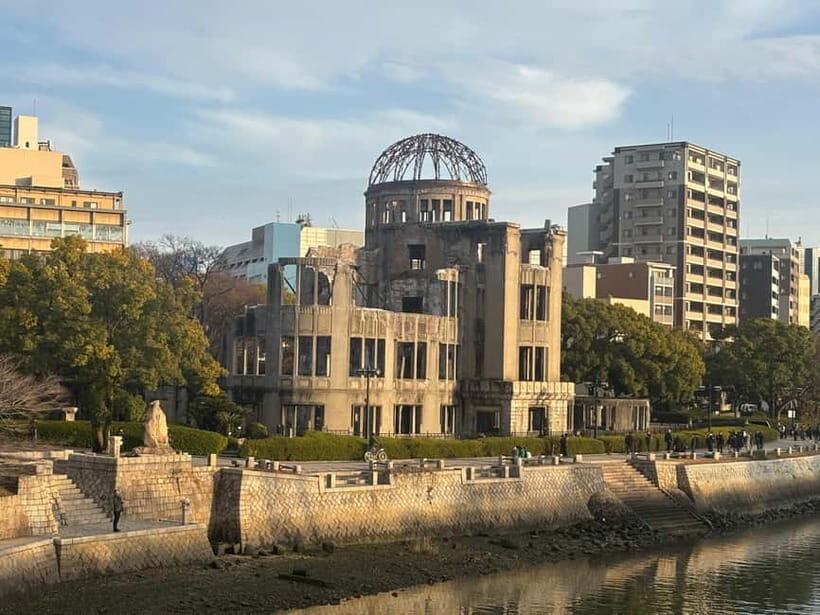
Hiroshima’s Peace Memorial Park can hit you like a wall of silence. The statues, cenotaphs, names, and plaques are powerful, but they’re also easy to misread if you only look for photos. A guided walk gives you the thread that holds the whole place together.
What I like most is that you don’t just get facts. You get interpretation. The tour is structured to help you understand what each site is for, why it matters, and how the design of the park shapes your emotions and attention as you go.
Also, the timing matters. The route is about two hours, and that tight window is a feature, not a flaw. You’ll finish with a strong grasp of the essentials instead of wandering for half a day and still feeling like you missed the point.
You can also read our reviews of more tours and experiences in Hiroshima.

Gates of Peace and Prayer Fountain: setting the tone
The tour starts at the Gates of Peace, right in front of the Italian restaurant Mario (on the gate side). This is a good place to orient yourself fast. Before you enter the memorial grounds, you get the tour’s basic message: remembrance with purpose.
From there, the Prayer Fountain is a short stop, but it matters. It gives you the rhythm of the visit: pause, reflect, then move on. You’ll also hear how the park functions as a living space for peace rather than a museum you just walk through.
This first stretch is where a good guide earns their pay. In the reviews, people kept praising the way guides stay engaging while handling an emotionally heavy topic with care. That matters here, because you’re not just learning history. You’re learning how to stand in it.
Hiroshima Peace Memorial Park: where context turns grief into meaning
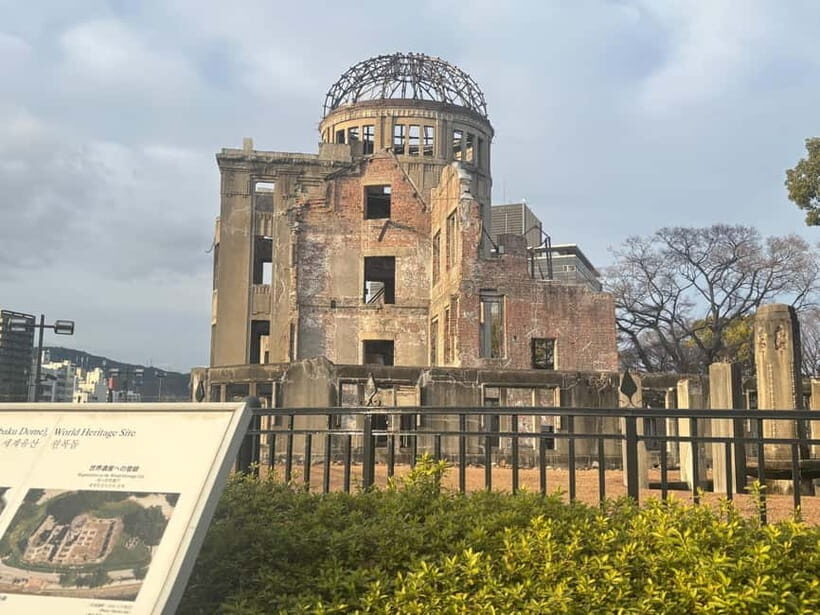
The heart of the experience is Hiroshima Peace Memorial Park. You’ll spend the most time here, and it’s the portion that tends to change how you see everything else.
This is where the tour style makes a difference. A guide can point out the “story behind the story,” like why certain memorial elements are placed where they are and how the park design leads you through stages of remembrance.
One of the most praised aspects of the tour is pacing. People described it as well-paced and structured, with a guide who answers questions and keeps the group moving at a steady speed. That’s important because this park can feel overwhelming when you’re trying to read everything alone.
Flame of Peace, Cenotaphs, and the sound of the Peace Bell
After the main park area, you move into the Flame of Peace region. The Flame of Peace is one of those places where you can feel your brain slow down. You’ll learn what the flame represents and how the memorial tradition is tied to the idea of world peace.
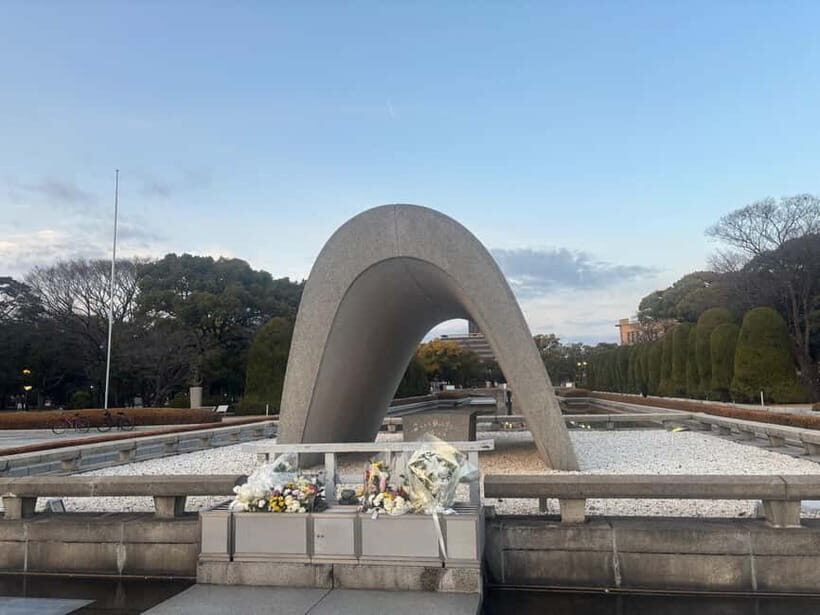
Then comes the cenotaph area: the Cenotaph for A-bomb Victims, where you pay tribute to those who lost their lives in 1945. You’ll also encounter the Korean Atomic Bomb Victims cenotaph, which widens the scope of remembrance beyond a single national perspective.
These moments are brief, but don’t treat them like photo ops. The best way to use the time is to slow down your thinking. Let the guide’s explanation land first, then you can take a photo if you want. Photography is allowed, but memorial areas deserve your attention more than your camera.
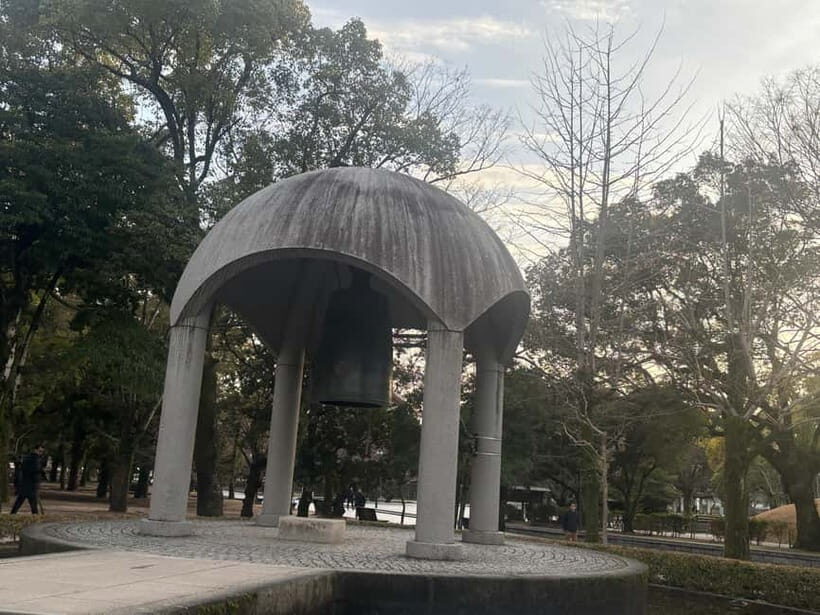
Before you move toward the next major sight, you’ll also ring the Peace Bell. It’s a small action, but it gives you a physical connection to the theme of hope. Reviews praised the guides’ respectful tone here, which I think is the difference between a meaningful moment and a weirdly timed gimmick.
Children’s Peace Monument and Sadako Sasaki’s cranes
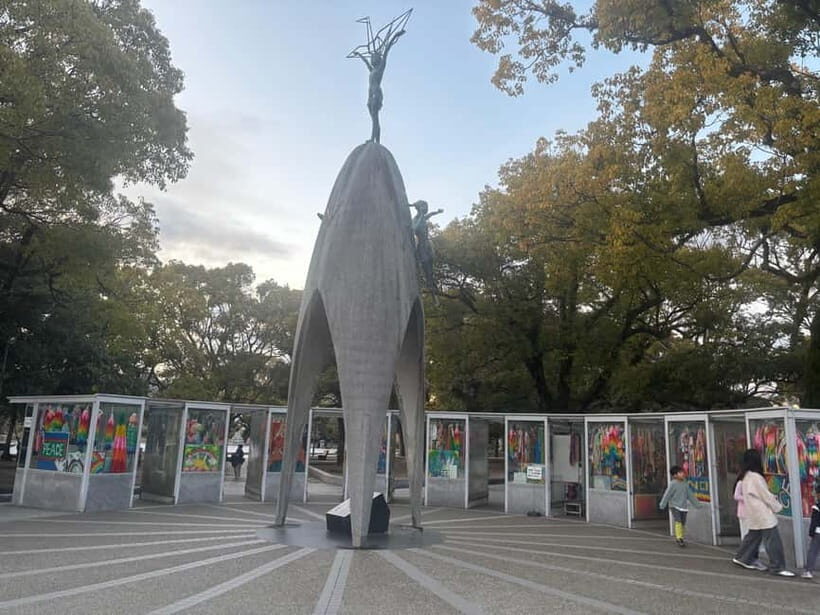
The children’s area brings the story into a different emotional register. You’ll visit the Children’s Peace Monument and hear the story connected to Sadako Sasaki and the thousand paper cranes.
This stop is often the one people remember later because it changes the math. It stops being only about dates and structures. It becomes about a human voice and a message that traveled forward through time.
If you’re visiting with kids (or if you’re simply a kid at heart), this is the part that makes the visit feel teachable. It’s also where the guide can handle tone best: respectful, not dramatic, and focused on why the symbol still matters.

The memorial halls and international names: Junod and Norman Cousins
One of the tour’s strengths is that it doesn’t keep you stuck in Hiroshima-only framing. You’ll visit the Hiroshima National Peace Memorial Hall area and also see memorials tied to individuals like Dr. Marcel Junod and Norman Cousins.
These names are easy to miss if you’re touring on your own. A guide helps you understand why they’re included, and how different people and voices have shaped the global peace conversation around Hiroshima.
In the feedback, people repeatedly said they learned details they wouldn’t have understood otherwise, especially about the significance of different monuments and how they fit into the larger narrative.
If you like your history with direction—who, why, and what it changed—this part is a real payoff.
Aioi Bridge to Atomic Bomb Dome: reading the skyline
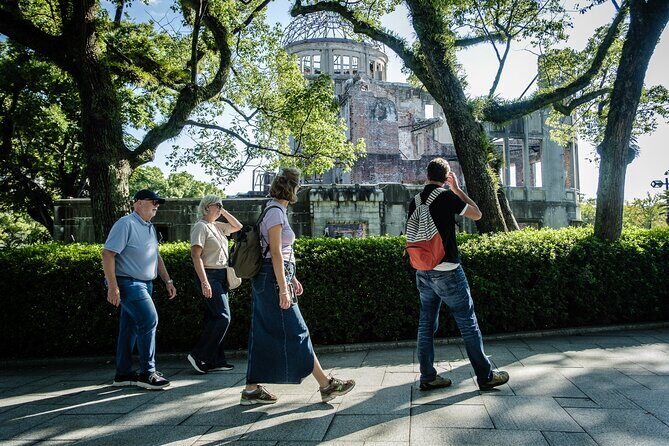
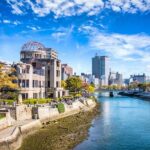
Next comes one of the most iconic sightlines on earth: Aioi Bridge and then the Atomic Bomb Dome.
The Dome is a UNESCO World Heritage Site, and it’s instantly recognizable. But the guide approach here is key. You don’t just stand there and stare. You learn why this location matters, and you see how the surrounding cityscape relates to the story.
The Aioi Bridge stop gives you a transitional viewpoint. It helps you orient yourself so the dome doesn’t feel like it appears out of nowhere. It also gives you a chance to reset after the heavier memorial stops.
People in the reviews described the experience as a must-do way to understand what’s right in front of you. They said they would have missed parts of the complete story without the guide. I think that’s especially true at the Dome, because it’s so famous you can accidentally treat it as a postcard.
Finish at the Hypocenter Monument: leaving with the full arc
The walk ends at the Hiroshima Atomic Bomb Hypocenter Monument. This is a good place to close the loop because it brings you back to the exact center point of the impact.
A final guide push here matters. Without context, the hypocenter can feel like an abstract marker. With the tour’s earlier explanations, it lands with more clarity: you understand what the bombing represented, why the story became global, and how Hiroshima rebuilt its identity afterward.
That rebuilding theme is part of the highlights for this tour. You’ll hear how Hiroshima recovered from the ashes and moved toward becoming a peace symbol. It’s not a denial of tragedy. It’s the full story arc—loss, then the long, complicated work of rebuilding.
Price and value: why $23 for two hours feels fair
At $23 per person for about two hours, this tour is strong value if you care about meaning, not just landmarks.
Why? Because you’re getting a live guide plus access to a concentrated set of major sites: Peace Memorial Park, Flame of Peace, Cenotaphs (including Korean victims), Peace Bell, Children’s Peace Monument, memorial halls, the Aioi Bridge approach, the Atomic Bomb Dome, and the hypocenter stop. For many visitors, that level of guidance would cost more if you tried to piece it together.
The reviews back up what matters for value: people praised the guide’s ability to keep the group engaged, explain significance clearly, and answer questions. They also mentioned small but useful extras, like food suggestions at the end. One person even mentioned an okonomiyaki recommendation afterward, which is a nice little life-saver after a heavy morning or afternoon.
If your goal is to get the most out of your day with less wandering and fewer unanswered questions, this price makes sense.
Practical tips so you can focus (and not suffer)
Here’s how to make the walk easier and more respectful:
Wear comfortable shoes. The tour covers a significant amount of walking. You’ll want proper traction and cushioning for long memorial-ground strolls.
Bring water, especially because there’s no food served. This matters more than you’d think. When you’re busy processing emotionally, you might forget basics until you’re tired.
Plan your clothing for weather. The tour operates in all weather conditions. Bring a hat and sunscreen, and dress for rain or sun based on the season.
Smoking isn’t allowed, so keep that in mind if you need breaks.
And if you want photos, photography is allowed. Just take your time for the moments that deserve your eyes first.
Who should book this tour, and who might skip it
This is a great match if you:
- Want a guided walk through major Hiroshima memorial landmarks in a tight time window.
- Like explanations that connect monuments to what they represent.
- Appreciate a guide who can answer questions and keep the pacing steady.
In the reviews, people praised guides like Syed, Shah, Hussain, and others for being engaging, respectful, and quick to respond. One review even mentioned a guide texting before the start, plus ending with local lunch recommendations. That’s the kind of practical friendliness you’ll appreciate when you’re arriving in a place that feels emotionally serious.
You might consider skipping if:
- You need wheelchair-friendly routing or you have mobility impairments. The tour is not suitable for wheelchair users.
- You prefer a fully self-paced visit and hate walking with a set schedule.
Should you book Hiroshima’s Peace Memorial Park and Atomic Bomb Dome walk?
Yes, if you want the fastest path to understanding what you’re seeing. This tour is built to help you read the park and the Dome with context, not just admiration.
Book it if you value a steady, respectful guide who can explain why Hiroshima was targeted, what the memorials mean, and how the city rebuilt itself into a global peace symbol. At $23 for two hours, you’re paying for direction—and direction is what turns a heavy visit into something that sticks.
Skip it only if the walking won’t work for you. Otherwise, treat it like your “meaning map” for Hiroshima. You’ll still want time on your own afterward, but you’ll know what you’re looking at when you do.
FAQ
How long is the Hiroshima Peace Memorial Park and Atomic Bomb Dome tour?
The tour lasts about 2 hours.
Where is the meeting point?
The meeting point is the Gates of Peace, front side of the Italian restaurant Mario.
What sites are included in the tour?
Key stops include the Hiroshima Peace Memorial Park, Flame of Peace, Children’s Peace Monument, Peace Bell, Aioi Bridge, the Atomic Bomb Dome, and the Hiroshima Atomic Bomb Hypocenter Monument, along with cenotaphs and memorials such as the Cenotaph for A-bomb Victims and the Korean Atomic Bomb Victims cenotaph.
Is food included?
No. Unfortunately, no food is served on this tour.
What languages are the guides available in?
The live tour guide is available in English, Urdu, and Hindi.
Is photography allowed?
Yes, photography is allowed, but you should be respectful in memorial areas.
What should I bring?
Bring comfortable shoes, a hat, a camera, sunscreen, and water.
Is the tour suitable for wheelchair users or people with mobility impairments?
No. It is not suitable for people with mobility impairments or wheelchair users.
Does it run in bad weather?
Yes. The tour operates in all weather conditions, so dress appropriately.