REVIEW · OSAKA
Real Kimono experience and Tsumami Kanzashi Workshop
Book on Viator →Operated by Kimono and Japanese culture Experience · Bookable on Viator
Your day starts with a tiny flower.
This Osaka workshop pairs a real kimono experience with a hands-on Tsumami-zaiku accessory class, then sends you out for a photo stroll in the Shinsekai/Tsutenkaku neighborhood.
I like that the session is built around doing, not just watching. You’ll choose your colors, make a Kanzashi-style hair clip/brooch from Japanese Chirimen cloth, then get help selecting a kimono and obi and being dressed properly. It’s also paced like a good lesson: you get an explanation paper and a basic technique briefing, then step-by-step support while you work.
One thing to plan around: after you wear the kimono, you need to return it within 1 hour, so your walking-and-photo time is fun but it’s not a long, lazy kimono day.
In This Review
- Key highlights you’ll feel fast
- Real kimono and Tsumami-zaiku in Osaka: what you’re really buying
- Step-by-step Tsumami-zaiku Kanzashi: turning cloth into a hair clip/brooch
- What your final piece is good for
- Choosing colors, then choosing the look: making it personal
- Getting dressed in kimono and obi: guidance that matters
- The photo moment plus the Shinsekai stroll near Tsutenkaku
- How to get the most out of the stroll
- Where the venue vibe helps: calm craft space and thoughtful service
- Price and value: why $52.03 feels fair for what you get
- Practical timing and logistics that affect your comfort
- Who this is best for (and who should look elsewhere)
- Should you book this kimono and Tsumami-zaiku workshop?
- FAQ
- What will I make during the Tsumami-zaiku workshop?
- How long does the experience take?
- Do I keep the accessory I make?
- What happens after I make my accessory?
- Is tea or coffee included?
- Where does the activity start?
- Is this a private experience?
- How long can I wear the kimono?
- What is the cancellation policy?
Key highlights you’ll feel fast
- Hands-on Tsumami-zaiku Kanzashi: you craft a hair clip/brooch with Chirimen cloth, then take it home.
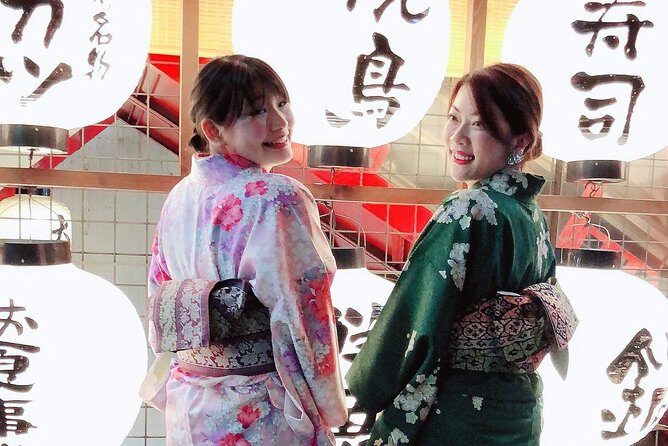
- Kimono + obi dressing help: you pick from a selection and get fitted, not just handed a robe.
- Tea or coffee during the build: small comfort while you concentrate on the craft.
- Photo-ready stroll in Shinsekai near Tsutenkaku: you get your accessory and kimono together for real neighborhood photos.
- Private group format: only your group participates, so the experience stays calmer and more personal.
- Good value for a full look: one ticket covers craft, dressing, and the photo stroll, rather than separating everything into extra tours.
Real kimono and Tsumami-zaiku in Osaka: what you’re really buying
This is not just a kimono rental where you pose and leave. You’re paying for two connected experiences that make each other better: a Tsumami-zaiku workshop (making a Kanzashi hair clip/brooch) and a kimono dressing session where you wear the accessory you made.
At $52.03 per person for about 2 hours, the value comes from the bundle effect. You’re not only getting dressed; you’re creating a souvenir that matches the outfit and shows the craft process behind it. That’s the difference between a costume moment and a personal cultural artifact.
You also get a setup that’s designed to keep things moving. You start with a brief explanation, then you choose colors/design, then you assemble. After that, kimono time. The order matters, because your accessory is ready before you go out for photos.
Finally, the “real world” part is built in. Shinsekai and the Tsutenkaku area aren’t a distant museum scene. It’s an everyday Osaka neighborhood vibe where you’ll be wearing kimono and showing off something you made with your own hands.
A few more Osaka tours and experiences worth a look

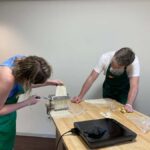
Step-by-step Tsumami-zaiku Kanzashi: turning cloth into a hair clip/brooch
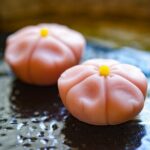
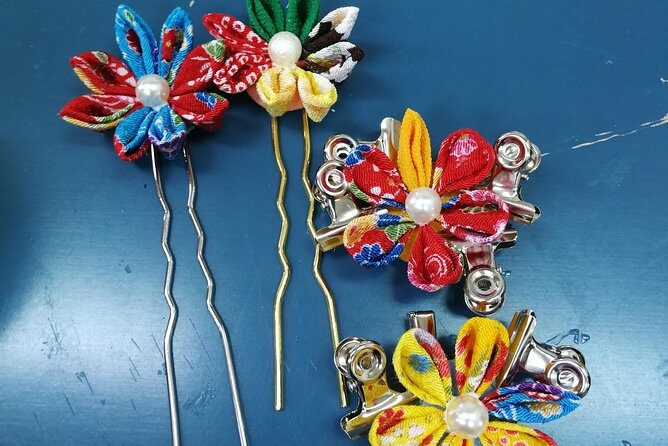
Tsumami-zaiku (often grouped under Kanzashi-style crafts) is a traditional Japanese hand craft where you create decorative pieces using small fabric folds. In this class, you’re making a Tsumami-zaiku Kanzashi hair clip (or brooch) using Japanese Chirimen cloth.
Here’s how the class works in practical terms:
First, you receive an explanation paper and a short briefing on the basic technique. That matters because it gives your hands a starting point. When you’re working with tiny pieces and folds, guessing is frustrating. A quick baseline helps you move faster and feel confident.
Next, you choose the colors and design for your accessory flowers. That step is more important than it sounds. It controls the final look, and it also tells you what to aim for while you’re assembling—so your craft doesn’t turn into random fabric fiddling.
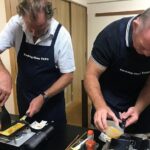
Then comes the building stage. You make the accessory with step-by-step assistance. The pace is human. You’re not left alone with a “good luck” table. Tea or coffee is served during the work, which is a small detail but it helps you settle in and treat the session like a calm craft class rather than a production line.
What your final piece is good for
You’ll take your accessory home as a special Japanese souvenir. Because it’s a hair clip/brooch, it’s genuinely usable. You’re not stuck with a pretty object you can only display in a drawer. If you like wearing accessories, it’s the kind of piece that keeps your Japan trip present long after the photos.
Choosing colors, then choosing the look: making it personal
The workshop gives you creative control in two separate places: first with the accessory design, then again with the outfit.
Color and flower design choices for your Kanzashi are where you make it yours. If you want something soft and subtle, you can steer that. If you want it bold, you can do that too. The main point is that your final accessory isn’t a generic “pick one of three” option.
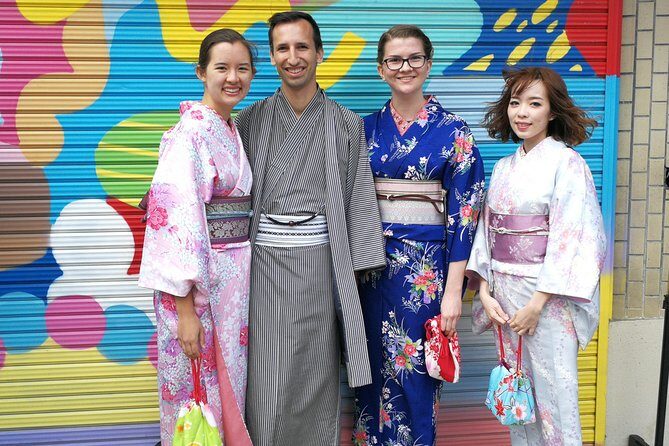
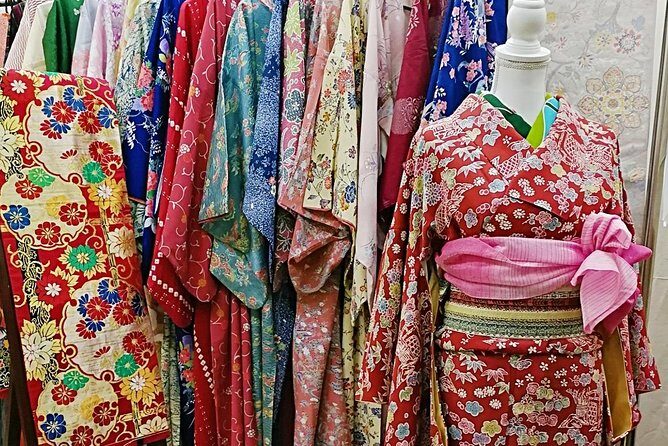
Then you move to wardrobe selection. You choose a kimono and obi from various options, and a staff member helps dress you. Reviews point to a large range of kimono and even yukata-style options, so you’re likely to find a look that fits your taste and photo goals.
This double-choice process is why the whole experience feels cohesive. You’re creating an accessory that complements the outfit you’re wearing in the neighborhood.
Getting dressed in kimono and obi: guidance that matters
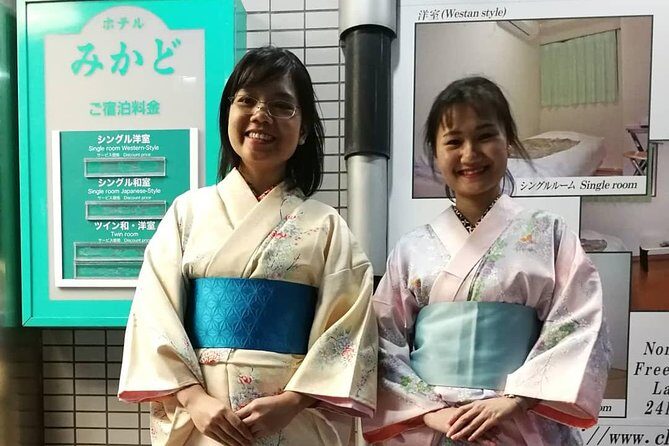
Kimono dressing can look intimidating from the outside. That’s exactly why the help here is a big deal.
After you finish your accessory, you choose the kimono and obi you like, then get dressed by the instructor or staff. That means you’re not trying to wrap your body into a garment with guesswork. You’ll get guidance during the process, which also helps you feel comfortable enough to walk and pose afterward.
One more practical thing: the kimono portion comes with a time constraint. You’ll return the kimonos within 1 hour. That doesn’t ruin the experience, but it does change how you should plan your mindset. Think of this as a focused kimono window for photos and short strolling, not an all-day roaming look.
If you want the best experience, wear comfortable inner clothes underneath and keep your phone/keys easy to handle. You’ll be more relaxed if you’re not constantly adjusting things.






The photo moment plus the Shinsekai stroll near Tsutenkaku
Once you’re dressed and your accessory is finished, you get your “wear it for real” time.
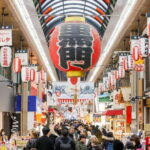
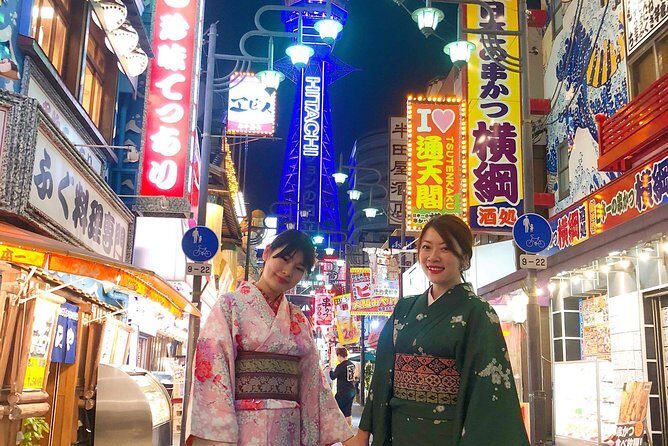
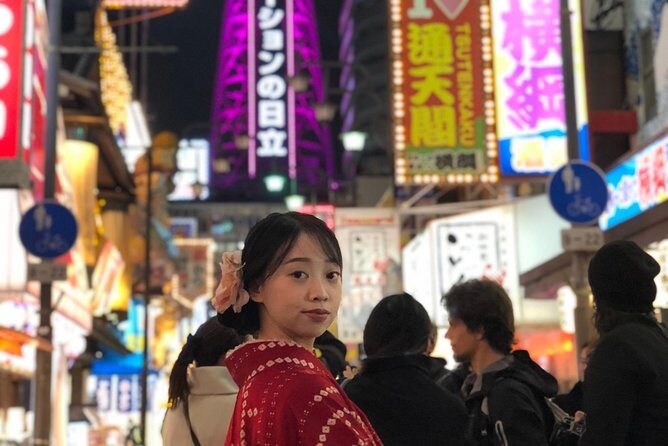
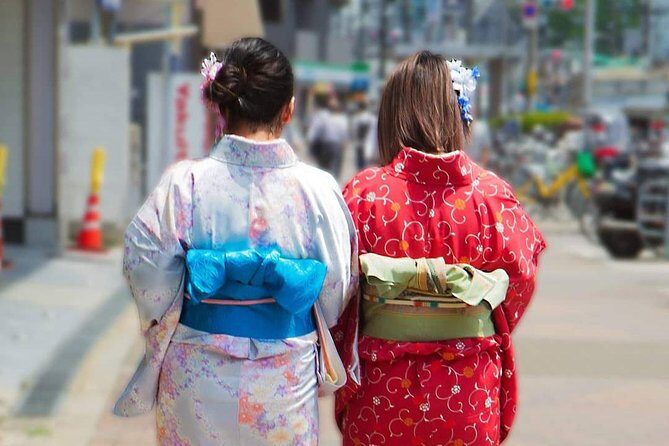
You’ll enjoy photo shooting with your accessory, then stroll around the Shinsekai/Tsutenkaku area in kimono. The Tsutenkaku tower area is a major landmark in this neighborhood, and it’s close enough that the walk feels convenient rather than exhausting.
This portion is the payoff. The craft isn’t separate from the outfit anymore. Your hair clip/brooch becomes part of the visual story. And you get that rare combo: you’re not only sightseeing, you’re in the scene.
How to get the most out of the stroll
- Take a few steady “full outfit” photos first, before you get tired.
- Use the accessory as your anchor: close-ups on the fabric flowers and a few angles with the kimono sleeves visible.
- If you’re with a group, spread out a bit for variety, then regroup so you don’t lose time.
Even in a short outing, the key is to think like a photographer for 10 minutes, not like a tourist rushing a checklist.
Where the venue vibe helps: calm craft space and thoughtful service
The class setting is described as well appointed, and one review also mentions beautiful gardens. That kind of atmosphere matters because it slows your pace down in a good way.
You’re doing a delicate hand craft. A comfortable, nicely arranged venue makes it easier to focus on the technique rather than just waiting for it to end.
The service also gets praised for being pleasant and helpful, especially during dressing and during the accessory steps. That shows up in a practical way: you’re more likely to finish with something you feel proud to wear and keep.
Price and value: why $52.03 feels fair for what you get
Let’s talk value with real eyes.
You’re paying for:
- instruction on Tsumami-zaiku basics
- step-by-step help making your Kanzashi hair clip/brooch
- a kimono and obi dressing service
- photo time with the accessory
- a kimono stroll around Shinsekai/Tsutenkaku
- tea or coffee during the workshop
You’re also not paying separately for the “make something” part and the “wear it” part. That’s where this ticket feels smart: the souvenir and the outfit work together.
Could you buy a ready-made accessory cheaper? Sure. But that’s not the same product. This is a crafted item that took your hands and your choices. The value is in the personal souvenir plus the real kimono moment.
At about 2 hours, it also fits into a typical Osaka schedule. It’s long enough to feel complete, but short enough that you can still do other sightseeing after.
Practical timing and logistics that affect your comfort
This experience runs about 2 hours. You’ll meet at the starting address in Osaka and the activity ends back at the meeting point.
A few logistics points that can make or break your day:
- Mobile ticket: plan to have your phone ready at check-in.
- Return within 1 hour: once you’re in kimono for the stroll, your total kimono window is limited.
- Near public transportation: good news if you’re moving around Osaka by subway or train.
- Private tour format: only your group participates, so you’ll likely get more attention and fewer “shared delays.”
Also keep in mind that “most travelers can participate.” That suggests it’s not an extreme physical activity. Still, you’ll be sitting and working with small pieces, so if you have finger/wrist limitations, pace yourself and ask for help early.
Who this is best for (and who should look elsewhere)
This works especially well if you want a hands-on cultural activity that still ends with classic Japan travel photos.
You’ll probably love it if:
- you want a real kimono experience but not just a rental
- you like making crafts and wearing the results
- you want a souvenir that’s personal and display-worthy
- you’re okay with a short, focused kimono window rather than all-day roaming
You might prefer something else if:
- you want a full-length kimono day with lots of hours on the street
- you’re looking for a purely sightseeing-focused tour with minimal workshop time
Should you book this kimono and Tsumami-zaiku workshop?
If you’re torn, I’d book it if you want one ticket that delivers two memorable outcomes: a crafted hair clip/brooch and a kimono outfit that matches it.
This is also a good pick for groups because the private format keeps the vibe calm, and the pace is structured enough that even first-timers feel guided. The step-by-step help and the photo stroll in the Tsutenkaku/Shinsekai area make it feel like a complete “Japan moment,” not a rushed add-on.
If you hate time limits, consider that 1-hour kimono return. But if you see that as a trade for a compact, satisfying experience, it’s a fair deal.
FAQ
What will I make during the Tsumami-zaiku workshop?
You’ll make a Tsumami-zaiku Kanzashi accessory, such as a hair clip (or brooch), using Japanese Chirimen cloth.
How long does the experience take?
The experience lasts about 2 hours.
Do I keep the accessory I make?
Yes. After the workshop and photos, you take your Tsumami-zaiku accessory home as a souvenir.
What happens after I make my accessory?
You choose a kimono and obi from the provided selection, get dressed, enjoy photo shooting with your accessory, and then stroll around the Shinsekai/Tsutenkaku area in kimono.
Is tea or coffee included?
Yes. Japanese tea or coffee is served during the work.
Where does the activity start?
The meeting point is 3-chōme-6-19 Nipponbashihigashi, Naniwa Ward, Osaka, 556-0006, Japan.
Is this a private experience?
Yes. Only your group participates.
How long can I wear the kimono?
You need to return the kimonos within 1 hour.
What is the cancellation policy?
You can cancel for a full refund if you cancel at least 24 hours before the experience starts.