REVIEW · KYOTO
Kyoto and Nara Private Car Tour with a Local English Guide Driver
Book on Viator →Operated by Japan Luxury Tours · Bookable on Viator
Fifteen stops, one stress-free ride. This Kyoto and Nara private car tour pairs a local English/Japanese guide with a licensed green-number driver, so you can hit major sights without wrestling trains. You also get the option to choose the car, plus hotel pickup/drop-off and onboard Wi-Fi.
What I like most is the way the guide keeps things practical while still pointing out what locals pay attention to. I also like that your team is built around Japan-born and Japan-raised staff, with Japanese language help available for emergencies. The main trade-off: it’s a full plate day, so most stops are quick, and temple and attraction entrance fees are not included.
In This Review
- Key things that make this tour work
- A fast, well-run day: Kyoto classics plus Nara’s big moments
- Price and value: what you’re really paying for
- The private car advantage: choose your ride and keep moving
- Safety and local reliability: the “green-number driver” focus
- Stop-by-stop: what you’ll actually see in Kyoto
- Fushimi Inari-taisha: start with the torii tunnel
- Arashiyama: bamboo forest, temple gardens, and river views
- Sagano Romantic Train and Monkey Park Iwatayama: optional ticket moments
- Gion: geisha and maiko culture district atmosphere
- More Kyoto icons: Kinkaku-ji, Kiyomizu-dera, and the Nishiki/Kiyamachi vibe
- Kinkaku-ji and Ginkaku-ji: the Golden and Silver Pavilion contrast
- Kiyomizu-dera: UNESCO scale and that famous stage
- Nishiki Market: Kyoto’s kitchen stop
- Yasaka Shrine and Chion-in: shrine lantern energy and big gate scale
- Sanjusangendo and Nijo Castle: long hall wonder and shogun-era architecture
- When Kyoto turns into scenery: Amanohashidate and Ine no Funaya
- The Nara payoff: deer park, Todai-ji, Kasuga lanterns, and a famous pagoda
- Nara Park: the deer meet you at the edges
- Todai-ji: the Great Buddha Hall moment
- Kasuga Grand Shrine: lantern walls in miniature chaos
- Kofuku-ji: five-story pagoda still dominates
- Who this tour is best for (and who should think twice)
- Small costs to plan for (so your day stays easy)
- Should you book this private car Kyoto and Nara tour?
- FAQ
- How long is the Kyoto and Nara private car tour?
- What is included in the tour price?
- Are entrance fees included for temples and attractions?
- Do we travel in a group or is it private?
- What extra costs should I expect on the day of the tour?
- Is pickup available?
Key things that make this tour work
- Private car with hotel pickup and drop-off, so you can skip station transfers and taxi-hopping
- English-and-Japanese local guide, plus emergency Japanese support if something goes wrong
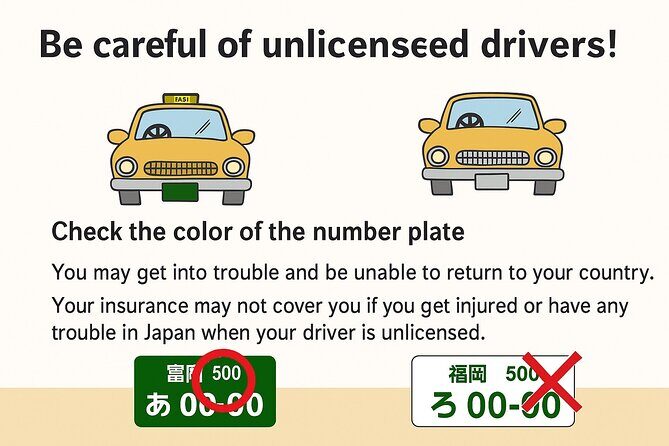
- Licensed green-number driver and a focus on safety and reliability
- Car choice (and an optional Mercedes V-Class upgrade) with Wi-Fi onboard
- Packed sightseeing rhythm with many stops, plus extra costs for entrances and ¥10,000 cash for gas/parking/highway
A fast, well-run day: Kyoto classics plus Nara’s big moments
This is the kind of day trip that feels custom even if you don’t plan much in advance. The format is simple: you’re picked up, driven between neighborhoods, and briefed at each stop by a guide who can switch between English and Japanese when needed. Since it’s private, your group moves as one unit instead of getting split up by train lines, ticket queues, or “who’s meeting us where?” confusion.
And yes, it’s a lot of ground. The itinerary stacks Kyoto’s top icons, then adds scenery spots in the wider Kyoto region, and finally ends in Nara. Each stop is listed at about 15 minutes, which is enough time to see the big picture, take a few photos, and understand what you’re looking at. It’s not enough time to do a slow, hour-long temple wander at every stop. So if your idea of a perfect day includes long, quiet temple breaks, you’ll want to use the customization option to lengthen a couple of favorites and shorten the rest.
You can also read our reviews of more guided tours in Kyoto

Price and value: what you’re really paying for
The price is $459.81 per group (up to 13) for about 10 hours. That means the cost advantage is strongest when you’re traveling with family or friends and can fill the vehicle—exactly the scenario this tour seems built for. For solo travelers, it can still make sense if you hate transit stress or you’re short on time and want to cover a lot in one day, but the “best value” is clearly for groups.
What’s included matters just as much as what’s not:
- Included: private transportation, hotel pickup and drop-off, an English/Japanese local guide, Wi-Fi on board, and a professional licensed driver. There’s also complimentary support for Shinkansen and restaurant reservations.
- Not included: entrance fees, meals, and a cash day-of transport cost for gas/parking/highway fees (¥10,000 per booking).
So the value story is this: you’re paying for time savings and local guidance. In Kyoto and Nara, that often beats trying to stitch together buses, trains, and long walking routes—especially if anyone in your group has limited mobility or you just don’t want to think about logistics all day.
The private car advantage: choose your ride and keep moving
One underrated perk here is the simple relief of not planning every transfer. You’re in an air-conditioned vehicle, you get Wi-Fi, and you have a dedicated driver handling the driving while your guide handles the “what to look for and where to go next” part.
It also helps that the tour can be customized based on your preferences. So if you care more about temples than shopping, or you want extra time for photos in specific areas, you can ask. Since the schedule is tight, that flexibility is practical—not just a nice-to-have.
There’s also a note that you can choose the car you want, with a Mercedes-Benz V-Class available as a higher-cost VIP option. That means your comfort level can scale with your group’s needs, not just your itinerary.
Safety and local reliability: the “green-number driver” focus

Kyoto traffic and parking can turn a day sour fast. This tour leans hard into the reliability factor by using professional licensed drivers and specifically mentions the Green Number system for the vehicle. It also points out that in recent years there has been an increase in accidents involving unlicensed or inexperienced drivers at other companies, and frames their approach around using Japanese guides/drivers.
What this means for you on the ground: fewer surprises. A safe driver plus a guide who knows how to manage timing and meeting points is a big deal when the day runs on a tight rhythm.
Stop-by-stop: what you’ll actually see in Kyoto
Most stops are short, so think of these as guided “spotlight visits.” Here’s how the day plays out, and what each place is best at.
You can also read our reviews of more private tours in Kyoto


Fushimi Inari-taisha: start with the torii tunnel
You’ll begin at Fushimi Inari-taisha, famous for its Senbon Torii—those bright red gates that stack into long tunnel-like corridors up the slope. Even with a limited time window, the key is understanding the layout and why it feels like you’re walking through a living monument rather than a single shrine building. Entrance is listed as free, so it’s a strong value start.
Timing note: this is also the kind of place where crowd flow matters. With a guide, you’re less likely to get stuck in the wrong direction.
Arashiyama: bamboo forest, temple gardens, and river views
Next you head to Arashiyama, the western Kyoto district where nature and heritage blend. The highlight stops are:
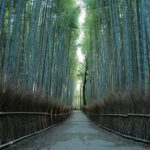
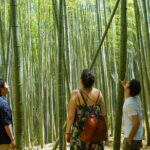
- Arashiyama Bamboo Forest: tall bamboo overhead, a photo-friendly walkway with a calm, almost storybook feel.
- Tenryu-ji Temple: UNESCO site with well-known landscaped gardens. Entrance is not included, so you’ll budget for the ticket if you want to go inside properly.
- Togetsukyo Bridge: famous Katsura River views and great framing for photos, especially in seasonal light.
- Arashiyama Kimono Forest: a modern art installation with many colorful kimono-wrapped pillars that looks magical at night or in evening light, depending on when you arrive.
What I like about bundling these in one section: your brain connects the theme. You don’t just see bamboo; you also see temple grounds, bridge scenery, and an art installation in the same neighborhood—so the “Arashiyama story” sticks.
Sagano Romantic Train and Monkey Park Iwatayama: optional ticket moments
From Arashiyama, the plan includes two experiences where the main activity costs extra:
- Sagano Romantic Train (Sagano Torokko Train) through the Hozugawa Gorge. Entrance is not included, meaning you’ll pay for the ride if it’s part of your plan.
- Monkey Park Iwatayama: a short trail up to see wild Japanese macaques plus panoramic city views. The ticket is listed as not included, and you’ll want decent comfort with walking uphill for it.
These two add the most “experience value” beyond temples. But because your time is tight, you’ll want to be realistic: if you’re traveling with kids, or anyone is easily tired, consider skipping one and using that time for the rest of Arashiyama.
Gion: geisha and maiko culture district atmosphere
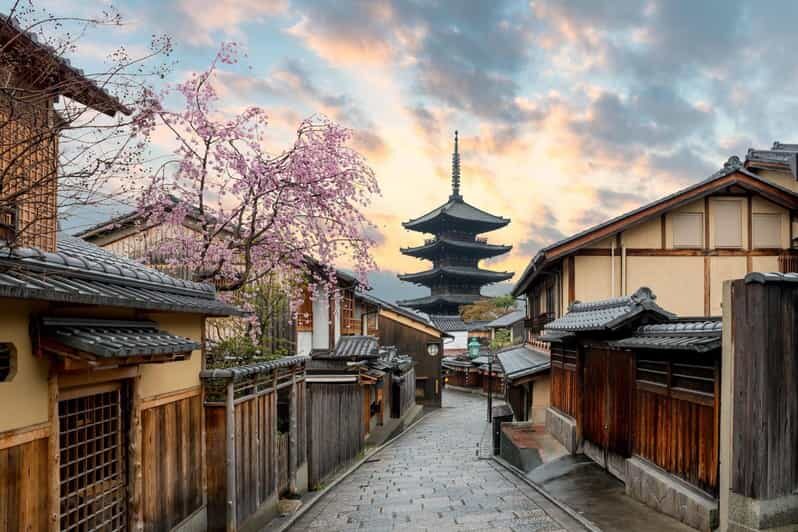
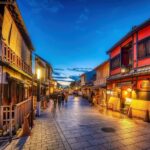
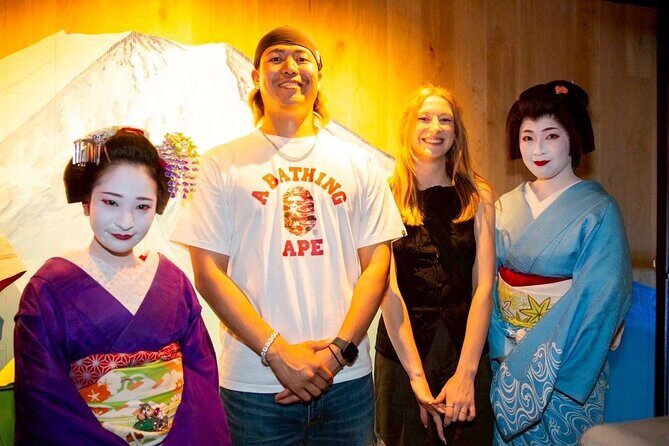
You’ll then move to Gion, Kyoto’s classic traditional district known for geisha and maiko culture. You’ll be in the area for a brief guided stroll, with free entry listed for the stop. Even if you don’t catch performers (they don’t move on a schedule for tourists), the point here is the street-level atmosphere—historic lanes, the feeling of walking through an older Kyoto.
More Kyoto icons: Kinkaku-ji, Kiyomizu-dera, and the Nishiki/Kiyamachi vibe

After Arashiyama, the itinerary keeps threading through Kyoto’s most famous religious and cultural landmarks, plus food-shopping.
Kinkaku-ji and Ginkaku-ji: the Golden and Silver Pavilion contrast
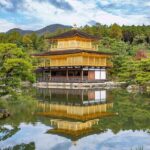
You’ll hit Kinkaku-ji (Golden Pavilion) and Ginkaku-ji (Silver Pavilion). Both are iconic, and the pairing helps you compare styles: one is about visual impact, the other about refined simplicity and garden mood. Entrance is not included for both, so plan for tickets.
If you only have energy for one pavilion, pick based on your taste. If you love dramatic sights, do Golden. If you prefer subtle garden aesthetics, choose Silver. With a private guide, you can also ask what’s most worth entering based on your time and where you’re standing for the best views.
Kiyomizu-dera: UNESCO scale and that famous stage
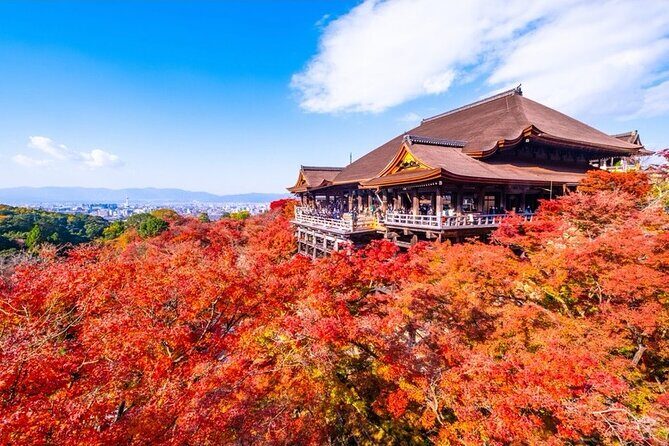
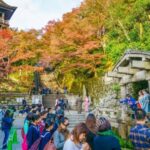
Next is Kiyomizu-dera, a UNESCO World Heritage site. It’s known for the grand wooden stage (Kiyomizu no Butai), which projects out dramatically over the grounds. Entrance is not included, so tickets matter here.
With only about 15 minutes, your best strategy is to use your guide’s direction to see the key platform area first, then decide if you want to go deeper inside.
Nishiki Market: Kyoto’s kitchen stop
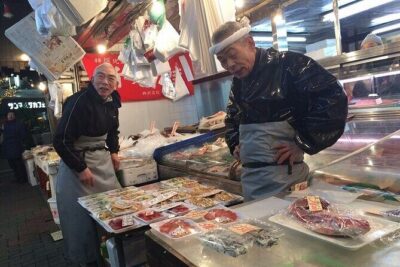
Between temples, you get Nishiki Market, often called Kyoto’s Kitchen because it’s lined with stalls and shops selling a huge range of foods and ingredients. This stop is listed as free, which makes it a solid place to spend money without buying another ticket. You can treat it as a snack-and-stroll break, and you’ll still feel like you’re experiencing Kyoto, not just walking through it.
Yasaka Shrine and Chion-in: shrine lantern energy and big gate scale
You’ll also visit Yasaka Shrine with its lively Gion Matsuri connection and famous lantern atmosphere, plus Chion-in Temple, known for its massive Sanmon Gate—described as the largest wooden gate in Japan. Yasaka is free; Chion-in is listed as free. For both, the value is in the atmosphere: the way crowds and lights move through the grounds.
Sanjusangendo and Nijo Castle: long hall wonder and shogun-era architecture
Two more notable stops round out the Kyoto portion:
- Sanjusangendo (Rengeo-in): famous for the long wooden hall stretching 120 meters and the sight of 1,001 life-size statues.
- Nijo Castle: UNESCO site tied to shogun Tokugawa Ieyasu’s Kyoto residence, known for palace buildings, gardens, and the castle’s overall structure.
Both have entrance fees not included. If tickets feel like a hassle, you can still appreciate the exterior and the guided context, but to get the full impact, plan to pay.
When Kyoto turns into scenery: Amanohashidate and Ine no Funaya
This tour doesn’t stop at the usual Kyoto-only list. It includes scenic stops around Amanohashidate and Ine no Funaya, which are outside the standard city highlights.
- Amanohashidate: one of Japan’s Three Scenic Views, a 3.6 km sandbar often called the Bridge to Heaven.
- Ine no Funaya: a fishing village known for funaya—traditional wooden boathouses built directly on the water.
- Amanohashidate View Land: a view area along the sandbar region, described with nearly 5,000 pine trees.
Why I like this addition: it gives your day a nature reset between dense temple stops. The drawback is obvious: this kind of scenery requires time and driving. If you’re the type who wants only major monuments in Kyoto and Nara and hates long transit, you might prefer a more strictly city-focused variation. That’s where customization comes in.
The Nara payoff: deer park, Todai-ji, Kasuga lanterns, and a famous pagoda

After Kyoto’s heavy hitters, the tour shifts to Nara’s core sights, where the scale is different and the atmosphere feels more open.
Nara Park: the deer meet you at the edges
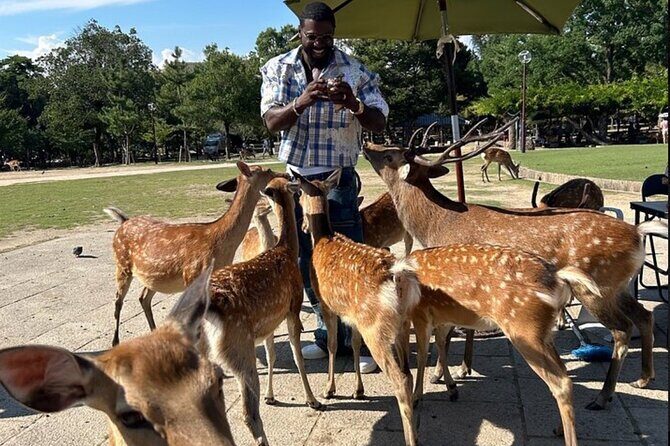
You’ll arrive at Nara Park, known for over 1,000 freely roaming deer and for being in Nara’s ancient capital area. Entrance is listed as free. Even in 15 minutes, the deer-and-shrine vibe is unmistakable—and it’s a great place to get a breather before the big temples.
Todai-ji: the Great Buddha Hall moment
Next is Todai-ji Temple, UNESCO and one of Japan’s most historically significant temple sites. The main star is the Daibutsuden, the Great Buddha Hall housing a massive bronze Buddha. Entrance is not included, so budget for the ticket if you want to see the hall properly.
If you like “one big wow moment” at the end of a day, this is it.
Kasuga Grand Shrine: lantern walls in miniature chaos
Then Kasuga Taisha: UNESCO, founded in the 8th century, and famous for hundreds of bronze and stone lanterns. Tickets are listed as not included for this stop. The key here is the feeling of stepping into a shrine world where light and stone lanterns create a glow-like atmosphere even during daytime.
Kofuku-ji: five-story pagoda still dominates
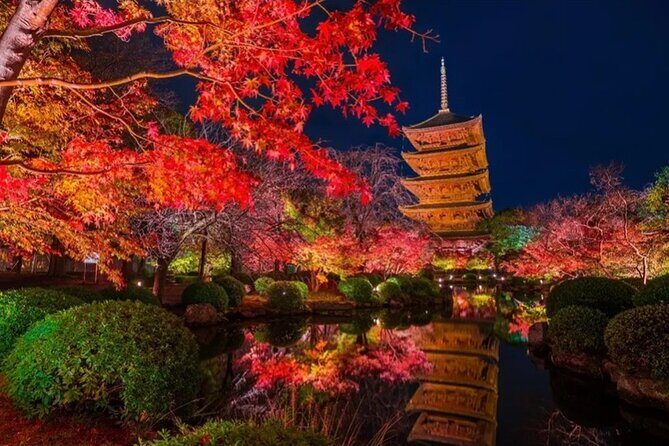
The last major Nara stop is Kofuku-ji Temple, known for the five-story pagoda. Again, entrance fees are not included. It’s a classic “Nara silhouette” moment—exactly the kind of landmark that photographs well even if your time is brief.
Who this tour is best for (and who should think twice)
This tour is a strong fit if:
- You’re traveling with family, kids, or older relatives and want less transit friction
- You want a guided day that covers Kyoto and Nara sights in one go
- You value safety, clear navigation, and someone handling the schedule
- Your group likes a mix of temples, food shopping, and scenic viewpoints
Think twice if:
- You want deep time at temples (this day is quick at many stops)
- You hate additional costs like entrance tickets and the cash day-of transport charge
- You’re traveling with very young kids or anyone who can’t handle repeated short walks and occasional uphill spots (like Monkey Park)
Small costs to plan for (so your day stays easy)
Even though it’s a private tour, there are extra spend categories you should expect:
- Entrance fees for stops marked as not included (most of the major temples/attractions)
- Meals (not included)
- ¥10,000 cash on the tour day for gas, parking, and highway fees per booking
- Optional add-on: Kansai Airport transfer (extra fee option)
- Optional upgrade: Mercedes V-Class (high-cost option)
If you budget for those ahead of time, the day feels smoother and you won’t get that mid-tour surprise feeling.
Should you book this private car Kyoto and Nara tour?
I’d book it if you want maximum sightseeing with minimum stress—and you’re okay with short, guided visits rather than slow museum-style time. The standout strengths are the private car comfort, the English-and-Japanese local guide format, and the safety emphasis around a licensed green-number driver. For groups up to 13, the value is especially strong because the transportation cost is spread out.
I’d pass or at least customize heavily if your top priority is lingering at a smaller number of places. The itinerary is packed, and while the guide can steer you toward what matters most, you’ll still be moving through a lot in about 10 hours.
If you want, tell me your travel month and who’s in your group (ages, interests). I can suggest which stops are worth ticketing hardest and which ones you can safely treat as quick photo stops.
FAQ
How long is the Kyoto and Nara private car tour?
It’s about 10 hours.
What is included in the tour price?
You get hotel pickup and drop-off, an English and Japanese speaking local guide, a private vehicle with a professional licensed driver, Wi-Fi onboard, and complimentary support for Shinkansen and restaurant reservations. Mobile tickets are also used. Entrance fees and meals are not included.
Are entrance fees included for temples and attractions?
No. Entrance fees are not included for the stops that list admission as not included.
Do we travel in a group or is it private?
It’s private. Only your group participates.
What extra costs should I expect on the day of the tour?
Gas, parking, and highway fees are collected in Japanese yen cash on the tour day: ¥10,000 per booking. Some attractions also require tickets that are not included. A Kansai Airport transfer is available as an extra fee option.
Is pickup available?
Yes, pickup is offered, and the tour includes hotel pick-up and drop-off.