REVIEW · HIROSHIMA
Hiroshima’s Historic Walk Private Tour: Castle, Dome & Peace Park
Book on Viator →Operated by Opatrip.com Japan · Bookable on Viator
Two hours can change how you see Hiroshima. This private historic walk strings together Hiroshima’s key memorial sites with a local guide and just enough time at each stop to understand what you’re looking at. You start at the castle, then move through prayer, remembrance, and reflection at the dome and Peace Memorial Park.
I especially like the tight, efficient timing: about 30 minutes per stop. That means you still get city views from Hiroshima Castle, a calm moment at Hiroshima Gokoku Shrine, and the emotional weight of the Atomic Bomb Dome and Peace Memorial Park without spending your whole day in transit. I also like that guides use clear context and side-notes that help the story land faster, like the feedback about guides Waleed and Kumiko being effective and attentive to what people need in the moment.
The main drawback is simple: it’s a short walk. If you want to linger longer in museums or take lots of photos at each landmark, you may feel a little rushed on a busy day, and crowd conditions can affect how smooth each stop feels.
In This Review
- Key highlights you’ll feel in real time
- What this Hiroshima Historic Walk really delivers in 2 hours
- Start at Hiroshima Castle: museum first, then the views
- Hiroshima Gokoku Shrine: the quiet pause that changes the mood
- Atomic Bomb Dome: how to make 30 minutes feel like more
- Peace Memorial Park: moving walking time and meaningful stops
- Pacing that works: 4 stops, no wandering, just meaning
- Price and value: $445.87 per person, plus a small castle fee
- Who should book this tour (and who might want more time)
- Practical expectations: what to know before you go
- Should you book Hiroshima’s Historic Walk Private Tour?
- FAQ
- How long is the Hiroshima’s Historic Walk Private Tour?
- Where does the tour start and end?
- Is this a private tour?
- What is included in the tour price?
- What is not included?
- Which stops are part of the tour?
- Is admission required at every stop?
- Do I need to bring a ticket, or do I get a mobile ticket?
- When should I book?
- What’s the cancellation policy?
Key highlights you’ll feel in real time

- Private guide, private pace so you can ask questions and keep moving without merging into a big crowd
- 30 minutes per major landmark keeps the itinerary focused and avoids the usual time-waster problem
- Hiroshima Castle city views plus samurai-culture museum time gives you contrast before the memorial sites
- Hiroshima Gokoku Shrine as a reflective reset before you reach the Atomic Bomb Dome
- Dome and Peace Memorial Park in one continuous story so the meaning connects as you walk
- Mobile ticket helps you manage day-of logistics without fuss
What this Hiroshima Historic Walk really delivers in 2 hours
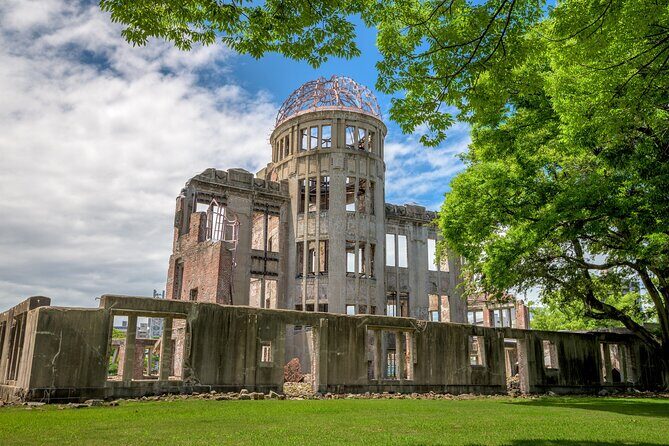
This is a private, end-to-end walking experience designed for one goal: comprehension. You’re not just checking boxes. You’re walking through a chain of places that each carry a different message, and your guide helps you read them in order.
You’ll cover four major stops with roughly 30 minutes at each. The route makes sense geographically and emotionally: start with Hiroshima Castle and its viewpoint, then shift to spiritual remembrance at Hiroshima Gokoku Shrine, move into the shock and silence of the Atomic Bomb Dome, and finish with the calm, formal space of Peace Memorial Park.
The tour is listed for about 2 hours, but “about” matters. If the area is crowded, if you pause for questions, or if you need extra time near the memorial sites, your guide may adjust what you can comfortably do within the block of time.
You can also read our reviews of more walking tours in Hiroshima
Start at Hiroshima Castle: museum first, then the views
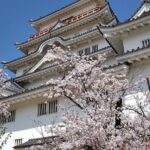
Your tour meeting point is at Hiroshima Castle (21-1 Motomachi, Naka Ward, Hiroshima). From there, the first stop is Hiroshima Castle itself, where you’ll have about 30 minutes. What I like here is the setup: the castle gives you a visual anchor for the city and a culture layer before you reach the memorial sites.
The castle visit includes a museum with samurai culture, plus the chance to see the city from the tower. Even if you’re not a museum person, a small museum stop like this works because it changes the tone. You go from “place on a map” to “place with cultural context,” which makes the later stops feel less like an isolated tragedy and more like part of Hiroshima’s continuing story.
A practical consideration: the castle admission fee is not included (listed as 2.5 USD). If you’re paying cash or planning how you’ll handle small extras, keep this in mind so it doesn’t slow you down on arrival.
Hiroshima Gokoku Shrine: the quiet pause that changes the mood
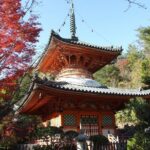
Next up is Hiroshima Gokoku Shrine. The time budget is also about 30 minutes, and admission is free. This stop is important because it breaks the emotional momentum in a good way.
The shrine is described as a symbol of peace and remembrance, and it’s set up as a serene retreat right in the heart of Hiroshima. I think that detail matters: you’re not walking straight from the castle into the heaviest memorial site. You get a slower, more reflective step where you can settle your thoughts and let your brain catch up to what comes next.
In a tour like this, those small tone shifts are not fluff. They shape how you perceive the dome and the park. If you skip over the “pause” feeling, the memorial sites can come at you like a wall. A shrine stop helps you approach the rest with more awareness and less shock.
Atomic Bomb Dome: how to make 30 minutes feel like more

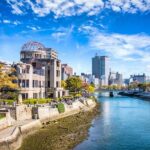
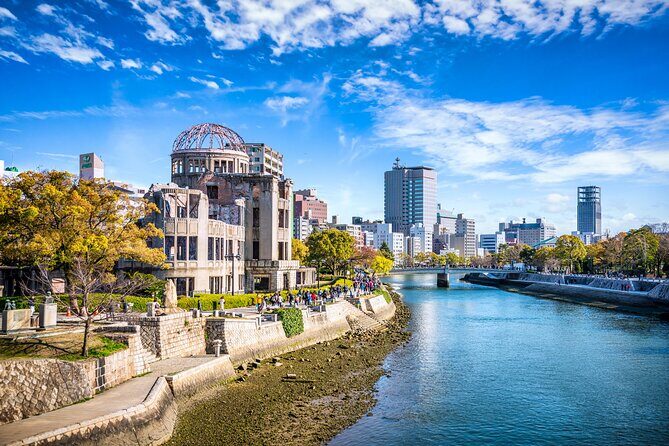
Then you reach the Atomic Bomb Dome, and the schedule stays tight: about 30 minutes. Admission is free, and it’s UNESCO-listed. Your guide will help you see it not as a photo backdrop, but as a poignant reminder of the tragedies of war and the enduring hope for peace.
This is the part where pacing becomes your friend. In 30 minutes, you can do two things well: (1) look carefully and take in the structure and surroundings, and (2) understand the context behind why this specific landmark remains so powerful. Without guidance, it’s easy to feel like you’re just standing there staring. With guidance, you’re standing there with a clearer set of questions.
A consideration: because it’s a globally recognized memorial site, it can get busy. If the crowd is thick, you may have less room to linger exactly where you want. The upside is that your guide can help you adjust your focus so you still feel the meaning even if you can’t stay in the same spot for long.
Peace Memorial Park: moving walking time and meaningful stops
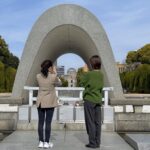
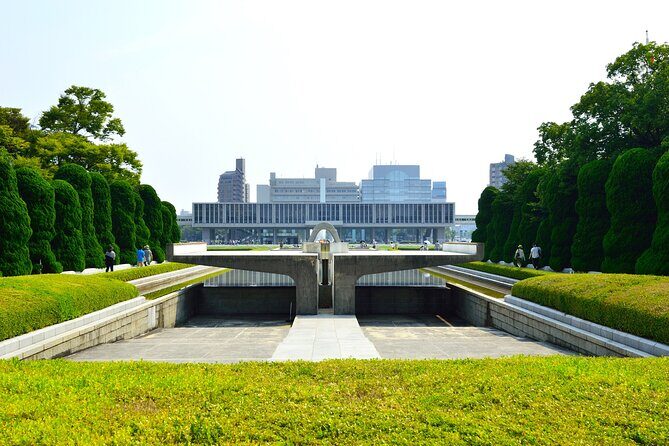
The tour ends at Peace Memorial Park (1 Nakajimacho, Naka Ward, Hiroshima). Before you finish, you’ll have about 30 minutes here as well, and admission is free.
Peace Memorial Park is presented as a thoughtfully maintained space dedicated to remembering atomic bomb victims. I like finishing at the park because it’s built for reflection rather than quick viewing. You’re not rushing through another viewpoint. You’re walking through a designed environment for remembrance.
If you like how your tour feels emotionally directed, this stop is where that happens. In the feedback, guide Kumiko is highlighted for being obliging and guiding people effectively through the museum, gardens, and memorials in the park area, including helping choose a transport approach when needed. That kind of practical guidance makes a big difference in a place where you might otherwise feel you have to figure everything out on your own.
One practical note: the park portion includes walking through multiple areas. If your energy is limited that day, it’s worth telling your guide early. Private tours work best when you set expectations up front.
You can also read our reviews of more private tours in Hiroshima



Pacing that works: 4 stops, no wandering, just meaning
The itinerary structure is simple: four major stops, four short blocks. Each one is timed for about half an hour, with the main idea that you’ll keep the storyline continuous.
This pacing is a value decision. You’re paying for a guide and a focused route, not for hours of open-ended wandering. It also means you can fit this into a Hiroshima day without sacrificing the rest of your schedule.
Still, I’d plan some flexibility. Crowds, your own photo habits, and how long you want to read signage can add minutes quickly. The tour information also notes that availability and accessibility of attractions may vary depending on time of day and crowd conditions. So think of the 2-hour plan as a strong framework, not a rigid checklist.
Price and value: $445.87 per person, plus a small castle fee
At $445.87 per person, this is not a bargain tour. It’s a premium private experience, and the value comes from what’s included: a professional local guide and a private group setup that only includes your party.
The short duration (about 2 hours) also changes the math. You’re paying for focused guidance and efficient route planning, not for a full-day tour spread across multiple neighborhoods. If you’re the type of traveler who hates piecing together sites with apps and bus schedules, that’s where this pays off.
Here’s where the on-the-ground costs are clear: Hiroshima Castle’s entrance fee is not included (listed as 2.5 USD). The other stops—Hiroshima Gokoku Shrine, Atomic Bomb Dome, and Peace Memorial Park—are listed as free admission. So you’re mostly paying for the guide experience and the private, timed walking route.
If you’re traveling solo, the cost can feel steep, but privacy often matters most at sites like the dome and park, where you may want to ask questions or pause without feeling rushed. If you’re traveling with a small group, it can feel more reasonable because you’re splitting the private-guide benefit across people.
Who should book this tour (and who might want more time)
This tour is a strong match if you want structure. You like having someone help you connect the dots between Hiroshima’s castle symbolism, the spiritual remembrance at a shrine, and the direct memorial meaning at the dome and park.
You’ll also like it if you appreciate a guide who explains things clearly and adds side-notes that make history easier to hold. The feedback you provided points to guides who are effective at presenting context quickly, and that’s exactly what you need in a 2-hour format.
On the flip side, if your ideal pace is slow, you might want a longer visit. The short time at each stop means you may not fully explore every exhibit detail in the castle museum or spend long minutes in every memorial area. In that case, you’ll get a powerful overview, but you might crave a second pass later.
Practical expectations: what to know before you go
A few things to plan around based on the tour info:
- It’s a private tour, so only your group participates.
- You’ll receive confirmation at booking time.
- You can use a mobile ticket.
- The start is at Hiroshima Castle, and you finish at Peace Memorial Park.
- It’s near public transportation, which helps if you’re mixing this with other plans.
Because admission at three of the four stops is free, your main day-of cost is the castle ticket. And because the tour is private and guided, you’re not left wrestling with timing on your own.
Should you book Hiroshima’s Historic Walk Private Tour?
If you want a guided, focused route that respects Hiroshima’s memorial meaning, I think this is a smart booking. The biggest win is how the guide helps you connect each stop into one coherent story, while the 2-hour structure keeps you from getting lost in logistics.
I’d book it if:
- you have limited time in Hiroshima
- you prefer a private guide over self-guided hopping
- you want context delivered in a clear order
- you’d rather pay for efficiency than spend your day figuring out timing
I’d hesitate if:
- you want to spend long stretches in museums or quiet corners without a clock
- you’re traveling during peak crowd times and need lots of flexibility
- you’re hoping for an all-day immersion rather than a sharp overview
Overall, this is not a slow burn. It’s a well-paced walk with real guidance—exactly the kind of tour that makes a short visit count.
FAQ
How long is the Hiroshima’s Historic Walk Private Tour?
It’s listed as about 2 hours.
Where does the tour start and end?
It starts at Hiroshima Castle (21-1 Motomachi, Naka Ward, Hiroshima) and ends at Peace Memorial Park (1 Nakajimacho, Naka Ward, Hiroshima).
Is this a private tour?
Yes. It’s a private tour/activity, and only your group participates.
What is included in the tour price?
Included: professional local guide services.
What is not included?
Hiroshima Castle entrance fee is not included (2.5 USD).
Which stops are part of the tour?
Hiroshima Castle, Hiroshima Gokoku Shrine, Atomic Bomb Dome, and Peace Memorial Park – Hiroshima.
Is admission required at every stop?
No. Hiroshima Gokoku Shrine, Atomic Bomb Dome, and Peace Memorial Park are listed as free. Hiroshima Castle admission is not included.
Do I need to bring a ticket, or do I get a mobile ticket?
You get a mobile ticket.
When should I book?
On average, it’s booked about 23 days in advance.
What’s the cancellation policy?
It’s non-refundable and cannot be changed for any reason. If you cancel or request an amendment, the amount paid is not refunded.