REVIEW · TOKYO
Kamakura Great Buddha and Enoshima with hotel Pickup small group
Book on Viator →Operated by QHTravel · Bookable on Viator
Two coasts in one day: that works. This small-group route strings together Kamakura legends, the Enoshima island mood, and even a couple of Slam Dunk–style photo stops.
I especially like the smooth, low-stress logistics for a long day: air-conditioned transport, an early start from Tokyo Station, and time built in so you can walk, shop, and take photos without feeling herded. I also like the driver-led support, including a kind, professional driver such as Mr. Alex, who keeps everything running on time.
One thing to plan for: this is not a full guided lecture. The driver/guide offers basic English help and directions, but you shouldn’t expect in-depth explanations at every stop, and lunch is not included.
In This Review
- Key points to know before you go
- A Stress-Free Way to See Kamakura and Enoshima from Tokyo
- Enoshima Island: Two Hours to Walk, Look, and Feel the Sea Air
- Kamakura High School and Slam Dunk Magic (Without the Full-Day Detour)
- The Enoden Streetcar Ride: A Short Detour Worth Keeping
- Tsurugaoka Hachimangu Shrine: The Day’s Cultural Anchor
- Kotoku-in and the Great Buddha: The Main Event (Plus a Small Extra Fee)
- Driver vs. Guide: What English Support Looks Like Here
- Timing and Pacing: A Full Day That Doesn’t Feel Like a Sprint
- Enrich Your Day Without Overplanning: What to Read Before You Go
- Price and Value: Is $15 Really Enough?
- Who This Tour Suits Best (and Who Might Want More Guidance)
- Should You Book This Kamakura Great Buddha and Enoshima Tour?
Key points to know before you go
- Enoshima Island (2 hours, free entry) gives you room to wander at your own pace instead of sprinting through.
- Slam Dunk fandom stop at Kamakura High School is quick but easy to hit if you know what you’re looking for.
- The Enoden streetcar ride is a built-in way to see the Shonan coast town vibe during the day.
- Tsurugaoka Hachimangu Shrine (1.5 hours, free) is one of Kamakura’s big cultural anchors with time to slow down.
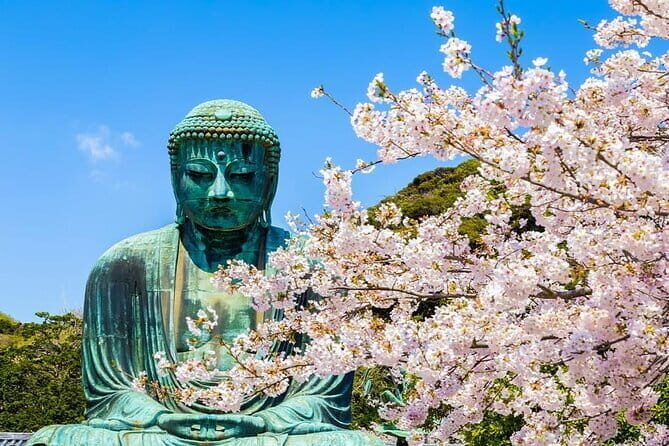
- Kotoku-in and the Great Buddha are the centerpiece, but you should expect a small extra entrance fee.
A Stress-Free Way to See Kamakura and Enoshima from Tokyo
If you want a full day outside Tokyo without the hassle of figuring out trains and transfers on your own, this tour fits the bill. It runs about 10 hours and keeps the day tightly organized across the best-known sights in Kamakura and Enoshima.
You’ll start at Tokyo Station (Marunouchi North Gate Dome, 1-chōme-9-1). If you choose the hotel pickup option, you’re collected from your hotel or B&B and brought to the tour’s meeting point before you head out. The tour is a non-private shuttle bus with a guide/driver who provides essential support, so the structure is there, but you still move at your own pace once you arrive.
This matters because Kamakura and Enoshima can eat up time fast—stations are spread out, and walking routes between temples and viewpoints add up. Here, you get one planned route and a vehicle that does the between-stop work.
You can also read our reviews of more tours and experiences in Tokyo.



Enoshima Island: Two Hours to Walk, Look, and Feel the Sea Air
The day starts on Enoshima Island for about 2 hours, and the island admission is listed as free. This is the part of the trip where you can shift from city pace to coastal wandering without needing tickets for multiple attractions.
What you should expect from this stop is simple: time outdoors, sea views, and the chance to browse around the island area at a comfortable speed. Because the tour format gives you room to explore on your own, you can focus on what you want—photos, snacks, souvenir browsing, or just lingering on the path.
A practical tip: Enoshima is popular and often busy. Going in with a light plan helps—choose a couple of viewpoints you care about, then let the rest happen naturally.
Also note: the tour is listed as requiring good weather. If the day is rainy or miserable, the schedule can be affected, so check conditions before you go and pack accordingly.
Kamakura High School and Slam Dunk Magic (Without the Full-Day Detour)
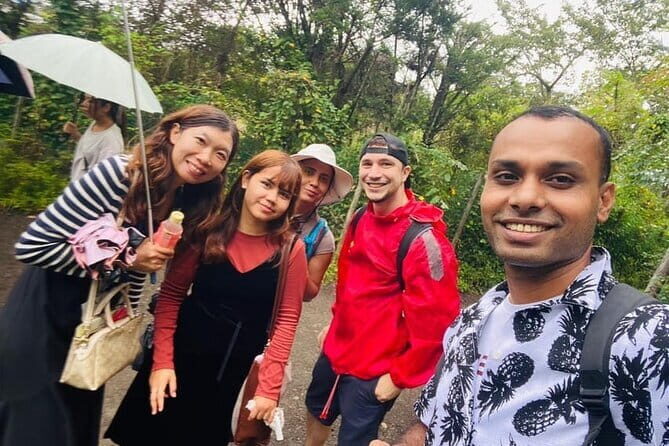
Next up is a 30-minute stop at Kamakura High School, a model location fans connect to the Slam Dunk series. Admission is free, and the time window is short by design.
This is a good stop if you enjoy a quick photo mission and then want to get back to the larger, more meaningful sites. It’s also handy if you’re traveling with mixed interests: anime and culture both have a place here, and the schedule doesn’t let one theme stretch the whole day.
Since the stop is brief, you’ll want to arrive ready to act. Think about what you want to capture—street scenes near the station area tend to be where people aim their cameras—then move on. This is not the kind of location where you want to lose time.
The Enoden Streetcar Ride: A Short Detour Worth Keeping
A standout in this itinerary is the Enoden streetcar. You’ll spend about 20 minutes around the Enoden Bus Kamakura Office area, with train tickets included, and the point is to let you experience that coastal tram feel instead of only riding buses and walking on foot.
The appeal here is how the Enoden line links towns and famous viewpoints along the Shonan area. Even if you’re not a transit nerd, the ride gives you a visual break—windows, movement, and a different rhythm than temples and shrine gates.
What I like about including this: it’s a small chunk of time that makes the day feel more like a local journey. It also breaks up the longer stretches of sightseeing so you don’t feel stuck in one mode all day.
Tsurugaoka Hachimangu Shrine: The Day’s Cultural Anchor
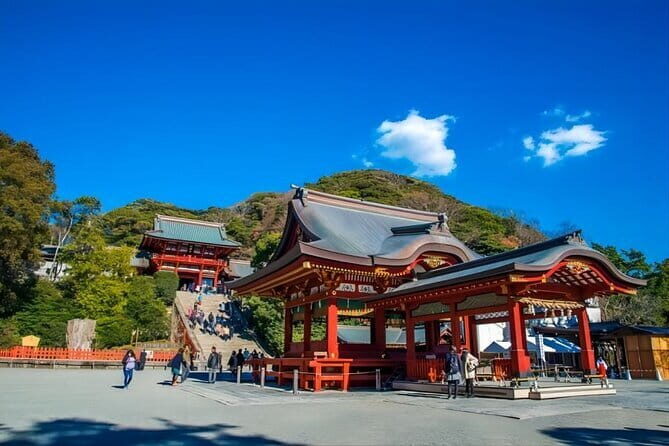
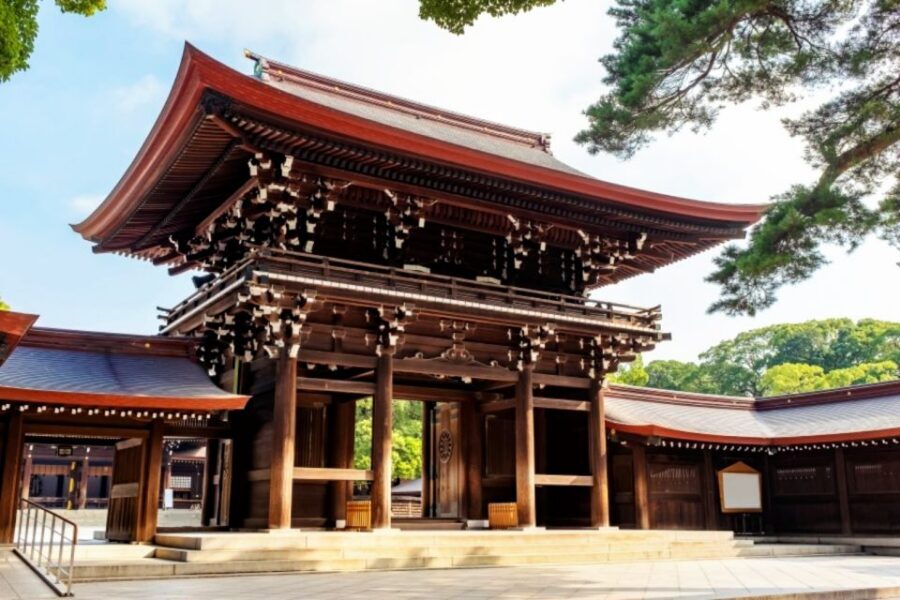
Tsurugaoka Hachimangu Shrine is scheduled for 1 hour 30 minutes, and admission is free. This is one of Kamakura’s major shrines, with roots tied to the 12th century and the Minamoto era.
What makes this stop satisfying is the scale. You get enough time to take in the main shrine area, slow down for photos, and walk through the approaches without feeling squeezed. In a day trip that’s already packed, a free shrine stop with solid time is a good use of your schedule.
The shrine setting also helps you understand why Kamakura became such a magnet for pilgrims and history-minded travelers. Even without a deep lecture, the atmosphere carries the story: long paths, ceremonial space, and the sense of tradition that’s hard to recreate elsewhere.
If you’re sensitive to crowds, aim to spend your first few minutes getting your bearings before you settle into slower pacing for photos.





Kotoku-in and the Great Buddha: The Main Event (Plus a Small Extra Fee)
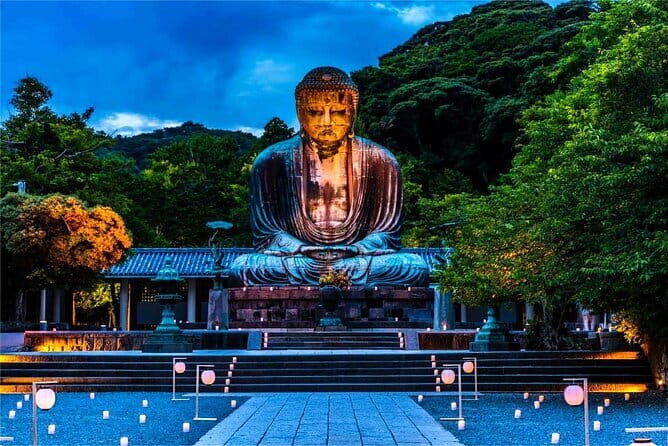
The final major sight is Kotoku-in Temple and the famous Great Buddha of Kamakura. You’ll have about 40 minutes here, and the bronze Amitabha Buddha statue is the headliner.
Important money note: the Great Buddha entrance is listed as not included, and the additional cost is $2.1. That means your all-in budget is a little higher than the headline price, but it’s still a low-cost add-on compared with the transport and time you get from Tokyo.
This is the stop where you’ll feel the power of scale. Even with a tight schedule, walking in and seeing the statue up close tends to be the moment people remember most. The temple area also offers photo opportunities, but you’ll want to manage your time so you don’t get stuck in bottlenecks right at the entrance.
Practical tip: if you care about photos, arrive ready to shoot quickly and then move around. Some angles fill fast, especially when crowds peak.
Driver vs. Guide: What English Support Looks Like Here
This tour is set up as non-private shuttle service. The driver/guide provides basic English guidance, but they’re not positioned as a deep explanation guide for each attraction. You’re free to explore once you’re at the stops.
That difference matters. If what you want is a full narrative—who built what, why this shrine matters in detail, and how legends connect—this format may feel a bit light. If you want an efficient day with directions, checkpoints, and enough independence to enjoy the places yourself, this is a good fit.
The reviews highlight that the driver experience can be a strong point. One example in the notes is Mr. Alex, described as kind and professional, and specifically praised for being punctual and for directing people to the right places to meet again.
So think of this as: transportation + help + structure. You bring curiosity, and the day gives you the sights.
Timing and Pacing: A Full Day That Doesn’t Feel Like a Sprint
The itinerary is compact in the best way. You have multiple time blocks that are short enough to keep momentum, but not so short you feel trapped.
- Enoshima (2 hours) gives you breathing room.
- High School (30 minutes) is quick and focused.
- Enoden (20 minutes) adds variety.
- Tsurugaoka Hachimangu (1.5 hours) balances the spiritual side with space to walk.
- Great Buddha (40 minutes) is enough to see it properly and still have time to move on.
The key is that you’re not doing constant rush-and-wait cycles. You move from one anchor stop to the next, and you’re free to take breaks in each place rather than staying strapped to a single narrative track.
Lunch is not included, which you should plan for. With a day like this, I suggest you treat food as a flexible part of your schedule—grab something simple near the places you’re already passing so you don’t lose time hunting.
Enrich Your Day Without Overplanning: What to Read Before You Go
Because the guide support is described as basic, you’ll enjoy the day more if you come in with a small starter pack. You don’t need to study for weeks, but knowing the basics helps you notice details as you walk.
A good quick pre-read can cover:
- Why the Great Buddha at Kotoku-in is such an icon in Pure Land Buddhism.
- What the Minamoto connection means for Tsurugaoka Hachimangu Shrine.
- The general “Slam Dunk pilgrimage” idea around Kamakura High School.
You’ll still be able to enjoy the sights without prep. But a little knowledge lets you connect the dots faster—especially at the shrine and temple.
Price and Value: Is $15 Really Enough?
Let’s talk value honestly. At $15 per person, this is a bargain for a full 10-hour day trip from Tokyo that includes air-conditioned transport and complimentary train tickets (for the Enoden portion). You’re also getting a planned route across multiple top locations without needing to assemble train schedules yourself.
However, two costs can add up:
- Great Buddha entrance is extra at $2.1.
- Lunch is not included.
Even with those, the total cost stays low compared with many tours that charge more for fewer stops. The real “cost” here is that you’re buying efficiency and access, not a deep guide-led history course.
If you’re the type who likes to explore independently and you value great logistics more than constant explanation, the pricing makes a lot of sense.
If you want intensive guided storytelling at every stop, you might feel you’re paying for transport more than narration. In that case, consider whether you’d prefer a tour type that leans more into guided explanations.
Who This Tour Suits Best (and Who Might Want More Guidance)
I’d point this tour toward you if:
- You have one day and want Kamakura + Enoshima highlights in a single run.
- You want easy independence at stops, not a nonstop lecture.
- You’re a Slam Dunk fan and you want a quick, practical way to hit the Kamakura High School connection.
- You like the idea of riding the Enoden streetcar and seeing Shonan-town rhythm from the window.
It may not be the best match if:
- You’re expecting a fully guided, in-depth cultural breakdown at each attraction.
- You want long, unhurried time at just one site (this itinerary is built for coverage).
The good news: even with basic guidance, you’re still at the right places. You just supply the extra curiosity yourself.
Should You Book This Kamakura Great Buddha and Enoshima Tour?
Book it if you want a structured, budget-friendly day that hits the big-name Kamakura sights plus Enoshima’s coastal mood, with an included Enoden ride and just enough time to enjoy each location. The standout for many people is the balanced schedule: long enough to see things, short enough to keep the day moving.
Don’t book it if what you really want is a history-heavy guided experience throughout the day. This tour is more about getting you there smoothly, giving you directions, and letting you explore.
If you’re on a tight schedule in Tokyo and you want a classic day trip that feels local—temples, shrine grounds, tram views, and coastal walking—this one is a strong choice.