
REVIEW · TOKYO
Discover Japanese Umami: Onigiri & Dashi Masterclass in Tokyo
Book on Viator →Operated by 割烹道 · Bookable on Viator
Japanese food starts with one quiet ingredient: dashi. This class is interesting because you actually watch dashi being made, taste kombi, bonito, and blended stock side by side, then build your own lunch around that flavor. I love how hands-on it is, and I also like the fact that the instruction is clear enough to make you confident recreating Japanese tastes at home. One possible drawback: this is a focused 2-hour workshop, so it’s not the kind of tour where you wander Tokyo for long or eat a huge variety of unrelated dishes.
You’ll meet at the Kappodo HQ / Tokyo D kitchen Studio in Nishiazabu, and you’ll leave with a printed recipe set plus Japanese seasonings so the flavors don’t fade after the class. With a small max group size of 8 and English guidance, it’s built for learning, not just watching. If you hate sake or alcohol, note that there’s a Kappodo original sake tasting included, though it’s described as a tasting rather than a full drink service.
In This Review
- Key Points You’ll Care About
- Why Dashi and Umami Belong at the Start of Your Japan Trip
- The Kombu, Katsuobushi, and Awase Lesson (Plus the Tasting That Makes It Click)
- Miso Soup and Side Dishes: Learn Washoku Without the Guesswork
- Dashimaki Tamago on a Rectangular Pan: Rolling Texture Like Japan
- Shaping Onigiri with Classic Fillings: Hand Skills You Can Actually Use
- Alcohol Tasting: Kappodo Original Sake, Included
- Price and Value in Tokyo: Is $129.49 Actually Fair?
- Getting There in Nishiazabu and How the Group Format Works
- What You’ll Take Home (Besides Lunch)
- Who This Workshop Fits Best
- Should You Book This Dashi and Onigiri Masterclass?
- FAQ
- How long is the masterclass?
- What is the meeting time?
- Where does the class take place?
- Is prior cooking experience required?
- Will I understand the lesson if I don’t speak Japanese?
- How many people are in the group?
- What’s included in the price?
- What’s not included?
- Do I get anything to take home?
- What’s the cancellation policy?
Key Points You’ll Care About
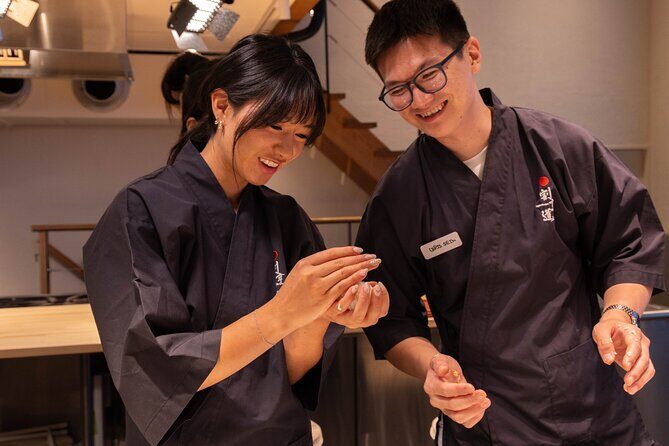
- Three-dashi comparison in real time: kombu, katsuobushi, and awase, tasted side by side.
- Umami made practical: you learn how savory taste works, not just what ingredients to buy.
- Hands-on lunch: onigiri shaping plus dashimaki tamago on a traditional rectangular pan.
- Washoku rhythm: miso soup and side dishes are shown with plate-ready technique.
- Small group, English instruction: max 8 travelers helps questions land and stick.
- Take-home tools: printed recipes and Japanese seasonings to recreate what you learn.
Why Dashi and Umami Belong at the Start of Your Japan Trip
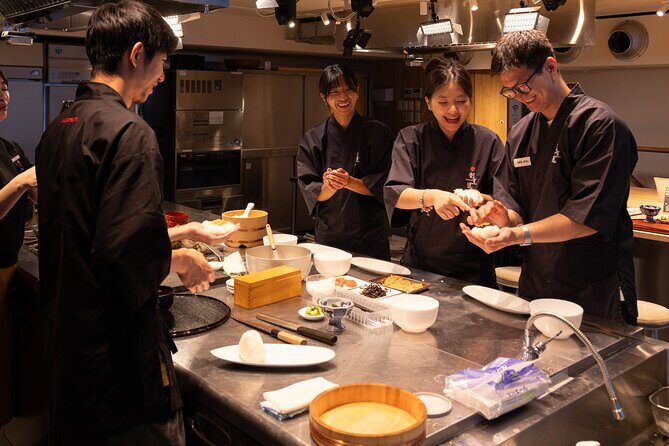
If Japan has a flavor superpower, it’s umami. Dashi is the engine that turns that umami on, whether it’s in soup, simmered dishes, or a simple rice ball filling. What makes this workshop especially useful is the structure: you start with the fundamentals, then you cook with the results right away.
I like that you’re not just handed a list of ingredients. You get to see how the three main dashi styles are made and then taste them in a controlled way. That matters because umami can feel mysterious until you can compare it with your own mouth.
The other thing I appreciate is the learning pace. The class is short enough to stay fun, but it’s packed with clear steps—dashi, miso soup and sides, dashimaki tamago, and then onigiri. You’ll be busy, but not confused.
You can also read our reviews of more tours and experiences in Tokyo.



The Kombu, Katsuobushi, and Awase Lesson (Plus the Tasting That Makes It Click)
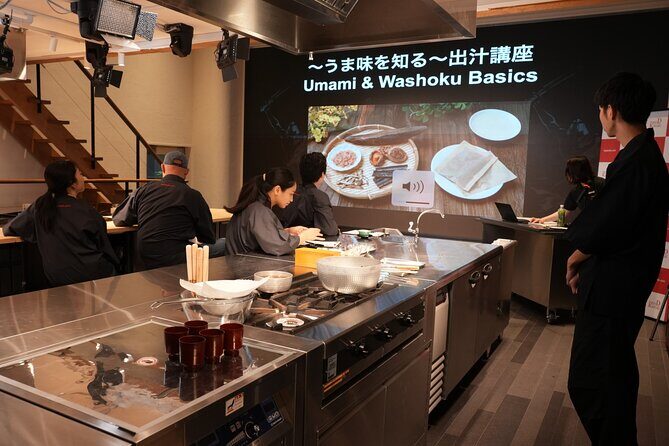
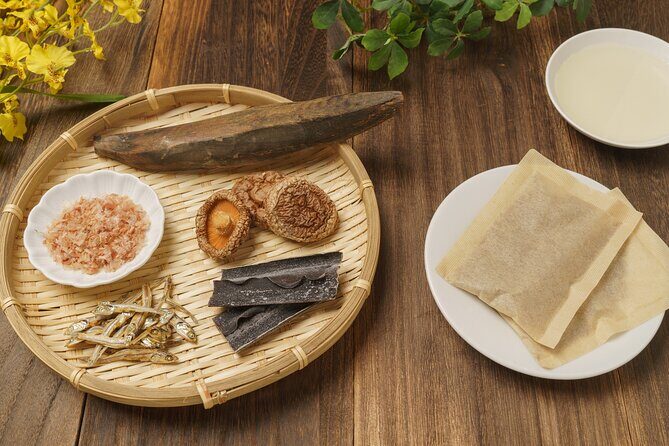
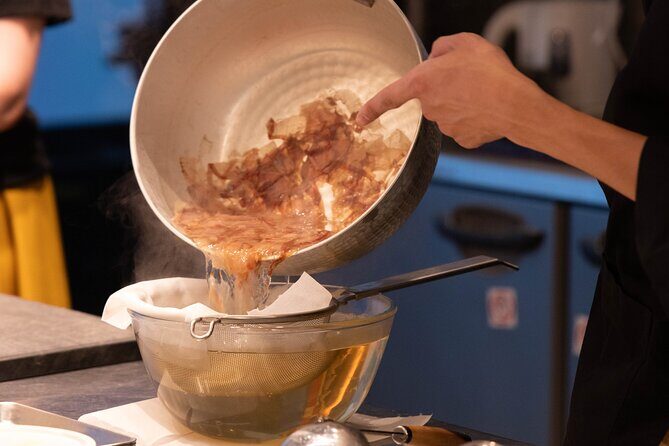
This is the part you’ll probably remember most. You watch dashi being made fresh using three approaches: kombu (kelp), katsuobushi (bonito flakes), and awase (the combined method). Then you taste each one side by side so you can notice how the flavor changes.
Here’s why that comparison is so valuable. Many people try to copy Japanese food at home by buying one “magic stock.” But real Japanese cooking often treats dashi like a tool. Kombu can taste clean and gently savory. Katsuobushi tends to feel deeper and more aromatic. Awase aims for a rounded balance. Once you’ve tasted those differences, you’ll stop thinking of dashi as one single thing.
You’ll also get a lecture on dashi and umami so the science stays grounded and easy. The class positions umami as Japan’s savory fifth taste, and it connects that idea to what you’re cooking and tasting. In plain terms, you learn how to build flavor using something that’s not complicated—if you know the method.
A quick consideration: dashi tastes subtle compared to heavily seasoned Western sauces. If you’re expecting bold punchy flavor on the first sip, it might take a moment. That’s normal. Once you understand what dashi is doing, the subtlety becomes the point.
Miso Soup and Side Dishes: Learn Washoku Without the Guesswork
After the dashi foundation, you move into a traditional washoku pattern: soup, sides, and texture. You’ll watch a demonstration of how to prepare miso soup and side dishes, and the plating process is included as part of the lesson.
That plating piece is more useful than it sounds. Japanese food often relies on small decisions: how the soup is served, how the side dishes are arranged, and how the colors and shapes work together. When someone shows you the process, you stop treating it like an afterthought. You start learning the rhythm.
This is also where the class feels like a proper meal, not a demo followed by a few bites. Included lunch hands-on cooking means you get to eat what you’re working on, and the spread described in the experience has the feeling of a full set. That helps you connect technique to taste immediately.
If you’re the type who likes to learn by eating and repeating, this section is a strong match. You’ll see the method, then you’ll taste the result as part of the lesson flow.
Dashimaki Tamago on a Rectangular Pan: Rolling Texture Like Japan
Next up: dashimaki tamago, the Japanese rolled omelet made with dashi. You’ll make it yourself using a rectangular tamagoyaki pan, which is key. The shape matters because it drives the rolling technique and the thickness control.
I like that this isn’t framed as egg cooking in general. It’s framed as dashimaki tamago specifically, with the dashi knowledge from earlier carried into the batter. So you’re not just learning a recipe; you’re practicing the idea that dashi isn’t only for soup.
What you’re going for is fluffy texture with clean layers. You might not nail it instantly, and that’s part of the fun. The pan is traditional, and the process gives you a real sense for why Japanese home cooks treat this like a skill worth practicing.
One practical note: rolled omelet cooking is hands-on and fast. Wear an apron and expect to pay attention. This class provides tools and aprons, so you’re not scrambling for gear, but you will be moving and cooking with your own hands.
Shaping Onigiri with Classic Fillings: Hand Skills You Can Actually Use
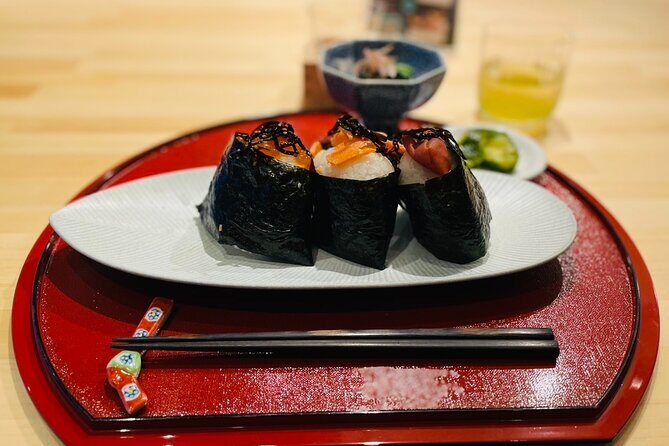
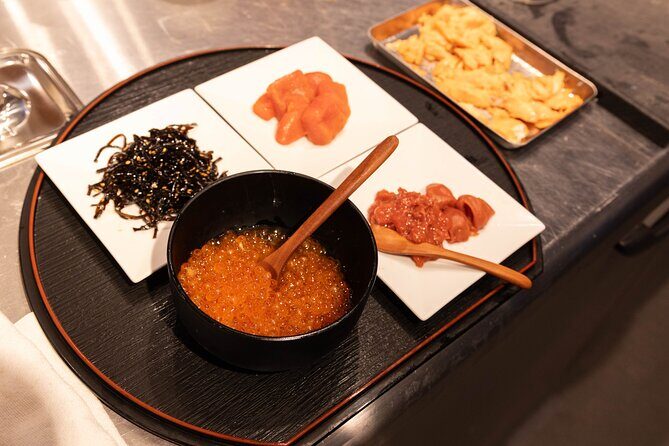
Then comes onigiri. You’ll choose from a variety of traditional fillings and shape the rice balls by hand. This is the point where the lesson turns into something you can do repeatedly at home, because onigiri is a real daily-life food in Japan.
What makes this step satisfying is the combination: you’ve learned why dashi and umami matter, and now you’re shaping a food where those flavors influence the filling and overall taste balance. Onigiri also has built-in flexibility. If you understand the flavor logic, you can adapt fillings later.
I also like that the class makes shaping feel doable. You’re not expected to be perfect on day one. You’re guided through form and technique, then you walk out with a recipe set that helps you recreate the process after the workshop.
And yes, you should come hungry. This isn’t a tiny snack class. You’re cooking lunch, tasting sake, and working through multiple stages.






Alcohol Tasting: Kappodo Original Sake, Included
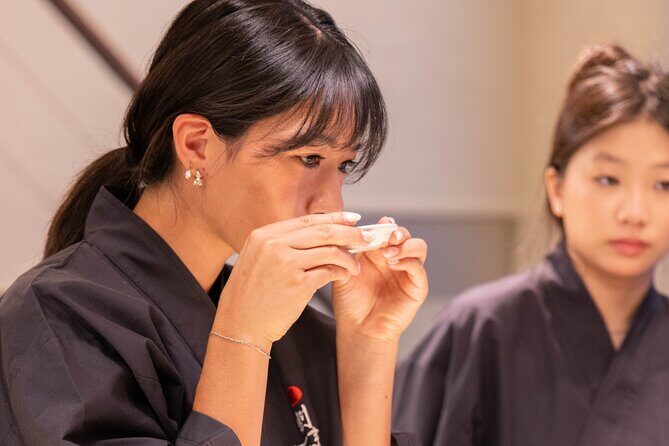
There’s also an alcoholic beverage tasting: Kappodo original sake. The wording makes it clear this is a tasting, not an open-ended drinking session. Still, it’s worth planning your comfort level.
If you don’t drink alcohol, you can treat it like a short cultural stop rather than a requirement. Sake is part of Japan’s food culture, and tasting it alongside what you cook can help you connect the overall flavor mood of the meal.
Price and Value in Tokyo: Is $129.49 Actually Fair?
At $129.49 per person for about 2 hours, this is not a bargain-basement cooking class. But I think the value is strong if you’re the kind of traveler who wants more than a souvenir experience.
Here’s what you’re paying for:
- Instruction in English with a max group size of 8
- A guided dashi and umami lecture
- Hands-on cooking for onigiri, dashimaki tamago, plus a miso soup and side dishes element
- Included sake tasting
- Tools and aprons
- A printed recipe set and Japanese seasonings to take home
- A participation certificate
In other words, you’re not paying just for food. You’re paying for skill-building around the core of Japanese cooking. Dashi is the foundation of so much cuisine, so learning it early can stretch your travel food budget later because you’ll understand what you’re tasting when you eat out.
The one caution is time. If you want a long, wandering, multi-stop Tokyo day with lots of extra sights, a 2-hour workshop may feel too compact. But if your goal is food literacy and hands-on confidence, the schedule works.
Getting There in Nishiazabu and How the Group Format Works
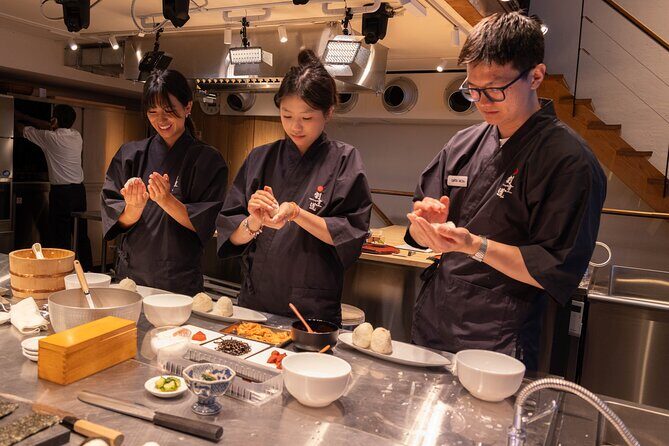
The meeting point is the DK building area at Nishiazabu (Minato City), at the Kappodo HQ / Tokyo D kitchen Studio. Start time is 11:00am, and the activity ends back at the meeting point.
Two things make this easier than it sounds:
- It’s described as near public transportation.
- The group size is capped at 8, which usually means more time with instructors and fewer crowds.
You should plan to arrive a little early so you can get settled and start cooking without rushing. Also, transportation is not included, so if you’re coming from somewhere like Shibuya or Asakusa, factor in train or taxi time.
What You’ll Take Home (Besides Lunch)
A major part of the experience is what follows you home. You’ll receive:
- A printed recipe set
- Japanese seasonings
That’s a big deal because Japanese cooking often depends on small differences in seasoning and stock. If you only remember the taste but not the method, it’s hard to repeat. With a take-home recipe set and seasonings, you can practice instead of just reminiscing.
You’ll also walk away with a clearer map of umami. Once you’ve compared kombu, katsuobushi, and awase and used dashi in your cooking, you’ll start seeing dashi as a practical tool in your own kitchen.
Who This Workshop Fits Best
This is a great fit if you:
- Want a hands-on food experience that teaches fundamentals, not just a single dish
- Are curious about what makes Japanese flavor feel different
- Like small group formats where you can ask questions
- Want practical steps you can repeat after you return home
It may feel less ideal if you:
- Want a long sightseeing-heavy day
- Have no interest in sake tasting
- Prefer cooking in a fully private setting (the class is for small groups, max 8)
Should You Book This Dashi and Onigiri Masterclass?
I’d book it if your Japan trip includes eating out and you want to understand the building blocks. Learning dashi and umami in a live, side-by-side way changes how you taste everything afterward. Add to that the hands-on onigiri shaping and dashimaki tamago rolling, and you get an experience that feels like a skill class, not a one-off meal.
If you’re on the fence, ask yourself one question: do you want to come away with recipes you can actually use? If yes, this workshop is strong value for the money. If your priority is seeing more of Tokyo than cooking, you might prefer a tour with longer sightseeing.
FAQ
How long is the masterclass?
It runs for about 2 hours.
What is the meeting time?
The start time is 11:00am.
Where does the class take place?
The meeting point is Kappodo H.Q / Tokyo D kitchen Studio in Nishiazabu, Minato City, at 2-chōme 21-12 DKビル, Tokyo.
Is prior cooking experience required?
No prior cooking experience is needed.
Will I understand the lesson if I don’t speak Japanese?
Instruction is provided in English.
How many people are in the group?
The class has a maximum of 8 travelers.
What’s included in the price?
The price includes a dashi and umami lecture, hands-on onigiri making plus dashimaki tamago, a demonstration of side dishes and miso soup, sake tasting, tools and aprons, and a certificate of participation.
What’s not included?
Private transportation isn’t included.
Do I get anything to take home?
Yes. You receive a printed recipe set and Japanese seasonings.
What’s the cancellation policy?
You can cancel for free up to 24 hours in advance for a full refund. Changes less than 24 hours before the start time aren’t accepted, and cancellations within 24 hours aren’t refunded.


![[Once-in-a-Lifetime Experience]Tokyo City Go-Kart Experience Tour - Getting There: ALOHA Go-Kart and What You Need Before You Drive](https://images.thejapantraveler.com/wp-content/uploads/once-in-a-lifetime-experiencetokyo-city-go-kart-experience-tour.jpg)











