REVIEW · HIROSHIMA
Discover the Soul of Hiroshima: A Peace-Themed Koto Workshop
Book on Viator →Operated by Experiential lesson of traditional Japanese instrument "Koto" · Bookable on Viator
A koto lesson with a peace message. This workshop ties the instrument’s long legacy to Hiroshima’s call for peace, including a reflective performance you’ll learn and play with others. You’ll get both music know-how and a meaningful takeaway—without needing any previous experience.
I especially love the balance of hands-on teaching and context. You’ll hear how the 13-string koto connects to craftsmanship from Fukuyama, then you’ll practice the piece with English-speaking guidance from Hanz. One thing to consider: the focus is moving and memorial-themed, so expect a quieter, respectful tone rather than a casual, party-style class.
In This Review
- Key highlights
- Why this Hiroshima koto workshop feels personal
- Koto craft and the Hiroshima connection: what you learn first
- A quick reality check for beginners
- Echo of Serenity: the peace-themed performance piece
- Your hands-on lesson with Hanz: what practice actually looks like
- Practical note on the tone
- Group finale: playing together and getting your video keepsake
- Why the small group size helps
- The thoughtful take-home: crane and meaning
- Price and value: is $46.24 a fair deal?
- Location and timing: where you go in Hiroshima
- What to expect on the day (comfort, refreshments, and flow)
- Who should book this (and who might not)
- Should you book this Hiroshima koto workshop?
- FAQ
- How long is the koto workshop in Hiroshima?
- Do I need to know how to play the koto before I arrive?
- Will the lesson be in English?
- What do I take home from the workshop?
- Are refreshments included?
- What is the maximum group size?
Key highlights
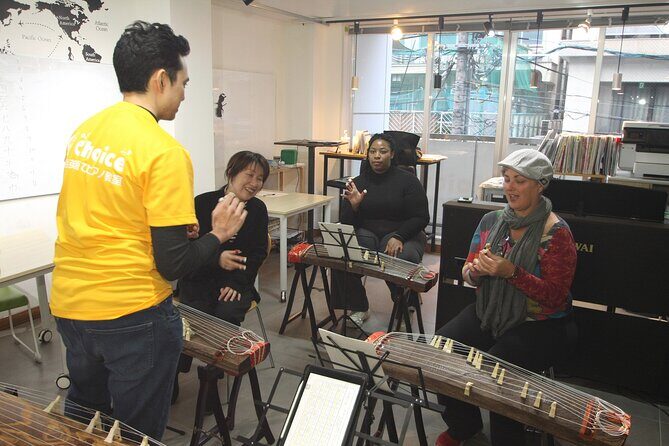
- Peace-themed koto performance that honors atomic bomb victims through Echo of Serenity
- Fukuyama koto craft details including why the instrument design carries meaning
- Beginner-friendly instruction covering posture and plucking technique step by step
- Group finale with a keepsake video recorded with instructor accompaniment
- Folded origami crane to share the message of hope
Why this Hiroshima koto workshop feels personal
In Hiroshima, music doesn’t sit on a stage—it carries memory. This workshop uses that idea on purpose: you learn a koto piece built around peace, then you play it as a group. The result is more than a souvenir photo. It’s something you can actually repeat, listen to again later, and share while telling the story behind it.
The koto itself is a special choice for this kind of workshop. It’s a 13-string instrument with a history said to stretch about 1,300 years. That long timeline matters here because you’re not just learning a song. You’re learning how an old craft becomes a living language—especially when the subject is Hiroshima’s message of hope.
A few more Hiroshima tours and experiences worth a look

Koto craft and the Hiroshima connection: what you learn first
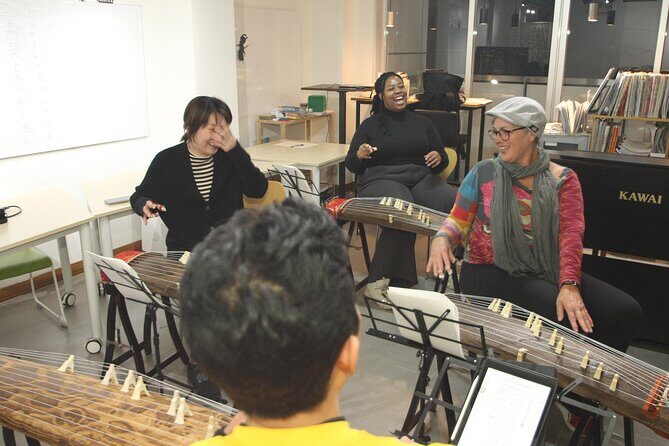
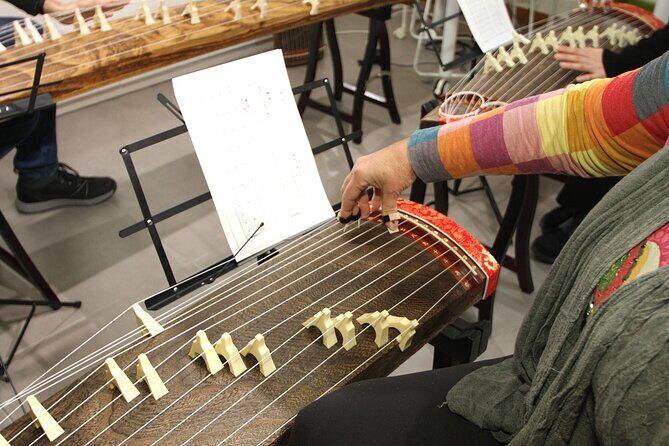
Your session starts with the instrument and its background, not random technique drills. You’ll learn about how the koto works and what to notice as you play—like the way each part relates to symbolism. That matters because it turns practice into understanding. Instead of plucking strings on autopilot, you start to feel what you’re doing.
You’ll also get the geographic thread of the craft. The workshop explains that Fukuyama is a heartland for koto craftsmanship, with over 70% of Japan’s kotos coming from there. Even if you never visit Fukuyama, this gives you a map in your head: the workshop is happening in Hiroshima, but the instrument’s roots trace back to a specific region built around making kotos well.
A quick reality check for beginners
You do not need prior koto experience. The teaching covers basics like proper posture and how to pluck. If you’re worried about coordination—hands, timing, and the right sound—this is exactly the kind of class where those worries get handled early. I’d treat it like a structured introduction to a new instrument, not a test.
Echo of Serenity: the peace-themed performance piece
After the groundwork, you’ll hear Echo of Serenity. This is the hauntingly beautiful composition used as the workshop’s musical prayer for peace, and it honors atomic bomb victims. The point is emotional accuracy as much as it is musical accuracy. You’re not learning the “shape” of notes only. You’re learning how the koto can hold resonance—what words can’t.
The workshop frames the sound as something that lingers, which changes how you listen while practicing later. If you’ve played other instruments, you’ll recognize this idea: some instruments don’t just produce pitch, they produce atmosphere. With the koto, that atmosphere becomes part of the message.
Your hands-on lesson with Hanz: what practice actually looks like
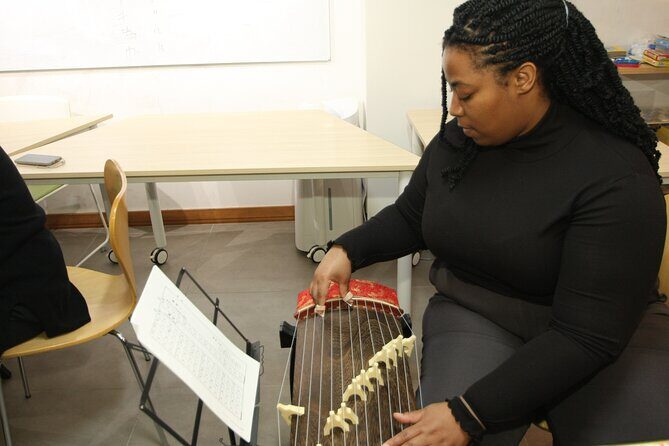
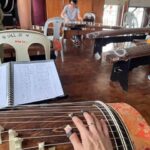
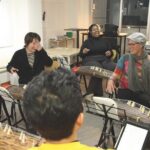
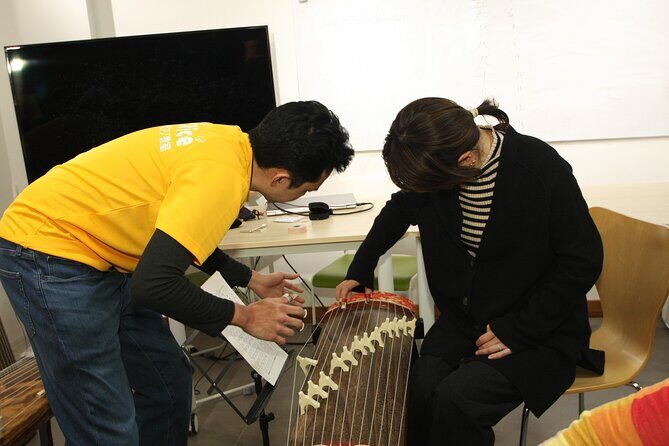
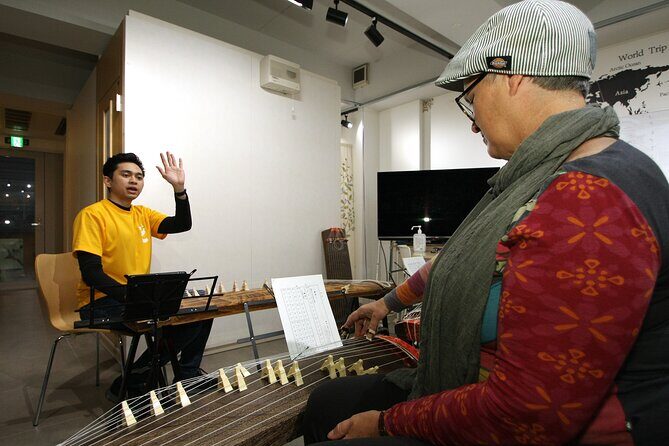
Next comes the hands-on portion, and this is where the class earns its place. English-speaking masters guide you through playing the piece, with clear coaching. In one standout note, the instructor Hanz was described as helpful and someone who made the lesson feel comfortable. That’s a big deal in a short workshop—because small classes only work if you feel safe asking questions and getting corrections.
What you can expect during your learning time:
- Posture guidance so your body supports the instrument instead of fighting it
- Plucking technique so you can produce the right tone and timing
- Step-by-step practice aimed at getting you to the final ensemble piece
Even at 1 hour 30 minutes, the session doesn’t feel like a rushed demo. It’s built so you’ll leave with something you can perform, not just watch.


Practical note on the tone
Because the music is peace-focused, the room atmosphere tends to be respectful. If you prefer loud, joking group energy, you might find it calmer than you expect. If you like meaningful, quiet concentration, this is a strong match.
Group finale: playing together and getting your video keepsake
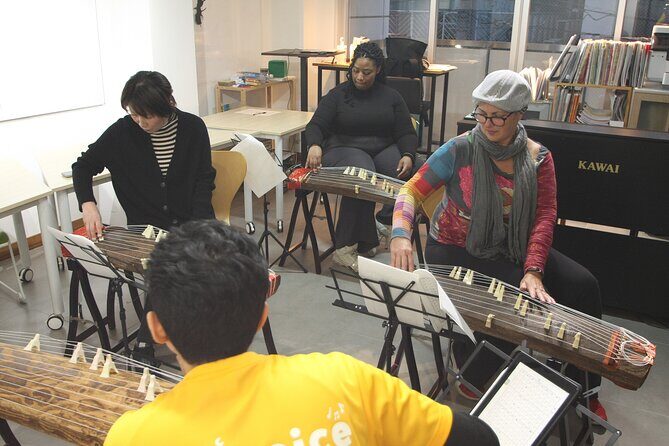
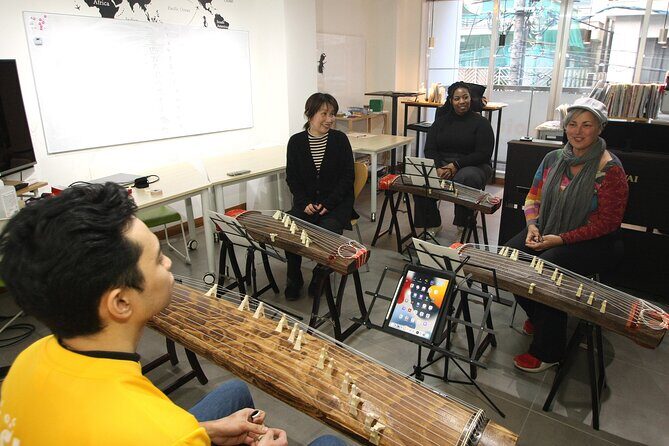
One of the most valuable parts is the finale. You join fellow participants in a heartfelt ensemble of Echo of Serenity. This matters even if you’re brand new, because the final group effect helps you understand how the parts fit together—and it gives you a shared moment with others who came for the same reason.
Then you receive a recording of your final piece performance, with instructor accompaniment. This is not a generic “look at my hands” clip. It’s a keepsake designed to let you relive the experience, hear the instrument clearly, and share what you learned with people back home. In practical travel terms, it’s one of the few activity souvenirs that keeps paying off after your trip.
Why the small group size helps
The group maximum is 6 travelers. That’s small enough that instruction can stay personal, and it reduces the risk of feeling lost. It also makes the ensemble finale feel more intimate, which fits the workshop’s emotional goal.
The thoughtful take-home: crane and meaning
You also take home an origami crane, folded by you. In Hiroshima, the crane isn’t just a cute paper craft—it’s a symbol of hope. The workshop’s structure encourages you to connect the crane to the message behind the music, so you can share it with others in a way that feels coherent, not random.
If you’re traveling with someone who likes cultural crafts, this is a good pairing: music plus an iconic symbolic object. And because it’s hands-on, you leave with something you made, not just something you purchased.
Price and value: is $46.24 a fair deal?
At $46.24 per person, this is priced like an activity that gives you more than one simple output. You get:
- a koto workshop and lesson
- coffee and/or tea plus soda/pop
- the koto itself included
- the origami crane keepsake
- a performance video recorded with instructor accompaniment
A traditional instrument class can be pricey when it’s private. Here, the group format keeps the cost reasonable while still aiming for a real performance at the end. Also, with only about 1 hour 30 minutes, you’re not stuck committing half a day in exchange for a quick demo.
If you’re the type of traveler who values “a thing I can replay and explain later,” this workshop is strong value. The video especially turns it into something longer-lasting than memory alone.
Location and timing: where you go in Hiroshima
The meeting point is in Hiroshima’s Naka Ward, in the Hatchōbori area: 84 石田第2ビル (Hatchōbori, Naka Ward, Hiroshima 730-0013). The activity ends back at the meeting point, which keeps things simple at the end.
It runs about 1 hour 30 minutes. That time length matters because it’s long enough for meaningful instruction and a finale, but short enough that you can still plan a normal evening afterward.
Also, it’s near public transportation. You won’t need private transport to make this work, so you can spend your budget on experiences rather than logistics.
What to expect on the day (comfort, refreshments, and flow)
This workshop includes coffee and/or tea, plus soda/pop. In other words, you’re not going to sit through a focused lesson completely dry. It’s a small thing, but it helps if you’re touring all day and you’ve got a travel pace rhythm to maintain.
Service animals are allowed, and most travelers can participate. If you’re sensitive to crowded spaces, note the cap of 6. It won’t feel like a large cattle-class group.
You’ll also receive confirmation at booking time, and the ticket is mobile. That’s helpful for quick arrivals and avoiding last-minute paperwork.
Who should book this (and who might not)
This fits best if you:
- want a cultural lesson you can actually play, not just watch
- care about peace and remembrance themes connected to Hiroshima
- like experiences with a tangible keepsake, especially a video you’ll share
- prefer small groups with more personal guidance
It might not be your favorite if you’re mainly looking for high-energy entertainment or if you strongly prefer upbeat themes. Echo of Serenity is memorial-themed, so the emotional tone is part of the design.
Should you book this Hiroshima koto workshop?
I think you should book it if you want a workshop that connects technique with meaning. The peace theme isn’t tacked on—it’s woven into the music you learn, then reinforced through the origami crane. Add in the small group size, the beginner-friendly instruction (including posture and plucking), and the performance video keepsake, and the overall value feels clear.
I’d skip it only if you’re determined to avoid memorial themes or if you don’t care about leaving with a performance you can rewatch. Otherwise, this is the kind of experience that makes Hiroshima feel human and specific—sound and symbol together.
FAQ
How long is the koto workshop in Hiroshima?
It runs about 1 hour 30 minutes.
Do I need to know how to play the koto before I arrive?
No. The workshop teaches you from the basics, including proper posture and plucking technique.
Will the lesson be in English?
Yes. The guidance is provided by English-speaking masters.
What do I take home from the workshop?
You receive a video recording of your final performance, and you take home an origami crane.
Are refreshments included?
Yes. Coffee and/or tea are included, along with soda/pop.
What is the maximum group size?
The workshop has a maximum of 6 travelers.