REVIEW · WAKAYAMA PREFECTURE
Mt. Koya Sacred 6hr Private Tour with Government Licensed Guide
Book on Viator →Operated by Japan Guide Agency · Bookable on Viator
Mt. Koya is spiritual quiet with great logistics. This 6-hour private tour focuses on UNESCO Mt. Koya highlights and pairs them with a custom walking itinerary you build from a set list of must-sees. I like that it’s guided by government-licensed multilingual support, and I also like how the route hits both big-name sacred spaces and the practical “how Shingon Buddhism runs” parts of Koyasan.
One thing to plan for: it’s a walking tour, so you’ll want comfortable shoes and a calm pace, especially if the weather turns. Also, while many stops are free, you’ll still need to handle what isn’t included, like transport and the one paid mausoleum stop.
In This Review
- Key Things You’ll Notice on This Mt. Koya Tour
- Why Mt. Koya Feels Different From Kyoto
- Price and What You’re Actually Buying for 6 Hours
- Meet at Kōyasan Station: The Walking-Private Reality
- Stop 1: Koyasan Okunoin and the Heart of Shingon
- Stop 2: Kongobu-ji Temple and the Temple Headquarters Feel
- Stop 3: Koyasan Danjo Garan and the Founding Ceremony Link
- Stop 4: Koyasan Reihokan Museum for the Objects Behind the Beliefs
- Stop 5: Koyasan Daishi Kyokai and the Shingon Administrative Center
- Stop 6: Tokugawa’s Mausoleum and What’s Paid Here
- Rain Plans, Early Starts, and Staying Comfortable
- How to Choose Your 3–4 Sites Without Regret
- Guide Styles Matter: Naka, Yuki, and the Personal Touch
- What to Pack for a Smooth Koyasan Day
- Who This Tour Suits Best (and Who Might Skip It)
- Should You Book This Mt. Koya Private Tour?
- FAQ
- How long is the Mt. Koya private tour?
- Where do I meet the guide?
- Is this tour private or shared?
- Is pickup included?
- Are entrance fees included for the temples and museum?
- Do I need to bring a ticket?
- Is lunch included in the price?
- What do I pay for besides the tour price?
- FAQ
- Can I cancel for a full refund?
- Is it free to bring service animals?
- Is the guide English speaking?
- What do you mean by customizable?
Key Things You’ll Notice on This Mt. Koya Tour
- Pick 3–4 sites from the tour options so your day fits your interests.
- Okunoin first style planning, which sets the tone fast at the heart of Koyasan.
- All the major temple anchors are covered: Kongobu-ji, Danjo Garan, and the Reihokan.
- Private means quiet time with your guide, not a big crowd march.
- Tokugawa’s Mausoleum is the only clearly marked paid stop in the main list.
- English-speaking guidance with named guides like Naka and Yuki in the experience history.
Why Mt. Koya Feels Different From Kyoto
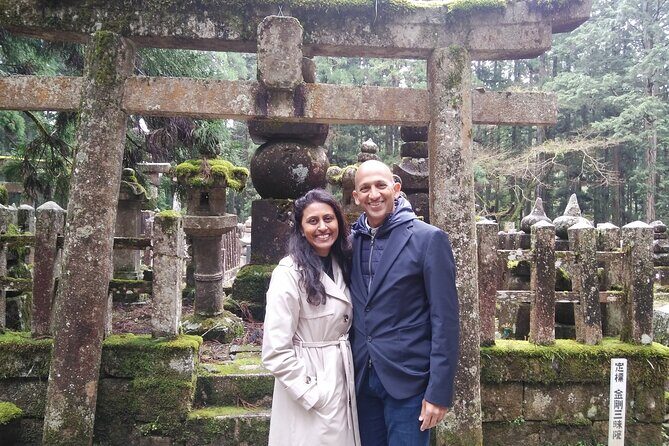
If you’re comparing Japan’s temple towns, Mt. Koya has a different rhythm. It’s not about shopping streets or a constant visitor loop. It feels more like walking into a living religious landscape where the pace slows, the air changes, and the stories stick because you’re moving through them.
That difference shows up in how the day is built. You’re guided through places that people come to for contemplation, not just photos. At Okunoin, for example, the atmosphere is part of the experience, so the tour format matters. A good guide helps you understand what you’re seeing without turning it into a lecture.
Also, the timing tip from recent experiences is simple: start early if you can. Mt. Koya can be quieter in the earlier hours, and it makes everything—from paths to temple courtyards—feel less crowded.
You can also read our reviews of more guided tours in Wakayama Prefecture
Price and What You’re Actually Buying for 6 Hours
At $153.11 per person for a private 6-hour walking tour, the cost isn’t “just entry tickets.” You’re paying for:
- A licensed local guide (English speaking) who can explain what you’re looking at.
- A route that can be customized to 3–4 sites from the provided list.
- The convenience of a guided plan that doesn’t force you to figure out everything alone.
Now, the money math isn’t automatic. Entrance fees are not evenly spread across the stops. The itinerary list marks several major sights as free, but Tokugawa’s Mausoleum is not included. On top of that, you’ll cover transportation fees (and lunch, plus personal expenses) yourself. The tour also notes no private vehicle.
So the value looks best if you want a guided day that saves time and mental energy. If you already plan to self-tour Mt. Koya with a stack of reading material and you don’t need help making sense of Shingon Buddhism, you could do it cheaper. But if you want someone to translate the meaning of the place while you walk, this price starts to feel reasonable for a private day.
Meet at Kōyasan Station: The Walking-Private Reality
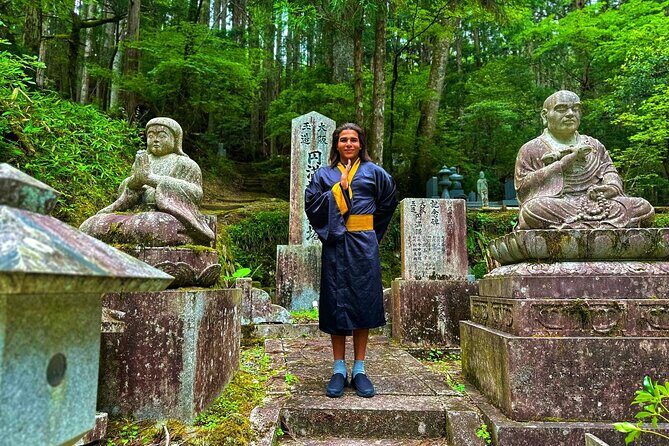
This is private, so it’s just your group. That matters here because Mt. Koya isn’t a one-size-fits-all route. Your guide can adjust pace and focus, and you can ask questions without feeling like you’re waiting for the crowd.
The meeting point is Kōyasan Station, and pickup is described as being on foot. One recent experience also mentioned a guide meeting people directly from a hotel, so in practice there may be some flexibility depending on where you’re staying and what your guide can arrange. What’s clearly consistent is that the tour centers on starting from the station area and ending back there.
Also note: the guide list includes licensed local English-speaking support, but “multilingual” is mentioned too. Either way, the guide role is to help you move efficiently and understand what matters at each stop.
Stop 1: Koyasan Okunoin and the Heart of Shingon
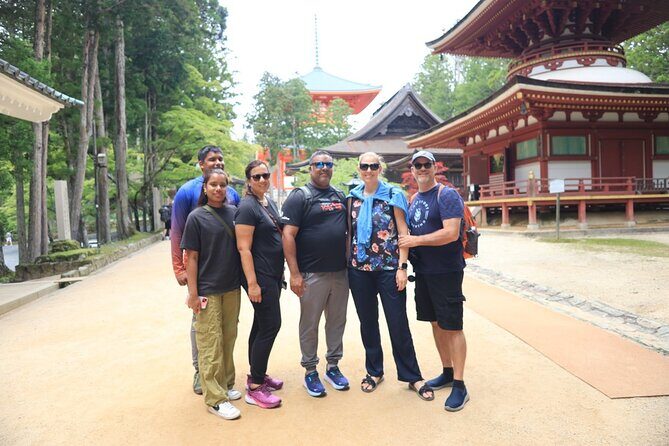
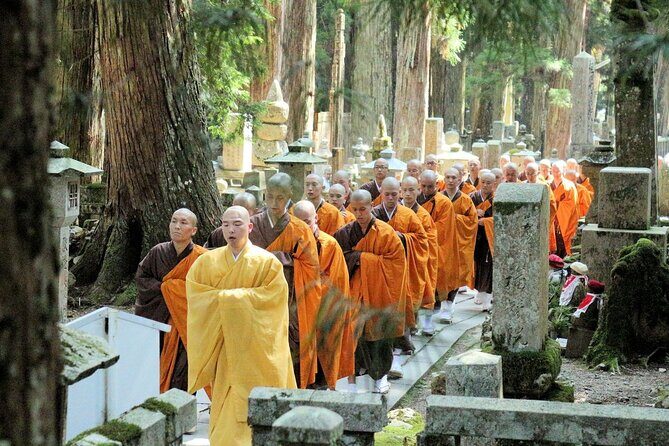
Okunoin is where Mt. Koya’s emotional pull becomes obvious. This stop is listed as the heart of the mountain’s sacred world, tied to Kūkai (Kobo Daishi), the founder of Shingon Buddhism. You’re there for the meaning of the site, and for the sense that this isn’t just history—it’s a living place of reverence.
The tour gives you about 1 hour 30 minutes here, and the admission is listed as free. That time window is important. At Okunoin, you don’t want a rushed “see it, leave it” rhythm. You want enough minutes to slow down, follow the paths, and let the scale of the space land.
If it’s rainy, this stop is still worth doing. One guide-led tour specifically continued during rain and still worked well. Wet stones and quieter paths can actually make the area feel even more hushed—just go with shoes that handle slippery surfaces.
Stop 2: Kongobu-ji Temple and the Temple Headquarters Feel
From Okunoin, the day shifts from reflective walking to a more institutional religious space. Kongobu-ji Temple is described as the headquarters for the Shingon Sect, tied to a network of temples throughout Japan and worldwide followers.
The tour gives you about 1 hour here, and it’s listed as free. This is the moment when a guide can be especially valuable. Without context, temple interiors and cultural elements can blur together. With guidance, you can understand what you’re seeing—religious artifacts, and those interior features like sliding doors with painted designs.
The practical benefit: you’ll see how the “big spiritual mountain” connects to the organized life of the sect. That turns Mt. Koya from a scenic stop into a place you can actually interpret.
You can also read our reviews of more private tours in Wakayama Prefecture
Stop 3: Koyasan Danjo Garan and the Founding Ceremony Link
Danjo Garan is described as one of the two most sacred sites on Mt. Koya. It’s also connected to the founding era of Mt. Koya in the 9th century, when Kūkai is associated with major early ceremonies dedicated to establishing the sacred mountain’s religious life.
You get about 1 hour here, and again it’s listed as free. This stop is where the “why this mountain” question starts getting answered. You’re not just looking at old buildings—you’re seeing how the site was framed as a spiritual center from the beginning.
One useful way to experience Danjo Garan is to pay attention to layout and orientation. A good guide will point out what connects the structures and why the sacred design matters. That’s also where the private setting helps—you can spend an extra few minutes at the exact vantage points your guide suggests without feeling like you’re delaying anyone else.
Stop 4: Koyasan Reihokan Museum for the Objects Behind the Beliefs
After two big temple anchors, the Reihokan Museum gives your brain something concrete to hold: religious and cultural treasures connected to Koyasan. The museum’s listed entrance hall design is styled after Byōdō-in Temple in Uji, which is a nice example of how Japanese sacred aesthetics echo across places.
The museum stop is about 30 minutes, and it’s listed as free. That’s short, but museums at temple sites often work best in smaller doses anyway. Use that half hour to focus on a few themes your guide highlights—how objects, art, and ritual heritage carry meaning.
If you’re the type who gets overwhelmed by too many rooms, this timing can be a relief. You’ll leave with better context for what you saw outside, instead of turning the day into a museum marathon.
Stop 5: Koyasan Daishi Kyokai and the Shingon Administrative Center
This stop can feel different from the more iconic temple spaces. Daishi Kyokai is described as the administrative center of Shingon Buddhism, responsible for spreading Kōbō Daishi’s teachings. The complex includes multiple buildings, with the tour description noting the administrative role rather than just a worship hall.
You get about 1 hour, and it’s listed as free. I like this stop because it grounds the spiritual story. It answers a practical question that many first-time visitors have: how does a sacred tradition actually keep going day after day?
A guide can also help you connect what you saw at the temple headquarters and the founding sites. When those pieces click, the whole day feels more coherent.
Stop 6: Tokugawa’s Mausoleum and What’s Paid Here
The final named stop in the list is Tokugawa’s Mausoleum on Koyasan, built in 1643 by the third Tokugawa shogun Iemitsu, placed close to Kōbō Daishi’s mausoleum. It’s a clear example of how political power and sacred prestige became linked in Japan’s history.
This stop is marked as not included for admission. The tour also lists it as about 1 hour. That means you should mentally budget for this extra cost. It’s also why I’d call this your “check the wallet” moment of the day.
The good news: since everything else in the main itinerary list is marked as free, this paid stop won’t surprise you in the middle of an expensive ticket chain.
Rain Plans, Early Starts, and Staying Comfortable
Weather can hit Mt. Koya the way it hits anywhere, but it doesn’t have to ruin your day. One experience explicitly noted that rain happened during the tour and it still turned into a wonderful outing. If you can’t control the sky, control your footwear and your pace.
Early start is also a real strategy here. One of the strongest practical tips is to begin earlier so you can see more of the “hot spots” with less crowd energy. Even if you don’t chase sunrise, getting going early makes the day feel more peaceful and helps you take your time at the stops that reward slow walking.
Finally, because the tour is private, you’re not locked into a rigid script. Your guide can adapt how long you stay in certain areas depending on foot traffic and your comfort level.
How to Choose Your 3–4 Sites Without Regret
You’ll be asked to pick your must-see spots from a list when you book. That’s a smart setup because it stops you from doing “everything” and feeling like you saw nothing clearly.
Here’s how I’d decide:
- If you want the most emotional core, make Okunoin one of your picks.
- If you want Shingon’s institutional side, include Kongobu-ji and/or Daishi Kyokai.
- If you like cultural objects, add Reihokan Museum.
- If you want the founding sacred center feeling, choose Danjo Garan.
- If you’re interested in connections to Japan’s political history, add Tokugawa’s Mausoleum.
Also, remember the tour description frames the day as a walking tour with efficient enjoyment. So fewer well-chosen sites often feel better than trying to squeeze in every stop just because you can.
Guide Styles Matter: Naka, Yuki, and the Personal Touch
The experience history includes guides like Naka and Yuki, and their comments show what they’re aiming for: customize the tour to your interests and keep the day understandable.
What stands out is that the guides don’t only focus on explanations. One recent experience even mentioned a guide going above and beyond by taking people to a vegetarian restaurant. That’s not listed as a guaranteed part of the tour, but it suggests a useful approach: if you care about food preferences, ask your guide what’s workable nearby and what fits the day.
The overall vibe in the experience summary is peace, clarity, and an emphasis on making the day feel personal rather than templated.
What to Pack for a Smooth Koyasan Day
You’ll be on foot for about 6 hours, and temple grounds can mean uneven paths. I’d pack for comfort first:
- Comfortable walking shoes with good traction
- A light rain layer if the forecast looks questionable
- A small bag for water and personal items
- A charged phone for your mobile ticket
Since lunch is not included, you may want to plan either a self-supplied snack or a lunch option arranged around your route.
Who This Tour Suits Best (and Who Might Skip It)
This tour fits you well if:
- You want a private day in a sacred place without navigating everything alone.
- You like temple history that’s explained in plain language, not just signage.
- You care about pacing and having time to reflect at key sites.
- You’re okay paying for a guide and handling some on-your-own costs (like transport and the one paid mausoleum stop).
You might consider something else if:
- You’re determined to do everything at your own pace with no guidance.
- You dislike walking for long stretches.
- You’d rather minimize costs heavily, because the tour price plus non-included items can add up.
Should You Book This Mt. Koya Private Tour?
Book it if you want Mt. Koya to feel meaningful, not just scenic. The biggest strength is the combination of licensed local guidance and a route you can tailor to your interests, hitting the core sacred spaces plus the museum and administrative center that many first-timers skip.
Skip it (or look for a different format) if your priority is maximum self-guided independence or you’re trying to keep every yen in a tight budget. In that case, you might feel boxed in by a prepared set of 3–4 choices and the paid add-on at Tokugawa’s Mausoleum.
If you want a calm, structured day with room to ask questions, this is a solid choice.
FAQ
How long is the Mt. Koya private tour?
The tour lasts about 6 hours.
Where do I meet the guide?
You meet the guide at Kōyasan Station. The tour then ends back at the meeting point.
Is this tour private or shared?
It’s a private tour/activity, so only your group participates.
Is pickup included?
Pickup is offered, but it’s described as pickup on foot near Kōyasan Station. (Meeting point guidance says you meet up with your guide on foot within Koyasan station.)
Are entrance fees included for the temples and museum?
Most listed sites are marked as admission free, but Tokugawa’s Mausoleum is listed as not included. Entrance fees and guide entry fees are only covered for sights listed under What to Expect.
Do I need to bring a ticket?
You get a mobile ticket.
Is lunch included in the price?
No. Lunch is not included.
What do I pay for besides the tour price?
You’ll cover transportation fees, lunch, and other personal expenses. A private vehicle is not included.
FAQ
Can I cancel for a full refund?
Yes. You can cancel up to 24 hours in advance for a full refund.
Is it free to bring service animals?
Service animals are allowed.
Is the guide English speaking?
The tour includes a licensed local English speaking guide.
What do you mean by customizable?
You choose 3–4 sites from a list of options provided for this tour, and your guide builds the walking route around your picks.