REVIEW · OTSU
Otsu-e Folk Art Workshop & Local Culture Walk Near Kyoto
Book on Viator →Operated by Ichie Wado · Bookable on Viator
Otsu-e painting turns a short train ride into a story. This Otsu workshop and culture walk, led by Otsu native Misato Takahashi, connects you to a folk-art tradition that started in the area about 400 years ago, with your own hands-on chance to paint a Lucky Oni Bell or Three Wise Monkeys. I also like that the pace is slow enough to actually notice details around Lake Biwa’s old-town edges, not just rush from photo spot to photo spot.
Two things I really like here: first, Misato’s family lineage (Wado Takahashi and the Otsu-e master family behind Takahashi Shozan) gives the art real personal context, not just a lecture. Second, the walk mixes craft with food stops—expect welcome tea and sweets, plus extra chances to pick up local snacks along the way. One consideration: you’ll be doing some walking through temple grounds and covered shopping arcades, so comfortable shoes matter.
In This Review
- Key highlights you’ll feel right away
- Why this Otsu-e experience works so well from Kyoto
- Meet Misato Takahashi, then learn why Otsu-e matters
- The walk part: local streets, small shops, and real texture
- Mochihyo and the Old Tokaido road flavor test
- Senmaruya dried foods: what Japanese kitchens actually rely on
- Sake history at Hirai Shoten
- Otsu Festival float exhibition: see the craft behind the spectacle
- Otsu Hyakuchokan merchant house: step into a preserved machiya
- Pickles at Yaoyo: one small detail that changes the whole day
- Otsu-e no Mise: the shop/workshop bridge to your painting
- The painting session at Ichie Wado: what you’ll actually make
- Practical value: price, timing, and what you’re buying
- Who should book this (and who might not)
- Quick tips to make the most of it
- Should you book Otsu-e Folk Art Workshop & Local Culture Walk near Kyoto?
- FAQ
- How long is the Otsu-e workshop and local culture walk?
- Is it a private tour?
- What will I paint during the workshop?
- Where does the tour start and end?
- What’s included for food and drinks?
- Are any admission fees included?
- Do I need to pay for the train from Kyoto to Otsu?
Key highlights you’ll feel right away
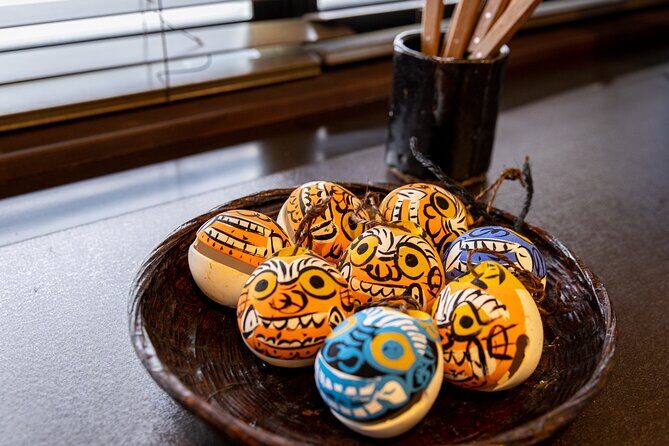
- A hands-on Otsu-e painting session where you’ll create your own souvenir (Lucky Oni Bell or Three Wise Monkeys)
- A guide who teaches with Otsu roots through Misato Takahashi’s family connection to the art
- Taste-first local stops like mochi sweets and long-standing pickle and dried-food shops
- Historic Otsu by foot including an old merchant house tour at Otsu Hyakuchokan
- Festival culture on display with an Otsu Festival float exhibition pavilion visit
- Lake Biwa context early on via the ginkgo trees used to be a landmark for boats
Why this Otsu-e experience works so well from Kyoto
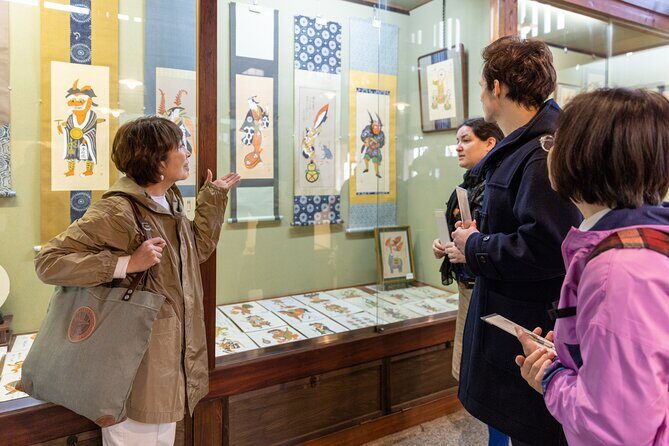
Otsu is the kind of town you can reach fast, yet feel far from the usual Kyoto crowds once you’re there. From Kyoto Station, you’re looking at about a 10-minute train ride to Otsu, and the vibe shifts quickly from big-city bustle to lakeside calm and older streets.
What makes this experience especially smart is the combo: you don’t just sit in a workshop. You also walk through everyday neighborhood lanes and traditional storefronts, so when you later paint Otsu-e, you already understand how this folk art fits into daily Otsu life. It’s a short day—about 3 hours 30 minutes—but it feels like more because the order of activities builds momentum.
And yes, it’s priced at $104.51 per person, but the value comes from the bundle. You get an English-speaking professional guide, admissions for at least some of the stops, welcome tea and snacks, and a take-home piece of art from a guided painting session. With group discounts and a private setup for just your group, it’s the type of experience that can be worth it even if you’re not a hardcore art person.
You can also read our reviews of more tours and experiences in Otsu.
Meet Misato Takahashi, then learn why Otsu-e matters
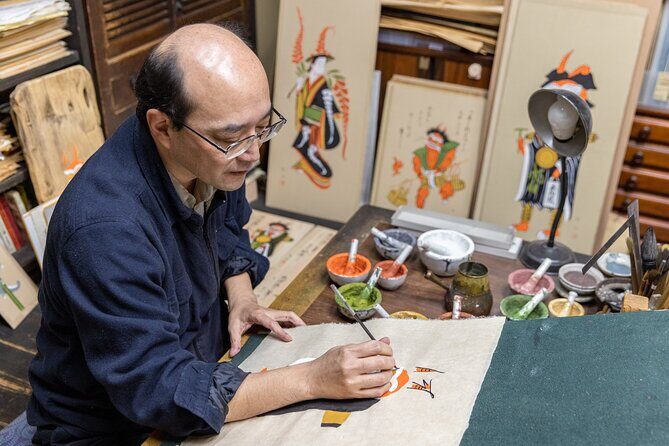
The tour is led by Misato Takahashi, an Otsu native who’s deeply committed to preserving Otsu-e painting. She’s also connected to the lineage behind Takahashi Shozan, tied to the Otsu-e master family—plus Misato’s father is part of that wider Wado Takahashi story. That background matters because Otsu-e isn’t just a style. It’s a local tradition that’s been maintained and interpreted over centuries.
In practice, this means the talk you get before painting doesn’t feel like generic museum wording. You’re learning what makes the images meaningful, how the style developed, and why certain subjects show up in folk art. I like that you get context before you pick up the tools; it makes the finished souvenir feel personal instead of random.
The walk part: local streets, small shops, and real texture
The route starts at Otsu Station, meeting at the north ticket gate. From there, the first sights tie the town to Lake Biwa. You’ll pause by the ginkgo trees of Kekaiji Temple in the Kyomachi 3-chome area—trees that used to serve as a landmark for boats. It’s a quick stop, but it sets a “this town has a working relationship with the lake” tone before you move into shopping streets.
Then you’ll hit Otsu’s food and everyday-culture rhythm.
Mochihyo and the Old Tokaido road flavor test
At Mochihyo, a Japanese sweets shop facing the Old Tokaido Road, you’ll pick up treats before the painting session. The tour is designed so you have something in hand while you’re still learning—then the workshop becomes more relaxed because you’re not hungry or rushed. It’s also a nice way to experience Otsu through a small storefront rather than a big “must-see” site.
Senmaruya dried foods: what Japanese kitchens actually rely on
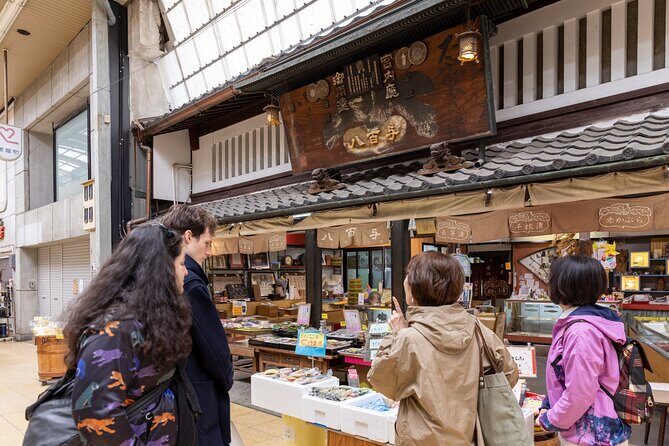
Next is Senmaruya, a long-standing dried food store on Nakamachi Street. This is the type of stop that helps you understand how Japanese pantry culture works. Instead of only tasting, you’re seeing what stays on shelves and what shows up in everyday cooking—meaning Otsu feels practical, not staged.
Sake history at Hirai Shoten
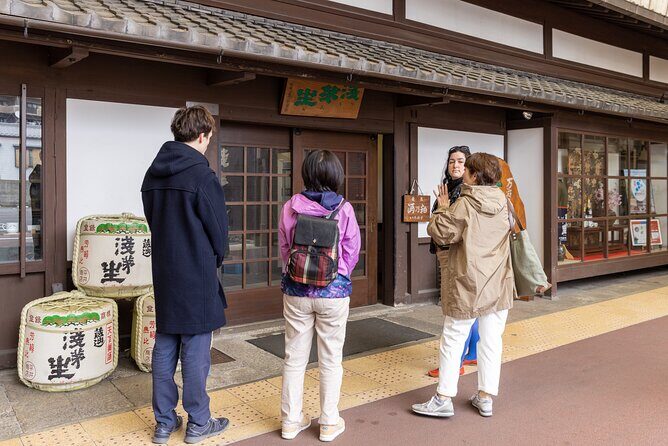
At Hirai Shoten in the Maruya-cho shopping arcade, the focus shifts to a sake brewery with 365 years of history. Even if you’re not making a sake purchase, it’s a great cultural contrast: folk art on one side of the tour, brewing tradition on the other, both tied to local identity. It also breaks up the walk with a different kind of “how this town survived and prospered” perspective.
Otsu Festival float exhibition: see the craft behind the spectacle
You’ll also visit the Otsu Festival Hikiyama Exhibition Pavilion on the Maruya-cho arcade route. One of the real festival floats is on display. This matters because it connects art to community ritual. Folk art isn’t only for walls and souvenirs—it also lives in festivals, craftsmanship, and shared memory.
Otsu Hyakuchokan merchant house: step into a preserved machiya
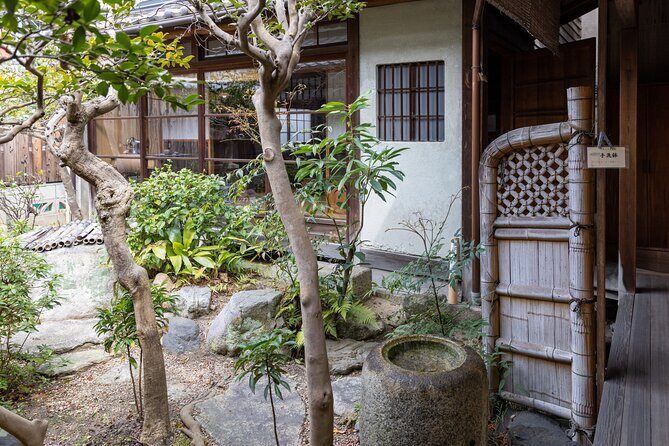
One of the most substantial cultural stops is Otsu Hyakuchokan, where you get a house tour inside a preserved Otsu machiya merchant home (a typical Otsu townhouse style). This part is about 20 minutes and is included.
If you’ve ever wondered what these “old merchant streets” are really like beyond storefront photos, this is the moment. You get to see a physical layout that explains how commerce, family life, and hosting worked—so when you later paint Otsu-e, you’re not only thinking about the artwork. You’re thinking about the people who commissioned it, sold it, and kept it alive.
Pickles at Yaoyo: one small detail that changes the whole day
At Yaoyo pickle shop (in the Hishiya-cho shopping arcade), you learn about Japanese dietary culture through pickles. You’ll pick up a seasonal pickle to enjoy later. I love that this isn’t just a tasting token. It’s food you can actually recognize as part of Japanese meals, not only as a snack.
Otsu-e no Mise: the shop/workshop bridge to your painting
Finally, you reach Otsu Enomise (Otsu-e no Mise) at Miidera sando—a shop and workshop space for Otsu-e. This stop works like a bridge: you see where the art is sold and made, then you move into the actual seminar room to create your own piece. It’s a smooth transition, and it helps you feel less like you’re “learning” and more like you’re participating.
The painting session at Ichie Wado: what you’ll actually make
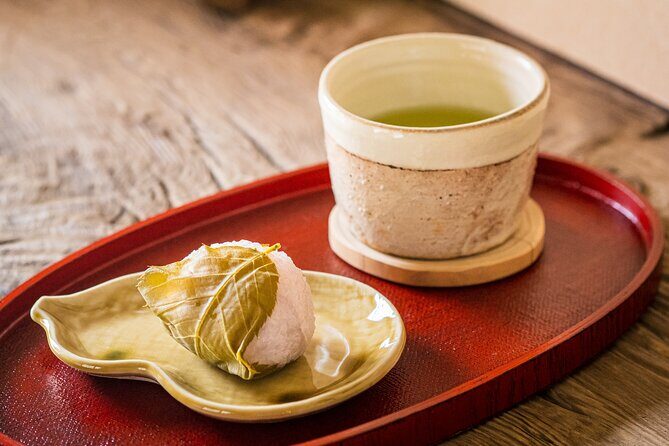
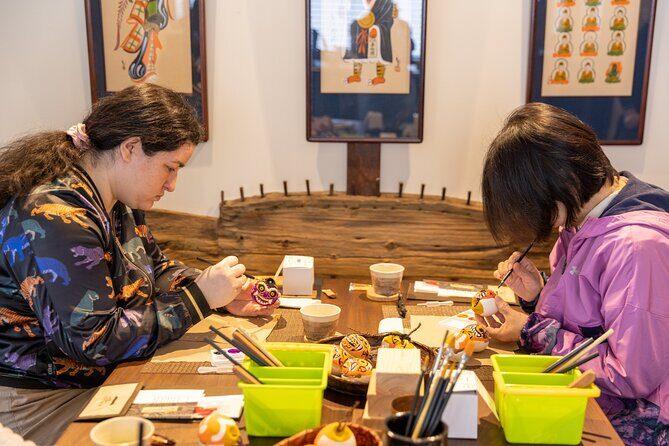
Your workshop happens at Ichie Wado Seminar House in Kozekicho, in front of Nagara Jinja Shrine. The tour includes welcome tea and sweets here, which is a small detail with a big effect: it slows your nerves and makes the creative part feel friendly instead of formal.
You’ll watch a presentation on Otsu-e history and features, then paint your own Lucky Oni Bell or Three Wise Monkeys. The wording in the experience description gives you those two options; in other words, you’ll leave with a real piece of folk-art you can take home, not just a memory.
What makes this workshop feel worth it is the combination of craft and meaning. Painting is only half the value. The other half is knowing what you’re drawing and why the subject matters in Otsu tradition. When the guide connects style to local tradition, your souvenir becomes a story you can tell later—especially because Otsu-e has a long, local lineage tied to the master family.
Practical value: price, timing, and what you’re buying
Let’s talk money honestly. At $104.51 per person for about 3 hours 30 minutes, this isn’t the cheapest way to spend a half day in the Kyoto area. But you are paying for a real bundle:
- A dedicated English-speaking guide
- Workshop instruction (not just watching)
- Admission fees for at least key cultural stops like Otsu Hyakuchokan and the festival float pavilion (or alternatives)
- Welcome tea, sweets, and local snacks
- Original Otsu-e souvenirs
Also, it’s priced for a private experience, meaning your group doesn’t get diluted into a larger crowd with strangers. And because there are group discounts, the per-person value can improve if you’re traveling with a small group.
The one thing not included is obvious but important: train fares between Kyoto and Otsu (listed as JPY200/adult). If you have a valid JR Pass, that can cover it; if you don’t, budget a little extra.
Who should book this (and who might not)
This is a strong fit if you:
- Want a hands-on cultural activity without a full-day commitment
- Like small-town Japan and walking in local arcades and streets
- Enjoy learning from a guide with deep family ties to the craft
- Want food snacks as part of the experience, not an afterthought
You might think twice if you:
- Want a major temple or big landmark style tour (this is more local and craft-focused)
- Prefer very minimal walking
- Need lunch included (it’s not part of the package)
Quick tips to make the most of it
- Wear comfortable shoes. The tour moves through multiple neighborhoods and shopping arcades.
- If you’re sensitive to walking time, take it slow early. The route starts with Otsu Station and works outward; pacing is part of the charm.
- Have a light appetite. You’ll get welcome tea and sweets, plus extra tastings, but lunch isn’t included, so plan to eat afterward.
- Bring a good attitude for details. Otsu-e is easier to appreciate when you notice how daily life and craft connect.
Should you book Otsu-e Folk Art Workshop & Local Culture Walk near Kyoto?
If you want something more meaningful than a standard sightseeing circuit, I’d book it. The sweet spot here is the combination of Otsu-e painting plus a guided, food-and-culture walk that explains where the art comes from. Misato Takahashi’s family connection adds weight, and the mix of merchant houses, festival display, and practical food culture keeps the day from feeling like only a classroom.
I would only skip it if your top priority is Kyoto landmarks or you don’t want any walking. Otherwise, this is a smart use of half a day that leaves you with both a story and a take-home piece of folk art.
FAQ
How long is the Otsu-e workshop and local culture walk?
It runs for about 3 hours 30 minutes.
Is it a private tour?
Yes. It’s listed as a private tour/activity, so only your group participates.
What will I paint during the workshop?
You’ll paint an Otsu-e design such as the Lucky Oni Bell or Three Wise Monkeys (the specific option is included in the workshop).
Where does the tour start and end?
It starts and ends at Ichiewado Seminar House, 4-17 Kozekichō, Otsu, Shiga 520-0035, Japan.
What’s included for food and drinks?
You’ll have welcome tea and sweets plus local snacks. Lunch is not included.
Are any admission fees included?
Yes. Admission fees for Otsu Hyakuchokan and the Otsu Festival Float Exhibition Pavilion (or other alternative places) are included.
Do I need to pay for the train from Kyoto to Otsu?
Train fares are not included. The Kyoto–Otsu JR fare is listed as JPY200 per adult, though it may be covered by a valid JR Pass.
If you’d like, tell me your travel month and whether you’ll have a JR Pass, and I’ll suggest an easy plan for what to eat before and after this 3.5-hour experience.