REVIEW · FUJINOMIYA
Samurai Swordsmanship and Sound Meditation in nature
Book on GetYourGuide →Operated by Wago · Bookable on GetYourGuide
Silence, then steel. In Honshu, you learn samurai sword basics and wear kimono and hakama before cleansing in a private river setting.
I particularly like the sound meditation with traditional flutes and drums, followed by standing Zen in nature, so the calm lands in your body, not just your ears.
One thing to consider: you need enough mobility for sword practice, and it’s not suitable for kids under 12, pregnant people, or anyone with back problems.
Key points to know before you go
- Private-river purification with water rituals and a prayer to the eight million gods
- Sword training progression: basic movements with an unsharpened sword plus a real cutting experience
- Sound meditation in the wild with flutes, drums, koshi, and improvised music performed on the spot
- Kimono/hakama photo time plus a sacred sword dance and performance
- Small group setting (max 10) with a host who teaches one-on-one style respect and form
In This Review
- Samurai swordsmanship plus sound meditation in quiet nature
- Meet Yusuke near Uenohara Station, then head for the river
- Kimono and hakama first: dressing the part without making it stiff
- River purification with a sword and a prayer to the eight million gods
- Standing Zen + sound meditation: flutes, drums, koshi, and improvised music
- Samurai sword basics: unsharpened training and a real cutting experience
- Watching the sword dance and sacred performance
- Timing and logistics: a long-ish class that stays focused
- Language and group size: small class energy with Yusuke’s teaching style
- Value check: why $64 feels fair for what you actually do
- Who should book this samurai sword and sound meditation experience
- Should you book Samurai Swordsmanship and Sound Meditation in nature?
- FAQ
- How long is the experience?
- Where do I meet the group?
- Is transportation included?
- Is the instruction available in English?
- What’s included in the price?
- What should I bring?
- What should I wear under the kimono and hakama?
- Do I need prior sword experience?
- Is there a dress code or anything I can’t do?
- What is the cancellation rule for a full refund?
Samurai swordsmanship plus sound meditation in quiet nature
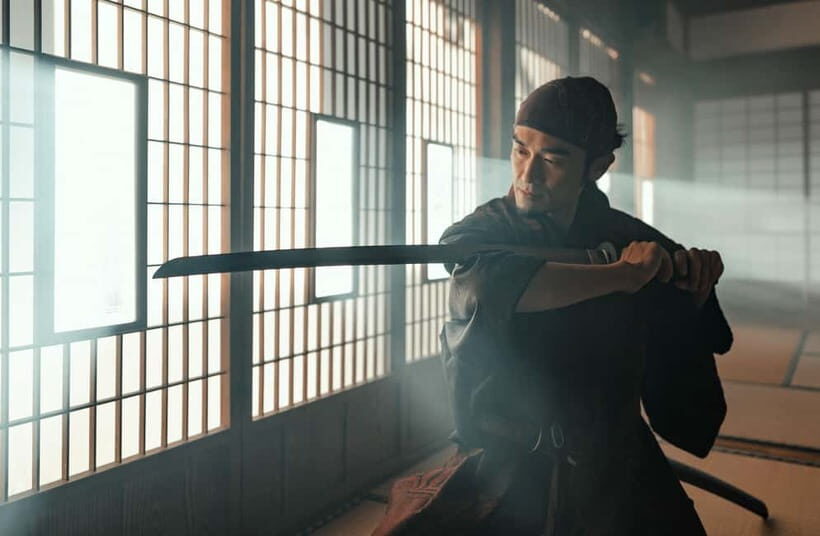
If you’re tired of tours that feel like a checklist, this one is different. The center of gravity is not sightseeing. It’s practice, ritual, and sound—right next to a beautiful private river area in Honshu.
You start by putting on traditional samurai clothing, then you move into purification and meditation. After that, you learn basic handling and movements with a sword, watch an authentic performance, and end with photo time. It’s cultural, but it’s also hands-on.
The best part is how the day uses multiple “channels” to change your state. Body first (stance and movement). Then mind (standing Zen). Then attention (music and breath). You don’t have to be a martial-arts person to get something meaningful out of it.
Meet Yusuke near Uenohara Station, then head for the river
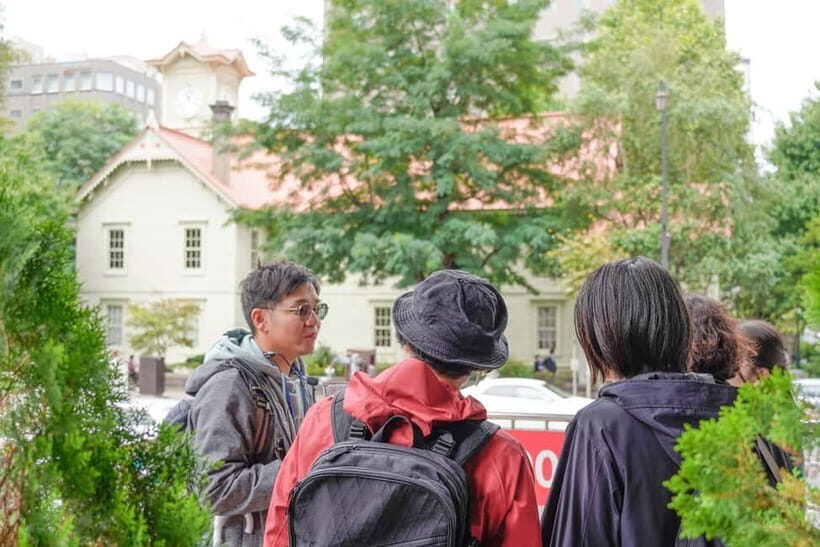
The experience meets at the rotary on the first floor of the south exit of Uenohara Station. The south exit is the bigger one with a supermarket in front, and you’ll be picked up in a white car.
From there, you’re not spending the whole day navigating. The total time on the clock is about 4 hours including pick-up and drop-off, while the actual experience runs 210 minutes.
Uenohara itself is a nice breather from Tokyo energy. It’s about 1 hour by train from Shinjuku and about 2.5 hours from Narita Airport. If you’re already in Tokyo, this is a practical way to get “real Japan nature” without losing your whole day to transport.
You can also read our reviews of more tours and experiences in Fujinomiya.



Kimono and hakama first: dressing the part without making it stiff
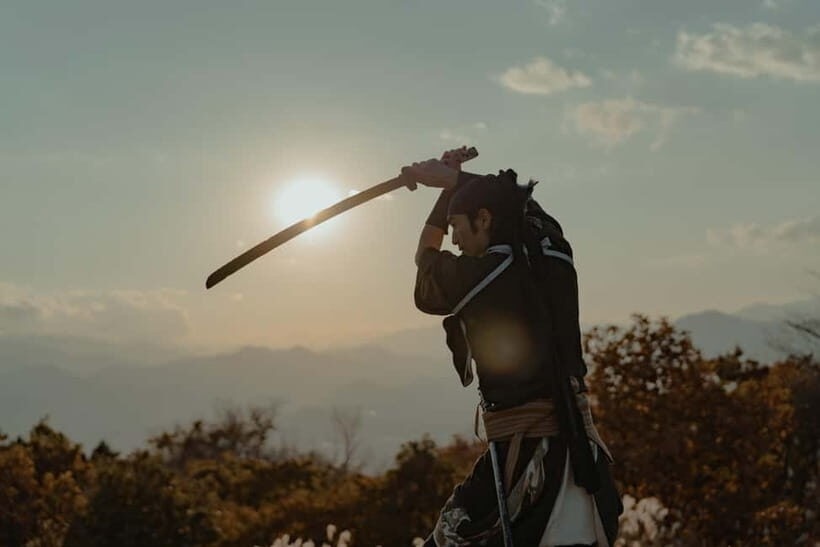
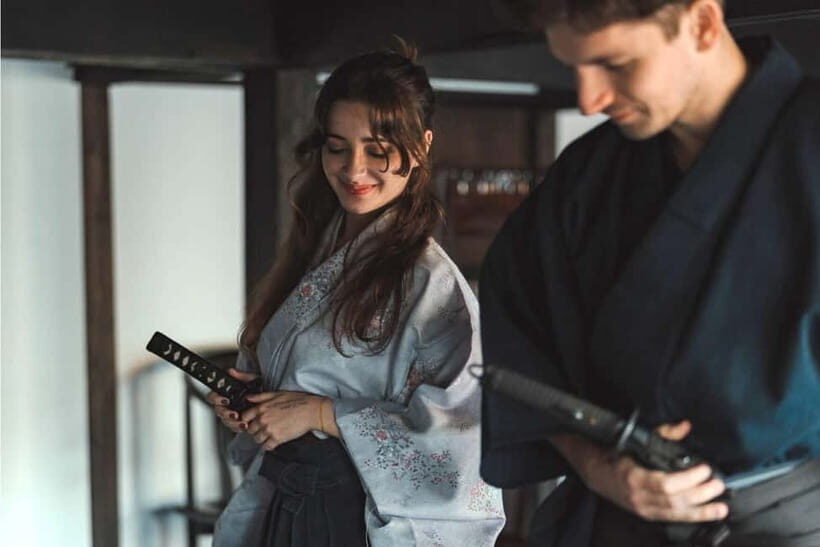
One of the most popular moments is the clothing change. You’ll rent a kimono and hakama and get ready for the day’s rituals and photos. This isn’t just costume play. In Japan, how you present yourself matters, and this setting makes that feel literal.
Practical tip: wear comfortable clothes underneath. The instructions specifically recommend dressing for movement, since you’ll be doing meditation stances and sword practice later.
Also, bring a camera. You’ll have photographing time built in, and you’ll want proof that you actually did this on your trip (not just thought about it at 2 a.m. while scrolling).
River purification with a sword and a prayer to the eight million gods
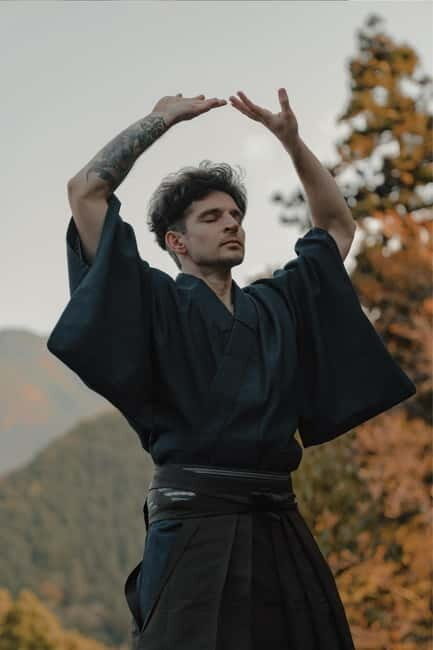
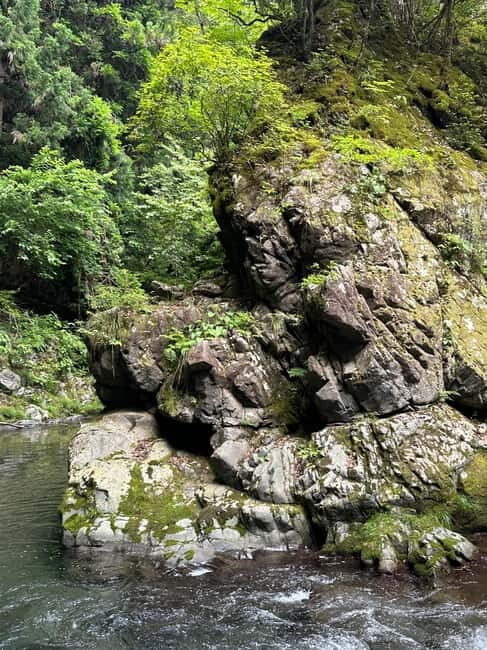
Before the music and swordwork, the day begins with purification. You’ll purify your mind and body with pure water of a beautiful private river. It’s paired with a ritual that includes a purification sword and reciting a prayer to the eight million gods.
This part matters because it changes the frame of the activity. Instead of treating sword practice like a sport, you’re being taught the mindset: respect, attention, and calm. Even if you’re new to martial arts, the ritual gives you a structure for focus.
The venue is private river nature, and the session is designed to feel like a reset. Past participants talk about how the water sounds and the space itself make their thoughts slow down. That’s not a small claim—nature sound can genuinely change how you breathe and hold tension.
Standing Zen + sound meditation: flutes, drums, koshi, and improvised music
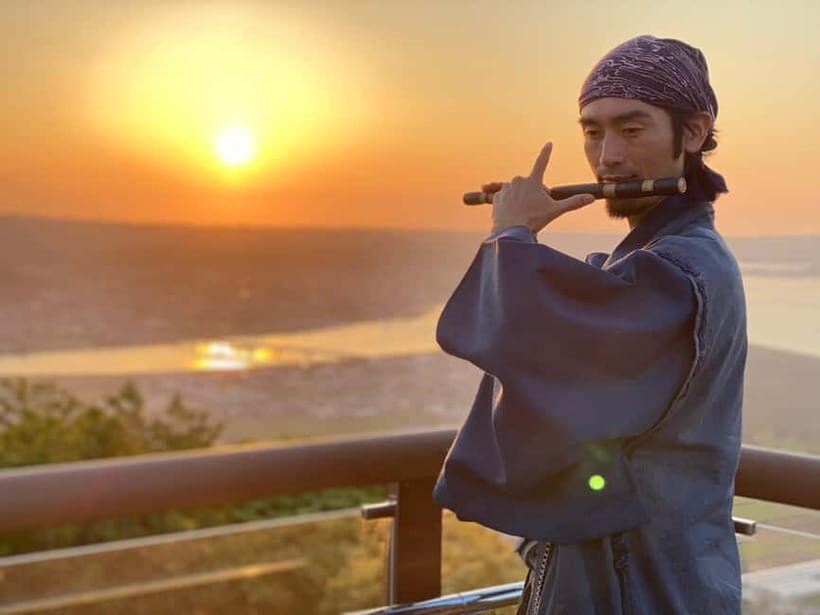
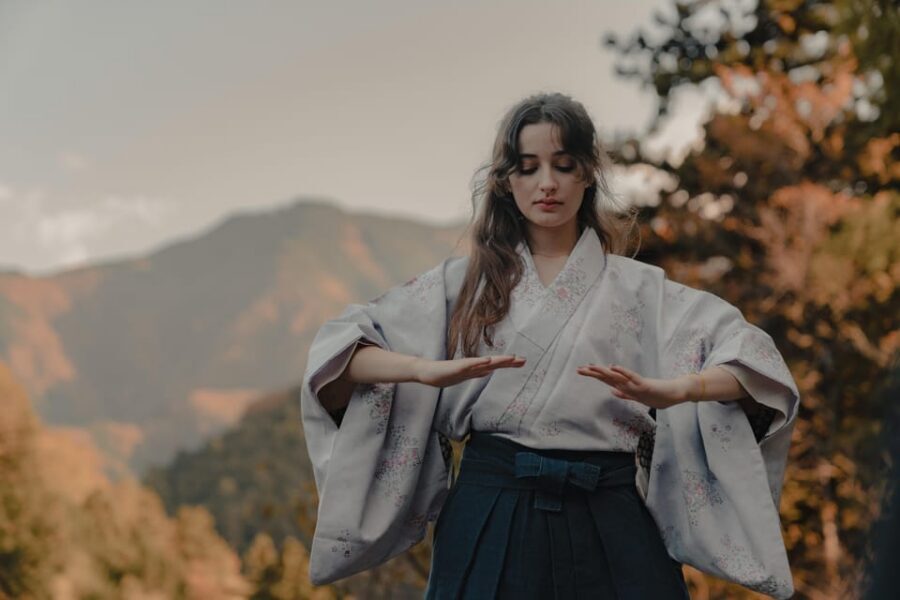
After the purification, the day shifts into stillness. You’ll do standing meditation while feeling nature around you, and then move into sound meditation.
The sound meditation is the signature. You’ll listen to traditional Japanese instruments such as flutes and drums, and the music can include other traditional sounds (including koshi). Importantly, there’s also improvised music performed on the spot, which keeps it from feeling like a prerecorded show.
This is where I think the value really shows. A sword class can be entertaining, but a sound-and-breath practice is what turns the day into a memory. It gives you a sensory “anchor” you can carry home and use when life gets loud again.
If you’re wondering what to do with your face during meditation: relax your jaw, soften your shoulders, and let your attention follow sound. You don’t need to perform calm. The point is to practice receiving it.
Samurai sword basics: unsharpened training and a real cutting experience
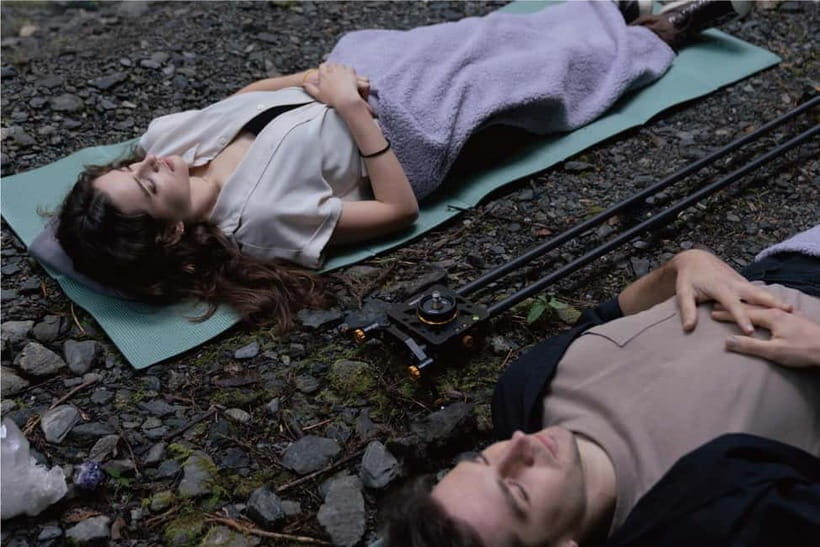
Now you get to the part most people came for: swordsmanship.
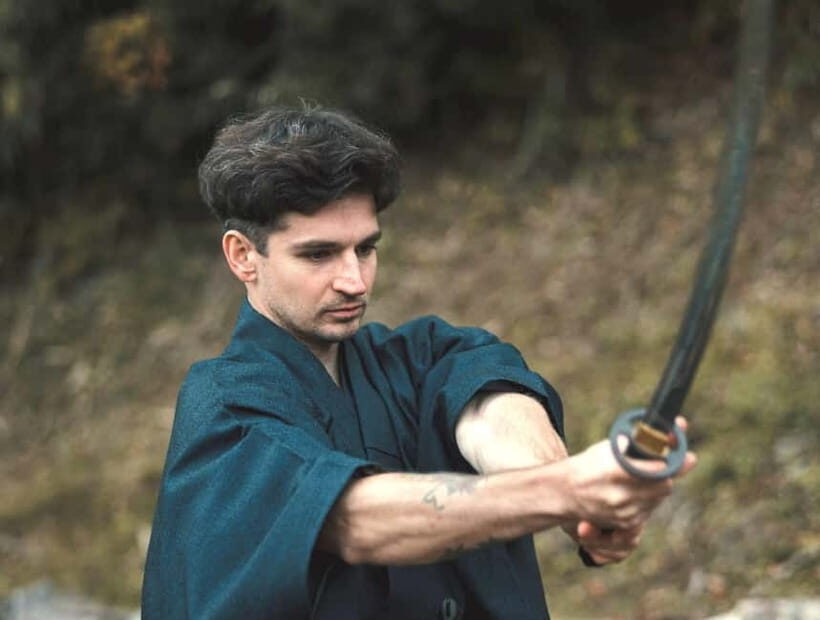
You’ll learn how to handle a Japanese sword and practice basic movements. Training uses an unsharpened sword, which makes the lesson accessible while you build control and correct habits. The emphasis is on form and respect, not on “winging it.”
Then comes the cutting moment. The experience includes a real sword cutting experience. Even without knowing the exact setup, the takeaway is that you’re not stuck watching only. You get guided participation that connects technique to result.
If you’re a beginner, that’s actually a good thing. Beginners focus on learning proper stance and grip rather than trying to copy advanced moves. Just remember: there’s a physical fitness requirement. Wear comfortable clothes underneath, and be honest about any limitations in your body.





Watching the sword dance and sacred performance
After you practice, you’ll watch a samurai art and sacred dance performance. The experience also includes an authentic sword dance that many people describe as emotional and soul-touching.
This isn’t a generic “drama for tourists” performance. It’s presented as an extension of the sword mindset you practiced earlier. The music can also be improvised, so the timing stays alive and responsive.
If you’re the type who usually skips performances, I’d still give this one your full attention. Seeing the sword movement after learning even a little about how it’s handled makes the choreography make more sense. Your brain links the visuals to the body mechanics you just practiced.
And yes, you’ll get photo time around the end, so plan to take a few shots where you look like you’re actually part of the ritual—not just holding a sword like it’s a souvenir.
Timing and logistics: a long-ish class that stays focused
The full experience is 210 minutes, and it usually feels like one complete arc: dress → cleanse → stand and listen → train → watch → photos. Because it’s structured like that, you don’t get the common problem of “random stops” that don’t connect.
Plan your day like this:
- Expect a start near Uenohara Station
- You’ll be taken to the venue area and come back
- Bring water, since you’re outdoors during parts of the program
Weather matters. The experience notes that depending on conditions, parts may be held indoors. That’s normal, and it doesn’t change the core sequence—just the setting for meditation and sound.
If you’re coming from Tokyo, the train ride to Uenohara is also part of the appeal. It’s a peaceful transition that helps your brain switch gears before the ritual begins.
Language and group size: small class energy with Yusuke’s teaching style
This is a small group experience with a limit of 10 participants. That matters more than you might think. With a sword and meditation, you want space and guidance, not a crowded room where you wait your turn for every step.
Instruction is available in English and Japanese. Even if your Japanese is basic, you’ll still get enough context to understand the movements and the respect-based cues.
Your host is Yusuke—a Swordsmanship Champion and a winner of the All Japan Swordsmanship Tournament. He’s also described as an heir to a real samurai family line, and he has appeared in movies, TV shows, and even as a representative of Japan for the official Olympic channel. In other words, you’re not just getting a hobbyist instructor. You’re getting someone who performs and teaches with legitimacy.
In the real-world feel of the day, hospitality is huge. Reviews highlight welcoming warmth from Yusuke and his wife, Yoshino. You may also receive tea during the session, which adds one more gentle pause between activities.
Value check: why $64 feels fair for what you actually do
At $64 per person, this isn’t a budget “try something quick” activity. But it also isn’t overpriced for the amount of real instruction and real attention you get.
Here’s where the value comes from:
- You get kimono and hakama rental, not just a photo opportunity
- You do multiple practice components: purification ritual, standing Zen, sound meditation, sword practice
- You get a hands-on sword moment plus a performance afterward
- The group is limited to 10, so the teaching attention doesn’t get diluted
Most importantly, the day isn’t designed like a factory schedule. You’re in a private nature setting with a host who’s teaching something he performs and lives through. That’s why people report it as a highlight of the trip and sometimes even moving.
If you want a very active day, this may be a better use of money than another “see a temple, take a photo, move on” plan. If you want a purely academic history lesson, you might find it more experiential than classroom-based—but the focus is the practice.
Who should book this samurai sword and sound meditation experience
This is a strong fit if you want:
- A hands-on cultural experience, not just watching
- A mental reset with sound meditation and standing Zen
- Samurai-themed activities that feel respectful and grounded in ritual
- Small-group attention and time to take photos
It’s also ideal if you’re traveling with someone who appreciates slower, meaningful experiences. The river, music, and ritual pacing make it easier to enjoy together without needing to “perform sightseeing.”
Avoid it if you:
- Need something fully seated and low-movement
- Have back problems
- Are traveling with children under 12
- Are pregnant
Should you book Samurai Swordsmanship and Sound Meditation in nature?
I’d book it if you’re the type of traveler who enjoys doing one memorable thing deeply. The combination of river purification, sound meditation, and swordsmanship practice is rare. The small group size keeps it personal, and the setting makes it feel like more than a staged activity.
I would skip it if you’re only looking for a fast, casual photo-and-stroll experience. This day asks for mobility and attention, and the value is in the full arc from ritual to practice to performance.
If that sounds like your style, this is the kind of Japan moment you’ll still think about when you’re back in your own time zone.
FAQ
How long is the experience?
The duration is 210 minutes. The total time is about 4 hours when you include pick-up and drop-off.
Where do I meet the group?
Meet at the rotary on the first floor of the south exit of Uenohara Station. A white car will be there to pick you up.
Is transportation included?
Transportation to and from the activity location is not included. You’ll handle getting to Uenohara Station, and then pick-up and drop-off are part of the activity timing.
Is the instruction available in English?
Yes. Instruction is available in English and Japanese.
What’s included in the price?
Kimono and hakama rental, swordsmanship practice with an unsharpened sword, a real sword cutting experience, standing Zen meditation in nature, sound meditation, a samurai art and sacred dance performance, and photo opportunities.
What should I bring?
Bring a camera, water, and comfortable clothes.
What should I wear under the kimono and hakama?
Wear comfortable clothing under the kimono and hakama so you can move during meditation and sword practice.
Do I need prior sword experience?
No prior experience is mentioned. You’ll learn how to handle a Japanese sword and practice basic movements, with sword practice using an unsharpened sword.
Is there a dress code or anything I can’t do?
Smoking is not allowed, and alcohol and drugs are not allowed.
What is the cancellation rule for a full refund?
You can cancel up to 24 hours in advance for a full refund.