REVIEW · FUJISAWA
Kamakura & Enoshima: Great Buddha, Shrines and Ocean Views
Book on GetYourGuide →Operated by Cornwall Ltd · Bookable on GetYourGuide
Temples and ocean views in one tight loop. This tour stitches together Kamakura’s samurai-era spirit and Enoshima’s seaside pace without making you jump cities or think too hard about logistics. I especially like how the route uses the local rhythm: shrine first, train next, then temples and viewpoints on foot.
My two favorite parts are the Enoden train ride along the coast and ending with the Great Buddha at Kōtoku-in. One thing to consider: it’s a lot of walking in a compact 5 hours, and it’s not a good match if you use mobility aids.
In This Review
- Key things I’d plan around
- Why this Kamakura–Enoshima route feels efficient
- Starting at Tsurugaoka Hachimangu: samurai culture in a walkable setting
- A quick food-market pause to break up the temple time
- Riding the historic Enoden: the coastal shortcut that’s also the experience
- Enoshima island walk: shrines, streets, and a slower seaside mood
- Hase-dera Temple: gardens and Kannon views in about half an hour
- Kōtoku-in and the Great Buddha: the big finish you can’t miss
- How the timing really works in 5 hours
- Price and value: what $50 buys you
- Guides and English support: the human factor
- Who should book this (and who should skip it)
- Should you book this Kamakura & Enoshima coastal tour?
- FAQ
- How long is the Kamakura and Enoshima tour?
- How much does the tour cost?
- Where does the tour start?
- What language is the guide?
- Which main sights are included?
- Do you ride public transport during the tour?
- Is entrance to attractions included?
- What should I bring?
- Is the tour suitable for kids and mobility needs?
Key things I’d plan around
- Tsurugaoka Hachimangu first: a strong start point for understanding samurai culture in Kamakura
- A short Kamakura food-market stop: time for small bites while you’re already in the flow
- The historic Enoden train: you get the scenery without having to coordinate transport
- Enoshima on foot for about an hour: enough time for streets, shrines, and relaxed coastal wandering
- Two major temple finales: Hase-dera for calm gardens and Kōtoku-in for the Great Buddha
Why this Kamakura–Enoshima route feels efficient
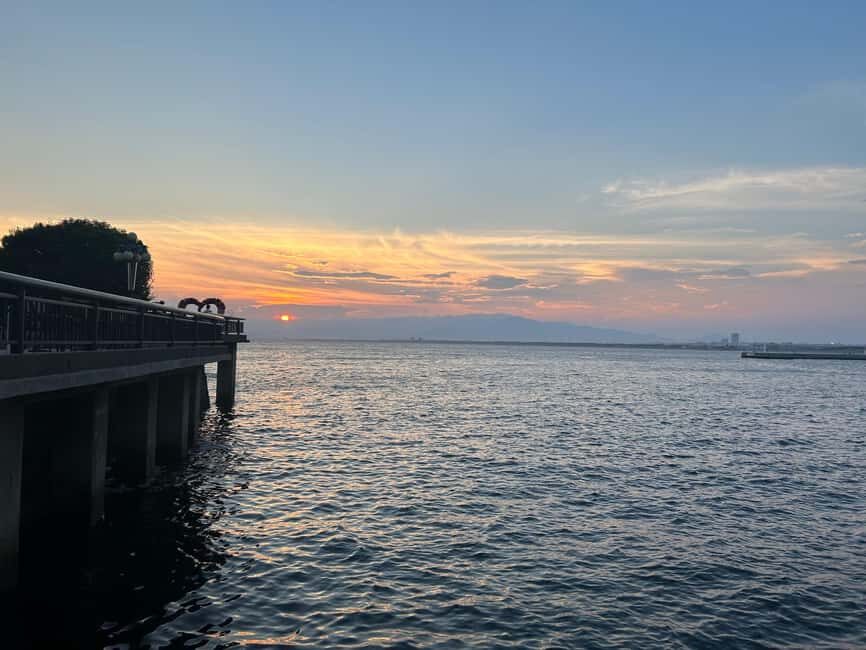
Kamakura and Enoshima are close enough that you can do them in one half-day, but only if you follow a sensible order. This tour keeps you moving like a local: you begin at the spiritual anchor in Kamakura, then you slide to Enoshima by train, and you finish with the most famous temple sights.
You’ll also get a guide who can connect the dots between places. That matters here, because these aren’t just photo stops. Each site reflects a different layer of belief and local identity, from samurai traditions to Buddhist devotion.
You can also read our reviews of more tours and experiences in Fujisawa.
Starting at Tsurugaoka Hachimangu: samurai culture in a walkable setting
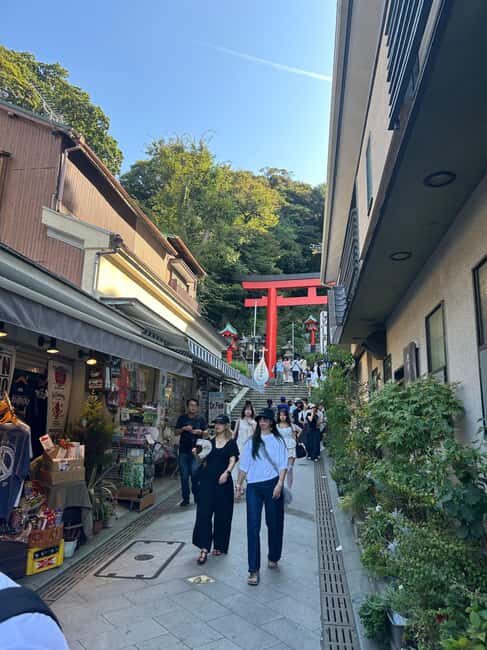
The tour kicks off at Tsurugaoka Hachimangu, Kamakura’s spiritual heart. You’ll spend about 45 minutes here with a mix of guided time and sightseeing, plus a photo stop to get oriented.
What I like about starting here is the way it gives meaning to what you see next. Kamakura is tied to samurai history, and Tsurugaoka Hachimangu is a symbol of that tradition, so you’re not just ticking off temples—you’re learning why the area feels the way it does.
A practical note: this is a popular landmark, so expect crowds at peak times. If you’re sensitive to noise and foot traffic, go in ready for busy energy.
A quick food-market pause to break up the temple time
Right after the main shrine area, there’s a shorter stop for photos and a visit that includes a food market for about 20 minutes. This is a smart pacing move. You’re still in the cultural zone, but you’re not standing around temple entrances for the entire tour.
You’ll have a chance to taste or browse small purchases, and the tour’s rhythm stays easy. Also, the tour notes that you should bring cash because some shops don’t accept cards—so don’t rely on card-only comfort.
Riding the historic Enoden: the coastal shortcut that’s also the experience
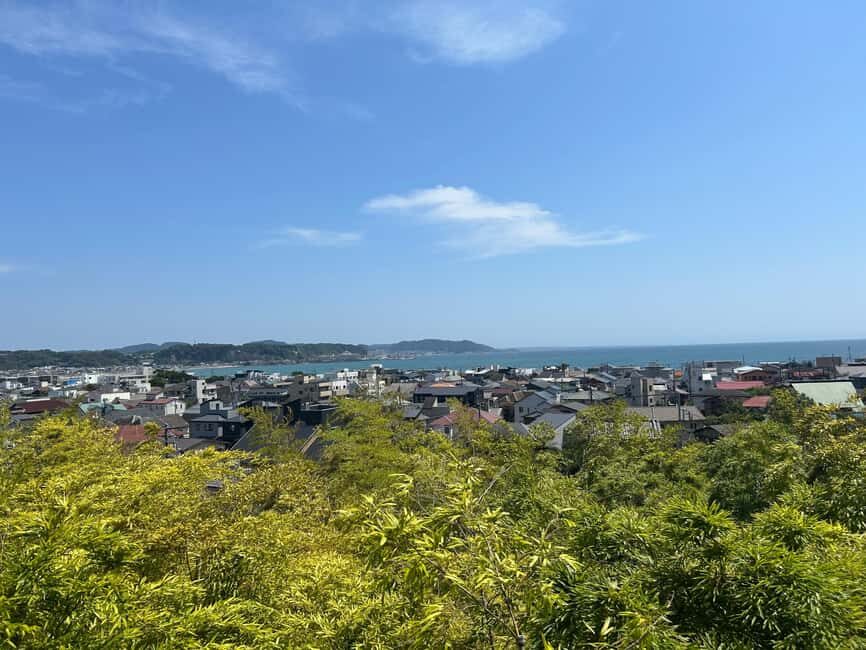
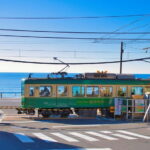
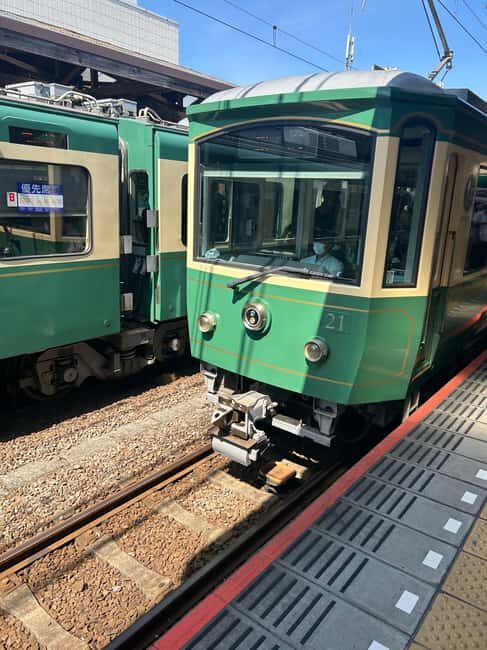
A big highlight is the Enoden train ride along the coastline. The tour builds this in as a guided transition, with roughly 15 minutes on the train at one stage and another shorter train segment later.
Here’s the value: you get scenery and context at the same time. You’re not stuck waiting at stations while you figure out which line to take. You’re also not stuck in a taxi bubble with zero payoff.
If you care about the “how” as much as the “what,” this is one of the best parts. Reviews consistently mention the views, and that’s exactly what this route is designed for.
Enoshima island walk: shrines, streets, and a slower seaside mood
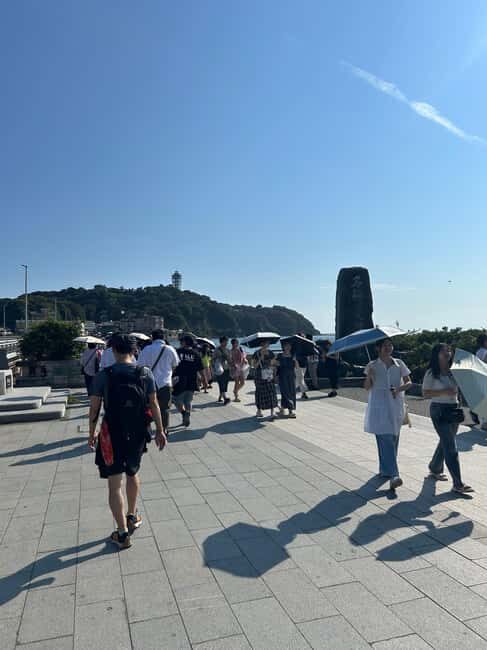
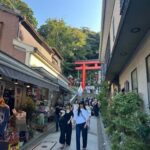
Once on Enoshima, you’ll spend about an hour walking around the island. Expect photo stops, guided time, and sightseeing, plus a food-tasting component built into that hour.
Enoshima works as a contrast to Kamakura. Kamakura can feel historic and serious; Enoshima is where the day turns more casual. You’ll walk through island streets and get a laid-back sense of coastal life, not just “scenic viewpoint tourism.”
A consideration: Enoshima’s charm comes with foot traffic. If the day is busy, your best strategy is to keep moving at a steady pace and accept that you may not linger everywhere. The guide’s pacing helps here.
Hase-dera Temple: gardens and Kannon views in about half an hour
After Enoshima, the tour heads to Hase-dera Temple. You’ll get around 30 minutes here with a photo stop and guided sightseeing.
Hase-dera is famous for peaceful gardens and for a major statue of Kannon, the goddess of compassion. I like this stop because it gives you something calmer after the island streets. It’s also a reminder that these places aren’t only about architecture—they’re about how the space makes you slow down.
If you’re visiting during peak hours, allow extra patience. Temple approaches can get crowded, and timing matters when you’re on a fixed half-day schedule.
Kōtoku-in and the Great Buddha: the big finish you can’t miss
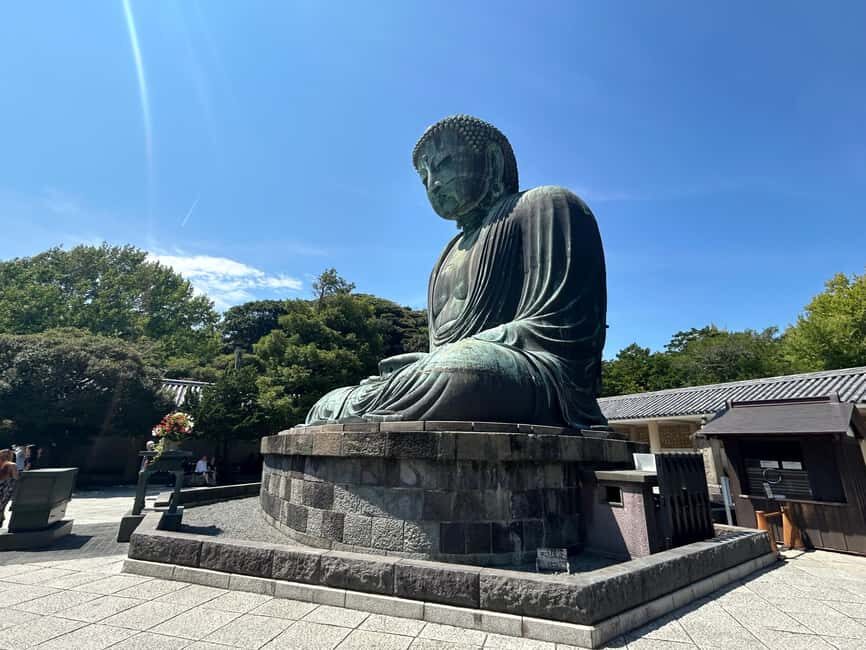
The final major temple stop is Kōtoku-in, home to the Great Buddha of Kamakura. You’ll spend about 40 minutes here, with guided time, sightseeing, and a photo stop.
This is the moment most people came for, and for good reason. The bronze Buddha is a landmark that has inspired visitors for centuries, and the tour format helps you appreciate it beyond the postcard version.
What makes the finish feel satisfying is the contrast. You’ve moved from shrine to train to island streets to garden calm, and then you land on a single iconic object. It feels like closure.
If you’re the type who likes to take photos, you’ll probably want a few extra seconds to frame shots from different angles. A guide can also help you choose better sightlines when the crowd density changes.
How the timing really works in 5 hours
This is a half-day tour, designed to feel full without dragging into a whole day. The schedule is tight but not rushed: shrine time first, then a market break, then Enoden rides, then Enoshima walking time, then Hase-dera, then Kōtoku-in.
That balance shows up in the feedback. Multiple people highlight that the tour is well put together, with beautiful views and a pacing that doesn’t feel chaotic. A guide who’s paying attention makes a difference, especially when you’re weaving between trains and temple entrances.
Still, manage expectations: it’s not a sit-and-stroll experience. You’ll be on your feet enough that comfortable walking shoes are a must.
Price and value: what $50 buys you
At about $50 per person for roughly 5 hours, this includes an English-speaking guide, walking time through Kamakura and Enoshima, and entrance fees to attractions.
Is it a bargain? For Japan, it’s fairly good value if you’d otherwise pay separate admission fees and struggle with transportation coordination. The real “value” isn’t only in saving money—it’s in saving brainpower. You get a structured route that uses Enoden to connect the dots.
Also, the small-group or private option matters here. A smaller group makes the guided context feel more natural instead of lecture-mode, and it can help you ask questions without waiting.
Guides and English support: the human factor
The reviews point to strong guiding, with people praising both knowledge and kindness. Names that came up include Yoko and Yuya, and both were described as very good at explaining things in English and answering lots of questions.
That’s a practical point for you. If you’re not reading every sign on your own, a guide’s explanations turn a temple-and-train day into a story you can actually follow. And if your Japanese is limited, it’s comforting to have someone handle the rhythm of where to go next.
Who should book this (and who should skip it)
This tour is best for you if you want:
- A structured half-day across Kamakura and Enoshima
- The Great Buddha + Kannon temple combo
- Scenic transport via Enoden
- A guide who can connect history, religion, and everyday atmosphere
Skip it if:
- You have mobility impairments or use a wheelchair (the tour is not suitable for wheelchair users)
- You’re traveling with children under 7
- You need to bring luggage or large bags, or baby strollers/baby carriages
One more reality check: the tour runs rain or shine, so plan for weather and keep your shoes ready for slippery temple paths.
Should you book this Kamakura & Enoshima coastal tour?
I think you should book it if you want the best of both worlds: Kamakura’s spiritual landmarks plus Enoshima’s seaside pacing, all linked by the scenic Enoden train. The route is tightly planned, it includes admissions, and the pacing sounds like what most people want from a half-day—enough depth to matter, not so long that you feel cooked.
Don’t book it if you’re not comfortable with steady walking or if accessibility is a key requirement. Also, if you dislike crowds, keep peak-hour timing in mind.
If you’re aiming for an efficient, authentic-feeling day with strong guide support, this one earns its good reputation.
FAQ
How long is the Kamakura and Enoshima tour?
The tour duration is 5 hours.
How much does the tour cost?
The price is listed as $50 per person.
Where does the tour start?
The meeting point may vary depending on the option booked, with one option at Kamakura Station (鎌倉駅 みどりの窓口). There is also an on-foot portion listed in the itinerary.
What language is the guide?
The tour includes an English-speaking live guide.
Which main sights are included?
You’ll visit Tsurugaoka Hachimangu, Hase-dera Temple, and Kōtoku-in (the Great Buddha of Kamakura), plus time on Enoshima Island.
Do you ride public transport during the tour?
Yes. The itinerary includes train rides on the Enoden along the coastline.
Is entrance to attractions included?
Yes. Entrance fees to attractions are included.
What should I bring?
Bring cash, since some shops may not accept cards for small purchases.
Is the tour suitable for kids and mobility needs?
The tour is not suitable for children under 7, people with mobility impairments, or wheelchair users.
![[Narita Airport Terminals 1, 2] 40-60km Sawara Itako Historic Bike Tour - The Route: Tone River Cycling Road to Edo Sawara and Katori Jingu](https://images.thejapantraveler.com/wp-content/uploads/narita-airport-terminals-1-2-40-60km-sawara-itako-historic-bike-tour.jpg)