REVIEW · SAITAMA PREFECTURE
Let’s enjoy Japanese Festival Music- Chichibu Yatai Bayashi
Book on Viator →Operated by Sachiko · Bookable on Viator
Festival music, before the lanterns even glow. In Chichibu, you get a rare, music-first look at Chichibu Yatai Bayashi, then you walk into shrine legends and the town that keeps them alive. The guide, Sachiko, ties it all together so you’re not just sightseeing landmarks.
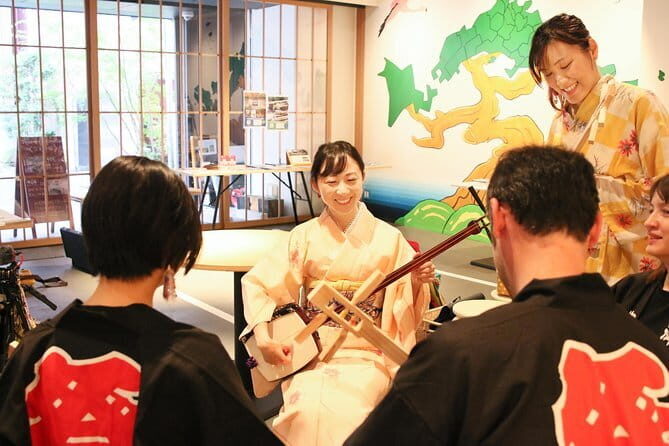
I love the English 3D theater and projection mapping at the Chichibu Festival Museum. I also like that Sachiko doesn’t treat it like a lecture—she actively helps explain the sounds and rhythms, and you can even get a chance to try taiko drums.
One catch: this tour runs only on Oct 6, 14, and 20 this year, and lunch isn’t included, so plan your timing if you need a meal break.
In This Review
- Key highlights worth planning around
- Chichibu Yatai Bayashi: why this music-first tour feels rare
- Chichibu Festival Museum: the 3D theater and projection mapping show
- Sachiko-led festival music: instruments, taiko practice, and what to listen for
- Chichibu Shrine in 50 minutes: Myoken-sama, Hidari Jingoro carvings, and legend connections
- Suwa Shrine, Otabisho, and downtown Chichibu: shops, cafes, and snack logic
- Price, timing, and logistics for a 4-hour afternoon loop
- Who this tour suits best (and who might rethink it)
- Should you book this Chichibu Festival Music tour?
- FAQ
- When does this tour run in October?
- How long is the experience, and what time does it start?
- Where do I meet the guide, and where does the tour end?
- Is the Chichibu Festival Museum show available in English?
- What is included in the price, and is lunch provided?
- What is the cancellation and refund rule?
Key highlights worth planning around
- English 3D theater and projection mapping bring the Chichibu Night Festival story to life fast
- Sachiko’s hands-on guidance makes the festival music easier to understand and enjoy
- Taiko drumming practice (not just watching) turns the experience into something you remember
- Chichibu Shrine context in 50 minutes connects Myoken-sama, Hidari Jingoro carvings, and local legend
- A downtown walk that feeds you with shops, cafes, and local gourmet options near key shrines
- Small group size (max 8) means more interaction and fewer “see you later” moments
Chichibu Yatai Bayashi: why this music-first tour feels rare
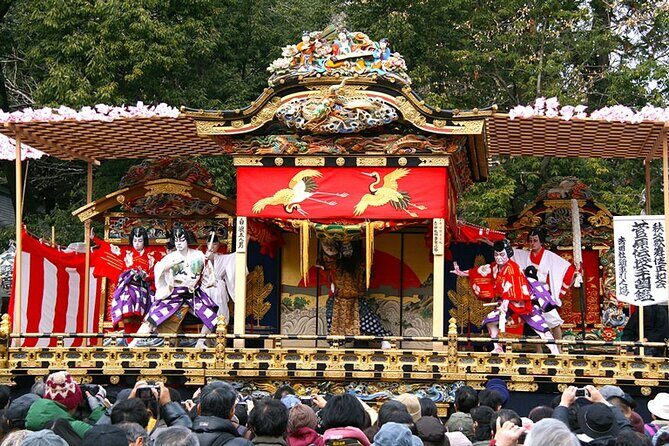
Most Chichibu tours focus on buildings, streets, and photo stops. This one flips the order: you start by tuning into the music and festival rhythm, then the history makes sense afterward. If you’ve ever wondered how Japanese festival sound is tied to community identity, you’ll get a direct answer here.
Sachiko’s approach is practical. She helps you understand what you’re seeing and hearing, instead of dumping facts. And because the group is capped at 8, you’re not fighting the crowd for explanations or instrument demos.
The festival angle also helps you slow down. Instead of rushing from one “famous place” to the next, you learn why the Chichibu Night Festival matters—so your shrine visit doesn’t feel random.
You can also read our reviews of more tours and experiences in Saitama Prefecture.


Chichibu Festival Museum: the 3D theater and projection mapping show
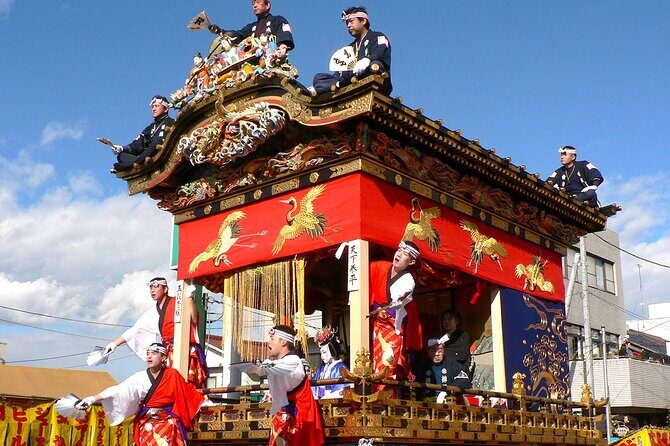
Your first stop is the Chichibu Festival Museum, where the big draw is the 3D theater in English plus projection mapping of the Chichibu Night Festival. Even if you’re not fluent in Japanese, you can follow what’s happening and why the festival looks the way it does.
What I like about starting here: it gives you visual anchors before you step outdoors. You’re not trying to imagine the festival while looking at a shrine. You already have the “movie” version in your head, so the real-world details land faster.
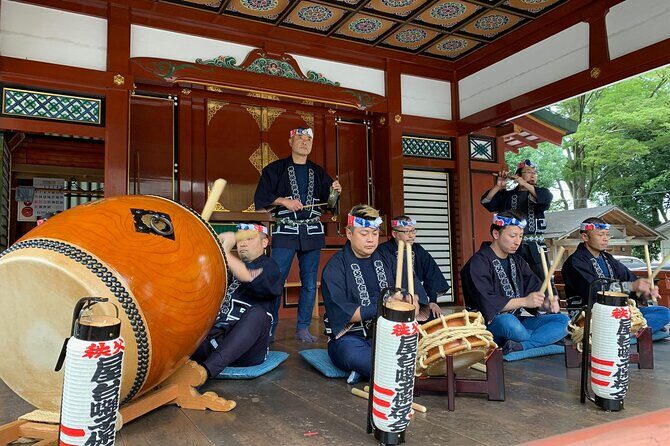
The museum portion is about 1 hour 30 minutes, and the admission is included. Inside, you’ll watch traditional festival music performed by local players, with Sachiko guiding the meaning of what you’re hearing. The effect is that you leave the museum with context, not just memories of lights and sound.
Possible drawback: if you strongly prefer outdoor walking and dislike theaters, you might feel the museum takes up too much of the day. But for most people, it’s the best use of time—especially for a 4-hour tour window.
Sachiko-led festival music: instruments, taiko practice, and what to listen for
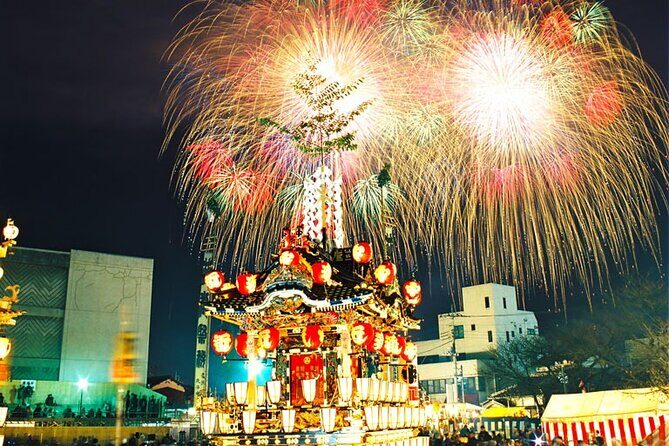
After the museum’s visuals, the tour keeps the focus on sound and performance. This is the part that makes the experience feel uncommon: you’re not only observing festival music—you’re learning it as a living practice.
Sachiko can guide you with the instruments, and you may also get a chance to try taiko drums. That matters. Watching drummers is one thing; getting your hands involved makes you understand the pace and physical effort behind the rhythm.
When you try taiko (even briefly), pay attention to the timing more than the power. Festivals like Yatai Bayashi depend on coordination—how one player’s beat locks into the group’s flow. If you approach it as learning rhythm rather than “performing,” you’ll have more fun and feel less pressure.
This section is also where Sachiko’s tour style shows up. In a small group, she can adjust her explanations depending on what you ask and what you seem to notice—so the tour doesn’t feel generic.
Chichibu Shrine in 50 minutes: Myoken-sama, Hidari Jingoro carvings, and legend connections
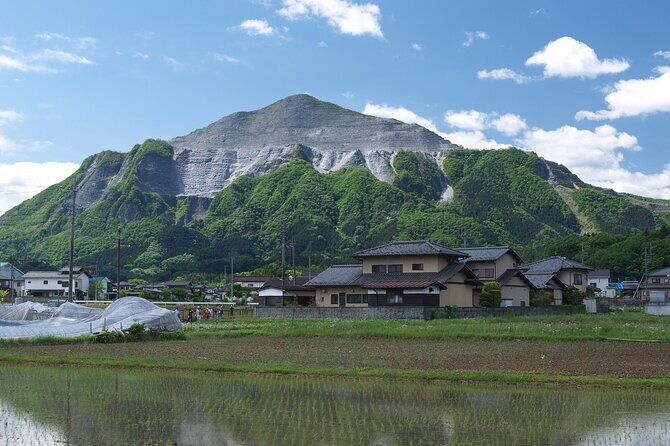
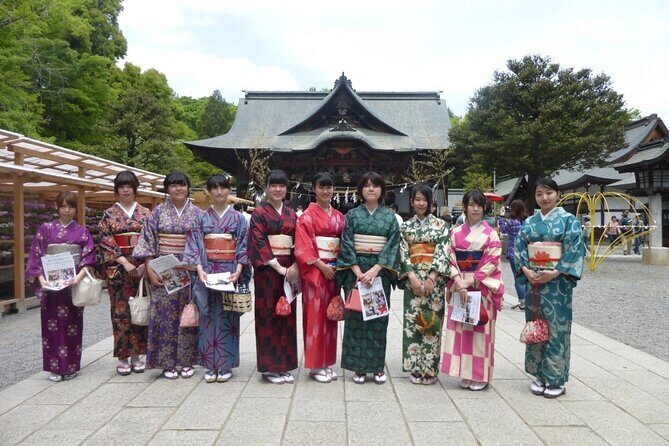
Next you head to Chichibu Shrine for about 50 minutes. The shrine has a long timeline—about 2111 years—and you’ll hear the spiritual story behind why people gather here.
A key figure is Myoken-sama, a female deity said to live at Chichibu Shrine and associated with the direction of the northern star. That detail isn’t just folklore filler. It helps you see the shrine as part of a cosmic map, not only a local stop.
You’ll also connect the shrine story to the Dragon God legend: Mt. Buko is linked to the Dragon God, and the Dragon God comes to Otabisho once a year to meet Myoken-sama on the day of the Night Festival. That yearly meeting concept turns the later downtown portion into more than a walk—it becomes the “where the story happens” map.
You’ll have time to notice carved artwork too. The shrine features magnificent sculptures carved by Hidari Jingoro, a famous woodcarver from the Edo era. Even in a short visit, that kind of craftsmanship gives you something concrete to focus on while you absorb the background.
Possible consideration: 50 minutes is tight for a shrine, especially if you like lingering. The tradeoff is that you’re getting the essential story beats and key visuals without the day turning into a slow crawl.
Suwa Shrine, Otabisho, and downtown Chichibu: shops, cafes, and snack logic

After the shrine stop, you move into the downtown area with about 1 hour 40 minutes. This is the part designed to feel like Chichibu, not like a checklist.
You’ll visit Suwa Shrine, connected in the legend as the home of the wife of the Dragon God living on Mt. Buko. Then you’ll head to Otabisho, the place tied to that once-a-year meeting between the Dragon God and Myoken-sama.
This is where you’ll see how the festival story threads through multiple sacred sites. If you already absorbed the museum context, the legends start behaving like a connected map instead of three separate explanations.
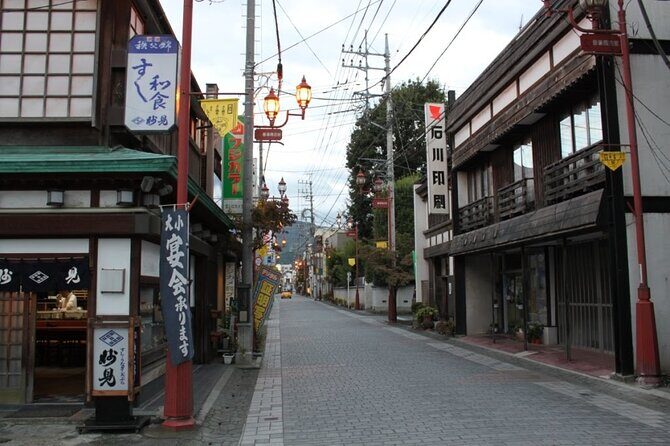
And yes, this is also your time to handle the practical side: Chichibu streets here are lined with shops and cafes, and the walk is set up so you can pick up local snacks or browse small stores. Lunch isn’t included on the tour, so I’d treat this downtown time as your chance to eat something real rather than just “wait for dinner.”
Tip: because the tour ends at a station with food and souvenir options, you can keep your shopping flexible. Grab a quick snack during the stroll if you need it, then decide later if you want a bigger meal near Seibu-Chichibu.

Price, timing, and logistics for a 4-hour afternoon loop
Let’s talk value, because $26.06 can feel either “cheap” or “not cheap” depending on what you usually pay for experiences like this.
Here, you’re paying for:
- the Chichibu Festival Museum admission (500 yen for adults; included in the price)
- structured access to a festival-music performance setting
- a guide-led explanation that connects the museum to shrines and legends
- a small-group format (max 8)
- a mobile ticket setup
The total duration is about 4 hours, starting at 12:30 pm. That’s useful if you’re staying in the area and want a full afternoon activity that still leaves time afterward for dinner and browsing.
You meet at Chichibu Station (1 Miyakawacho, Chichibu) and the tour ends at Seibu-Chichibu Station (1 Chome-16 Nosakamachi, Chichibu). Ending at Seibu-Chichibu is convenient because there’s a local food court and souvenir shops right there for last-minute needs.
Mobile ticket note: you’re using a mobile ticket, so have your confirmation ready on your phone. This keeps check-in easy and reduces paperwork stress.
Small practical drawback to plan around: lunch isn’t included. If you’re the type who gets cranky when hunger hits, build in a snack plan before or during the downtown walking time.
Who this tour suits best (and who might rethink it)
This tour is a great fit if:
- you want Chichibu through festival music, not just sights
- you like cultural context tied to specific places (shrines, carvings, and legend geography)
- you enjoy small-group guiding where questions and interaction are realistic
- you’re curious enough to try taiko drums, even if you’re a beginner
You might rethink it if:
- you prefer long scenic walks with minimal museum time
- you’re only interested in the most famous photo spots and don’t care about festival music interpretation
- you need lunch to be included (because it isn’t)
Should you book this Chichibu Festival Music tour?
I’d book it if your goal is to understand Chichibu’s festival culture in a way that sticks. The pairing of the museum’s English 3D theater and projection mapping with shrine legend context makes the day feel coherent. And Sachiko’s festival-music guidance turns the experience from passive watching into something active, especially if you get a taiko chance.
Book it soon if you’re planning for October. This is not a daily tour—it runs only on Oct 6, 14, and 20 this year—so your calendar matters more than usual.
FAQ
When does this tour run in October?
This tour is held only on Oct 6, 14, and 20 this year.
How long is the experience, and what time does it start?
The tour lasts about 4 hours and starts at 12:30 pm.
Where do I meet the guide, and where does the tour end?
You start at Chichibu Station (1 Miyakawacho, Chichibu) and end at Seibu-Chichibu Station (1 Chome-16 Nosakamachi, Chichibu).
Is the Chichibu Festival Museum show available in English?
Yes. The 3D theater is in English.
What is included in the price, and is lunch provided?
The price includes all fees and taxes, plus admission to the Chichibu Festival Museum. Lunch is not included.
What is the cancellation and refund rule?
You can cancel for a full refund if you do so at least 24 hours before the experience starts. If you cancel less than 24 hours before, the amount paid is not refunded.