REVIEW · SAITAMA PREFECTURE
Ecotourism and Woodcraft with a Mountain Artist Near Tokyo
Book on Viator →Operated by 奧むさし飯能観光協会 · Bookable on Viator
You come for the wood, stay for the silence. This 2.5-hour eco tour in Hanno connects Nishikawa timber heritage with hands-on forest work and a calming, forest-bathing walk. I especially like the way you get real forestry context, not just nature photos, and then you turn that learning into a personal kanji souvenir. One thing to consider: you’ll be outside in forest conditions, so bring weather-minded clothing and expect a fairly basic, active format.
Small groups help here, and you feel it from the start. The tour runs with a max of 8 people, and the flow stays practical: meet at Higashi-Agano Station, ride to the forest in an air-conditioned vehicle, then return to town without drama. The only drawback is that lunch is not included, so plan to eat after you finish—unless you’re happy hunting for something nearby on your own.
In This Review
- Key highlights at a glance
- A fast nature reset from Tokyo: Hanno and the forest day rhythm
- Finding the start point: Higashi-Agano Station to Kirari
- Nishikawa timber and the mountain artist style lecture
- Forest walking, forest bathing moments, and cutting a log
- The Kirari woodcraft session: pyrography with your own kanji
- What you’re really paying for: $93.93 value and small-group attention
- Practical tips that actually help on the day
- Dress for forest work
- Think ahead about lunch
- Know the tour is weather-dependent
- Go in open-minded
- Who should book this woodcraft-and-forest experience near Tokyo
- Should you book it?
- FAQ
- How long is the experience?
- Where does the tour start and end?
- Is lunch included?
- What’s included in the tour price?
- How big is the group?
- Will I need a ticket?
- Is the tour available in bad weather?
- Can I get a refund if plans change?
Key highlights at a glance
- Nishikawa timber background tied to Tokyo architecture and long-running forestry traditions
- A walk through an internationally certified private forest that’s usually closed to the public
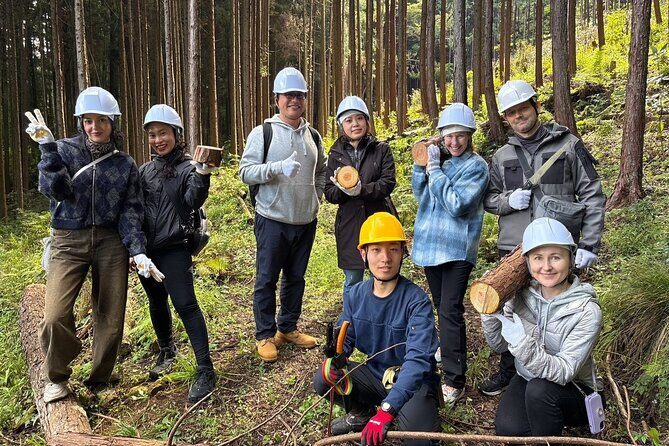
- Hands-on thinning concepts and actual log cutting (with safety gear provided)
- A calming forest-bathing style break under cedar and cypress canopy
- Pyrography with a kanji of your choice on a wooden Edo Castle piece that becomes a smartphone stand
- A small-group cap of 8 travelers for more time with the guide and hands-on tools
A fast nature reset from Tokyo: Hanno and the forest day rhythm
This tour is built for people who want out of the city without losing half the day to transit. You’re in Saitama Prefecture, in and around Hannō (often reached about an hour by train from Tokyo), which makes it a doable option even if you’re not planning a full weekend away.
The pace is also smart: about 2 hours 30 minutes total. That includes the forestry walk and the woodcraft session, plus time for getting back to the station. It’s long enough to feel like a proper experience, but short enough that you’re still able to eat lunch later and keep your day moving.
You can also read our reviews of more tours and experiences in Saitama Prefecture.

Finding the start point: Higashi-Agano Station to Kirari
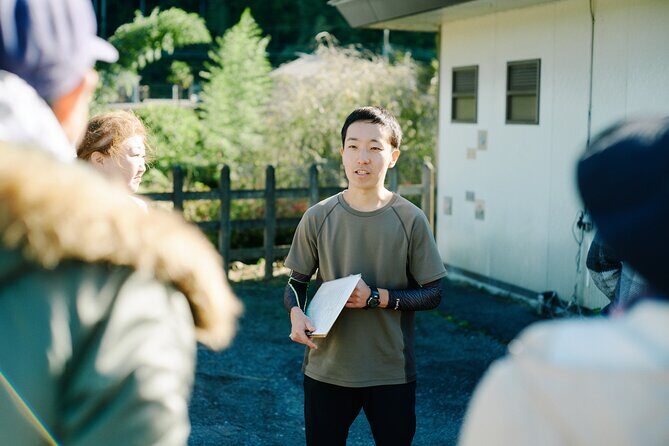
Your tour begins at Higashi-Agano Station, where you’ll exit the ticket gate and look for your guide holding a placard. From there, the day flows into a studio and forest experience, with you meeting your group first.
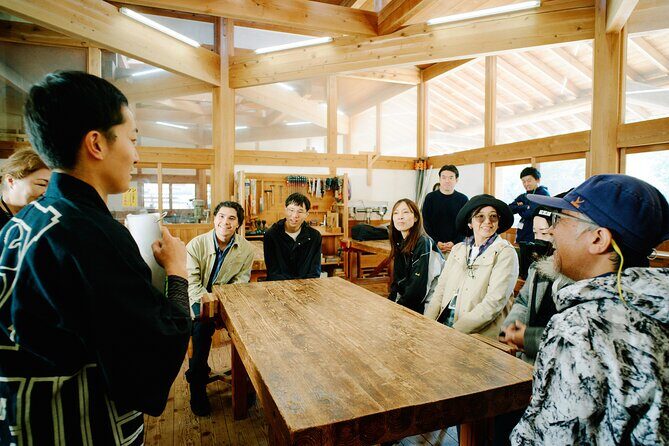
The craft portion happens at 木楽里(Kirari), the woodworking studio. This is where you get the main explanation for the timber, and it’s also the setting for your pyrography session later. What I like about starting the day with a clear meeting point like a station is that you don’t waste energy figuring out where things are supposed to happen.
There’s an air-conditioned vehicle involved, used to get you between the station and the activity site. Even if you’re used to walking tours, that little bit of support matters in Japan’s countryside because it keeps the day comfortable and on schedule.
Nishikawa timber and the mountain artist style lecture
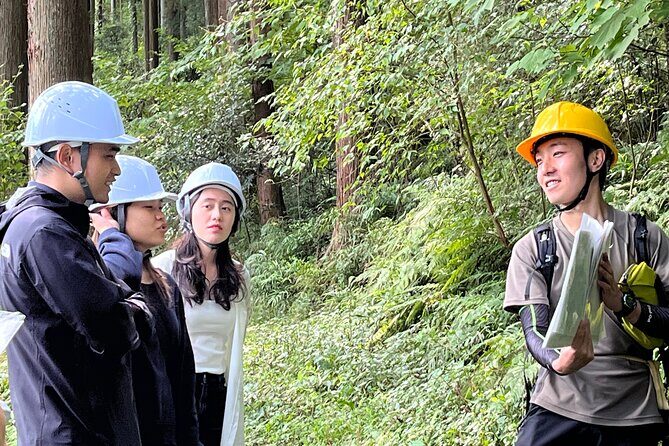
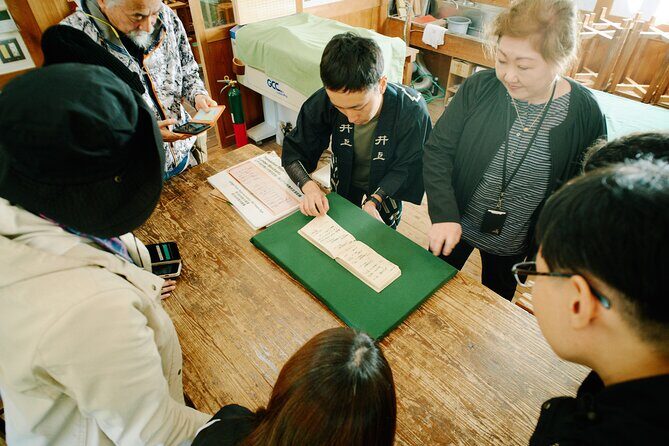
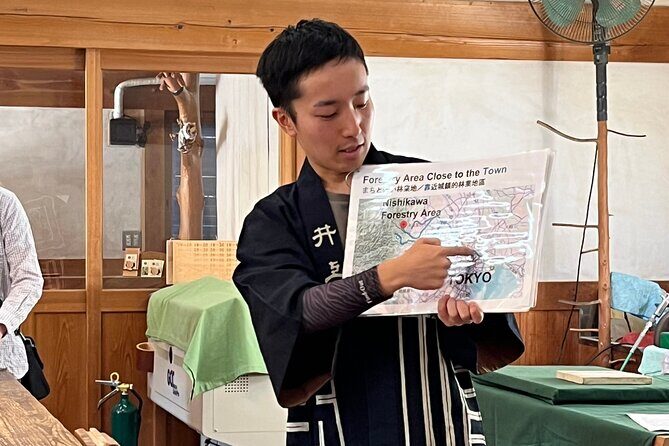
A key part of the experience is what you learn before you start cutting or carving. You’ll get a lecture from a forestry master—often described with the poetic title mountain artist—about Nishikawa timber and local forestry practices.
This isn’t abstract. You’ll learn how the wood connects to Tokyo’s architecture, including the idea that Nishikawa timber was once premium material and that the name reflects origins west of Tokyo. That kind of context helps your brain connect the dots: you’re not just touching a tree, you’re touching a material with a job in the built environment.
You’ll also hear about thinning, which is a central practice for forest health. It’s one of those topics that sounds technical, but the payoff is simple: without thinning, forests can become stressed and less resilient. This makes the hands-on part feel purposeful, not random.
The setting itself is special. You enter a private forest that’s described as internationally certified and normally closed to the public. That matters because it turns your walk into more than sightseeing—you’re seeing working forestry land with real stewardship behind it.
Forest walking, forest bathing moments, and cutting a log
Once you’re in the forest, the tour becomes very hands-on, but it stays grounded in calm. You’ll walk through cedar and cypress trees and take in the aromas of three types of wood. That sensory setup is surprisingly effective: it nudges you to slow down, notice bark, and pay attention to the differences you might otherwise miss.
The tour also includes a forest-bathing style break. In practical terms, that means you’re not just moving from one activity to the next. You get time to relax beneath the canopy and take in the quiet. If you like experiences that feel like a reset rather than a checklist, this portion is a big reason the reviews run high.
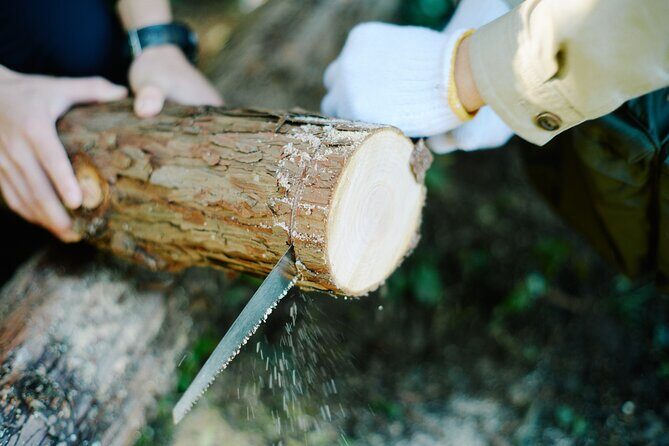
Then comes the part most people remember: log cutting. You’ll hear how thinning works, and then you try cutting yourself. If you’re thinking you’ll be a pro with a saw on the first try, keep expectations realistic. Cutting wood takes coordination and strength, and it may feel harder than you picture. Still, that’s also what makes it satisfying—you’re doing something real, with guidance.
Safety is handled in a straightforward way. The forest walk and woodwork include basic protective measures such as helmets and gloves, so you’re not left to improvise.
The Kirari woodcraft session: pyrography with your own kanji
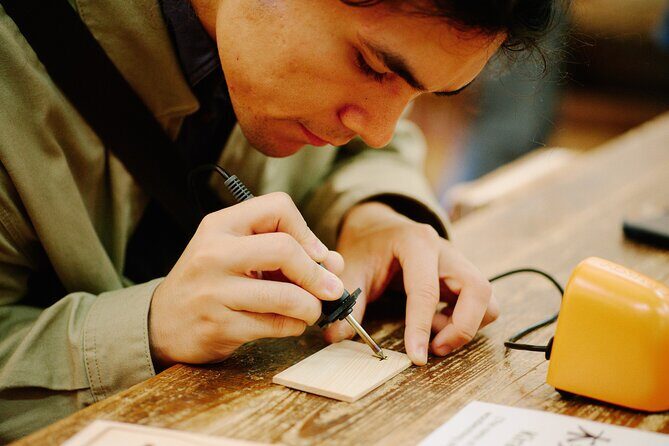
After the forest work, you shift from outdoor stewardship to a studio craft session at Kirari. This is where you use a pyrography pen to inscribe a kanji of your choice on a wooden piece shaped like Edo Castle.
This is one of the most “keep it forever” parts of the day because the result has both function and meaning. You’re not just making a flat souvenir. The finished piece becomes a smartphone stand, so it has a daily-use reason to stick around after the trip.
What I like about this craft is the balance. It’s guided enough that you’re not panicking over technique, but you still make a personal choice (your kanji). That small decision makes the object feel like yours, not like a mass-made item from a shop.
Also, pyrography is oddly calming. There’s a steady rhythm to tracing characters and focusing on small, controlled movements. Even if your forest energy runs out, this part gives you a quieter way to finish strong.


What you’re really paying for: $93.93 value and small-group attention
At about $93.93 per person for roughly 2 hours 30 minutes, the price isn’t just about using tools. You’re paying for several things at once:
- access to a normally closed private forest
- expert teaching about Nishikawa timber and thinning
- hands-on participation in log cutting
- a guided pyrography workshop with a final souvenir that has a real use
The group size cap of 8 travelers matters for value. In a bigger class, pyrography time can feel rushed, and forest cutting can become more “watch and pose.” Here, the small number supports one-on-one help and safer pacing during the more active parts.
You also get a mobile ticket, which keeps things easy on arrival. And because the day starts and ends at the same station area, it reduces the odds of wasting time on last-minute confusion.
Practical tips that actually help on the day
This kind of experience rewards preparation, not overthinking. Here’s how to set yourself up so you feel comfortable from start to finish.
Dress for forest work
You’ll be walking in a natural setting and doing cutting activity, so wear clothes that you don’t mind getting a little dusty. Closed-toe shoes are a safe call. If it’s cool or damp, bring layers—your comfort matters more than fashion.
Think ahead about lunch
Lunch is not included. The tour returns around the lunchtime window after you’re driven back to Higashi-Agano Station, with options for eating once you reach Hannō Station. I recommend deciding in advance if you want something quick near the station or if you’re happy to browse.
Know the tour is weather-dependent
The experience requires good weather. If conditions look bad, you may be offered a different date or a full refund. So don’t book a tight schedule with no flexibility.
Go in open-minded
Log cutting and pyrography both teach a skill you may not have. You don’t need prior woodworking experience. The value here is learning how local forestry and woodcraft work in a real, guided setting.
Who should book this woodcraft-and-forest experience near Tokyo
This is a great fit if you want a day trip that feels more meaningful than typical sightseeing.
You’ll likely love it if:
- you care about sustainable forestry and want to understand thinning and forest care beyond slogans
- you like hands-on work you can bring home in your hands, not just in photos
- you want a quieter nature break, with time that feels like forest bathing
- you enjoy Japanese craft and want to choose a kanji for your own souvenir
You might hesitate if:
- you’re looking for a purely gentle stroll with zero physical effort
- you hate being outside and prefer climate-controlled sightseeing only
For most people, the mix works well: learning in the studio, forest time outdoors, then a relaxing craft finish.
Should you book it?
I’d book this if you want one of the more authentic, active eco experiences near Tokyo without committing to a whole day of travel. The strongest reasons are the combination: real forestry education, log cutting participation, and a craft that actually results in something useful (a smartphone stand with your chosen kanji).
If you’re the type who likes learning how things are made—forests managed, wood used, characters drawn in real time—this day hits the mark. Just plan your lunch and dress for the forest, and you’ll leave with a story you can touch.
FAQ
How long is the experience?
It’s about 2 hours 30 minutes.
Where does the tour start and end?
It starts at Higashi-Agano Station and ends back at the same meeting point.
Is lunch included?
No. Lunch is not included.
What’s included in the tour price?
The tour includes an air-conditioned vehicle to drive you from Higashi-Agano Station to the activity site. Other activities like the forest experience and craft are part of the experience.
How big is the group?
The tour has a maximum of 8 travelers.
Will I need a ticket?
You’ll use a mobile ticket.
Is the tour available in bad weather?
The experience requires good weather. If it’s canceled due to poor weather, you’ll be offered a different date or a full refund.
Can I get a refund if plans change?
Yes. Free cancellation is available up to 24 hours in advance for a full refund.