REVIEW · KYOTO
Kyoto : Family-Friendly Sword Lesson at Samurai Ninja Museum
Book on GetYourGuide →Operated by GLOBA Inc. · Bookable on GetYourGuide
Katana practice in costume sounds corny, but it works. In Kyoto, you get a real hands-on katana lesson plus themed photo moments that feel way beyond a quick souvenir stop. You’ll learn some samurai basics (including the idea of proper technique) and then step into the role with period-style outfit elements.
I also like how the class is kept small, so the English instructor can actually guide you as you try. The vibe is equal parts fun and learning, and you’ll see energy ramp up fast—especially once the kids join in. One thing to consider: children under 3 can’t enter the samurai venue, so it may not work for the youngest travelers.
In This Review
- Key highlights you’ll care about
- Kyoto Samurai to Ninja in Two Hours: What the Flow Feels Like
- Suiting Up in Hakama, Helmet, and Armor (So It Feels Real)
- The Katana Lesson: Demonstration First, Then You Try
- Posing in Samurai-Themed Photo Spots (Yes, It’s Part of the Value)
- Ninja Weapons Trial: Shuriken Target Practice Brings It Home
- The Samurai and Ninja Museum Visit: What You Gain Beyond Photos
- Price and Value: Does $66 Make Sense for Two Hours?
- Who This Kyoto Experience Fits Best (and Who Might Want to Skip)
- Logistics That Matter in Kyoto (Without Making It a Project)
- Small Details That Improve Your Experience Fast
- Should You Book This Kyoto Samurai Sword Lesson?
- FAQ
- How long is the Kyoto family-friendly sword lesson?
- What is the price per person?
- What’s included in the experience?
- Is the instruction available in English?
- What should I expect during the sword lesson?
- Are there ninja activities included?
- Who can participate, and is there an age limit?
- How big are the groups?
- Is transportation to and from the activity included?
Key highlights you’ll care about
- Hakama + helmet + armor: you dress the part, not just for one photo.
- English-led sword training: a teacher demonstrates, then you practice.
- Kata instruction: you work through set movement sequences (often 2).
- Studio-style photo opportunities: posing is part of the experience.
- Ninja weapons trial: you get a turn with ninja tools, including shuriken target play.
- Small group format: limited participants for better attention.
Kyoto Samurai to Ninja in Two Hours: What the Flow Feels Like
This is a 2-hour, small-group experience designed around one simple goal: you leave feeling like you took part in samurai and ninja culture, not just looked at it. The format is hands-on from the start—first the look, then the technique, then the fun stuff—so the energy doesn’t sag halfway through.
You’ll start at the samurai-focused portion, where you get dressed and learn safe basics for swinging a sword. Then the experience shifts into the ninja side with a weapons trial, plus themed photos and a guided museum visit. If you’re traveling with kids, the pacing matters. It’s structured enough to feel organized, but playful enough to keep attention.
You can also read our reviews of more museum experiences in Kyoto

Suiting Up in Hakama, Helmet, and Armor (So It Feels Real)
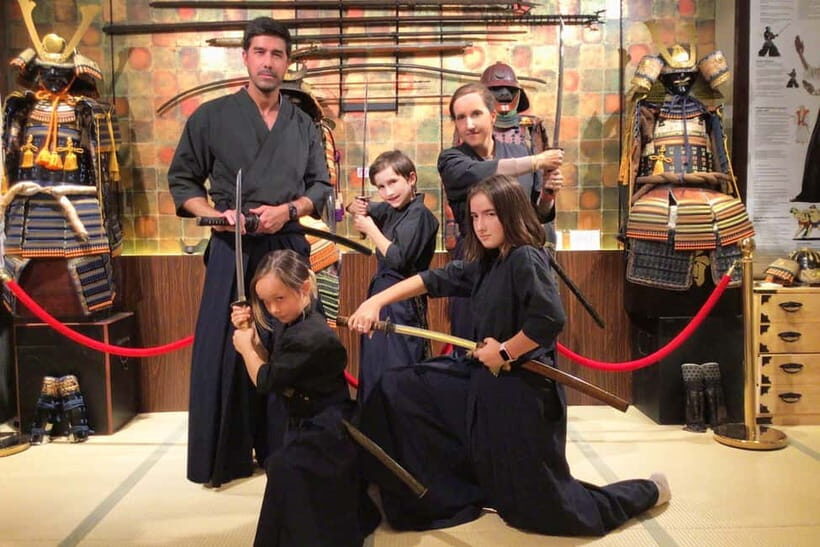
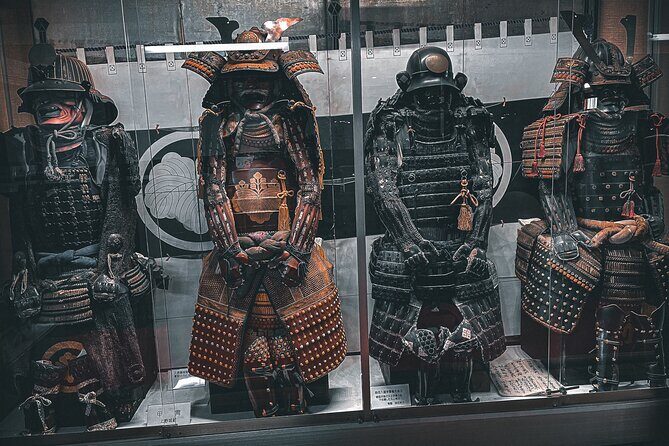
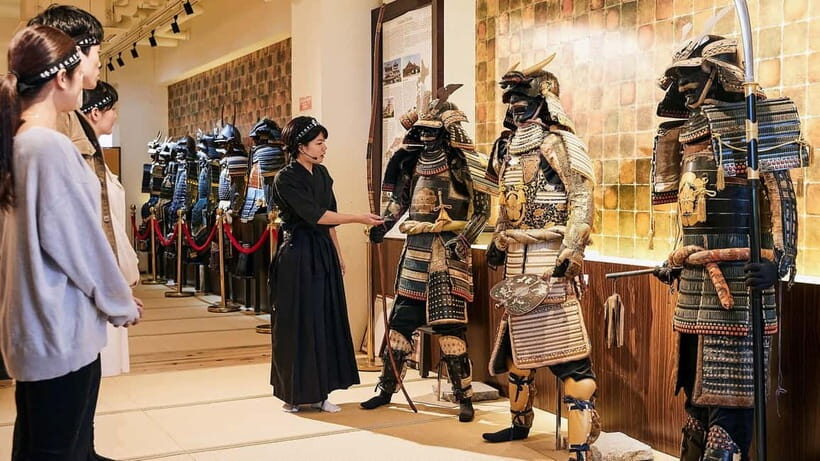
The first big moment is dressing up. You’ll wear samurai outfit pieces like a hakama, and you’ll also use items such as a samurai helmet and samurai armor. It’s not just a costume change for a single picture. You’re outfitted for the full training-and-photo flow.
Why this matters: when you actually put on the clothing and gear, it helps your brain shift from tourist mode to role-play mode. Even if your sword skills are brand new, you instantly feel part of the action. That’s the difference between watching and doing.
This is also where you’ll get some of the most memorable images. The backgrounds are themed, so you’re not standing in a generic room holding a prop. You’re posing in a setting built for the look.
The Katana Lesson: Demonstration First, Then You Try
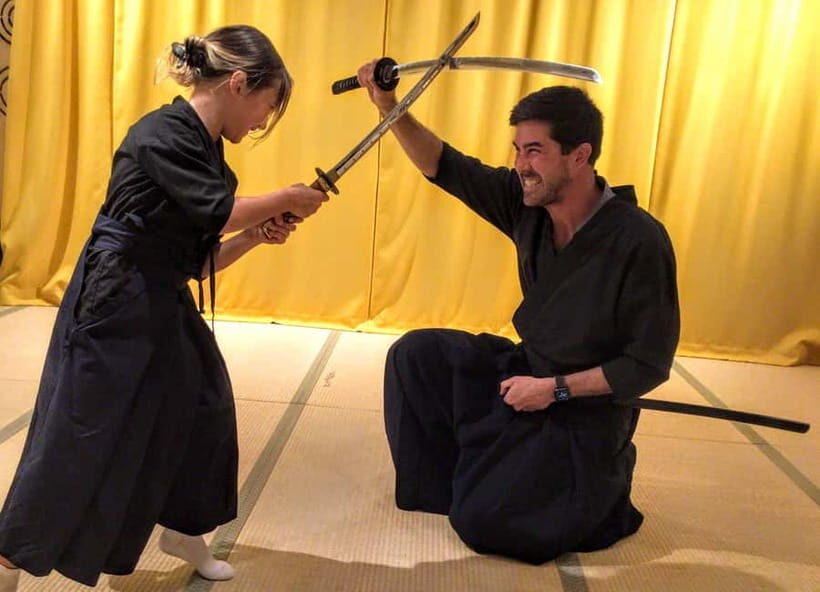
You’ll start with a demonstration of how to properly swing a sword, then you try yourself with guidance from an English-speaking instructor. The training is built around understandable movement practice, not showy stuff for experts.
A strong clue from past participants: people describe learning kata—set sequences of movements with the katana. One review specifically mentioned learning 2 kata, and that matches the feel of a short, structured class: you get a clear starting point, then you repeat and refine.
In practical terms, expect this to feel like a mini skill workshop. You aren’t just holding a sword for a second. You’ll learn the idea of form and timing, then attempt the motions while the teacher helps you correct what you’re doing.
Also, the instruction is in English. That sounds obvious, but it matters here because sword technique can be tricky. Having a clear teacher explaining what to do keeps the whole thing from turning into random swinging.
Posing in Samurai-Themed Photo Spots (Yes, It’s Part of the Value)
The photo side isn’t an afterthought. You’ll get themed photo opportunities, including posing with swords in front of a studio or samurai-themed backgrounds. This is one of the most praised parts of the experience because it turns a training session into a souvenir you’ll actually want to keep.
Here’s the trick: don’t treat the photos like a distraction. Treat them like part of the choreography. When you’re asked to pose, it encourages you to stand correctly, hold the sword with the right posture, and make the movement look intentional.
If you’re worried about feeling awkward, relax. The format is designed for beginners. You’ll be doing very staged poses rather than improvising combat scenes.
Ninja Weapons Trial: Shuriken Target Practice Brings It Home
After the samurai sword portion, the experience shifts to the ninja side with a ninja weapons trial. The most standout activity described is shuriken-style target practice. You’re not just watching someone throw. You get your own turn.
Why this is worth your time: it adds variety right when it would be easy for the experience to repeat the same theme. Sword work is one kind of training. Target practice is another, and it’s instant fun. Even adults tend to get competitive once the targets are in front of them.
If you’re bringing kids, this part is usually the energy peak. It’s concrete—hit or miss—and it gives you quick feedback. That makes it feel like a game, not a lecture.
A few more Kyoto tours and experiences worth a look


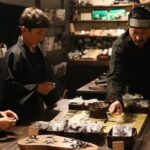


The Samurai and Ninja Museum Visit: What You Gain Beyond Photos
You also get a guided visit tied to the Samurai and Ninja Museum experience. Reviews describe this part as interesting, and it gives context to what you just tried.
Think of it like the “why” behind the “how.” The lesson gives movement. The museum visit helps explain the cultural background—how samurai lived, how they fought, and how ninja legends and tools fit into the broader story people remember.
You don’t need to be a history nerd for this to land. The museum portion works best when you see it as a way to connect what you’re holding and doing with what you’re learning about the culture.
Price and Value: Does $66 Make Sense for Two Hours?
At $66 per person for a 2-hour activity, you’re paying for more than a classroom session. The included value stack is meaningful:
- Samurai sword lesson (instruction + practice)
- Use of hakama and other costume pieces (helmet, armor)
- Themed photo opportunities
- Ninja weapons trial (including target-style play)
- Small-group coaching with an English instructor
- Skip-the-ticket-line style entry
So what are you really buying? Time with equipment and staff. If you tried to piece this together yourself—costume rental, a private instructor, photos, and a ninja activity—you’d likely spend more and still end up with a less organized experience.
The one value question to ask yourself is simpler: do you want a skill workshop plus a costume-and-photo package? If yes, this price fits. If you only want history lectures or only want museum time, you might find it feels too “activity-heavy.”
Who This Kyoto Experience Fits Best (and Who Might Want to Skip)
This is ideal for:
- Families who want a shared activity that feels fun for kids but not childish for adults
- Beginners who want guided instruction without needing prior martial arts experience
- Anyone who likes hands-on travel: dress up, learn, then do the thing
- Travelers who want Kyoto photos that look like more than a random stop
It may be less ideal for:
- Very serious martial artists who want a long, technical training program (this is short and beginner-friendly)
- Travelers traveling with very young kids, since children under 3 can’t enter the samurai venue
- People who prefer museums only, with no sword-and-costume portion
Logistics That Matter in Kyoto (Without Making It a Project)
This runs close to public transportation, which helps in a city where hopping across neighborhoods can eat your day. The activity also has stroller and wheelchair accessibility, which is useful if your family has mobility needs.
One more practical note: transportation to and from the activity isn’t included. Plan to arrive on time from wherever you’re staying, then let the experience handle the rest once you’re there.
Also, expect a small group. The format is limited to a small number of participants (and the overall activity has a cap). That smaller setting is part of why the teaching seems to land well in reviews.
Small Details That Improve Your Experience Fast
Here are a few practical moves that keep this kind of activity smooth:
- Go in knowing you’ll dress up and move. Wear comfortable clothes you can manage with the costume overlay.
- If you’re camera-first, decide ahead of time what matters most: sword poses, ninja target moments, or both. The session flows through all of it, but focus helps.
- If you’re traveling as a group, plan your photo preferences early so you don’t waste time deciding mid-session.
- Bring a calm attitude. You’re learning technique in a short time, not becoming a swordsman.
From the reviews, the instructors are a big part of the success. Names mentioned include Raito (praised for teaching), Maestro Ken (teaching kata and dressing the group), Nobu, and Jukia. That variety hints at consistent staffing and a teaching style aimed at making beginners comfortable.
Should You Book This Kyoto Samurai Sword Lesson?
Book it if you want an experience that mixes costume, instruction, and play in one tidy package. The best reason is value-for-effort: you’re not just watching sword culture; you’re acting it out, learning basic technique, and then getting ninja target practice plus themed photos.
Skip it if you’re mainly after a museum day, or if your travel party includes toddlers under 3, or if you want a serious multi-hour training track with deeper technique.
If you’re in the middle—curious, excited, and a little goofy in a good way—this is a strong pick for Kyoto. You’ll walk away with better than a souvenir: you’ll have a skill moment, photos with real “I did it” energy, and a story you can tell at dinner tonight.
FAQ
How long is the Kyoto family-friendly sword lesson?
The experience lasts 2 hours.
What is the price per person?
The price is $66 per person.
What’s included in the experience?
It includes a samurai sword lesson, use of hakama, a samurai helmet, samurai armor, themed photo opportunities, and a ninja weapons trial.
Is the instruction available in English?
Yes. The instructor speaks English.
What should I expect during the sword lesson?
You’ll watch a demonstration of how to properly swing a sword, then you’ll try it yourself. The session also covers the history of samurai, and you learn kata sequences.
Are there ninja activities included?
Yes. There’s a ninja weapons trial, including target practice with ninja shuriken.
Who can participate, and is there an age limit?
Children under 3 cannot enter the samurai venue.
How big are the groups?
It’s a small group limited to 10 participants, and the overall activity can have a maximum of 22 travelers.
Is transportation to and from the activity included?
No. Transportation to and from the activity is not included.