REVIEW · NARA
Nara: Authentic Onigiri Cooking Class & Meal in a Local Home
Book on Viator →Operated by Authentic Local Experience House · Bookable on Viator
Want Nara without the tour-bus noise? I love that you cook in Mune and Hitomi’s real, 70-year-old home, not a commercial kitchen. I also like that you make three onigiri styles and then eat the meal right there, warm and fresh.
One thing to consider: this is about 2 hours, so it’s not a long, step-by-step boot camp for mastering every detail. Come ready to learn, taste, and ask questions, not to stay for hours of extra practice.
In This Review
- Key reasons this onigiri experience works
- Stepping into a 70-year-old Nara home (and why it matters)
- The 2-hour flow: what you do, in order
- Traditional, Typical, Innovative: the real skill jump
- Traditional: learn the classic shape and feel
- Typical: understand the kind people actually eat often
- Innovative: design your own version
- The meal: miso soup and side dishes that make it feel complete
- Who you meet: Mune & Hitomi and the kind of conversation you’ll have
- Location near Nara Station: planning your day without stress
- Price and value: is $70 worth it?
- Practical tips before you go
- Should you book this onigiri class?
- FAQ
- What is the location for the onigiri cooking class in Nara?
- How long is the experience?
- What is included in the meal after cooking?
- Who will you cook with during the class?
- How big is the group?
- What is the cancellation policy?
Key reasons this onigiri experience works
- Real home setting: a private residence built over 70 years ago, so the mood feels everyday, not staged
- English-speaking hosts: Mune (tourism expert with an MSc from the University of Glasgow) and Hitomi (folk art lover)
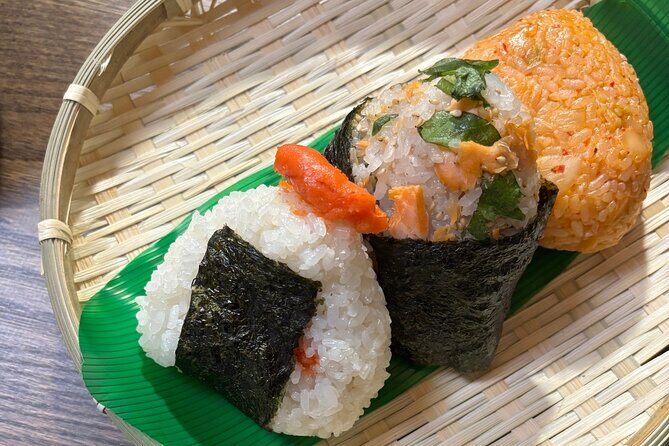
- Three distinct onigiri styles: Traditional, Typical, and an original Innovative one you design yourself
- You eat what you make: your onigiri plus miso soup and homemade side dishes
- Small group size: max 6 travelers, which usually means more time for Q&A and gentle guidance
- Easy access: about a 5-minute walk from Nara Station, with quick day-trip routes from Kyoto and Osaka
Stepping into a 70-year-old Nara home (and why it matters)
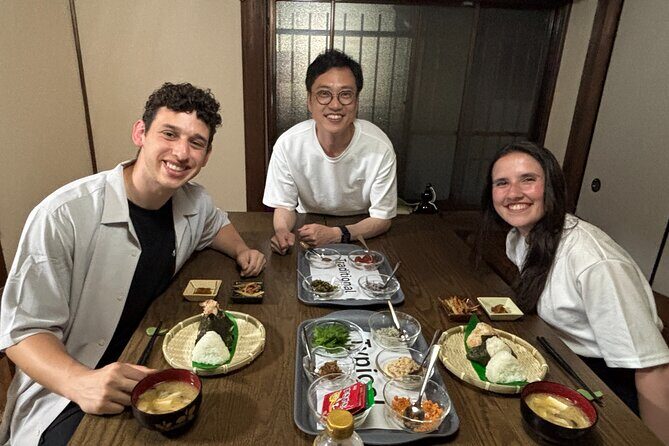
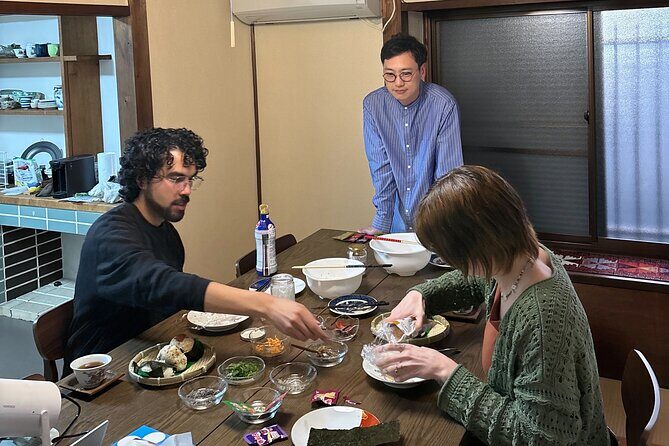
This isn’t a cooking class in the usual sense. It feels closer to visiting friends—except your “friends” are Mune & Hitomi, and you’re invited to cook lunch or dinner in their actual home.
The biggest draw for me is the setting. You’re in a typical Japanese residence that’s been around for more than 70 years. That translates to more than good photos. The home itself sets expectations: you’re not in a white-box studio, you’re inside daily life. You notice the pace, the quiet, and the little rhythms that make Japan feel different from what you see at major sights.
And because the hosts are comfortable speaking English, you don’t spend the night silently guessing. Mune is a tourism expert with a strong academic background, and Hitomi has a passion for folk art—so your conversation can move beyond just food. You’ll likely talk about what Japanese daily life looks like and how people think about food and history in everyday terms.
Possible drawback: if you’re the type who wants a big “teacher voice” lecture or a very structured timetable that never bends, a home experience may feel too relaxed. You’ll get guidance, but the atmosphere stays human.
You can also read our reviews of more cooking classes in Nara
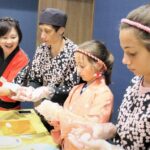
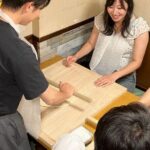
The 2-hour flow: what you do, in order
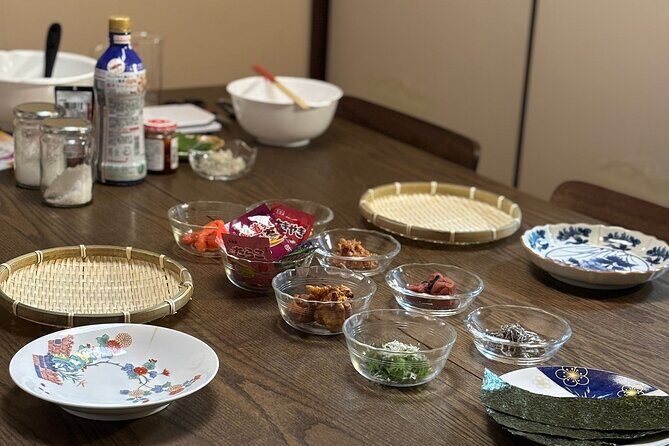
The session runs for about 2 hours and finishes back where you started. In that short window, the experience is designed to keep you doing the hands-on parts while still leaving room for conversation.
Here’s the usual arc, based on how the experience is described:
1) Meet Mune & Hitomi and settle in
You arrive at their meeting point (1-chōme-1-8 Shibatsujichō, Nara). From Nara Station it’s about a 5-minute walk, so it’s not a “lose an hour to getting there” situation. Then you’ll be welcomed into the home, introduced to the vibe, and brought into the cooking space.
2) Learn onigiri basics the practical way
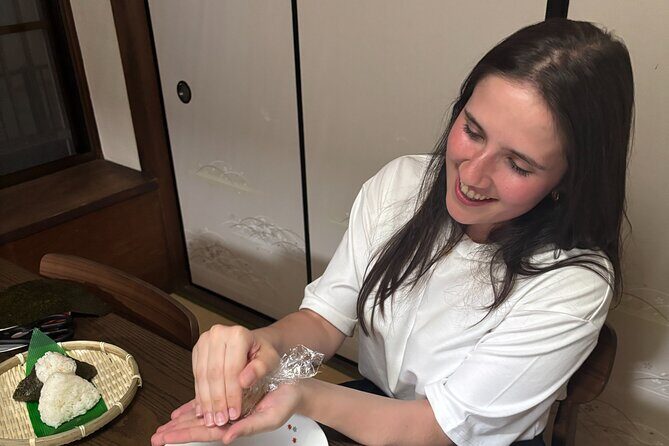
Instead of reading a recipe and hoping it makes sense, you learn by doing: handling rice, shaping it, and working with seasoning. Onigiri sounds simple—until you try it. How tight the rice is packed, how the shape holds, and how flavor gets into each bite are the parts that make the difference.
3) Make three styles, one after another
This is the core of the experience. You’ll create:
- Traditional onigiri
- Typical onigiri (popular style)
- Innovative onigiri (your own twist)
Because the group is small (max 6), you’re not stuck watching someone else work. You can ask questions while you cook, and you’re more likely to get real feedback on your shaping and seasoning.
4) Sit down for a full meal: your onigiri plus sides
After cooking, you eat together in a private setting. Your meal includes miso soup and homemade side dishes, which turns this from a snack-making workshop into something that actually fills you up for the day.
If you’re doing Nara Park or the big temples in the morning, this becomes a smart way to recharge before more walking. If you’re sightseeing late, it’s also a nice alternative to searching for a restaurant when local dining options might be closed.
Traditional, Typical, Innovative: the real skill jump
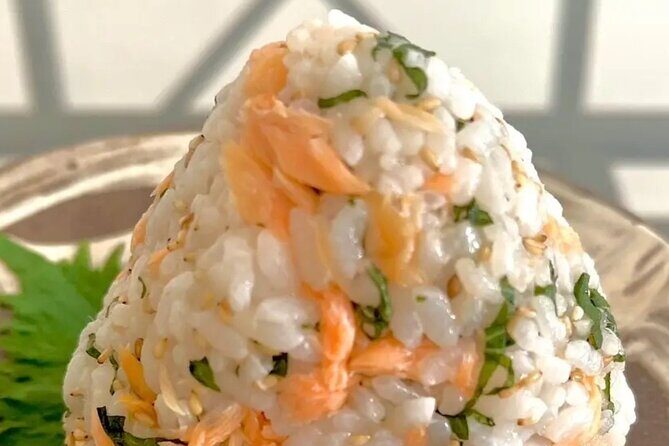
The part that makes this worth your time is not just that you make onigiri. It’s that you make three different approaches in one session.
Traditional: learn the classic shape and feel
Traditional onigiri is the style that helps you understand the fundamentals: how the rice holds together, how seasoning is balanced, and how you keep the texture from turning mushy or falling apart.
In practice, you’ll likely notice that the “classic” method makes the easiest base for future variations. Even if you think you’ll only ever eat store-bought onigiri, learning how the texture and shape are supposed to behave is useful.
Typical: understand the kind people actually eat often
Typical onigiri means the popular version—something people tend to reach for without overthinking it. That matters because it’s what you’ll want to recreate when you’re back home and craving the real daily-life flavors of Japan.
This is where you start to connect the food to routine: what’s comfortable, what tastes right, and what works well in a meal.
A few more Nara tours and experiences worth a look

Innovative: design your own version
This is the fun part. Innovative onigiri means you create your own original—so you’re not just copying. You’re experimenting within the framework you learned.
This section is especially valuable if you’re the type who gets bored in purely technical lessons. You’ll still learn technique, but the reward is your own edible result.
The meal: miso soup and side dishes that make it feel complete
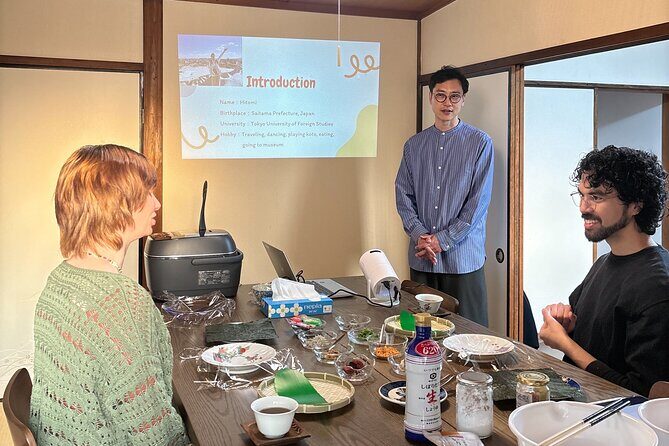
A lot of food classes stop after you make something bite-sized. Here, you eat a real meal.
You get:
- Your onigiri (not just one piece—this is part of a full plate)
- Miso soup
- Homemade side dishes
Why that matters: onigiri alone can be satisfying, but it doesn’t automatically feel like a complete Japanese meal the way washoku-style eating does. Having soup and sides changes everything—flavor balance, temperature contrast, and that settled feeling you get after a proper lunch or dinner.
Also, eating in the same home where you cooked is part of why the experience feels personal. There’s no “hand it off and disappear” moment.
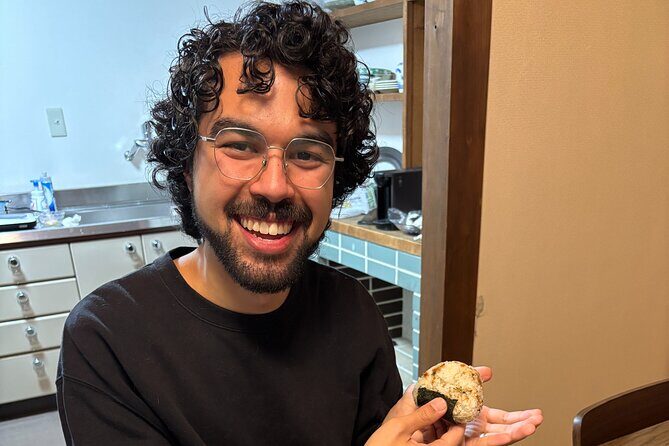
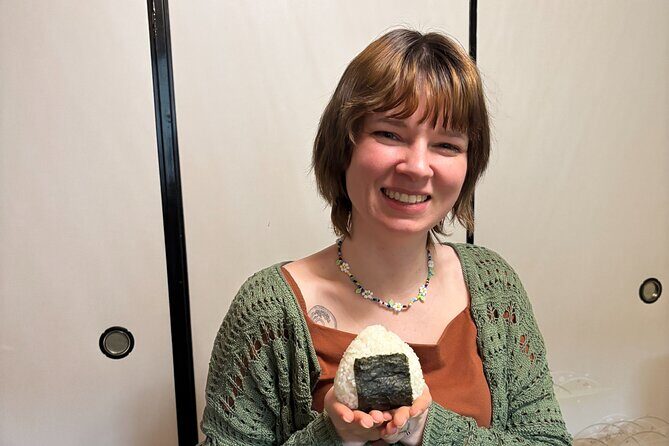
From the way people describe the session afterward, a big highlight is that the onigiri you make turns out surprisingly beautiful. That’s not just about appearance. When your shape holds and the seasoning makes sense, you tend to enjoy it more—and you feel motivated to repeat it.
Who you meet: Mune & Hitomi and the kind of conversation you’ll have
Small group size helps, but the hosts make the experience. Mune and Hitomi aren’t positioned as distant instructors. They’re framed as local friends.
A couple of things stand out from the information you’re given about them:
- Mune speaks English and is described as a tourism expert with an MSc from the University of Glasgow
- Hitomi is into folk art, which hints that she may bring a wider lens to culture beyond just food
This combination usually leads to conversation that’s practical and grounded. You’re not just hearing cooking tips; you’re asking real questions about Japanese lifestyle and history. That “real talk” element is often what people remember most—especially if you’ve already done the big outdoor sights and want something human and everyday.
Location near Nara Station: planning your day without stress
This is one of the easiest experiences to plug into a Nara itinerary.
- It’s about a 5-minute walk from Nara Station
- It’s positioned for day-trippers coming from Kyoto (about 35 minutes) and Osaka (about 40 minutes)
That matters because it reduces the “logistics tax.” When your class starts close to a major transit hub, you can keep your schedule realistic. You can spend the morning at the major attractions and still make this without rushing.
If you’re coming from Kyoto or Osaka, this can also be a welcome change of pace: you get a local home meal instead of relying on convenience stores or whatever restaurant is open late.
Price and value: is $70 worth it?
At $70 per person for about 2 hours, you’re paying for more than rice and ingredients. You’re paying for:
- Access to a real private home setting
- Time and instruction from English-speaking hosts
- A small-group experience (max 6)
- Three styles of onigiri plus a full meal (miso soup and homemade sides)
Is it cheap? No. But it’s not just a cooking demo either. The meal component turns it into actual lunch or dinner value, which helps balance the price.
Also, you’re not only learning how to shape onigiri. You’re practicing how to season it and how to make it hold together—skills you can carry forward. If you like food experiences where the outcome is something you can recreate at home, this tends to justify the cost.
Practical tips before you go
A home-based class is simple, but a few details can make your evening smoother.
- Go hungry, but don’t arrive starving. You’ll cook and then eat. Hunger can make rice handling feel stressful.
- Bring questions. The experience is designed for conversation, not just quiet cooking. If you want to ask about daily life in Japan, now is the time.
- Watch your pace. Onigiri is all about texture. If you rush the shaping, it can feel harder to get right.
- Think about your next steps after class. Since it’s close to Nara Station, you’ll be able to continue sightseeing or head back to where you’re staying without a complicated commute.
- Use the mobile ticket. It’s listed as a mobile ticket experience, so make sure you can access your confirmation on your phone.
Should you book this onigiri class?
If you want Nara beyond temples and parks, this is a strong fit. The main reason I’d book it is the combination of a real local home setting, English-speaking hosts you can talk with, and a meal that feels like lunch or dinner—not just a few bites.
You might skip it if you’re looking for a long, highly technical cooking program, or if you only want the cheapest possible food activity. This is best as a memorable cultural moment as much as a cooking skill-building session.
If you’re doing Nara as a day from Kyoto or Osaka, this also makes sense because it’s easy to reach and gives you a calmer, more personal experience in the middle of a packed itinerary.
FAQ
What is the location for the onigiri cooking class in Nara?
The meeting point is listed as 1-chōme-1-8 Shibatsujichō, Nara, 630-8114, Japan, and the activity ends back at the meeting point.
How long is the experience?
The duration is listed as approximately 2 hours.
What is included in the meal after cooking?
After you cook, you’ll have a meal that includes your onigiri, miso soup, and homemade side dishes.
Who will you cook with during the class?
You’ll cook with the hosts Mune and Hitomi, who are described as friendly and English-speaking.
How big is the group?
The experience has a maximum of 6 travelers.
What is the cancellation policy?
You can cancel for a full refund up to 24 hours in advance of the experience start time. If you cancel less than 24 hours before, the amount paid is not refunded.