REVIEW · NARA
Full Day Nara Deer, Temple, Shrine, Activities & Tea Ceremony
Book on Viator →Operated by Japan Tour Adventure · Bookable on Viator
Deer, temples, and tea in one day. This walking tour strings together Todai-ji and the quiet power of Gango-ji, plus hands-on culture like origami and calligraphy, without turning Nara into just a photo line. I also like how the day includes a proper tea ceremony with freshly made matcha and a traditional handmade wagashi. The main drawback: it’s still a lot of walking, and Nara Park can be crowded when the deer are in full motion—so wear shoes you can trust.
What makes it feel different is the mix of classic must-sees and smaller, specific stops. You’ll also get a chance to meet Japan’s knife tradition at Kikuichi (including a cutlery intro), then slow down for shrine paths and crafts at the Nara Visitor Center & Inn. With a small group size (max 12) and a bilingual local guide, it’s easier to ask questions and keep your bearings as you move.
Pricing-wise, it’s not cheap, but it’s built around included admissions and an included tea ceremony. You’ll still need to plan for your own lunch and any shopping, since those aren’t part of the package.
In This Review
- Key things I’d plan around
- Todai-ji’s Namdaimon Gate and the Great Buddha scale
- Kikuichi Knife-Maker Lore without turning it into a shopping trap
- Kasuga Taisha Shrine and the lantern path effect
- Nara Park deer time and the deer challenge flow
- Higashimuki Shopping Street for lunch that fits the schedule
- Origami, calligraphy, and optional costume photos at the Nara Visitor Center
- Gango-ji’s demon origin story and the oldest temple feeling
- Shofukutei tea ceremony: matcha and wagashi served right in front of you
- Price and what you’re really getting for $110.55
- Small group walking pace: good for first-time Nara
- Should you book this Nara deer, temples, activities, and tea day?
- FAQ
- FAQ
- How long is the full day Nara tour?
- What time does the tour start?
- Where do I meet and where does the tour end?
- How big is the group?
- Is this a walking tour?
- What is included in the price?
- Is lunch included?
- Can I use a mobile ticket?
- Is there any admission I need to pay at Todai-ji and Gango-ji?
- What is the cancellation window?
- If I want to wear a kimono, is that part of the tour?
Key things I’d plan around
- Todai-ji for the Great Buddha scale: gate first, then enough time inside to actually look around.
- Kikuichi’s main store stop: a focused intro to Japanese knives and cutlery history.
- Kasuga Taisha and its lantern path: Shinto basics plus a very specific atmosphere.
- Nara Park deer time with a guided route: cookies included, and you’ll follow the guide for the best flow.
- Craft hour at the Nara Visitor Center & Inn: deer origami plus calligraphy in kana/kanji, with optional photo costumes.
- Shofukutei tea ceremony: matcha and wagashi served in front of you by a certified tea master.
Todai-ji’s Namdaimon Gate and the Great Buddha scale
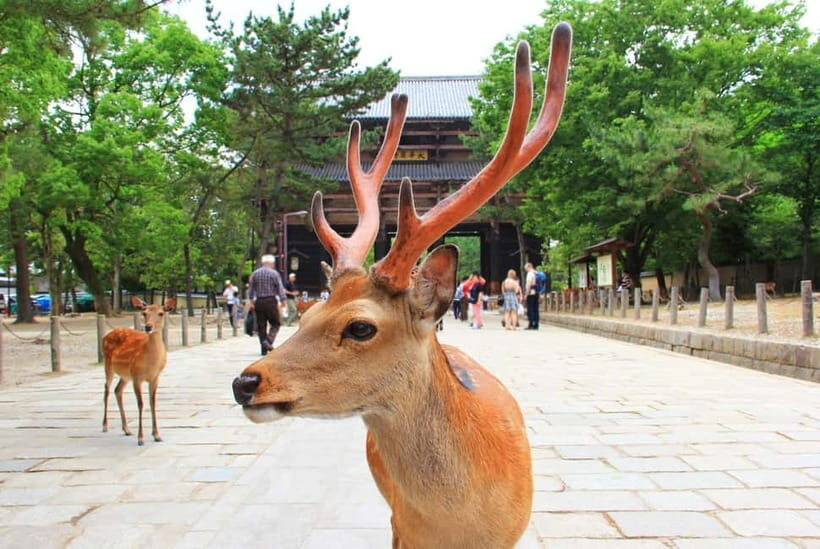
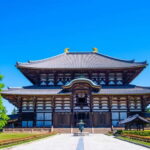
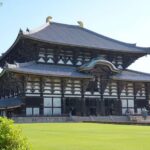
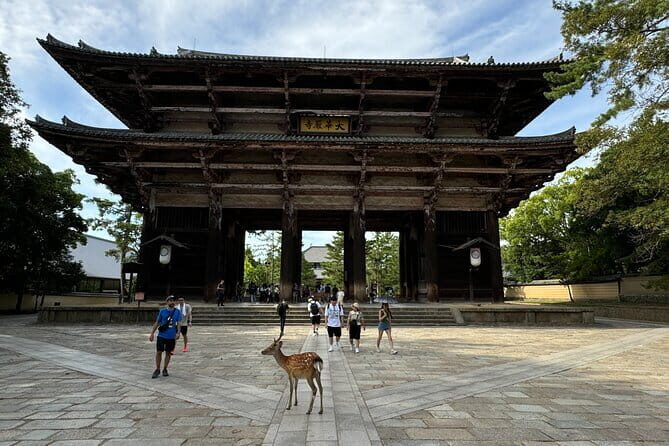
You start at Todai-ji Namdaimon (Grand South Gate), the huge gateway that marks the Todaiji temple domain. It’s one of those places where the architecture hits you before any explanation does. There are fierce guardian statues on either side, and even if you don’t read a single sign, you’ll understand the message: this is serious temple space.
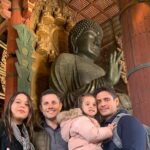
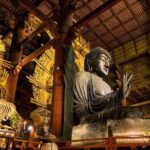
After that, you get your Todaiji Temple visit with free time inside. The key detail here is how the tour times it: about 50 minutes inside. That’s enough to walk the main areas at an easy pace and take your time with the centerpiece—the biggest bronze Buddha statue in Japan. If you rush, you’ll miss the way the space holds your attention (and how the hall changes depending on where you stand).
My practical tip: bring patience for crowds and glare. If you want photos, pick one or two viewpoints early. Then spend the rest of your time looking for small things—the carvings, the scale, the way people move through the hall.
A few more Nara tours and experiences worth a look
Kikuichi Knife-Maker Lore without turning it into a shopping trap
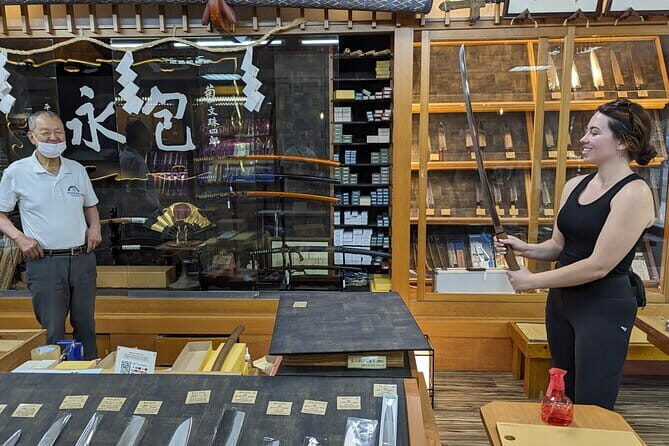
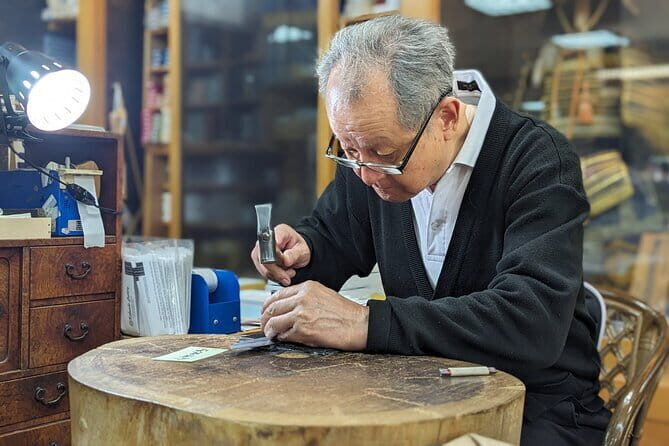
Next you head to Kikuichi Monju Shiro Kanenaga Main Store, linked to the famous Japanese cutlery tradition. This stop is billed as an intro to Japanese cutlery history, with advice on Japanese knives if you’re interested. It also highlights that the brand connects to a former katana maker, which helps explain the mindset behind the steel and the craft.
The tour gives you about 35 minutes here. That’s a good length: long enough to understand what you’re looking at, short enough that you’re not trapped in a sales pitch. Also, admission is included for this stop, so you’re not paying extra on top of what you already booked.
If you do buy something, note that shopping isn’t included in the tour price. Still, the value is that you’ll have context. Japanese knives can get complicated fast, and a quick structured explanation can save you from guessing.
Kasuga Taisha Shrine and the lantern path effect
Then comes Kasugataisha Shrine, one of Nara’s iconic Shinto sites. You’ll learn about the spirit of Kasuga—described as connected to nature—and you’ll get a practical intro to Shinto as you walk the shrine grounds.
The spotlight experience here is the lantern path. Even without fancy lighting gear, the lantern walkway gives the whole area a moody, candlelit feel—especially when the day is busy. You’re there for about 40 minutes, which is enough to walk the path, absorb the atmosphere, and still keep the energy for the rest of the day.
Consideration: Shinto sites are active, living places of worship. Keep your voice down and take cues from how people behave. It keeps the day respectful—and it usually makes your photos come out better too.
Nara Park deer time and the deer challenge flow
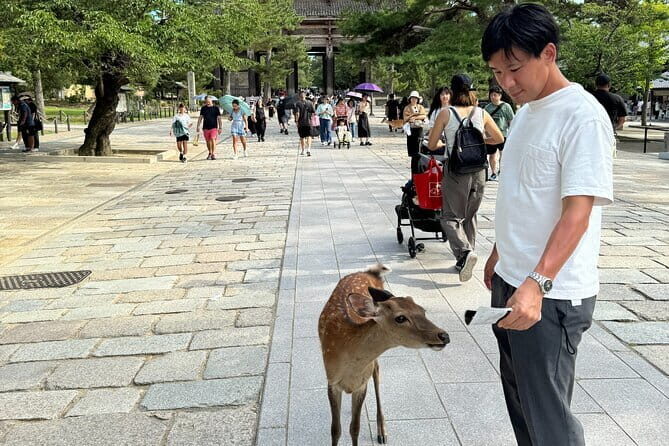
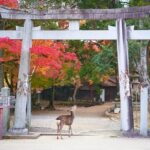
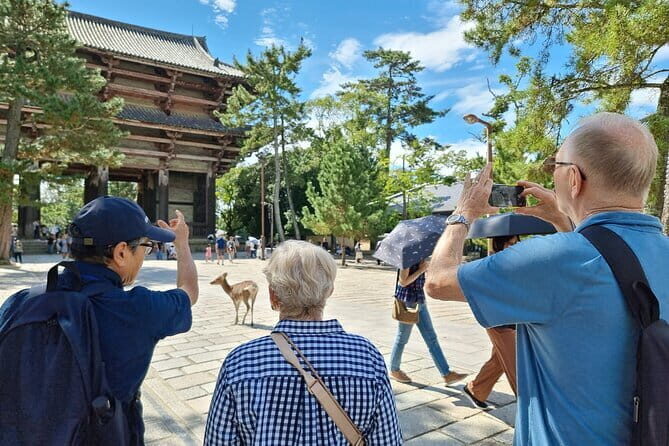
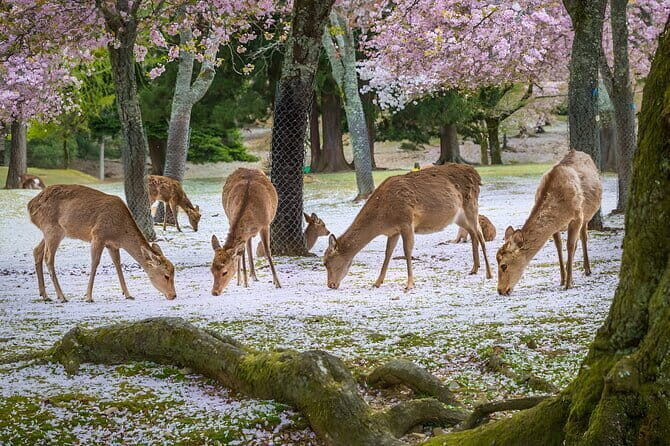
Walking through Nara Park is the emotional core of the day. You’re guided through the park to witness the harmony between the city and the deer. The tour also includes what it calls a Deer Challenge, plus deer cookies so you can participate in the interaction in a controlled way.
This is one of the parts where good guidance matters. In deer parks, the easiest mistake is to move too slowly or too fast—either way, you lose the sense of the place. With cookies provided and a local guide steering the route, you’ll spend less time figuring out what to do and more time experiencing the scene.
My practical advice:
- Keep the cookies ready, but don’t wave them around.
- Be aware of where you stand while the deer move in and out of crowds.
- Wear shoes with traction. Park paths can be uneven.
Higashimuki Shopping Street for lunch that fits the schedule
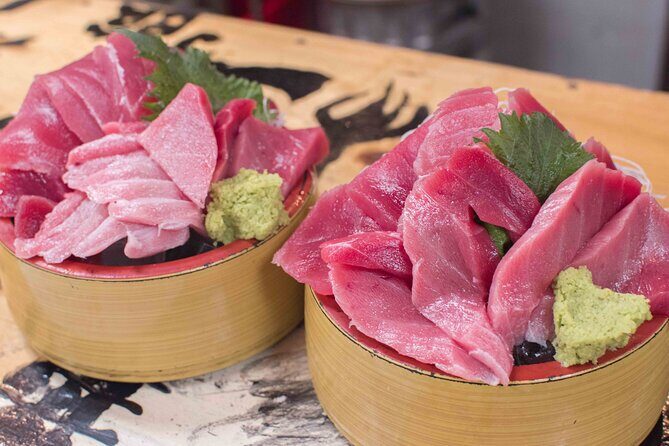
You’ll get 45 minutes of free time around Higashimuki Shopping Street on the west side of Nara Park. Since the tour doesn’t include lunch, this is your chance to grab something quick and local without derailing the day.
Because you only have 45 minutes, I’d treat lunch like a checkpoint: buy what’s easy to eat on the move, then return to the meeting point on time. The tour is structured so you can eat, but it’s not built for a slow sit-down meal.
Also, you might find this part helpful even if you don’t shop much. Shopping streets are where you see daily life, not just temple scenery. Even a short walk between bites can make the day feel more grounded.


Origami, calligraphy, and optional costume photos at the Nara Visitor Center
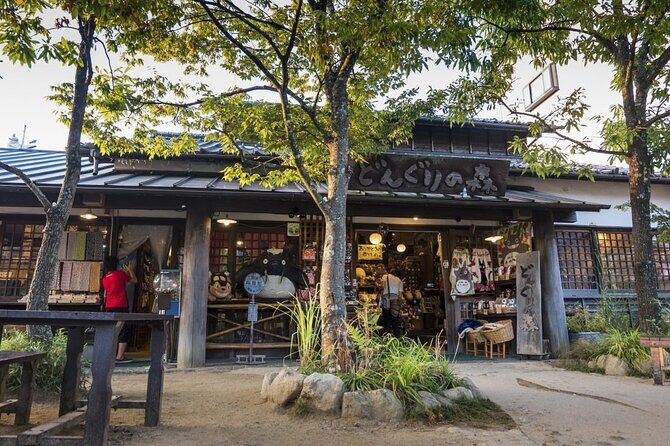
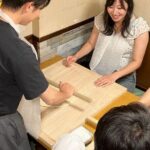
Next you move to the Nara Visitor Center & Inn for a hands-on craft activities block—about 1 hour. This is where the tour goes beyond sightseeing and gives you something you can actually take home.
You’ll practice:
- Origami (including making a deer origami)
- Calligraphy, writing your name in Katakana or Kanji
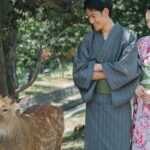
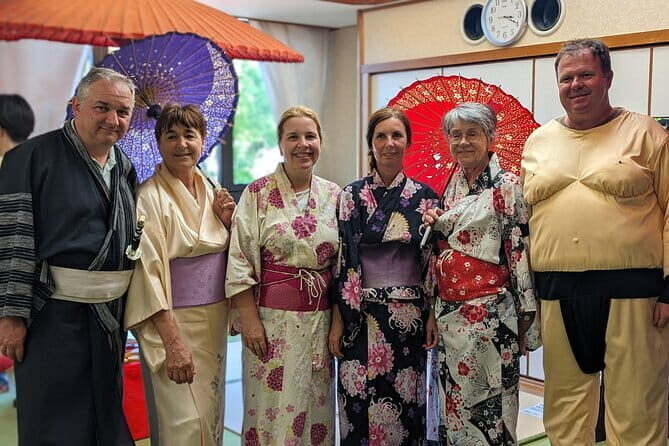
- A photoshoot option, and if time allows, you may wear a kimono and/or other costumes/outfits
Admission for this segment is included, so you’re not paying for the experience separately.
What I like about this hour: it’s not just watching. You participate, you leave with something personal, and you get a short cultural lesson at the same time. If you’re nervous about handwriting, don’t be. Calligraphy here is more about trying and learning than perfection.
Quick comfort tip: you’ll be standing and focusing your hands. Wear comfortable clothes and keep sleeves out of your way for craft time.
Gango-ji’s demon origin story and the oldest temple feeling
After crafts, the tour shifts tone at Gango-ji Temple, around 45 minutes. This is one of Nara’s seven great temples, and it’s tied to the World Heritage story of Nara. The highlight is its status as the oldest temple in Japan still standing.
You’ll also hear a scary origin story about the demon of Gangoji. It’s the kind of storytelling that turns history from dates into mood. Even if you don’t catch every word, the structure helps: you hear the story, then you see the space it belongs to.
Why this stop works well in the schedule: after the open-air energy of deer and the visual impact of big temple halls, Gango-ji gives you a different pace—more atmosphere, more focus.
Shofukutei tea ceremony: matcha and wagashi served right in front of you
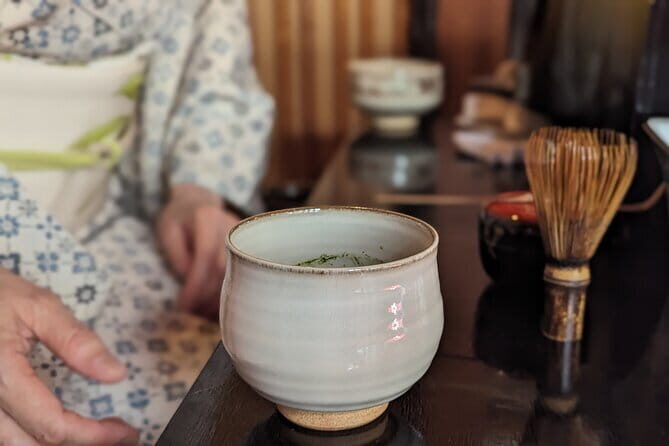
The day ends with the calmer, more intimate highlight: a visit to Shofukutei for a traditional tea ceremony. You’re there for about 1 hour.
What’s special here is the way it’s described: you’re welcomed by a tea master and her husband, and the ceremony is designed to feel away from crowded, overpriced tourist traps. You’ll get freshly made matcha green tea, served so you can see the process, plus a traditional handmade wagashi to go with it.
This is included in your booking price. So you don’t have to decide on the spot whether it’s worth it—you already know it’s part of the package.
My practical tip: don’t plan a heavy meal right before tea unless you’re sure you’ll still enjoy the matcha. Tea ceremonies are about attention. Also, if you’re sensitive to caffeine, matcha can still feel strong—so pace yourself.
Price and what you’re really getting for $110.55
At $110.55 per person for about 7 hours, you’re paying for more than a route. The value comes from what’s built in:
- A bilingual local guide
- Deer cookies
- Todai-ji entrance fee
- Cultural activities (origami and calligraphy)
- Gango-ji entrance fee
- Tea ceremony fee with matcha and wagashi
What’s not included is equally important:
- Lunch
- Food and drinks
- Shopping and souvenirs
So the real decision isn’t just cost. It’s whether you want an organized day that bundles major admissions and a structured cultural session in one go. If you’re the type who likes figuring things out alone and you don’t care about guided crafts or the tea ceremony, you might find cheaper ways to build your own day.
But if you want a day that feels intentional—temples plus hands-on culture plus an actual tea ceremony—this pricing starts to make sense. It’s a pay-once plan that reduces decision fatigue.
Small group walking pace: good for first-time Nara
This is a walking tour, and the group size tops out at 12 people. That matters. Smaller groups tend to move better through crowded areas, and you’re less likely to get lost when you’re learning how to navigate temple and park zones.
The tour starts at 9:00 am, and it uses a mobile ticket. It also runs near public transportation. So if you’re coming from a nearby city, you’re not dealing with remote logistics.
As for who it suits: it says most people can participate, so it’s not pitched as an extreme hike. Still, if you have mobility issues or you dislike standing for stretches (temples and tea ceremony both involve sitting and waiting moments), you should consider whether a different Nara format might fit you better.
Should you book this Nara deer, temples, activities, and tea day?
I’d book it if you want a single-day plan that hits the big Nara icons—Todai-ji and Kasuga Taisha—and also adds structured culture: origami, calligraphy, and a real matcha tea ceremony.
I’d skip it if you mainly want free time to roam on your own, or if you’re allergic to walking days with scheduled stops. Also skip if you’re not interested in tea or crafts. The tour is built around those included experiences.
One more angle: guide quality seems to be a big deal on this tour style. I’ve seen evidence of guides like Remi and Harry handling the day with clear storytelling and strong language support, including German. That kind of explanation really helps the temple and shrine parts feel less like a checklist and more like a story you can follow.
FAQ
FAQ
How long is the full day Nara tour?
It runs for about 7 hours.
What time does the tour start?
The start time is 9:00 am.
Where do I meet and where does the tour end?
You meet at 7-Eleven 30-1 Higashimuki Kitamachi, Nara, 630-8214, Japan, and the tour ends back at the meeting point.
How big is the group?
The maximum group size is 12 people.
Is this a walking tour?
Yes, it is a walking tour.
What is included in the price?
Included items are a bilingual local guide, deer cookies, Todai-ji entrance fee, cultural activities, Gango-ji entrance fee, and the tea ceremony fee (matcha and wagashi).
Is lunch included?
No. Food and drinks, including lunch, are not included.
Can I use a mobile ticket?
Yes, the tour offers a mobile ticket.
Is there any admission I need to pay at Todai-ji and Gango-ji?
No. Entrance fees for Todai-ji and Gango-ji are included.
What is the cancellation window?
You can cancel for a full refund up to 24 hours before the experience’s start time.
If I want to wear a kimono, is that part of the tour?
If time allows, you can wear a kimono and/or other costumes/outfits for a memorable photoshoot during the craft/photo portion.