REVIEW · NARA
Nara: Enjoy Highlight Of Nara in 3 hours
Book on Viator →Operated by gotcha · Bookable on Viator
A stoplight quick visit in Nara can still feel meaningful. This 3-hour tour pairs Nara Park deer feeding with two major spiritual landmarks: Kasuga Taisha and Todaiji. I love how it’s structured for real seeing time (not constant rushing), and I also like that the guide brings local context so the deer and shrines make sense, not just look pretty. The main thing to consider is that it’s short, so if you want long, slow museum-style wandering, you’ll feel a bit of time pressure.
You’ll start near Himuro Shrine and end at Kasuga Taisha, so you’re not retracing your steps. The group is capped at 8 travelers, which helps the guide keep things moving without turning the whole outing into a stampede. You’ll also get an English-speaking guide and a mobile ticket, which makes check-in and logistics easier than most “quick highlights” tours.
Here’s what you can expect: deer crackers in Nara Park, lanterns and shrine grounds at Kasuga Taisha, then one big temple moment at Todaiji that anchors the whole trip with scale and age.
In This Review
- Key points before you go
- Nara Park deer time: calm feeding and Shinto meaning
- Kasuga Taisha’s lantern forest: a shrine built for atmosphere
- Todaiji Temple: seeing one massive wooden landmark up close
- How the 3-hour format changes what you notice
- Small group and guide style: what makes this tour feel human
- Price and value: $71.54 for three major Nara stops
- Where you start and end: a route that saves you steps
- Who this tour fits best (and who might want a different plan)
- Should you book this Nara highlight tour?
- FAQ
- What places does this 3-hour Nara tour include?
- How long are the stops?
- Is the entrance fee included?
- Is there an English-speaking guide?
- How big is the group?
- Where does the tour start and end?
Key points before you go
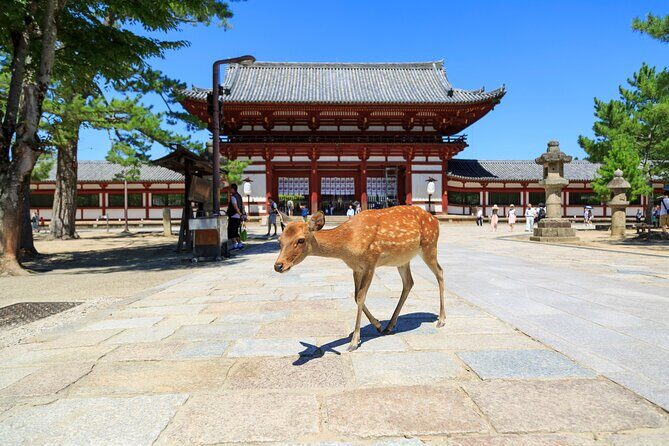
- Deer feeding at Nara Park: hand-feed rice crackers and watch their calm rhythm up close.
- Kasuga Taisha lantern atmosphere: vermilion shrine buildings plus thousands of hanging lanterns, especially evocative at night or festival time.
- Todaiji’s scale in one hour: one of the world’s largest wooden structures, tied to centuries of continuity.
- English guide with practical pacing: designed for three stops in about three hours without feeling chaotic.
- Small group size (max 8): better questions, better timing, and fewer bottlenecks.
- Mobile ticket convenience: simple entry process for a tour this short.
Nara Park deer time: calm feeding and Shinto meaning
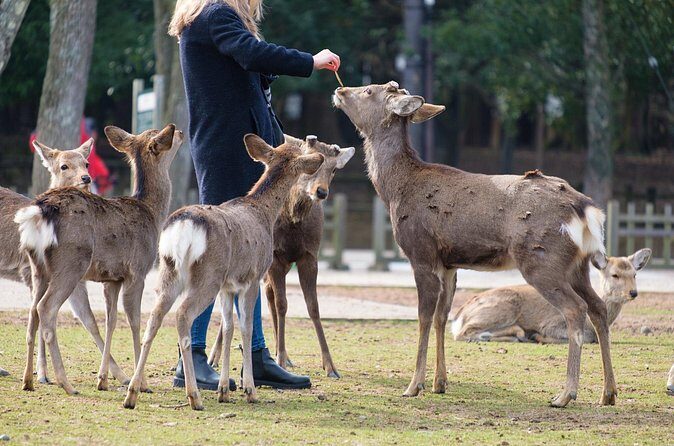
Nara Park is the most direct way to meet the deer that make this city famous. You’ll spend about 45 minutes here, with time to feed them special treats and watch them move through the grounds at an unhurried pace. Deer are considered messengers of the gods in Shinto beliefs, so the moment isn’t only cute. It’s part of a living spiritual landscape, and the guide context helps you notice that.
The best way to enjoy this stop is to treat it like a mindful interaction, not a food frenzy. Keep your hands steady, follow the guide’s lead on when to offer crackers, and watch their body language. The deer can be curious, and you’ll likely get close enough for it to feel personal, which is exactly why this stop lands as a highlight.
A practical consideration: deer feeding can be a little unpredictable. You might get a deer that’s more persistent than average, so stay calm and don’t try to outsmart them with sudden movements. If you’re traveling with kids, the short time helps, because you get the deer experience without dragging it out too long.
A few more Nara tours and experiences worth a look

Kasuga Taisha’s lantern forest: a shrine built for atmosphere
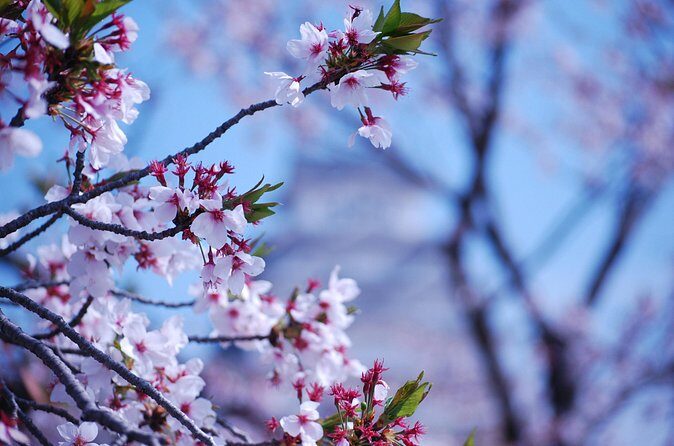
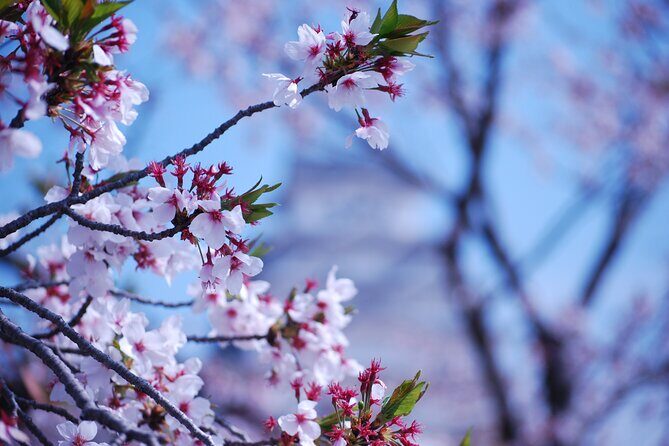
Next comes Kasuga Taisha, and this is the stop where the tour shifts from wildlife to wonder. You’ll have about 45 minutes, enough time to walk the shrine grounds, take in the vermilion-lacquered pavilions, and see the hanging lanterns for which Kasuga Taisha is known. The surrounding forest vibe matters here too, because the shrine is tied to the idea of divine spirits residing nearby.
Kasuga Taisha’s lanterns are a signature detail. They create a soft, steady glow along the streets and pathways, which can feel especially special during festivals—though you’ll still get the core visual impact even outside festival timing. If you like atmosphere more than crowds, this is a strong match because the lanterns make the space feel designed for quiet attention.
There’s also the Manyo Botanical Garden connected to the shrine experience. You may not have time to linger for hours, but even a quick look gives you another layer beyond the main buildings—more like a shrine environment than a single photo spot. If you’re the kind of traveler who likes to understand what you’re looking at, the guide’s explanations can turn lanterns from decoration into cultural storytelling.
The drawback? Forty-five minutes can feel brief if you want to take lots of slow photos and pause for every viewpoint. If that’s you, focus on the lantern-lit paths and the main pavilion area first, then use the remaining time for garden wandering.
Todaiji Temple: seeing one massive wooden landmark up close
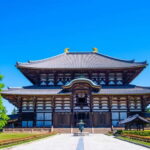
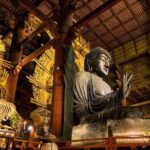
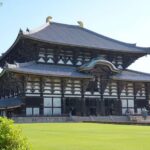
The final cultural anchor is Todai-ji Temple, with about 1 hour to explore. This is one of Nara’s most famous temples, and the headline is its scale: one of the world’s largest wooden structures. It’s also designated as a national treasure, and you’ll be in the presence of roughly 1,300 years of layered religious importance.
Here’s why this stop works even on a short tour. You’re not trying to do everything in Nara. You’re landing on the temple that represents the city’s historical weight, so the visit feels like it has a spine. The guide context helps you connect the sight to time depth, so you’re not just looking at big architecture—you’re understanding why it matters.
What I like about this setup is the pacing. One hour at Todaiji is long enough to notice structure, layout, and atmosphere, while still keeping energy for the full loop. If you tend to wander without direction, you’ll likely appreciate having a guide to point out what to focus on, especially inside a site that can be visually overwhelming.
One consideration: Todaiji is famous for a reason, so plan your patience. Even with a guided group, you may encounter slower moments in busy viewing areas. The upside is that the scale doesn’t lose power just because people are around. You’ll still feel how immense the wooden hall is once you’re close to it.
How the 3-hour format changes what you notice
This tour is built for momentum: three stops in roughly three hours, with about 45 minutes at Nara Park and Kasuga Taisha and 1 hour at Todaiji. That time plan is ideal if you want to hit the must-sees without sacrificing the feel of each place.
The upside for you is clarity. Nara can sprawl in your mind—park, shrines, temple grounds, little side lanes—and a tight itinerary helps you make sense of the city in a short window. You’ll walk away understanding the deer as part of Shinto symbolism, seeing lanterns as a shrine identity, and recognizing Todaiji as the historical anchor.
The potential downside is exactly that: you’ll have less time for deep, slow wandering. If you dream of revisiting Kasuga Taisha at dusk for the lantern mood, or if you want to linger longer at Todaiji, this tour may feel like the first chapter, not the whole book. That doesn’t make it bad—it just helps you choose the right expectation.
Small group and guide style: what makes this tour feel human
The tour caps at 8 travelers, and that detail matters more than you’d think. In crowded destinations, small group size means less bumping, fewer awkward standstills, and more room to ask the guide questions. It also makes the route feel smoother because the guide can adjust pace to your group without leaving anyone behind.
Two guide names showed up in past experiences: Hiro and 小川. In those examples, the guides were praised not just for explanations, but for how they managed the flow—taking people around Nara to provide context beyond the headline stops. In another case, 小川 even helped by walking people back toward the train station, which signals a more thoughtful, end-to-end approach rather than a strict drop-off.
If you like guides who connect the dots—why the deer are there, how lantern traditions fit the shrine, how Todaiji’s scale ties into Nara’s long timeline—this format is a good bet. If you prefer total self-guided freedom, then a short group tour can feel slightly structured. Still, at only three hours, you get the structure without losing a full day.


Price and value: $71.54 for three major Nara stops
At $71.54 per person, this is priced like a focused “highlight route.” Here’s what makes it feel reasonable: it includes an English-speaking guide, and entrance fees are included for both Kasuga Taisha and Todai-ji Temple. Nara Park itself is free, so you’re not paying to access the deer area—your cost is mainly for interpretation and time efficiency across the three big stops.
For many travelers, the value comes from what you avoid. You avoid the mental overhead of figuring out a tight route, the guesswork on what’s worth your attention, and the time wasted piecing together transportation between landmarks. This tour doesn’t try to cover every shrine in Nara. It focuses on the places most likely to give you the Nara “aha” moment quickly.
If you’re a family, a couple on a tight schedule, or a first-timer who wants the essentials without turning your trip into a checklist, the price tends to make sense. If you’re already comfortable planning your own day and you love slow wandering, you might decide to DIY—and then the guide cost becomes a question of preference.
Where you start and end: a route that saves you steps
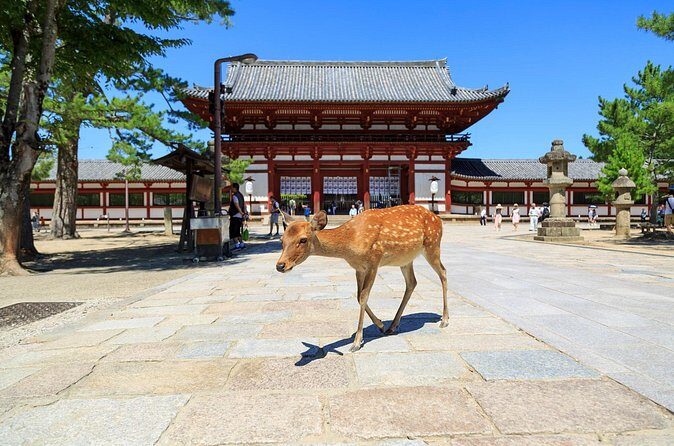
This tour starts at Himuro Shrine and ends at Kasuga Taisha. That matters because it keeps the loop logical. You’re not finishing back where you began, which can feel nicer when you’re trying to keep your day moving toward the next activity or your transport.
The meeting point is specific (Himuro Shrine in Nara), and the ending point is also clearly set at Kasugataisha Shrine. Since it’s near public transportation, you should be able to plug this into your day plan without too much headache.
The only thing to keep in mind is that ending at Kasuga Taisha means you’ll want your next plan to start nearby, or you should give yourself a little buffer to relocate afterward. If your next stop is far away, you may want to plan an easy transit segment.
Who this tour fits best (and who might want a different plan)
This experience is best for people who want Nara’s signature moments in a short burst. It’s especially suited to:
- First-time visitors who want the deer, the lantern shrine, and the giant temple in one go
- Travelers who like being guided, especially where context matters
- People who prefer a small group pace (max 8)
It may be less ideal if you:
- Want long visits, multiple photo loops, or deep time in each site
- Prefer total independence and don’t need a guide to point out what to focus on
- Are sensitive to animal interactions (the deer are part of the point)
Physical fitness wise, it’s described as moderate. That means you’ll be doing a fair amount of walking, but it’s not positioned as extreme hiking. If you’re comfortable with city-level walking, you should be fine.
Should you book this Nara highlight tour?
I’d book this if you want the Nara “greatest hits” with enough explanation to make them click. The combination of deer feeding at Nara Park, lantern identity at Kasuga Taisha, and the massive presence of Todai-ji is a strong three-part story—symbolic, atmospheric, and historical. The fact that entrance fees are included for two of the three stops is a practical win, and the small group size makes the whole thing feel more like a guided walk than a cattle tour.
I would skip or modify if your dream Nara day is slow and immersive. This is a tight schedule, so you’ll likely leave wanting more time in at least one place. In that case, consider using this tour as a fast intro, then plan a longer return to your favorite stop later.
FAQ
What places does this 3-hour Nara tour include?
It covers three stops: Nara Park (deer feeding), Kasuga Taisha Shrine (including its lanterns), and Todai-ji Temple (the large wooden temple).
How long are the stops?
Nara Park is about 45 minutes, Kasuga Taisha is about 45 minutes, and Todai-ji Temple is about 1 hour.
Is the entrance fee included?
Entrance fees are included for Kasuga Taisha and Todai-ji Temple. Nara Park has free admission.
Is there an English-speaking guide?
Yes, the tour includes an English-speaking guide.
How big is the group?
The maximum group size is 8 travelers.
Where does the tour start and end?
It starts at Himuro Shrine and ends at Kasuga Taisha Shrine.