REVIEW · SAITAMA PREFECTURE
Gyoda Tabi Shoes Cultural Walking Tour
Book on Viator →Operated by Gyoda Oneday Trip · Bookable on Viator
Gyoda’s tabi shoes aren’t a souvenir—they’re a craft. This 3-hour walking tour in Saitama takes you through the town’s warehouse culture, then into the places where tabi shoes are made, with tastings and a shrine visit tied to the region’s special flower display.
Two things I like right away: you get to pick your tabi socks for the walk, and the highlight is a guided look at the tabi manufacturing process at the Isami factory. The main drawback to note is that the guide is described as not licensed or certified, so you’ll want to go in with the right expectations: friendly explanation, but not the same as a formal museum-style guide.
In This Review
- Key Points at a Glance
- Gyoda’s Tabi Culture: What This 3-Hour Walk Really Delivers
- Price and Value: Why $45.61 Can Make Sense
- Meeting Point at Buratto Gyoda: Start Smart, Start Comfortable
- Stop 1: Kanko Bussankan Buratto—Pick Your Tabi Socks and Get Oriented
- Stop 2: Chujirou Warehouse (忠次郎蔵) and Jelly Fries
- Stop 3: Jumangokufukusaya Gyoda Honten—Manju in a Building from 1836
- Stop 4: Gyodahachiman Shrine and the Hanachozu Flower Display
- Stops 5 and 6: Isami Corporation’s Factory Visits (Old Roof, New Process)
- Stop 5: Isami Corporation School Factory (Exterior)
- Stop 6: Isami Corporation Headquarters (Guided Manufacturing Tour)
- Snacks, Small Shopping, and the Food-Craft Connection
- The Guide Factor: What to Expect from Mitch-San Style Storytelling
- Logistics That Matter: Walking Comfort, Timing, and Group Size
- Who This Tour Is Best For (And Who Might Skip It)
- Quick FAQ
- FAQ
- What’s included in the tour besides the guide?
- Are factory visits part of the tour?
- How long is the experience?
- Where is the meeting point?
- What time does the tour start?
- Is a mobile ticket used?
- Is there a limit on group size?
- Do I need to budget for a guide tip?
- Should You Book the Gyoda Tabi Shoes Cultural Walking Tour?
Key Points at a Glance
- Choose and wear real tabi socks with zori sandals so the craft feels practical, not just theoretical.
- Factory time is the payoff: you’ll see both an older saw-tooth-roof factory building and the main manufacturing tour.
- You’ll eat local snacks like jelly fries and Jumangoku manju as part of the route.
- Japan Heritage tied to everyday work: you’ll visit historical warehouse buildings and learn why they’re preserved.
- A shrine stop adds meaning with the Gyoda Hanahancozu flower display and a local blessing tradition.
Gyoda’s Tabi Culture: What This 3-Hour Walk Really Delivers
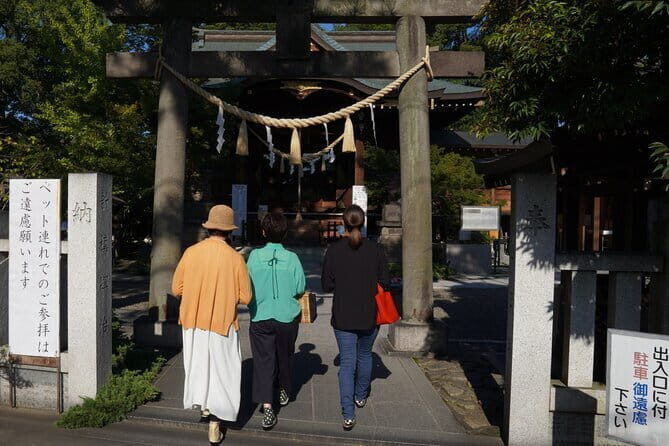
Gyoda is about an hour from central Tokyo, but it feels like a different tempo. Instead of rushing from famous landmark to famous landmark, you follow a thread: how a footwear style became a regional identity—and how that identity still shows up in working warehouses and factory floors.
What makes this tour genuinely interesting is the mix of three parts that usually don’t go together: warehouses, food, and manufacturing. You’re not just looking at old buildings; you’re learning how the craft supported a town economy, then you step toward the production side so it still feels alive.
Also, the pacing works. About 3 hours means you can experience a lot without your feet hating you by stop two. The group limit is small—up to 15 people—so you’re more likely to get questions answered and keep the tour from feeling like a cattle line.
You can also read our reviews of more walking tours in Saitama Prefecture

Price and Value: Why $45.61 Can Make Sense
At $45.61 per person for roughly 3 hours, this isn’t a bargain, but it also isn’t priced like a theme park experience. You’re paying for several “costly in time” items:
- Included footwear gear: tabi socks (split-toe Japanese socks) and zori sandals
- Included snacks: jelly fries and Jumangoku manju
- Guided stops across multiple historical buildings
- A factory-focused visit that’s harder to assemble on your own
If you’re the kind of traveler who enjoys learning how everyday objects get made—thread, shaping, finishing—this price starts to feel fair. If you’re only after a quick look at a shrine and a photo, you might prefer something shorter or cheaper. But if you want the craft angle, this is a strong use of half a day.
Meeting Point at Buratto Gyoda: Start Smart, Start Comfortable
The tour starts back at 観光物産館ぶらっとぎょうだ (Buratto Gyōda) at 2-chōme-1-8 Oshi, Gyoda, Saitama 361-0077. The start time is 1:00 pm, and the activity ends back at the same point.
Since it’s near public transportation, you can keep your morning flexible. Still, I’d plan to arrive a few minutes early so you’re not stressed when it’s time to get fitted.
The tour uses a mobile ticket, which is convenient. Just have your phone ready at check-in. Service animals are allowed, and most travelers can participate, so it’s designed to be accessible for a wide range of visitors.
Stop 1: Kanko Bussankan Buratto—Pick Your Tabi Socks and Get Oriented

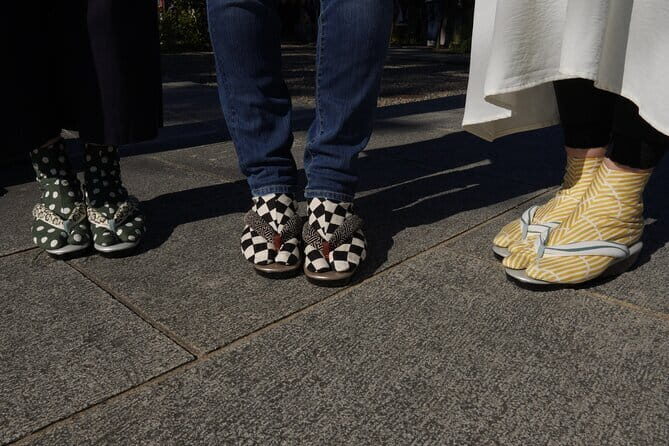
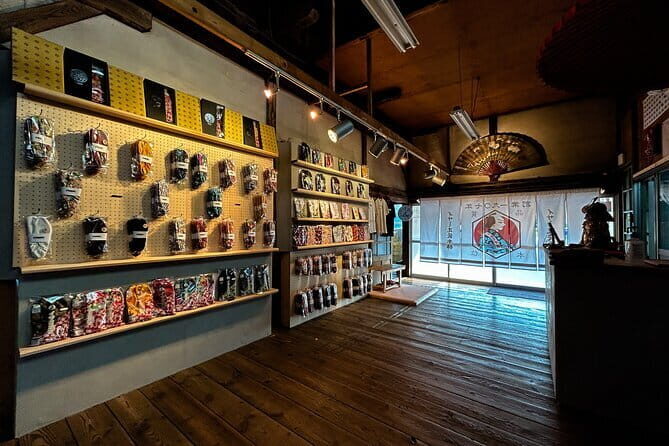
You begin at Kanko Bussankan Buratto Gyoda, and this is more than just a warm-up stop. Here, you choose the tabi socks you’ll wear during the tour. That small detail matters. When your feet are in the split-toe socks and zori sandals, you start understanding what makes tabi different from regular socks—right away.
You also get free Gyoda City sightseeing maps and time around souvenir stores. This is a good moment to reset your expectations: you’re entering a town that treats footwear culture as local heritage, not novelty.
The stop lasts about 30 minutes, with admission ticket noted as free. You’ll likely move from “I’m here for photos” to “I’m here to understand how this works” by the end of this first segment.
Stop 2: Chujirou Warehouse (忠次郎蔵) and Jelly Fries
Next is 忠次郎蔵 (Chujirou warehouse), a historical building designated as a Japan Heritage component cultural property, plus it’s a nationally registered tangible cultural property. In plain terms: this is a preserved structure that helps explain how the town’s trade and storage once worked.
And you don’t just look—you eat. You’ll try jelly fries, described as a local food served during this stop.
This combination is key. Food can feel random on tours, but here the snack supports the “town identity” theme. It also breaks up the walking with something you can taste, not just read.
The stop is short—around 10 minutes—so don’t expect a long story here. Think of it as a quick hit of history plus a local bite.





Stop 3: Jumangokufukusaya Gyoda Honten—Manju in a Building from 1836
At Jumangokufukusaya Gyoda Honten, you get a guided look at historical storehouses and a tasting of manju. The building dates to 1836 and is designated as a national tangible cultural property.
Manju is the kind of snack that can feel familiar once you taste it, but the real value is the setting. You’re learning how commerce and craft traveled together—factories made the shoes, warehouses stored goods, and shops sold what people needed and enjoyed.
This stop lasts about 15 minutes. It’s enough time to sample and understand the “why here, why preserved” angle without slowing the tour down too much.
Stop 4: Gyodahachiman Shrine and the Hanachozu Flower Display

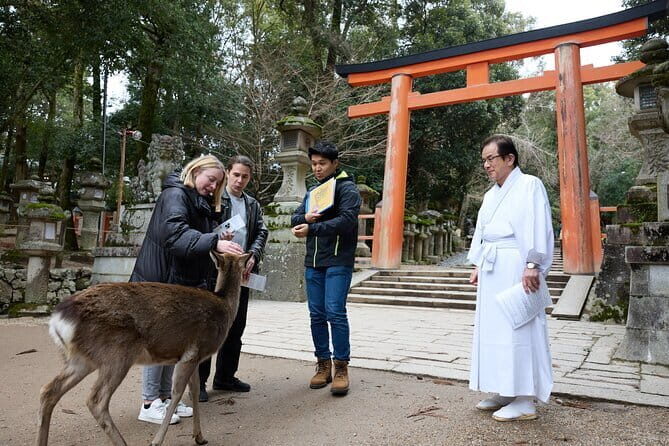
Then you’ll visit Gyodahachiman Shrine. This stop is tied to something distinctive: hanachozu, described as a beautiful flower display. The shrine is also noted for blessings for cancer, and it’s visited by local residents and people from all over Japan.
One practical detail: you may visit the shrine on your own. The tour includes about 25 minutes here, so you can decide how much time you want for calm viewing versus photographing.
This stop is a nice change of pace from the warehouse/factory theme. It grounds the tour in how Gyoda treats nature, ritual, and local faith as part of daily culture.
Stops 5 and 6: Isami Corporation’s Factory Visits (Old Roof, New Process)
Now you get to the real reason many people sign up: seeing how tabi shoes come to life.
Stop 5: Isami Corporation School Factory (Exterior)
You’ll visit the Isami Corporation School Factory building exterior, about 5 minutes. It was built in 1917 and is described as Gyoda’s largest saw-toothed-roof tabi shoes factory, registered as a component cultural property.
Even from the outside, this building is a clue: factories weren’t just functional; they were designed in a way that reflects an industrial era and the scale of production.
Stop 6: Isami Corporation Headquarters (Guided Manufacturing Tour)
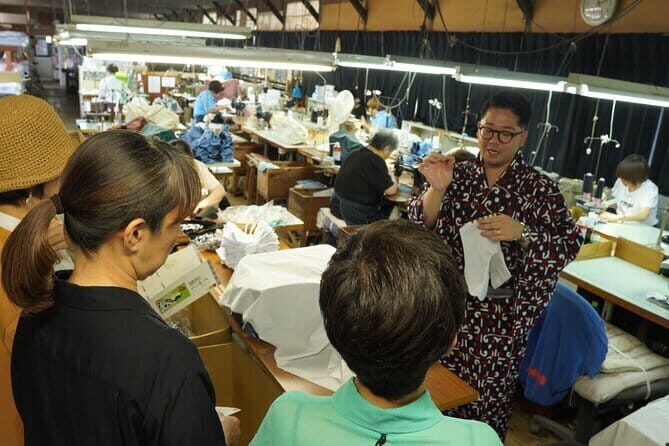
Then comes the longer stop—about 45 minutes—at (株)イサミコーポレーション 本社. This is a guided tour of the tabi manufacturing factory where you’ll be taken through the production process.
The exact step-by-step details aren’t listed here, but the intent is clear: you’ll learn the Japanese technique of making tabi shoes and see the process explained in a way that connects craft to cultural identity.
This is also where the tour earns its top praise. The factory visit is the part that makes Gyoda feel real—less like a history lesson and more like a working tradition.
Snacks, Small Shopping, and the Food-Craft Connection
Food plays a supporting role, but it’s a useful one. You’ll get jelly fries at the Chujirou warehouse stop and Jumangoku manju at the Jumangokufukusaya storehouse.
These aren’t just “grab and go” snacks. They keep the route grounded in local life: if Gyoda produced tabi shoes, it also supported a whole ecosystem of shops, storage buildings, and everyday treats.
If you’re the kind of person who likes buying something small at the end—so you remember the place, not just the photos—this tour’s structure gives you time to browse around the early stop at Buratto Gyoda and pick up items afterward if you want.
The Guide Factor: What to Expect from Mitch-San Style Storytelling
One recurring detail from the experience feedback is the guide’s friendly, clear storytelling. Mitch-san is specifically mentioned as a guide who explains the history of Gyoda, tabi, and the surrounding culture.
One caution, though: the tour information states the in-person guide is not licensed or certified. That doesn’t automatically mean the explanations will be weak. It just means you shouldn’t treat this like an academic lectured tour. I’d go in wanting a personable local perspective, not a formal credentialed interpretation.
Logistics That Matter: Walking Comfort, Timing, and Group Size
Here’s what you’ll want to plan around:
- Duration: about 3 hours
- Start time: 1:00 pm
- Group size: maximum 15 travelers, which helps keep things moving and personal
- Footwear: you’ll wear tabi socks and zori sandals, so your feet are part of the experience
- Transit: near public transportation, so you won’t be stuck in a car dependency situation
Because you’re in zori sandals, you may want to wear clothing you can comfortably walk in for a few hours. Also, consider that tabi socks feel different if you’ve never worn split-toe socks before. Starting with the included fitting stop at Buratto Gyoda helps.
Who This Tour Is Best For (And Who Might Skip It)
This is a great match if you:
- love craft and production more than sightseeing
- want to understand the real-life context behind a cultural item like tabi shoes
- enjoy small historical buildings, not just big-ticket monuments
- want a compact half-day that mixes industry, food, and a shrine
You might skip (or choose something else) if you:
- dislike factory-focused tours
- hate walking in sandals, even if they’re part of the tour
- want a highly formal, credential-heavy guiding style
Quick FAQ
FAQ
What’s included in the tour besides the guide?
You get tabi (split-toe Japanese socks) and zori sandals, plus snacks like jelly fries and Jumangoku manju.
Are factory visits part of the tour?
Yes. You’ll see the Isami Corporation School Factory exterior and also take a guided tour of the Isami Corporation manufacturing factory at the headquarters.
How long is the experience?
It’s about 3 hours (approx.).
Where is the meeting point?
It starts at 観光物産館ぶらっとぎょうだ (2-chōme-1-8 Oshi, Gyoda, Saitama 361-0077), and it ends back at the same place.
What time does the tour start?
The start time is 1:00 pm.
Is a mobile ticket used?
Yes, the tour uses a mobile ticket.
Is there a limit on group size?
Yes. The maximum group size is 15 travelers.
Do I need to budget for a guide tip?
A guide tip is not included, so tips are your choice.
Should You Book the Gyoda Tabi Shoes Cultural Walking Tour?
If you want an experience that treats a daily object—tabi shoes—as cultural heritage, then yes, I’d book it. The mix of wearing tabi, tasting local snacks, visiting historical warehouse buildings, and then seeing how shoes are made gives you more than “one afternoon of walking.” It gives you context.
Book it especially if you’re curious about how a town’s identity survives through working factories and preserved structures. If that factory angle excites you, this tour is one of the more practical and memorable ways to spend time in Saitama besides Tokyo day trips.