REVIEW · SAITAMA PREFECTURE
Mt. Fuji and Hakone Private Tour with English Speaking Driver
Book on Viator →Operated by KHANZ JAPAN TOURS · Bookable on Viator
Mt. Fuji never runs out of viewpoints. This private 10-hour day trip strings together the key Fuji-area stops—Oshino Hakkai, Mt. Fuji 5th Station, Lake Kawaguchi spots like Oishi Park and Arakurayama Sengen Park, plus Hakone’s Lake Ashi—with a real English-speaking driver-guide focused on getting you good views. I especially liked the photo-friendly routing and the way the day can work even when the weather is moody; the one drawback is that visibility depends heavily on cloud cover and winter conditions, and Mt. Fuji access can involve road rules and fees.
Because it’s a private group (up to 5) with hotel pickup and an air-conditioned vehicle, you’re not stuck with the usual Tokyo-to-Fuji “everyone rides together” chaos. In fact, I took cues from guidance styles I’ve seen on this tour—Hassan handling Saturday traffic smoothly, Bilal adjusting plans when it was rainy or overcast, and Shan turning the drive into stories about life in Japan—so you get both transportation and interpretation, not just driving.
In This Review
- Quick takeaways before you go
- Private transport that saves you from Fuji-day headaches
- Oshino Hakkai Springs: Fuji-water and the winter Diamond Fuji idea
- Small consideration
- Mt. Fuji 5th Station at 2,200m: the closest car-access to the top
- What I’d do with 1 hour here
- Lake Kawaguchiko: Fuji views with a ropeway option and hot-spring energy
- Small consideration
- Oishi Park: a short walk timed to flower seasons
- What to watch for
- Arakurayama Sengen Park: the 398 steps to Chureito pagoda views
- Small consideration
- Lake Ashinoko in Hakone: a scenic break with Pirate Cruise as an option
- Practical note
- Gotemba Premium Outlets: optional shopping time, not part of the core views
- Small consideration
- Price and value: what you’re paying $540 for
- Getting clear Fuji: small strategy that matters
- What you should bring
- Who should book this tour (and who might not)
- Should you book this Mt. Fuji and Hakone Private Tour?
- FAQ
- What time does the tour start, and what time do you return?
- How long is the tour?
- Is this a private tour?
- How many people can be in a group?
- Do you get hotel pickup, and what’s the transportation like?
- What’s included in the price?
- What’s not included?
- Is Gotemba Premium Outlets included, or is it optional?
- Does Mt. Fuji 5th Station involve a toll or seasonal road changes?
- Can you see Diamond Fuji at Oshino Hakkai?
Quick takeaways before you go
- Private English-speaking guidance that helps you find photo spots with less stress
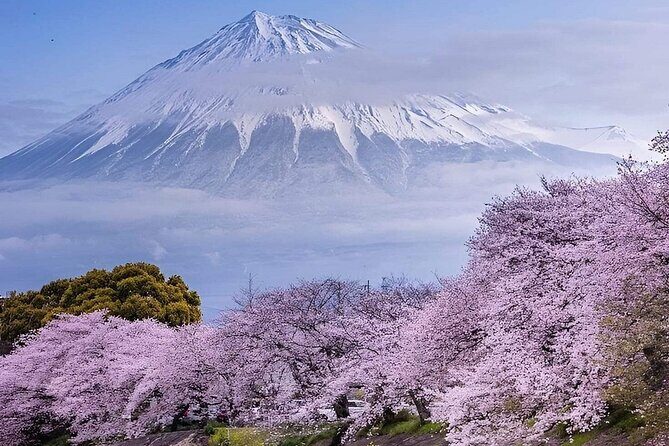
- Big Mt. Fuji coverage in one day, from Oshino Hakkai to 5th Station and Chureito-area views
- Weather-aware flexibility, so a cloudy day doesn’t feel like a wasted ride
- Season-aware planning for Mt. Fuji road access and winter conditions
- Value math for small groups, with parking fees and an AC vehicle included
Private transport that saves you from Fuji-day headaches
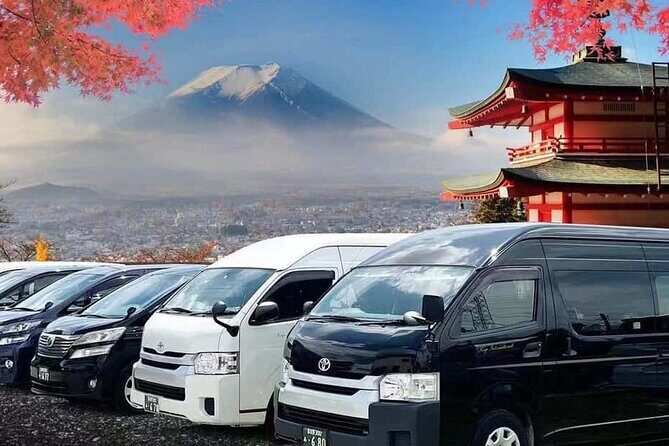
Starting at 8:30am, this tour is built for one thing: making Mt. Fuji practical from Tokyo without you having to master routes, timetables, or transfers. You’ll travel in an air-conditioned vehicle, with parking fees included, and you’ll be dropped back at your hotel by around 6:30pm.
The private part matters more than people think. With a small group of up to 5, the day stays flexible—your driver can steer you toward better vantage points and keep the schedule realistic. In one highlight I liked: Bilal was able to pivot on an overcast day and guide people to spots they probably wouldn’t have found on their own.
This is also a tour where the driver is more than a taxi. I really appreciate when a driver can explain what you’re looking at, and not just point at it. That’s the vibe here, and it shows in stories from past tours like Shan sharing background about daily life in Japan along the way.
You can also read our reviews of more private tours in Saitama Prefecture
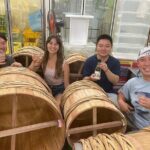
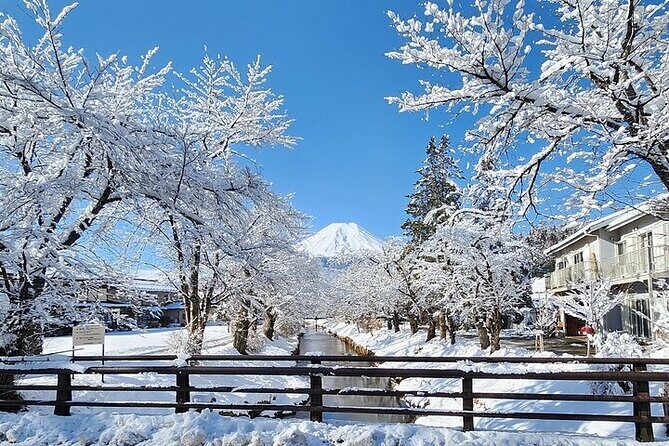
Oshino Hakkai Springs: Fuji-water and the winter Diamond Fuji idea
Oshino Hakkai is one of those places that feels simple—clear ponds, calm walking paths—until you learn what’s powering the scenery. These are the eight springs fed by the aquifer water from Mt. Fuji, and the area is part of the Mt. Fuji World Heritage context.
If you’re going in winter, this stop gets extra attention for a specific visual phenomenon: Diamond Fuji. The idea is that when the Earth lines up just right, the rising or setting sun can align with Mt. Fuji’s peak so it looks like the mountain is cupping the sun. You can only see it from certain positions, so the value of a guide here is not just convenience—it’s choosing the best angle.
Expect about 1 hour at Oshino Hakkai. There’s also an open-air museum setting around the largest pond (Hannoki Bayashi Shiryokan). It’s a great place to stretch your legs without turning the day into nonstop walking.
Small consideration
Even with the right viewpoints, Diamond Fuji is still weather- and timing-dependent. If clouds move in, you’ll still enjoy the springs and the classic Mt. Fuji backdrop, just without the “diamond” effect.
Mt. Fuji 5th Station at 2,200m: the closest car-access to the top
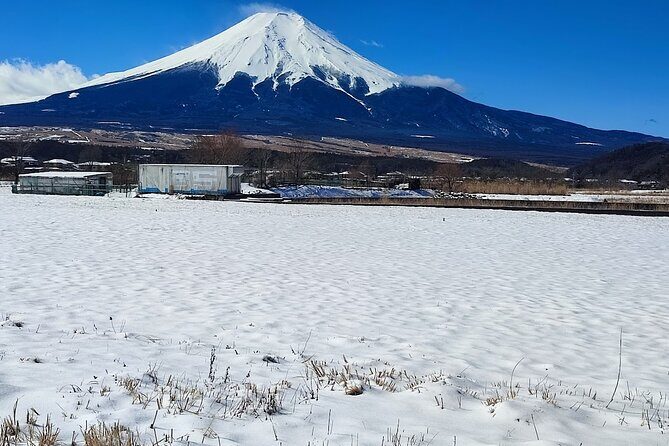
The Mt. Fuji 5th Station is the altitude moment of the day. This is the highest point accessible by car, reaching around 2,200 meters. Even if you’re not a serious climber, it’s the closest you’ll get to feeling like you’re standing near the mountain’s summit zone.
You’ll typically get about 1 hour here, which is enough to soak in views, walk to key overlooks, and take photos. You may also see city and distant areas from viewpoint points when visibility is good.
Now for the practical part that can surprise people: access to the station involves the Fuji Subaru Line, a scenic toll road. The cost is listed as 2,100 yen, and in winter the road can be partially closed during heavy snow. Also, during most of the climbing season (July 5 to September 10, 2024), the road is closed to private vehicles, and shuttle buses handle the route between designated parking areas and the 5th Station.
Admission for the 5th Station is not included, so budget for that separately.
What I’d do with 1 hour here
Plan to dress warm. Even when Tokyo feels mild, 2,200m can feel brisk. Keep your outer layer easy to pull on and off for photos.

Lake Kawaguchiko: Fuji views with a ropeway option and hot-spring energy
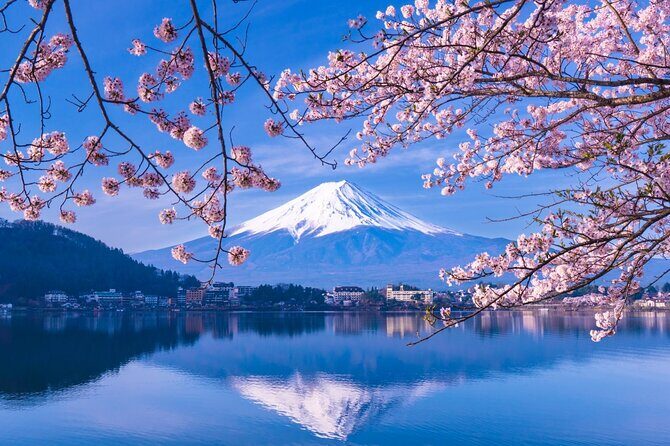
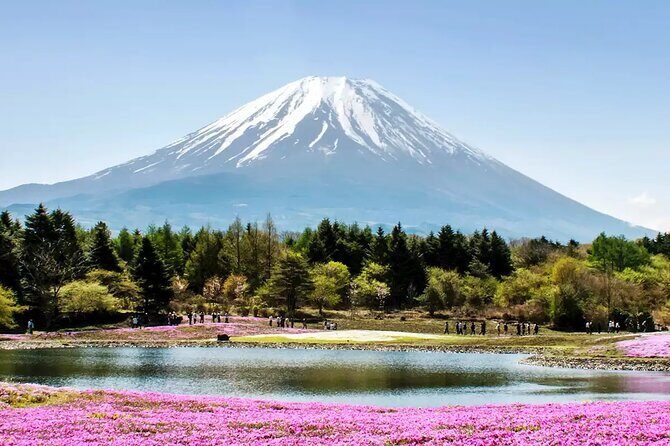
Lake Kawaguchiko is one of the most reliable places to frame Mt. Fuji in your photos—wide water foreground, mountain in the background, and multiple observation angles within short driving distances. This stop is about 1 hour, and it’s ideal for resetting after the height of 5th Station.
A popular add-on here is the Kachi Kachi Ropeway, which goes up to an observation area near the summit of Mount Tenjo. From there, you can take in sweeping views of both Lake Kawaguchiko and Mt. Fuji. This is also where the vibe starts to shift from “mountain pilgrimage” to “relax and look around.”
The area has hot springs too, so if your day includes colder weather or early morning wind, Lake Kawaguchiko is a good stage to feel human again—at least before the next viewpoint.
Small consideration
With only about an hour, you may not have time for every optional activity. If you want the ropeway, plan your time tightly so you’re not rushing when you should be enjoying the view.
Oishi Park: a short walk timed to flower seasons
Oishi Park is a calm counterpoint to the more dramatic Mt. Fuji moments. It sits on the north shore of Lake Kawaguchiko and gives you classic Fuji-and-lake photos from a comfortable walking path.
The path is about 350 meters long, and the park is known for seasonal color:
- Early April to late May: moss phlox like a pink carpet
- Late June to late July: lavender blooms
- Mid to late October: kokia shrubs turn red
If Mt. Fuji is the main character in your mind, this park is the supporting cast that makes the photo feel complete. It’s also a place where you can connect food to scenery. The Kawaguchiko Natural Living Center offers activities like making fruit jam and an all-you-can-eat cherry and blueberry picking course, plus a café where you can try blueberry ice cream.
What to watch for
If you’re chasing a specific flower season, go in the windows above. Otherwise, focus on the view first—you can still get beautiful photos even when the flowers aren’t in peak bloom.
Arakurayama Sengen Park: the 398 steps to Chureito pagoda views
Arakurayama Sengen Park brings you the famous “Mt. Fuji above the scene” composition. This is a peace memorial park with Shinto shrines, and the main approach includes 398 stairs to reach higher viewpoints.
Near the top, you’ll find the Chureito pagoda, built to memorialize people lost in World War I and II. The observatory deck area is where you’ll understand why this spot shows up on so many Mt. Fuji photo lists.
This stop is about 1 hour. That’s just enough time to decide how much stair climbing you want to do, grab the photos, and enjoy the view at different elevations.
Small consideration
Stairs can be tiring after a long day. If you’re visiting with anyone who has mobility concerns, take it slow and choose the viewpoint you can reach comfortably.
Lake Ashinoko in Hakone: a scenic break with Pirate Cruise as an option
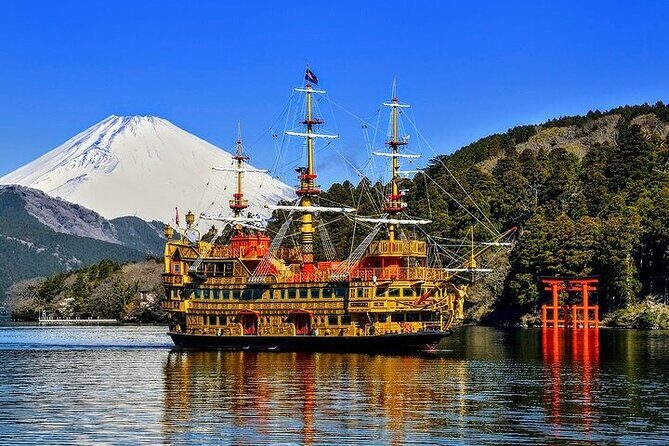
Once the Fuji loop wraps, the Hakone part of the day gives you another mood: volcanic-lake scenery around Lake Ashi (Ashinoko). It’s described as a scenic lake in the Hakone area of Kanagawa Prefecture, and it’s a solid visual change from Lake Kawaguchiko.
You’ll have about 1 hour here. A highlight mentioned for this stop is the Pirate Cruise on Lake Ashi. The wording suggests you can experience it as part of the overall Fuji-and-Hakone flow, depending on how your driver structures the day.
Practical note
Because this tour is timed tightly, treats and cruises should be treated as “possible add-ons,” not guaranteed extras. Your driver is the one who can judge what fits in the day’s schedule while keeping you on track for the return.
Gotemba Premium Outlets: optional shopping time, not part of the core views
Gotemba Premium Outlets is an optional switch you can add if you want shopping time. It’s 1 hour, and you’ll need to discuss adding it with the driver in the morning, since it changes how the day’s pacing works.
This is a good fit if you’re traveling with someone who wants a break from viewpoints, or if you’d rather spend the last hour buying practical souvenirs than standing under another camera lens. The tour description frames it as premium outlet brands.
Small consideration
Shopping often expands into extra time because people browse. Since you only have one hour in this slot, have a plan (or at least a budget) so it doesn’t eat your day.
Price and value: what you’re paying $540 for
At $540 per group (up to 5), this tour is priced as a private day package. The value comes from what would be annoying to do on your own: getting from Tokyo to multiple Fuji-area viewpoints efficiently, dealing with timing, and having an English-speaking driver who can guide you around key stops.
Here’s what’s included:
- Air-conditioned vehicle
- Parking fees
- Pickup offered
- Mobile ticket
And here’s what’s not included:
- Lunch
- Mt. Fuji 5th Station admission
On paper, $540 can sound steep until you do the per-person math. With a group of friends or a family of up to five, you’re often splitting the cost among people who would otherwise need separate logistics. If you’re solo, it’s still a convenience play—you’re paying to remove friction from a long day.
The clearest payoff, in my view, is this: Fuji can be a weather gamble. A private guide who can find workable viewpoints and adjust when conditions shift is a meaningful upgrade over hoping public transit lines up perfectly.
Getting clear Fuji: small strategy that matters
Mt. Fuji is iconic, but it’s not always cooperative. Clouds, rain, and winter snow can change what you can see. The best “hack” here is less about tricks and more about timing and flexibility.
From past experiences on this tour, two patterns come through:
- When the morning clears, you can catch strong views.
- If it’s rainy or overcast, the guide’s job becomes relocating you to better angles and keeping your schedule useful.
Hassan is an example of the traffic-and-routing skill set—one Saturday outing involved heavy traffic, and the driver handled the day smoothly. Bilal is a good example of viewpoint scouting—when weather was dull, the plan shifted so people weren’t stuck staring at a wall of cloud.
What you should bring
- Warm layers for higher altitudes and wind
- A light rain layer, even in seasons that feel dry
- Comfortable shoes for the stair-heavy stop at Arakurayama
- A phone or camera setup that’s ready to shoot fast (you don’t always get long “re-do” moments)
Who should book this tour (and who might not)
You should book this if you want a one-day hit list of the most photographed Fuji-area spots, with guidance that helps you make the best of the day. It’s especially appealing for small groups who value convenience, don’t want to navigate trains and transfers, and like photo stops that are planned rather than improvised.
You might want a different style of tour if:
- You hate long days (this is about 10 hours)
- You plan to rely on flexible add-ons for every stop (the schedule is tight)
- You’re on a strict budget and already comfortable with transport planning
The route is also a good match for many travelers since the tour states that most travelers can participate.
Should you book this Mt. Fuji and Hakone Private Tour?
If you’re short on time in Japan but still want the classic Fuji experience plus Hakone scenery, this is a strong choice. You’re buying efficiency, comfort, and interpretation—especially helpful when visibility is unpredictable.
My recommendation is simple: book it if your priority is maximizing viewpoints while staying relaxed. If you enjoy planning your own routes and don’t mind the logistics, you could do it independently. But if you want the day to run smoothly from pickup to drop-off, and you like having an English-speaking guide steering the experience, this private Fuji-and-Hakone day trip is worth serious consideration.
FAQ
What time does the tour start, and what time do you return?
The tour starts at 8:30am and you’ll be dropped off by around 6:30pm at your hotel.
How long is the tour?
The duration is approximately 10 hours.
Is this a private tour?
Yes. It’s a private tour/activity, and only your group participates.
How many people can be in a group?
The price is per group up to 5 people.
Do you get hotel pickup, and what’s the transportation like?
Pickup is offered, and you’ll travel in an air-conditioned vehicle.
What’s included in the price?
The price includes an air-conditioned vehicle and parking fees, and you’ll receive a mobile ticket.
What’s not included?
Lunch is not included, and Mt. Fuji 5th Station admission is also not included.
Is Gotemba Premium Outlets included, or is it optional?
Gotemba Premium Outlets is optional. You should discuss adding it with the driver in the morning, and it’s scheduled for 1 hour.
Does Mt. Fuji 5th Station involve a toll or seasonal road changes?
Reaching the 5th Station uses the Fuji Subaru Line, a scenic toll road costing 2,100 yen. In winter, the road may be partially closed during heavy snow. During the climbing season (July 5 to September 10, 2024), the road is closed to private vehicles and shuttle buses operate between designated parking lots and the 5th Station.
Can you see Diamond Fuji at Oshino Hakkai?
Diamond Fuji is described as a winter phenomenon that can be seen when the sun aligns perfectly with Mt. Fuji from certain places. Oshino Hakkai is one of the listed stops where winter views can be especially striking.